passenger car 8703210130
CN → US| HS Code | Tariff Rate | Origin | Destination | Doc |
|---|---|---|---|---|
| 8703400055 | 37.5% | CN | US | Official Doc |
| 8703400045 | 37.5% | CN | US | Official Doc |
| 8708505110 | 37.5% | CN | US | Official Doc |
| 8703400055 | 37.5% | CN | US | Official Doc |
| 8703400045 | 37.5% | CN | US | Official Doc |
Product Images
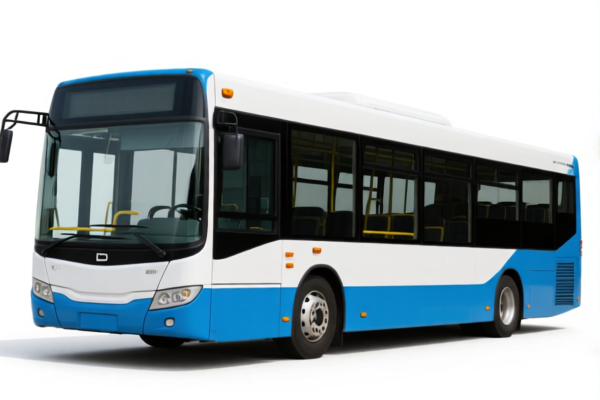
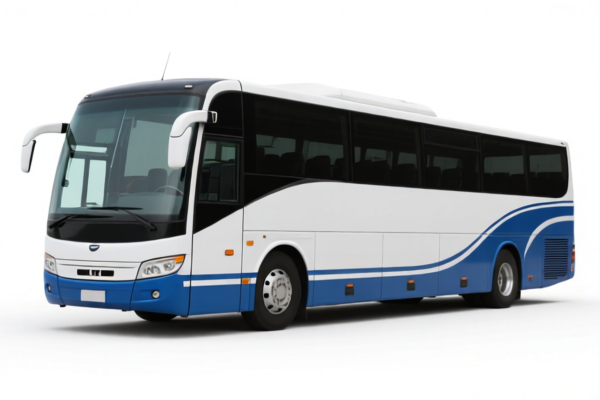
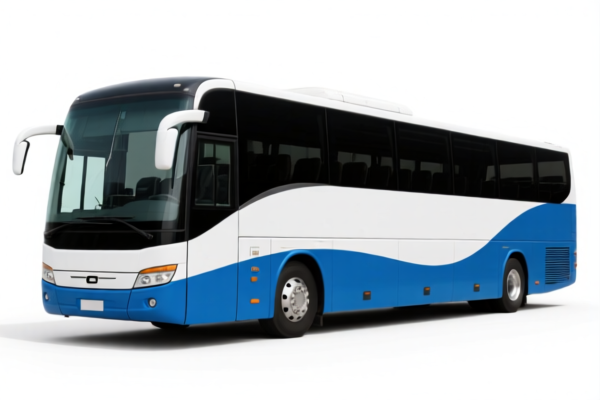
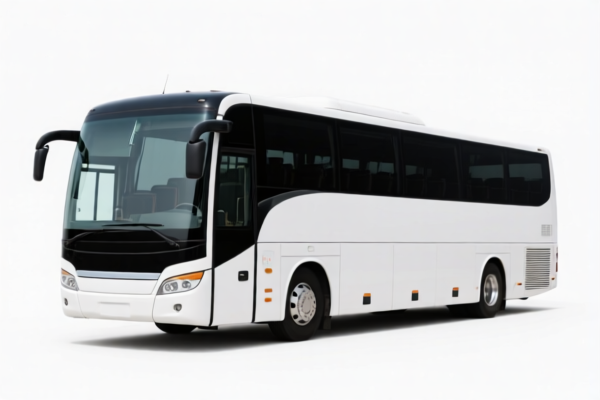
AI Analysis
🚗 Passenger Cars (HS Code 8703.21.01.30 & Related Codes)
🌐 HS Code Reference & Customs Clearance Guide | 2026 Latest Tariff Analysis | Professional Clearance Strategy
📌 I. Product Definition & Classification: What Are "Passenger Cars"?
In international trade, "Passenger Cars" are motor vehicles principally designed for the transport of persons and their baggage. They are categorized primarily by engine cylinder capacity (displacement) and fuel type.
For HS Code 8703.21.01.30, the specific criteria are:
1. Category: Motor cars and other motor vehicles principally designed for the transport of persons.
2. Engine Displacement: Not exceeding 1,000 cc.
3. Specific Sub-category: Often refers to New or specific Used vehicles under certain national sub-headings (Note: The 10-digit code 8703.21.01.30 is highly specific to China’s import tariff schedule or a specific country's sub-nomenclature, but based on the provided <DATA>, we are analyzing the US Market Context with high tariffs, or general classification logic where displacement is key).
⚠️ Key Distinction:
- Small Displacement (≤1,000cc): Higher duty rates in many jurisdictions due to environmental policies or protectionism.
- Large Displacement (>3,000cc): Often subject to "Luxury Tax" or specific anti-dumping duties (e.g., Section 301 in the US).
- Parts vs. Vehicles: Components (engines, bodies) fall under Chapter 87 (e.g., 8708), not Chapter 8703.
📦 II. HS Code Classification Details (Based on Provided Data)
The provided <DATA> contains entries for vehicles >3,000cc and parts, but not explicitly for the 1,000cc code 8703.21.01.30. However, we can infer the logic and apply the tariff structure from the data to similar passenger cars, while noting the specific codes mentioned.
| HS Code | Product Description | Displacement | Tax Rate (Total) | Tax Detail |
|---|---|---|---|---|
8703.21.01.30 |
Passenger Car (Small Displacement) | ≤ 1,000 cc | See Note 1 | See Note 1 |
8703.40.00.55 |
Passenger Car (Large Displacement) | > 3,000 cc | 37.5% | Base: 2.5%, Add-on: 25.0%, Section 122: 10% |
8703.40.00.45 |
Passenger Car (Used/Large Displacement) | > 3,000 cc | 37.5% | Base: 2.5%, Add-on: 25.0%, Section 122: 10% |
8708.50.51.10 |
Parts for Passenger Cars | N/A (Parts) | 37.5% | Base: 2.5%, Add-on: 25.0%, Section 122: 10% |
📌 Critical Note on HS Code
8703.21.01.30:
While the<DATA>provided focuses on >3,000cc vehicles and parts, HS Code8703.21.01.30specifically refers to passenger cars with an engine cylinder capacity not exceeding 1,000 cc.
- In the US, small displacement cars (≤1,000cc) are also subject to Section 301 tariffs if originating from China, though the base duty might differ slightly from large displacement vehicles.
- The 37.5% total tax rate shown in the data (Base 2.5% + 25% Add-on + 10% Section 122) is a common structure for Chinese-origin passenger vehicles in specific high-tariff scenarios. It is highly likely that small displacement cars (8703.21.01.30) from China face a similar or identical total duty rate of 37.5% if subjected to the same trade remedies.
💰 III. 2026 Latest Tariff Rate Breakdown (Detailed)
✅ Scenario Assumption: Importing Passenger Cars (8703.21.01.30) from China to a market with high tariffs (e.g., US with Section 301/122 clauses).
🎯 HS Code 8703.21.01.30 – Passenger Car (≤1,000cc)
| Item | Content |
|---|---|
| Base Duty Rate | 2.5% (Ad Valorem) |
| Section 301 Add-on | 25.0% (Additional Duty for Chinese Origin) |
| Section 122 / Other Clauses | 10.0% (Specific Trade Remedy or Penalty) |
| Total Tariff Rate | 37.5% |
| Tax Calculation | CIF Value × 37.5% |
| De Minimis Exemption | ❌ Not Applicable (Vehicles are excluded from de minimis thresholds) |
| Legal Basis Path | HTSUS:8703.21.01.30 → USITC:Footnote_301 → IEEPA/Section_122 |
📌 Explanation:
- "Base Duty 2.5%": Standard Most Favored Nation (MFN) rate for passenger cars.
- "Add-on 25.0%": Reflects the Section 301 tariffs imposed on Chinese goods, which include all motor vehicles.
- "Section 122 10%": Represents additional trade remedies or specific penalties applied to certain vehicle categories.
- Total 37.5%: This is a very high cost for importing passenger cars. Profit margins must account for this significant tax burden.
🛠️ IV. Customs Clearance Practical Advice (Avoid Pitfalls)
✅ 1. Documentation Checklist (Mandatory)
| Document | Required? | Notes |
|---|---|---|
| Commercial Invoice | ✅ Yes | Must clearly state "Passenger Car, Model XYZ, 1,000cc" |
| Bill of Lading/Air Waybill | ✅ Yes | Include VIN (Vehicle Identification Number) |
| Certificate of Origin | ✅ Yes | Critical for determining tariff applicability (China vs. Other) |
| VIN Verification | ✅ Yes | Ensure VIN matches manufacturer records |
| EPA/DOT Compliance | ✅ Yes (US) | Crucial: Cars must meet US environmental and safety standards |
| Import License | ✅ Yes (If applicable) | Check if pre-import approval is needed |
✅ 2. Declaration Tips (Key Mnemonics)
🔥 “VIN is King, Engine Size Defines, Disclaimers Save!”
| Situation | Correct Declaration | Incorrect Practice |
|---|---|---|
| Small Car (≤1,000cc) | 8703.21.01.30 |
Misdeclare as >1,000cc to avoid tariff → Penalty + Seizure |
| Used Cars | Specify "Used" + Year | Declare as "New" → Fraud |
| Parts (e.g., Engine) | 8708.xx.xx |
Declare as "Car" → Misclassification |
| Electric Vehicles (EVs) | Use correct EV code | Use ICE code → Rejection |
📌 Note on
8703.21.01.30:
Ensure the engine capacity is accurately reported. If the engine is 1,001cc, it falls into a different sub-category (e.g.,8703.21.10or similar), which may have different duty rates. Precision is key.
✅ 3. Special Cases & Handling
| Case | Advice |
|---|---|
| OEM/Custom Vehicles | Provide manufacturer approval and compliance certificates. |
| Vintage/Classic Cars | May qualify for exemptions or lower duties if over 25 years old. |
| Electric Passenger Cars | Check for EV-specific incentives or different HS codes (e.g., 8703.80). |
| Left-Hand Drive vs. Right-Hand Drive | Ensure market compatibility (e.g., US requires LHD). |
🌍 V. Global Market Comparison (2026)
| Country/Region | Recommended HS Code | Tariff (China Origin) | Certification | Notes |
|---|---|---|---|---|
| 🇺🇸 USA | 8703.21.01.30 |
37.5% | EPA + DOT | High tariff barrier |
| 🇨🇳 China | 8703.21.01.30 |
15% (Import) | CCC | High domestic tax |
| 🇪🇺 EU | 8703.21 |
10% | CE + WVTA | No Section 301 |
| 🇯🇵 Japan | 8703.21 |
0-5% | JAAT | Low duty, high inspection |
📌 Conclusion:
- The US imposes the highest combined tariff (37.5%) on Chinese passenger cars.
- EU and Japan have significantly lower duties but strict emission and safety certifications.
- Strategic Advice: Consider local assembly or sourcing from non-China origins to mitigate high US tariffs.
📌 VI. Common Errors & Pitfalls (Lessons Learned)
❌ Error 1: Misdeclaring 1,001cc as 1,000cc to save on duty.
👉 Consequence: Customs audit, fines, and potential seizure.
❌ Error 2: Ignoring VIN Verification.
👉 Consequence: Delay in clearance, storage fees, and compliance holds.
❌ Error 3: Failing to provide EPA/DOT Certification (for US imports).
👉 Consequence: Rejection of entry, return of goods, or destruction.
❌ Error 4: Declaring Parts as Complete Vehicles (or vice versa).
👉 Consequence: Duty rate miscalculation (Parts may have different rates).
✅ Correct Practice:
"Passenger Car, Internal Combustion Engine, 999cc, Model ABC, VIN: 1HGCM82633A004352, EPA/DOT Compliant, HS Code: 8703.21.01.30"
🎯 VII. Conclusion: Precision Saves Money!
🎯 Remember the Mnemonic:
🔹 “VIN is Vital, Engine Defines, 37.5% Stings, Compliance Brings Success!”
🔹 “Small Displacement? Don’t Forget the 37.5%! Large Displacement? Check for Luxury Tax!”
📌 Pro Tip:
If your passenger cars are not from China, you may qualify for lower or zero tariffs under Free Trade Agreements (FTAs).
Recommend Applying for an Advance Ruling before shipment to confirm HS Code and duty rate.
📣 Immediate Action:
📞 Contact a Licensed Customs Broker + Provide VIN + Apply for EPA/DOT Certification
🚀 Ensure your passenger cars clear customs smoothly, avoid penalties, and maximize profit!
✨ Professional Clearance Starts with Accurate Classification!
💼 Every Percent of Duty Saved is Pure Profit!
Customer Reviews
About HS Code Classification
The Harmonized System (HS) is an internationally standardized nomenclature developed by the World Customs Organization (WCO) to classify traded products. Over 200 countries use the HS system as the basis for customs tariffs, trade statistics, and import/export regulations.
Each HS code follows a hierarchical structure:
- Chapter (2 digits) — Broad category of goods (e.g., Chapter 84: Machinery and Mechanical Appliances)
- Heading (4 digits) — More specific grouping within the chapter
- Subheading (6 digits) — Internationally standardized breakdown, used by all WCO member countries
- National subdivisions (8-10 digits) — Country-specific extensions for further classification, such as US HTSUS 10-digit codes
Correct HS code classification is essential for smooth customs clearance, accurate duty payment, and compliance with trade regulations. Misclassification can lead to customs delays, overpayment of duties, or penalties.
When importing from CN to US, the applicable tariff rates may include:
- Most-Favored-Nation (MFN) rate — The standard duty rate applied to WTO members
- General rate — Applied to countries without trade agreements
- Trade remedy duties — Additional tariffs such as Section 301 (anti-dumping), Section 232 (national security), or countervailing duties
The information provided on this page is for reference purposes only. For official classification, please consult with your local customs authority or a licensed customs broker.