passenger car radial tire 17 18 inch
CN → US| HS Code | Tariff Rate | Origin | Destination | Doc |
|---|---|---|---|---|
| 4011101060 | 39.0% | CN | US | Official Doc |
| 4011101070 | 39.0% | CN | US | Official Doc |
| 8708704560 | 37.5% | CN | US | Official Doc |
Product Images
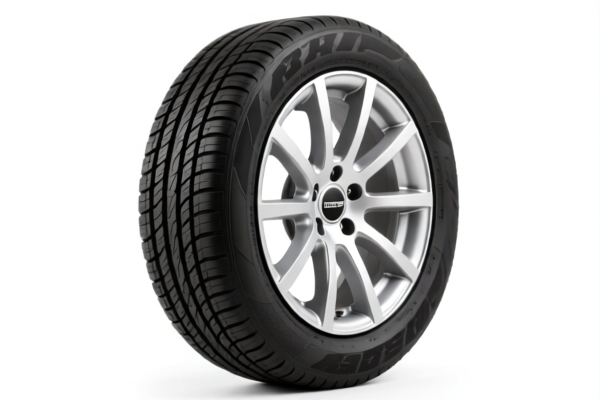
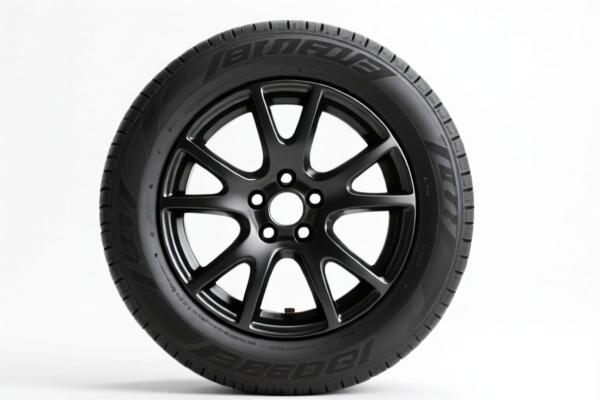
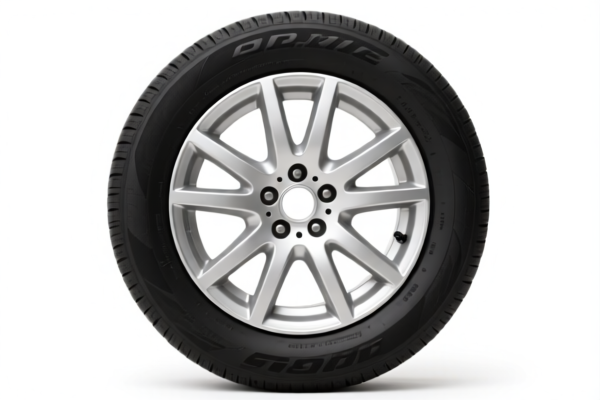
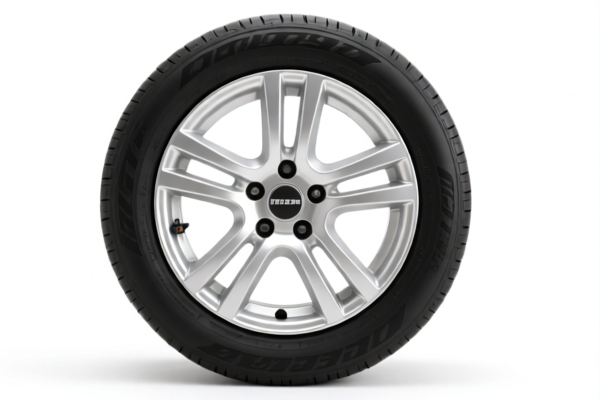
AI Analysis
🚗 Passenger Car Radial Tires (17-18 Inch Wheels)
🌐 HS Code Reference & Customs Clearance Guide | 2026 Latest Tariff Analysis | Professional Clearance Strategy
📌 I. Product Definition & Classification: Do You Really Know "Radial Tires"?
Passenger car radial tires are the critical contact point between the vehicle and the road. In international trade, they are strictly categorized based on rim diameter and intended use (passenger vs. racing). Misclassification can lead to severe penalties or delayed shipments.
⚠️ Key Distinction Point:
- Passenger Use: Standard tires for everyday vehicles, typically with specific rim diameter ranges → Classify under 4011.10.10.60
- Racing/Competition Use: Specialized high-performance tires for track days or professional racing → Classify under 4011.10.10.70
- Racing Wheel Assemblies: Complete wheel+tire units for racing cars, often composite materials → Classify under 8708.70.45.60
📦 II. HS Code Classification Details (2026 Latest Tariff Authority Comparison)
| HS Code | Product Description | Application Scenario | Rim Diameter | Total Tax Rate |
|---|---|---|---|---|
4011.10.10.60 |
Passenger car radial tires, for matching rims 17-18 inches, rubber material | Daily driving, standard sedans, SUVs | 17-18 inches | 39.0% |
4011.10.10.70 |
Radial racing tires, for matching rims 18 inches, rubber material | Professional racing, track use, high-performance sports cars | 18 inches | 39.0% |
8708.70.45.60 |
Road wheels for racing cars, radial form, rubber/composite material | Complete racing wheel assemblies, composite construction | N/A | 37.5% |
🔍 Important Reminder:
- Passenger tires (4011.10.10.60) must clearly state "Passenger Car" and specify rim diameter 17-18 inches.
- Racing tires (4011.10.10.70) require proof of racing application; misclassifying as passenger tires may trigger audits.
- Racing wheels (8708.70.45.60) apply only if the item is a complete wheel assembly with composite materials, not just rubber tires.
💰 III. 2026 Latest Tariff Rate Details (Including Surtaxes & Policy Add-ons)
✅ Applicable Country: United States (US)
✅ Origin: China (CN)
✅ Effective Date: From November 10, 2025 (including subsequent imports)
🎯 1. 4011.10.10.60 —— Passenger Car Radial Tires (17-18 Inch)
| Item | Content |
|---|---|
| Base Duty Rate | 4.0% |
| Section 301 Surcharge | +25.0% |
| Section 122 Tariff | +10.0% |
| Total Tax Rate | 39.0% |
| Tax Calculation | CIF Value × 39.0% |
| De Minimis Exemption | ❌ Not Eligible (deny_de_minimis) |
| Legal Basis Path | Section 301:9903.88.01 → Section 122:9903.01.25 → USITC:4011.10.10.60 |
📌 Explanation:
- The "25% Section 301 Surcharge" is imposed under U.S. Trade Law Section 301 against Chinese goods;
- The "10% Section 122 Tariff" is an additional levy under Section 122 of the Trade Expansion Act;
- Total 39% is a high tariff, requiring advance cost planning!
🎯 2. 4011.10.10.70 —— Radial Racing Tires (18 Inch)
| Item | Content |
|---|---|
| Base Duty Rate | 4.0% |
| Section 301 Surcharge | +25.0% |
| Section 122 Tariff | +10.0% |
| Total Tax Rate | 39.0% |
| Tax Calculation | CIF Value × 39.0% |
| De Minimis Exemption | ❌ Not Eligible |
| Legal Basis Path | Section 301:9903.88.01 → Section 122:9903.01.25 → USITC:4011.10.10.70 |
📌 Note:
- Same tax rate as passenger tires (39%);
- Even if labeled as "racing tires," the total tax remains 39% for Chinese origin;
- Ensure documentation explicitly states "Racing Application" to avoid classification disputes.
🎯 3. 8708.70.45.60 —— Racing Wheel Assemblies (Road Wheels)
| Item | Content |
|---|---|
| Base Duty Rate | 2.5% |
| Section 301 Surcharge | +25.0% |
| Section 122 Tariff | +10.0% |
| Total Tax Rate | 37.5% |
| Tax Calculation | CIF Value × 37.5% |
| De Minimis Exemption | ❌ Not Eligible |
| Legal Basis Path | Section 301:9903.88.01 → Section 122:9903.01.25 → USITC:8708.70.45.60 |
📌 Note:
- Slightly lower total tax (37.5%) compared to tires alone;
- Applies only to complete road wheel assemblies for racing cars, made of rubber/composite;
- Cannot be used for standard rubber tires; must include wheel structure.
🛠️ IV. Customs Clearance Practical Advice (Battle-Tested Pitfall Avoidance Guide)
✅ 1. Required Documentation Checklist (None Can Be Missing)
| Document | Must Provide | Description |
|---|---|---|
| ✅ Product Specification Sheet | ✔️ | Includes size, load index, speed rating, rim diameter, material |
| ✅ Product Photos (with Label) | ✔️ | Clear view of sidewall text, model number, brand, DOT code |
| ✅ Commercial Invoice | ✔️ | Explicitly state "Passenger Car Radial Tire" or "Racing Tire" |
| ✅ Packing List | ✔️ | Detail units per carton, total weight, dimensions |
| ✅ Certificate of Origin (CO) | ✔️ | If non-China origin, may qualify for preferential rates |
| ✅ Third-Party Test Report | ✔️ | DOT, ECE, or UTQG certification if required |
| ✅ Import License (if applicable) | ✔️ | For certain commercial quantities or restricted brands |
✅ 2. Declaration Tips (Key Mantras)
🔥 “Tires Don’t Split, Race vs. Road Clear, Name Precise, Tax Avoids Fear!”
| Scenario | Correct Declaration | Wrong Practice |
|---|---|---|
| Standard passenger tires (17-18") | 4011.10.10.60 |
Misclassify as racing → 39% but audit risk |
| Racing tires (18") | 4011.10.10.70 |
Declare as passenger → 39% but documentation mismatch |
| Complete racing wheel assembly | 8708.70.45.60 |
Declare as tire → 39% vs 37.5% (minor difference but compliance issue) |
| Mixed shipments (tires + rims) | Split Declaration | Combine → Incorrect HS Code → Penalties |
✅ 3. Special Situation Handling
| Situation | Handling Advice |
|---|---|
| OEM Tires | Provide customer PO + design specs to confirm passenger/racing use |
| Tires with Run-Flat Technology | Still 4011.10.10.60, no change in classification |
| Tires for Electric Vehicles | Same classification, but highlight EV compatibility in documentation |
| Tires for Military Use | May require special license, consult customs broker in advance |
🌍 V. Global Major Market Clearance Comparison (2026 Latest)
| Country/Region | Recommended HS Code | Tariff | Certification Requirement | Remarks |
|---|---|---|---|---|
| 🇺🇸 United States | 4011.10.10.60 / 4011.10.10.70 |
39.0% (China Origin) | DOT + ECE | 122 Surtax Applies |
| 🇨🇳 China | 4011.10.10.60 |
5% | CCC + GB Standards | No Additional Surtax |
| 🇪🇺 European Union | 4011.10.10.60 |
0% (if CE Marked) | ECE + RoHS | No Surtax |
| 🇦🇺 Australia | 4011.10.10.60 |
5% | RCM + ADR | No Surtax |
| 🇯🇵 Japan | 4011.10.10.60 |
0% | JIS + PMDA | No Surtax |
📌 Conclusion:
- The United States is the only major market imposing high additional surtaxes on Chinese-origin tires;
- Chinese-origin tires face high clearance costs in the US; consider supply chain diversification or pre-clearance rulings.
📌 VI. Common Mistakes & Pitfall Avoidance Guide (Blood-Tested Lessons)
❌ Mistake 1: Declaring "Racing Tires" as "Passenger Tires" to avoid audit
👉 Consequence: Documentation mismatch → Audit → Delay + Potential Fine
❌ Mistake 2: Not specifying rim diameter in description
👉 Consequence: Customs rejects classification → Delay + Storage Fees
❌ Mistake 3: Mixing tires and rims in one HS Code
👉 Consequence: Incorrect classification → Penalties + Back Taxes
❌ Mistake 4: Using vague terms like "Tires" without "Radial" or "Passenger/Racing"
👉 Consequence: Customs reclassifies → Higher tax + Delay
✅ Correct Practice:
"Passenger Car Radial Tire, 17-Inch Rim, 225/45R17 91V, DOT Certified, Model XYZ, Rubber Material"
OR
"Radial Racing Tire, 18-Inch Rim, 305/30ZR18 98Y, Track Use Only, Model ABC, No DOT Required"
🎯 VII. Conclusion: Professional Declaration Saves Time, Money & Stress!
🎯 Remember the Mantra:
🔹 “Tires Don’t Split, Race vs. Road Clear, 39% Tax is Real, 37.5% for Wheels, Name Precise is Key!”
🔹 “HS Code Determines Life or Death, 1.5% Difference Matters, Declaration Precision Saves Thousands!”
📌 Pro Tip:
If your tires are originally from Vietnam, Mexico, Thailand, or Malaysia, you may apply for IEEPA Exemption, reducing tariffs to 0%~5%;
Recommend applying for an Advance Ruling before shipment to avoid clearance risks.
📣 Take Action Now:
📞 Contact Professional Customs Broker + Provide Product Photos + Apply for HS Code Advance Ruling
🚀 Let your tires clear smoothly, export efficiently, and boost profits!
✨ Professional Clearance Starts with Accurate Classification!
💼 Every Cent of Your Cost Deserves Precise Calculation!
Customer Reviews
About HS Code Classification
The Harmonized System (HS) is an internationally standardized nomenclature developed by the World Customs Organization (WCO) to classify traded products. Over 200 countries use the HS system as the basis for customs tariffs, trade statistics, and import/export regulations.
Each HS code follows a hierarchical structure:
- Chapter (2 digits) — Broad category of goods (e.g., Chapter 84: Machinery and Mechanical Appliances)
- Heading (4 digits) — More specific grouping within the chapter
- Subheading (6 digits) — Internationally standardized breakdown, used by all WCO member countries
- National subdivisions (8-10 digits) — Country-specific extensions for further classification, such as US HTSUS 10-digit codes
Correct HS code classification is essential for smooth customs clearance, accurate duty payment, and compliance with trade regulations. Misclassification can lead to customs delays, overpayment of duties, or penalties.
When importing from CN to US, the applicable tariff rates may include:
- Most-Favored-Nation (MFN) rate — The standard duty rate applied to WTO members
- General rate — Applied to countries without trade agreements
- Trade remedy duties — Additional tariffs such as Section 301 (anti-dumping), Section 232 (national security), or countervailing duties
The information provided on this page is for reference purposes only. For official classification, please consult with your local customs authority or a licensed customs broker.