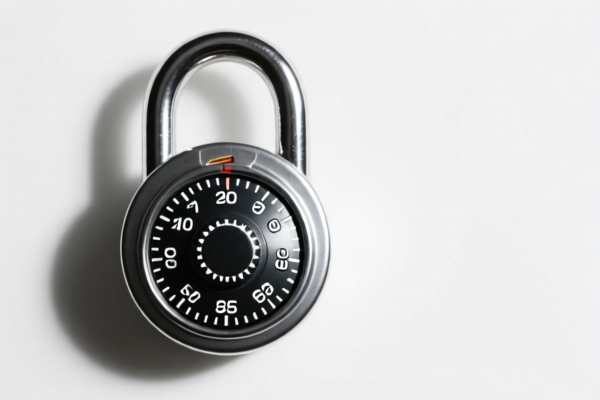
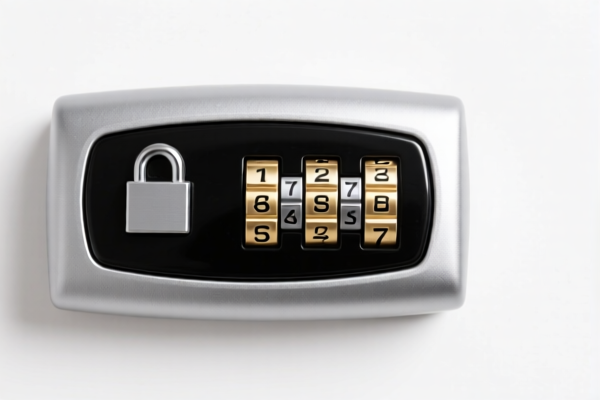
password drawer lock
CN → US| HS Code | Tariff Rate | Origin | Destination | Doc |
|---|---|---|---|---|
| 8301300090 | 23.2% | CN | US | Official Doc |
| 3926305000 | 22.8% | CN | US | Official Doc |
| 8302423065 | 71.4% | CN | US | Official Doc |
| 8301300060 | 23.2% | CN | US | Official Doc |
| 3926902500 | 24.0% | CN | US | Official Doc |
Product Images


AI Analysis
🔐 Password Drawer Locks: HS Code Classification & US Customs Clearance Guide | 2026 Tax Update
🌐 HS Code Reference & Clearance Guide | 2026 Latest Tariff Analysis | Professional Strategy
📌 I. Product Definition & Classification: What Exactly Is a "Password Drawer Lock"?
A Password Drawer Lock is a securing device primarily used for furniture (drawers, cabinets, safes) that allows access via a numeric code rather than a traditional key. In international trade, its classification depends heavily on material composition (metal vs. plastic) and functional description (as a "lock" vs. as a "furniture fitting/accessory").
⚠️ Key Distinction: - If the primary identity is a security locking mechanism made of base metals → It is classified under Chapter 83 (Base Metal Locks). - If the primary identity is a furniture accessory made of plastics → It is classified under Chapter 39 (Plastic Articles). - Note: Misclassification leads to massive tariff discrepancies (from ~23% to ~71%).
📦 II. HS Code Classification Details (2026 Latest Tariff Authority Comparison)
Based on the provided data, here are the 5 potential HS Code classifications for Password Drawer Locks, ranging from lowest to highest tax burden.
| HS Code | Product Description & Rationale | Material/Function Focus | Total Tax Rate |
|---|---|---|---|
8301.30.00.90 |
Base Metal Locks: Classified as base metal locks, fitting the specific form and use of furniture locks. | Base Metal Lock | 23.2% |
8301.30.00.60 |
Furniture Locks (Base Metal): Meets the criteria for locks used in furniture, material is base metal. | Base Metal Lock | 23.2% |
3926.30.50.00 |
Plastic Furniture Fittings: Classified as plastic furniture accessories used for cabinet connection or fixation. | Plastic Accessory | 22.8% |
3926.90.25.00 |
Other Plastic Handles/Knobs: Fits other plastic handles and knob categories (includes plastic handles/knobs parts). | Plastic Handles/Knobs | 24.0% |
8302.42.30.65 |
Other Base Metal Fittings: Classified as other furniture fittings made of base metal (steel, aluminum, copper). | Base Metal Fitting | 71.4% |
🔍 Critical Insight: - Lowest Risk/Lowest Cost:
3926.30.50.00(22.8%) and8301.30.00.90/60(23.2%) are the most favorable options. - Highest Risk/Highest Cost:8302.42.30.65(71.4%) is extremely expensive due to the "Steel/Aluminum/Copper Articles Additional Duty." - Strategy: Avoid8302classification unless the product is strictly a metal hinge/handle and not a locking mechanism. Prioritize8301(Locks) or3926(Plastic Fittings).
💰 III. 2026 Latest Tariff Rate Breakdown (Including Surcharges & Policy Add-ons)
✅ Applicable Country: United States (US)
✅ Origin: China (CN)
✅ Effective Time: Current tariffs apply.
All listed HS codes share a similar tax structure composed of three parts. Below is the detailed breakdown for each classification.
🎯 1. 8301.30.00.90 & 8301.30.00.60 — Base Metal Locks
| Item | Content |
|---|---|
| Base Duty | 5.7% |
| Section 301 (Add-on) | 7.5% |
| Section 122 (Add-on) | 10% |
| Total Tax Rate | 23.2% |
| Tax Calculation | CIF Value × 23.2% |
| Legal Basis Path | Base Tariff: 5.7% + 301: 7.5% + 122: 10% |
📌 Explanation:
- These codes are classified as locks (8301).
- They are subject to the standard Section 301 (7.5%) and Section 122 (10%) surcharges.
- Total Cost: 23.2% of the CIF value.
🎯 2. 3926.30.50.00 — Plastic Furniture Fittings
| Item | Content |
|---|---|
| Base Duty | 5.3% |
| Section 301 (Add-on) | 7.5% |
| Section 122 (Add-on) | 10% |
| Total Tax Rate | 22.8% |
| Tax Calculation | CIF Value × 22.8% |
| Legal Basis Path | Base Tariff: 5.3% + 301: 7.5% + 122: 10% |
📌 Explanation:
- This code is classified under Plastic Articles (3926).
- It offers the lowest total tax rate (22.8%) among all options.
- Suitable if the lock has significant plastic components used for cabinet connection.
🎯 3. 3926.90.25.00 — Other Plastic Handles/Knobs
| Item | Content |
|---|---|
| Base Duty | 6.5% |
| Section 301 (Add-on) | 7.5% |
| Section 122 (Add-on) | 10% |
| Total Tax Rate | 24.0% |
| Tax Calculation | CIF Value × 24.0% |
| Legal Basis Path | Base Tariff: 6.5% + 301: 7.5% + 122: 10% |
📌 Explanation:
- Classified as plastic handles/knobs.
- Slightly higher base duty (6.5%) leads to a 24.0% total rate.
- Use this if the product is marketed primarily as a "handle with keypad" rather than a "lock."
🎯 4. 8302.42.30.65 — Other Base Metal Furniture Fittings (⚠️ HIGH TAX ALERT)
| Item | Content |
|---|---|
| Base Duty | 3.9% |
| Section 301 (Add-on) | 7.5% |
| Section 122 (Add-on) | 10% |
| Steel/Aluminum/Copper Articles Additional Duty | 50% |
| Total Tax Rate | 71.4% |
| Tax Calculation | CIF Value × 71.4% |
| Legal Basis Path | Base: 3.9% + 301: 7.5% + 122: 10% + Steel/Al/Cu Add-on: 50% |
📌 ⚠️ CRITICAL WARNING:
- This code triggers the 50% Additional Duty on Steel, Aluminum, and Copper Articles.
- Even though the base duty is low (3.9%), the total tax is 71.4%.
- Avoid this classification for password locks unless absolutely necessary. The cost difference vs.8301is 48.2%!
🛠️ IV. Customs Clearance Practical Advice (Real-World Pitfall Guide)
✅ 1. Documentation Checklist (Must-Haves)
| Document | Required? | Explanation |
|---|---|---|
| ✅ Product Specifications | ✔️ | Must clearly state: "Password Lock," "Electronic/Mechanical," "Material: Plastic/Metal." |
| ✅ Structure Diagram | ✔️ | Proves it is a locking device (supporting 8301) or a fitting (supporting 3926). |
| ✅ Commercial Invoice | ✔️ | Description must match HS Code rationale (e.g., "Base Metal Lock" for 8301). |
| ✅ Material Composition Proof | ✔️ | Crucial for distinguishing between 8301 (Metal) and 3926 (Plastic). |
| ✅ Packing List | ✔️ | Ensure no mixing of goods with different HS codes in one shipment. |
✅ 2. Declaration Tips (Key Mantras)
🔥 “Material Matters, Function Defines!”
| Scenario | Correct Declaration | Wrong Practice | Consequence |
|---|---|---|---|
| Metal Lock Body | 8301.30.00.90 (Base Metal Lock) |
Classifying as 8302 (Fitting) |
Tax jumps from 23.2% to 71.4%! |
| Plastic Lock Body | 3926.30.50.00 (Plastic Fitting) |
Classifying as 8301 |
Audit risk (Material mismatch) |
| Mixed Materials | 3926.30.50.00 (If plastic is primary) |
Declaring as 8301 |
Potential reclassification |
| Electronic Component | Still 3926 or 8301 (if locking function dominates) |
Classifying as 8543 (Electrical Machine) |
Wrong Chapter |
✅ 3. Special Handling
| Situation | Advice |
|---|---|
| OEM Custom Locks | Provide design files showing the locking mechanism to support 8301. |
| Plastic Enclosure + Metal Core | If the locking function is via metal, 8301 is safer. If it’s a plastic housing for a simple latch, 3926 may be better. |
| High-Value Smart Locks | Ensure electronic parts are not classified separately. The whole unit is a "lock." |
🌍 V. Global Market Comparison (2026 Latest)
| Country/Region | Recommended HS Code | Total Tax Rate (China Origin) | Notes |
|---|---|---|---|
| 🇺🇸 USA | 8301.30.00.90 / 3926.30.50.00 |
22.8% - 23.2% | Avoid 8302 (71.4%)! |
| 🇨🇳 China | 8301.30.00.90 |
~5-7% | No Section 301/122. Lower cost. |
| 🇪🇺 EU | 8301.30.00.90 |
~3-5% | No Section 301/122. CE Marking required. |
| 🇬🇧 UK | 8301.30.00.90 |
~3-5% | Post-Brexit tariffs may vary slightly. |
📌 Conclusion:
- The USA is the most complex market due to Section 301 and Section 122 surcharges.
- Section 122 (10%) and Section 301 (7.5%) are mandatory for most Chinese imports.
- Material Choice: Using plastic (3926) can save 0.4% compared to metal locks (8301), but avoids the 50% steel penalty (8302).
📌 VI. Common Errors & Pitfall Guide (Blood & Tears Lessons)
❌ Mistake 1: Classifying a metal password lock as 8302.42.30.65 (Fitting)
👉 Consequence: Tax increases from 23.2% to 71.4%. Loss of ~48% profit margin!
❌ Mistake 2: Declaring a plastic lock as 8301 (Base Metal Lock)
👉 Consequence: Customs audit, potential reclassification, fines, and shipment delays.
❌ Mistake 3: Ignoring the "Steel/Aluminum/Copper" additional duty in 8302
👉 Consequence: Unexpected 50% surcharge on top of base duties.
❌ Mistake 4: Splitting the lock into "electronic part" and "mechanical part"
👉 Consequence: Complex declaration, higher combined tax if parts are taxed differently.
✅ Correct Action:
“Password Drawer Lock, Model XYZ, Material: [Plastic/Metal], Function: Security Lock, CE/FCC Certified.”
🎯 VII. Conclusion: Professional Classification, Cost Optimization!
🎯 Remember the Mantra:
🔹 “Lock is 8301 (23%), Plastic is 3926 (23%), Fitting is 8302 (71%)!”
🔹 “Avoid 8302 at all costs! Choose 8301 or 3926 for safe, low-cost clearance.”
📌 Tips:
- If your product is primarily plastic, use 3926.30.50.00 for the lowest rate (22.8%).
- If your product is primarily metal, use 8301.30.00.90 (23.2%).
- Never use 8302.42.30.65 for a password lock unless you want to pay 71.4% in taxes.
📣 Immediate Action:
📞 Contact your customs broker.
📄 Provide material specs and product photos.
🚀 Choose the right HS Code to save up to 48% in taxes!
✨ Professional clearance starts with accurate classification!
💼 Every cent of tax saved is pure profit!
Customer Reviews
About HS Code Classification
The Harmonized System (HS) is an internationally standardized nomenclature developed by the World Customs Organization (WCO) to classify traded products. Over 200 countries use the HS system as the basis for customs tariffs, trade statistics, and import/export regulations.
Each HS code follows a hierarchical structure:
- Chapter (2 digits) — Broad category of goods (e.g., Chapter 84: Machinery and Mechanical Appliances)
- Heading (4 digits) — More specific grouping within the chapter
- Subheading (6 digits) — Internationally standardized breakdown, used by all WCO member countries
- National subdivisions (8-10 digits) — Country-specific extensions for further classification, such as US HTSUS 10-digit codes
Correct HS code classification is essential for smooth customs clearance, accurate duty payment, and compliance with trade regulations. Misclassification can lead to customs delays, overpayment of duties, or penalties.
When importing from CN to US, the applicable tariff rates may include:
- Most-Favored-Nation (MFN) rate — The standard duty rate applied to WTO members
- General rate — Applied to countries without trade agreements
- Trade remedy duties — Additional tariffs such as Section 301 (anti-dumping), Section 232 (national security), or countervailing duties
The information provided on this page is for reference purposes only. For official classification, please consult with your local customs authority or a licensed customs broker.