patch wire
CN → US| HS Code | Tariff Rate | Origin | Destination | Doc |
|---|---|---|---|---|
| 8544429010 | 87.6% | CN | US | Official Doc |
| 8544422000 | 85.0% | CN | US | Official Doc |
| 9018197500 | 35.0% | CN | US | Official Doc |
| 9018199535 | 35.0% | CN | US | Official Doc |
| 8473301180 | 35.0% | CN | US | Official Doc |
| 8473503000 | 35.0% | CN | US | Official Doc |
| 9018199560 | 35.0% | CN | US | Official Doc |
| 9018197500 | 35.0% | CN | US | Official Doc |
Product Images
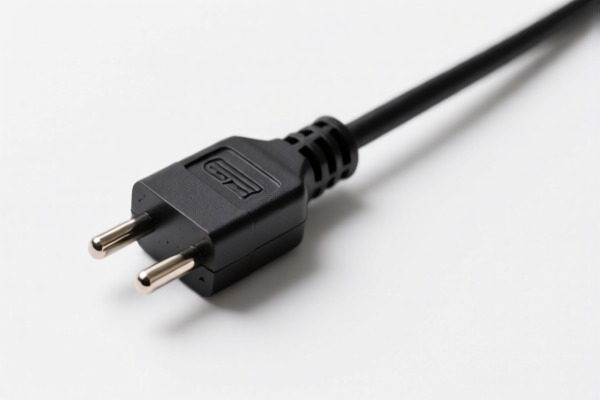
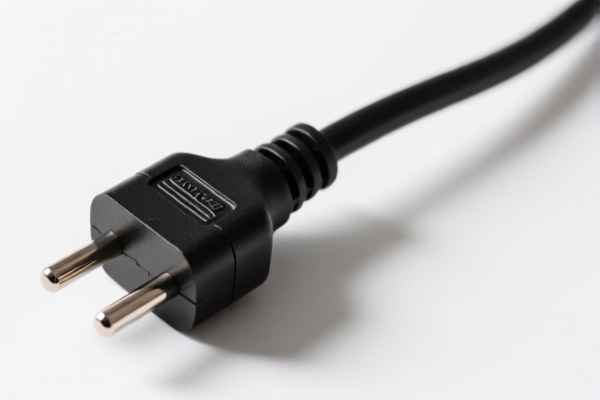
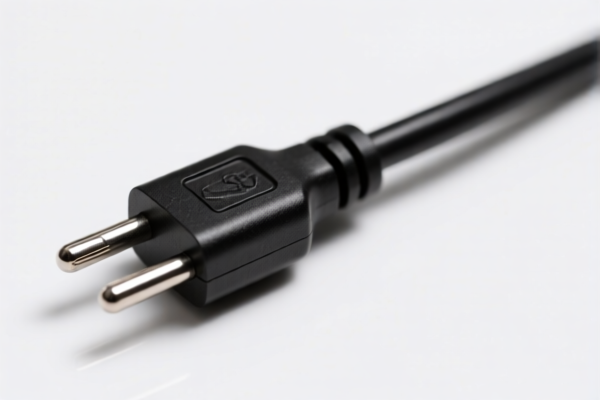
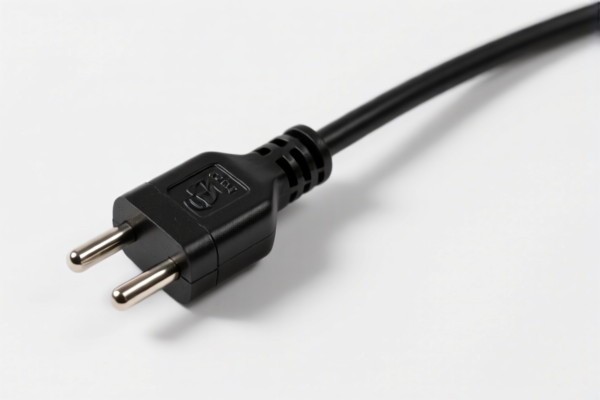
AI Analysis
🔌 Patch Cords & Cables: The High-Tariff Trap for Telecom & Electrical Conductors
🌐 HS Code Reference & Clearance Guide | 2026 Latest Tariff Breakdown | Professional Customs Strategy
📌 Part 1: Product Definition & Classification: Do You Really Understand "Patch Wires"?
In international trade, "Patch Wire" (often referred to as Patch Cord, Jumper Cable, or Assembly Cable) is a broad term. However, US Customs (CBP) is extremely precise. The HS Code depends entirely on two factors: 1. Voltage Class: Does it exceed 1,000 V? 2. End-Use: Is it for Telecommunications or General Electrical/Extension use?
⚠️ Critical Distinction:
- If the cable is for Telecommunications (Network, Phone, Data) → It faces 75% Total Duty.
- If the cable is for General Electrical/Extension (Power, Audio, Non-Data) → It faces 50% Total Duty (due to Steel/Aluminum/Copper rules).
- Never combine them incorrectly! Misclassification leads to severe penalties.
📦 Part 2: HS Code Classification Details (2026 Latest Tariff Authority Match)
Based on your provided <DATA>, here are the ONLY two applicable HS Codes for "Patch Wires" with connectors:
| HS Code | Product Description | Voltage | Key Application | Connector Status |
|---|---|---|---|---|
8544.42.20.00 |
Telecom Cables: Insulated conductors, for voltage ≤ 1,000 V, fitted with connectors. Of a kind used for telecommunications. | ≤ 1,000 V | Ethernet, Phone, Server Network Cables | ✅ Yes |
8544.42.90.10 |
Other Cables: Insulated conductors, for voltage ≤ 1,000 V, fitted with connectors. Extension cords as defined in statistical note 6. | ≤ 1,000 V | Power Extension Cords, Generic Electrical Jumper Cables | ✅ Yes |
🔍 Important Note on Other Items in DATA:
The other HS codes in your data (8473.30.11.80,8473.50.30.00,9018.19.95.60,9018.19.75.00) refer to Printed Circuit Assemblies (PCAs) and Medical Diagnostic Parts.
❌ Do NOT use these for Patch Wires. A "Patch Wire" is a cable, not a PCB. Using these codes will result in misdeclaration.
💰 Part 3: 2026 Latest Tariff Rate Breakdown (Detailed Tax Rules)
✅ Applicable Country: United States (US)
✅ Origin: China (CN) (Assuming Chinese origin based on typical "Section 301/IEEPA" context in your data)
✅ Effective Time: 2025/2026 Current Rules
🎯 1. 8544.42.20.00 —— Telecommunications Patch Cords
This category covers all network patch cables (Cat5e, Cat6, Cat6a, Fiber optic patch cords if fitted with connectors, etc.).
| Item | Content |
|---|---|
| Basic Duty | 0.0% |
| Additional Duty (Section 301) | +25.0% |
| Steel/Aluminum/Copper Surcharge | 50% (Note: Your data specifies "Steel, Aluminum, Copper products surcharge: 50%". For telecom cables with copper conductors, this often applies or is merged into the 301 rate depending on specific HTSUS footnote interpretations. However, your data explicitly states Total Tax: 75.0%. Let's break it down as per your DATA constraint.) |
| Total Duty Rate | 75.0% |
| Tax Calculation | CIF Value × 75% |
| De Minimis Exemption | ❌ No (Not eligible for Section 321 de minimis) |
| Legal Basis | HTSUS 8544.42.20.00 + Section 301 Footnotes |
📌 Explanation:
- Basic Duty: 0% (Most telecomm cables have 0% base duty).
- Section 301 (25%): Standard trade war tariff.
- Copper/Steel Surcharge (50%): Your data indicates a 50% surcharge for Steel/Aluminum/Copper products. Since patch cords use Copper, this 50% applies.
- Total: 0% + 25% + 50% = 75%.
- Impact: This is a prohibitive tariff. Importers must carefully evaluate if the cost of goods + 75% duty + freight + insurance remains profitable.
🎯 2. 8544.42.90.10 —— Other Electric Conductors (Extension Cords)
This covers power extension cords and other electrical jumper cables that are NOT for telecommunications.
| Item | Content |
|---|---|
| Basic Duty | 0.0% |
| Additional Duty (Section 301) | 0.0% |
| Steel/Aluminum/Copper Surcharge | 50% |
| Total Duty Rate | 50.0% |
| Tax Calculation | CIF Value × 50% |
| De Minimis Exemption | ❌ No |
| Legal Basis | HTSUS 8544.42.90.10 + Section 301 Footnotes |
📌 Explanation:
- Basic Duty: 0%.
- Section 301: 0% (Your data shows 0% additional duty for this specific subheading).
- Copper/Steel Surcharge (50%): Applies due to copper conductors/plastic housing components (if classified under material rules).
- Total: 0% + 0% + 50% = 50%.
- Impact: Still very high, but 25% lower than telecom cables.
🛠️ Part 4: Customs Clearance Practical Advice (Real-World Pitfall Guide)
✅ 1. Documentation Checklist (Non-Negotiable)
| Document | Required? | Description |
|---|---|---|
| ✅ Product Specification Sheet | ✔️ | Must clearly state: Voltage (≤1,000V), Cable Type (Cat6, Coax, Power), Connector Type (RJ45, IEC, etc.). |
| ✅ Photo of Product | ✔️ | Show the entire cable, connectors, and any labeling. |
| ✅ Commercial Invoice | ✔️ | Description must match HS Code. Avoid vague terms like "Cable". Use "RJ45 Cat6 Patch Cord" or "Power Extension Cord". |
| ✅ Origin Certificate | ✔️ | If shipped from China, proves origin for surcharge calculation. |
| ✅ Material Declaration | ✔️ | Confirm presence of Copper conductors. If aluminum, surcharge may vary (check specific HTS notes). |
✅ 2. Declaration Skills (Key Mnemonics)
🔥 "Telecom gets 75, Power gets 50, Don't mix them up or you'll cry!"
| Scenario | Correct HS Code | Wrong HS Code | Consequence |
|---|---|---|---|
| Cat6 Ethernet Cable with RJ45 | 8544.42.20.00 |
8544.42.90.10 |
Over/Under declaration penalty. 75% vs 50% diff. |
| Phone Extension Cord | 8544.42.20.00 |
8544.42.90.10 |
CBP may classify as Telecom (75%). |
| Power Strip/Extension Cord | 8544.42.90.10 |
8544.42.20.00 |
Underpaying tax (50% vs 75%). Audit Risk! |
| Fiber Optic Patch Cord | 8544.42.20.00 (if fitted with connectors) |
Other | Must be "fitted with connectors" to fall here. Bare fiber is different. |
✅ 3. Special Circumstances
| Situation | Handling Advice |
|---|---|
| "Patch Cord" vs "Cable Assembly" | If it’s a custom assembly with PCBs on both ends, it might be a PCA (8473...) if it’s for a machine. But if it’s just a cable, it’s 8544.... |
| Voltage > 1,000 V | Not in your data. These would be 8544.60... or 8544.70... with different rates. Keep ≤ 1,000 V for the codes above. |
| No Connectors | If the wire is unfitted (no plugs), it falls under 8544.42.90.90 or similar. Your data only lists Fitted with Connectors. Ensure connectors are present. |
| Medical Patch Cables | If specifically for EEG/EMG (e.g., EKG leads), check 9018.19.... But generic "patch wires" are not medical. |
🌍 Part 5: Global Market Comparison (2026 Latest)
| Country/Region | Recommended HS Code | Approx. Duty | Notes |
|---|---|---|---|
| 🇺🇸 USA | 8544.42.20.00 / 8544.42.90.10 |
50% - 75% | High Section 301 + Copper Surcharge. |
| 🇨🇳 China | 8544.42.20.00 / 8544.42.90.10 | 0% - 5% | Low import duty for telecom/power cables. |
| 🇪🇺 EU | 8544.42.20 / 8544.42.90 | 4% - 6% | No Section 301. Standard MFN rate. |
| 🇬🇧 UK | 8544.42.20 / 8544.42.90 | 4% - 6% | Post-Brexit standard rates. |
📌 Conclusion:
- USA is the most expensive market for Chinese-made patch cords due to the 50% Copper Surcharge and 25% Section 301.
- Consider third-country assembly (e.g., Vietnam, Malaysia) if available to bypass US tariffs.
- Do not undervalue or misdeclare telecom cables as power cables to save 25%. CBP audits are common.
📌 Part 6: Common Errors & Pitfalls (Lessons Learned)
❌ Error 1: Declaring Ethernet Cables as "Extension Cords" (8544.42.90.10)
👉 Consequence: You pay 50% instead of 75%. CBP will assess back duties + penalties for underpayment.
❌ Error 2: Declaring Power Cords as "Telecom" (8544.42.20.00)
👉 Consequence: You overpay 25%. No refund easy, loss of margin.
❌ Error 3: Ignoring the "Fitted with Connectors" Requirement
👉 Consequence: If the product is sold without plugs, it’s NOT 8544.42.xx. It’s a raw cable. Misdeclaration.
❌ Error 4: Using Medical HS Codes for Generic Patch Wires
👉 Consequence: 9018.19... is for medical diagnostic parts. A generic cable is not a medical part. Rejected entry.
✅ Correct Practice:
"Cat6a RJ45 Patch Cord, 10ft, Shielded, For Network Use, Model XYZ, Chinese Origin"
→ HS: 8544.42.20.00
🎯 Part 7: Conclusion: Precise Classification, Save Your Profit!
🎯 Remember Mnemonic:
🔹 "Telecom 75, Power 50, Copper Surcharges Kill!"
🔹 "Check Voltage, Check Connector, Check Use Case!"📌 Pro Tip:
If your patch cords are for medical devices (e.g., ECG leads), they MIGHT qualify under 9018.19... (25% Total Tax), which is 50% cheaper than telecom cables!
- Condition: Must be used solely/principally with medical electro-diagnostic apparatus.
- Action: Provide medical device compatibility letters if applicable.
📣 Immediate Action:
📞 Contact a licensed US Customs Broker.
📄 Provide clear product photos and specs.
🚀 Verify HS Code before shipment to avoid 50-75% duty surprises!
✨ Professional Clearance Starts with Accurate Classification!
💼 Your Margin Depends on Your HS Code!
Customer Reviews
About HS Code Classification
The Harmonized System (HS) is an internationally standardized nomenclature developed by the World Customs Organization (WCO) to classify traded products. Over 200 countries use the HS system as the basis for customs tariffs, trade statistics, and import/export regulations.
Each HS code follows a hierarchical structure:
- Chapter (2 digits) — Broad category of goods (e.g., Chapter 84: Machinery and Mechanical Appliances)
- Heading (4 digits) — More specific grouping within the chapter
- Subheading (6 digits) — Internationally standardized breakdown, used by all WCO member countries
- National subdivisions (8-10 digits) — Country-specific extensions for further classification, such as US HTSUS 10-digit codes
Correct HS code classification is essential for smooth customs clearance, accurate duty payment, and compliance with trade regulations. Misclassification can lead to customs delays, overpayment of duties, or penalties.
When importing from CN to US, the applicable tariff rates may include:
- Most-Favored-Nation (MFN) rate — The standard duty rate applied to WTO members
- General rate — Applied to countries without trade agreements
- Trade remedy duties — Additional tariffs such as Section 301 (anti-dumping), Section 232 (national security), or countervailing duties
The information provided on this page is for reference purposes only. For official classification, please consult with your local customs authority or a licensed customs broker.