pearl paper
CN → US| HS Code | Tariff Rate | Origin | Destination | Doc |
|---|---|---|---|---|
| 4811904090 | 35.0% | CN | US | Official Doc |
| 4811906010 | 35.0% | CN | US | Official Doc |
Product Images



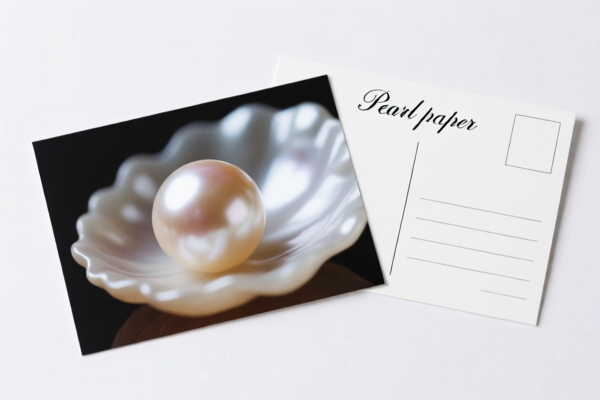
AI Analysis
📄 Pearl Paper (Coated Paper & Paperboard)
🌐 HS Code Reference & Customs Clearance Guide | 2026 Latest Tariff Analysis | Professional Compliance Strategy
📌 I. Product Definition: What is "Pearl Paper"?
"Pearl Paper" is not a standalone Harmonized System (HS) code but a trade term describing paper, paperboard, cellulose wadding, or webs of cellulose fibers that have been coated, impregnated, covered, surface-colored, surface-decorated, or printed. It typically refers to paper with a pearlescent or glossy finish, often used for high-end packaging, labels, or decorative applications.
In international trade, these goods fall under Heading 4811, which covers paper treated in various ways, provided they are not goods of heading 4803 (newsprint), 4809 (carbon copying paper), or 4810 (coated paper of a kind used for writing, printing, etc., in rolls/sheets).
⚠️ Key Distinction:
- If the paper is plain or uncoated (except for standard sizing), it may fall under different headings.
- If it is coated/impregnated/decorated and meets size/weight criteria, it falls under 4811.
- Critical Factor: The basis weight (grams per square meter, g/m²) is the primary determinant for classification within 4811.90.
📦 II. HS Code Classification Details (2026 Latest Tariff)
Based on the provided data, "Pearl Paper" is classified under HS Code 4811.90 with two specific sub-categories depending on its weight.
| HS Code | Product Description | Key Criteria | Application Scenario |
|---|---|---|---|
4811.90.40.90 |
Other paper, paperboard, cellulose wadding... in strips/rolls >15cm OR sheets (one side >36cm, other >15cm): Weighing not over 15 g/m² | Weight ≤ 15 g/m² | Ultra-thin decorative films, lightweight labels, thin gift wrapping |
4811.90.60.10 |
Other paper, paperboard, cellulose wadding... in strips/rolls >15cm OR sheets (one side >36cm, other >15cm): Weighing over 15 g/m² but not over 30 g/m² | 15 g/m² < Weight ≤ 30 g/m² | Tissue papers, thin cardboard, standard decorative pearl paper for packaging |
🔍 Important Notes:
- Both codes apply to goods in rolls (width >15 cm) or rectangular sheets (dimensions as specified).
- The term "Pearl Paper" is a commercial description; customs requires the technical specification (especially basis weight) for accurate classification.
- Goods of heading 4803, 4809, or 4810 are explicitly excluded.
💰 III. 2026 Tariff Rate Breakdown (Detailed Tax Policy)
✅ Applicable Country: United States (US)
✅ Origin: China (CN)
✅ Effective Date: Current rates apply as per latest trade data.
🎯 1. HS Code 4811.90.40.90
(Paper weighing not over 15 g/m²)
| Item | Detail |
|---|---|
| Base Tariff | 0.0% |
| Additional Tariff (Section 301) | 25.0% |
| Total Tax Rate | 25.0% |
| Tax Calculation | CIF Value × 25% |
| De Minimis Exemption | ❌ Not Applicable (Usually, Section 301 goods are excluded from de minimis if value exceeds threshold, but note: Section 301 tariffs generally apply regardless of de minimis for most commercial shipments; however, strictly speaking, de minimis ($800) may still apply if not explicitly blocked, but Section 301 tariffs are levied). |
| Legal Basis | HTSUS 4811.90.40.90 + USITC Footnote for Section 301 (China) |
📌 Explanation:
- The base MFN tariff is 0%.
- A 25% additional tariff applies due to Section 301 trade actions against China.
- Total Cost Impact: 25% of the landed value.
🎯 2. HS Code 4811.90.60.10
(Paper weighing over 15 g/m² but not over 30 g/m²; Tissue papers having basis weight not exceeding 29 g/m²)
| Item | Detail |
|---|---|
| Base Tariff | 0.0% |
| Additional Tariff (Section 301) | 25.0% |
| Total Tax Rate | 25.0% |
| Tax Calculation | CIF Value × 25% |
| De Minimis Exemption | ❌ Not Applicable |
| Legal Basis | HTSUS 4811.90.60.10 + USITC Footnote for Section 301 (China) |
📌 Explanation:
- Identical tariff structure to the sub-15g/m² category.
- Specifically mentions "Tissue papers" in the description, but applies to any paper meeting the weight and coating criteria.
🛠️ IV. Customs Clearance Practical Advice
✅ 1. Required Documentation
| Document | Required | Purpose |
|---|---|---|
| Commercial Invoice | ✔️ | Must clearly state: "Pearl Paper, Coated/Decorated, Weight: XX g/m²" |
| Packing List | ✔️ | Detail dimensions (width/length) and quantity |
| Product Specification Sheet | ✔️ | Crucial: Must include basis weight (g/m²), coating type, and material composition |
| Bill of Lading/Air Waybill | ✔️ | Standard shipping document |
| Certificate of Origin | ✔️ | To prove Chinese origin (subject to Section 301 tariffs) |
📌 Tip: If the paper is imported from a country other than China, Section 301 tariffs do not apply. The total tariff would be 0%. Ensure accurate origin declaration!
✅ 2. Declaration Best Practices
| Scenario | Correct Declaration | Risk if Incorrect |
|---|---|---|
| Weight ≤ 15 g/m² | HS Code: 4811.90.40.90 |
Misclassification may lead to penalties or audit |
| 15 g/m² < Weight ≤ 30 g/m² | HS Code: 4811.90.60.10 |
Misclassification may lead to penalties or audit |
| Weight > 30 g/m² | Not covered in this data | Must find correct HTSUS code (likely higher duty) |
| Sides ≤ 36cm/15cm | Not covered in this data | May fall under different subheadings (e.g., 4811.60) |
🔥 Golden Rule:
"Specify the Weight! Specify the Dimensions!"
Customs will reject vague descriptions like "Decorative Paper." You must provide:
- Material: Cellulose wadding/Paper
- Treatment: Coated/Decorated
- Weight: e.g., "20 g/m²"
- Form: Roll, 18 cm wide
✅ 3. Special Cases & Warnings
| Situation | Advice |
|---|---|
| Mixed Weights in One Shipment | Declare separately! Do not combine 10 g/m² and 25 g/m² paper in one line item. Use separate HTS codes. |
| Non-Chinese Origin | If sourced from Vietnam, India, etc., Section 301 25% tariff is eliminated. Total tax = 0%. Verify origin carefully. |
| Samples (< $800) | De minimis rules may apply, but Section 301 tariffs are generally collected even on small shipments if not properly exempted. Consult a broker. |
| Plastic-Coated Paper | If heavily plastic-coated, it might be classified under Chapter 39 (Plastics). Ensure it qualifies as "paper" under Chapter 48. |
🌍 V. Global Market Comparison (2026)
| Country | HS Code | Tariff (China Origin) | Tariff (Non-China Origin) | Notes |
|---|---|---|---|---|
| 🇺🇸 USA | 4811.90.40.90 / 4811.90.60.10 |
25% (Base 0% + 301) | 0% | Section 301 is the key differentiator |
| 🇨🇳 China | 4811.90.40.90 / 4811.90.60.10 |
~10-15% | Varies | Import duty into China |
| 🇪🇺 EU | 4811.90 |
6.5% | Varies | No Section 301 equivalent; standard WTO rates |
| 🇬🇧 UK | 4811.90 |
6.5% | Varies | Post-Brexit, similar to EU |
📌 Conclusion:
- US Imports from China: Expect 25% duty. Factor this into your pricing.
- Supply Chain Strategy: Consider sourcing from Vietnam, Thailand, or India to avoid the 25% Section 301 tariff, provided quality and lead times allow.
📌 VI. Common Mistakes & Pitfalls
❌ Mistake 1: Declaring "Pearl Paper" without specifying weight.
👉 Result: Customs may classify it under the highest applicable duty or request detailed info, causing delays.
❌ Mistake 2: Assuming all coated paper is duty-free.
👉 Result: Ignorance of Section 301 tariffs leads to unexpected 25% charges.
❌ Mistake 3: Mixing sheets and rolls in one declaration without clear distinction.
👉 Result: Incorrect HTS code assignment if dimensions/widths are ambiguous.
❌ Mistake 4: Overlooking the 36cm/15cm size threshold.
👉 Result: Small sheets (<36cm x 15cm) may fall under different subheadings with different tariffs.
✅ Correct Approach:
"Coated Decorative Paper, Pearl Finish, Basis Weight: 22 g/m², in Rolls, 20 cm Width, Origin: China"
HS Code:4811.90.60.10
Duty: 25%
🎯 VII. Conclusion: Smart Classification, Lower Costs
🎯 Key Takeaway:
"Weight is King, Dimensions are Queen, Origin is the Wildcard."
- ≤15 g/m² →4811.90.40.90→ 25%
- 15-30 g/m² →4811.90.60.10→ 25%
- Non-China Origin → 0%
📌 Pro Tip:
If you are importing large volumes, apply for an Advance Ruling from US Customs and Border Protection (CBP) to lock in the classification and avoid post-import audits.
Consider supply chain diversification to mitigate the 25% Section 301 tariff impact.
📣 Immediate Action:
📞 Contact your customs broker with the exact basis weight and material composition.
📄 Ensure your invoice and packing list match the HS Code description perfectly.
🚀 Clear your Pearl Paper through customs smoothly and cost-effectively!
✨ Professional Clearance, Precise Classification!
💼 Every gram counts – especially in tariffs!
Customer Reviews
About HS Code Classification
The Harmonized System (HS) is an internationally standardized nomenclature developed by the World Customs Organization (WCO) to classify traded products. Over 200 countries use the HS system as the basis for customs tariffs, trade statistics, and import/export regulations.
Each HS code follows a hierarchical structure:
- Chapter (2 digits) — Broad category of goods (e.g., Chapter 84: Machinery and Mechanical Appliances)
- Heading (4 digits) — More specific grouping within the chapter
- Subheading (6 digits) — Internationally standardized breakdown, used by all WCO member countries
- National subdivisions (8-10 digits) — Country-specific extensions for further classification, such as US HTSUS 10-digit codes
Correct HS code classification is essential for smooth customs clearance, accurate duty payment, and compliance with trade regulations. Misclassification can lead to customs delays, overpayment of duties, or penalties.
When importing from CN to US, the applicable tariff rates may include:
- Most-Favored-Nation (MFN) rate — The standard duty rate applied to WTO members
- General rate — Applied to countries without trade agreements
- Trade remedy duties — Additional tariffs such as Section 301 (anti-dumping), Section 232 (national security), or countervailing duties
The information provided on this page is for reference purposes only. For official classification, please consult with your local customs authority or a licensed customs broker.