peeled eucalyptus bark
CN → US| HS Code | Tariff Rate | Origin | Destination | Doc |
|---|---|---|---|---|
| 4407190093 | 35.0% | CN | US | Official Doc |
| 4401490090 | 35.0% | CN | US | Official Doc |
| 4401394290 | 35.0% | CN | US | Official Doc |
| 4407290296 | 35.0% | CN | US | Official Doc |
| 4403980095 | 35.0% | CN | US | Official Doc |
Product Images

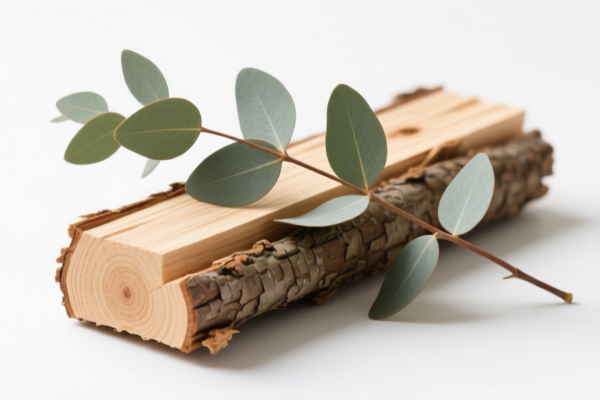
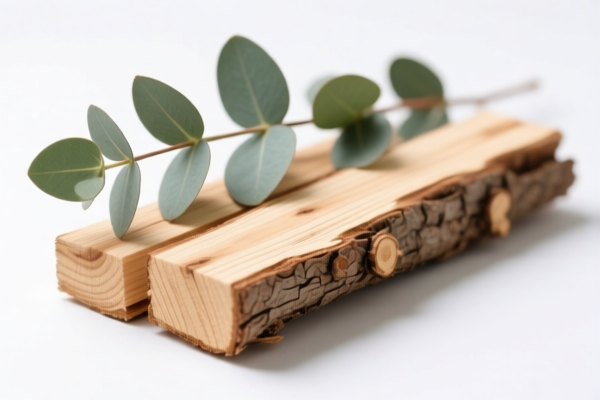
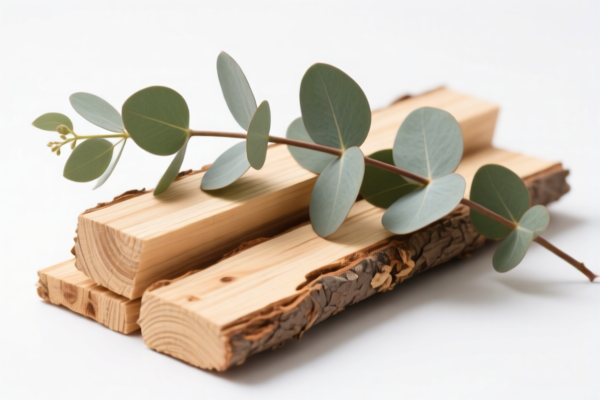
AI Analysis
🌳 Peeled Eucalyptus Bark (Industrial Wood & Fuel Applications)
🌐 HS Code Reference & Customs Clearance Guide | 2026 Latest Tariff Analysis | Strategic Entry Strategies for Eucalyptus
📌 I. Product Definition & Classification: What Exactly Is "Peeled Eucalyptus Bark"?
Peeled Eucalyptus Bark is a versatile raw material derived from Eucalyptus trees, primarily used in industrial processing, biomass energy, and wood products manufacturing. In international trade, its classification depends heavily on its physical state and intended use:
- Sawn/Lumber Form (Primary Wood Products): Processed into logs, planks, or matched pieces for furniture, flooring, or construction.
- Fuel/Biomass Form: Intended for combustion, power generation, or heating.
- Waste/Scrap Form: Residues, chips, or shavings resulting from primary processing.
- Catch-All/Fallback: Raw logs or semi-processed timber that doesn't fit strict fuel or waste definitions.
⚠️ Key Distinction:
- If the wood is sawed or chipped for structural/industrial use →归类 to Chapter 44 (Wood and Wood Articles).
- If the wood is intended for burning →归类 to HS 4401 (Fuelwood).
- If it is scrap/waste →归类 to HS 4401.39 (Wood Waste).
- Do not confuse with "Eucalyptus Essential Oil" (HS 3301) or "Eucalyptus Leaves" (HS 1211).
📦 II. HS Code Classification Details (2026 Latest Tariff Authority Cross-Reference)
Based on the provided data, here are the specific HS Codes for Peeled Eucalyptus Bark under US Customs regulations, including all applicable surcharges.
| HS Code | Product Description | Application Scenario | Primary Category |
|---|---|---|---|
4407.19.00.93 |
Peeled Eucalyptus Wood, Primary Form (Matched/Sorted) | Structural lumber, matching wood, industrial veneer bases | ✅ Sawn/Matched Wood |
4401.49.00.90 |
Peeled Eucalyptus Wood, Fuel Category | Biomass fuel, boiler fuel, heating purposes | ✅ Fuelwood |
4401.39.42.90 |
Peeled Eucalyptus Wood, Waste/Scrap Category | Wood chips, shavings, residues from sawmills | ✅ Wood Waste |
4407.29.02.96 |
Peeled Eucalyptus Wood, Tropical Wood Fallback | Raw logs or semi-processed tropical timber not fitting specific sub-headings | ✅ Tropical Timber (Fallback) |
4403.98.00.95 |
Peeled Eucalyptus Wood, Roughly Hewn/Primary Sawn | Unprocessed or roughly cut logs, raw timber state | ✅ Rough Sawn Wood |
🔍 Critical Note:
- All five HS Codes listed above carry the SAME tax structure for Chinese-origin goods entering the US.
- The distinction lies in Customs Verification: You must prove the end-use or physical form matches the description.
- Misclassification Risk: Declaring waste as fuel or lumber as waste can lead to audits, penalties, or delays.
💰 III. 2026 Latest Tariff Rate Breakdown (Including Additional Duties & Policy Surcharges)
✅ Applicable Country: United States (US)
✅ Country of Origin: China (CN)
✅ Effective Date: Post-2025 (Current Trade War Framework)
🎯 Universal Tax Structure for All Listed HS Codes
| Item | Content |
|---|---|
| Base Tariff Rate | 0.0% (Most Favored Nation rate for these sub-headings) |
| Section 301 Additional Duty | +25.0% (Imposed on Chinese goods under US Trade Act Section 301) |
| Section 122 Tariff (IEEPA) | +10.0% (Specific surcharge for Chinese eucalyptus/wood products) |
| Total Effective Tariff | 35.0% |
| Tax Calculation | CIF Value × 35% |
| De Minimis Eligibility | ❌ NO (These goods are not eligible for $800 de minimis exemption; they are subject to full scrutiny) |
| Legal Authority Path | USITC:4407/4401 → Section 301: Footnote 9903.88 → IEEPA: Section 122 Specific List |
📌 Explanation:
- "Base 0%": Eucalyptus wood products often have low base MFN rates due to global availability.
- "301 Duty 25%": The standard tariff on "Wood and Articles of Wood" from China.
- "122 Clause 10%": A specific additional levy targeting certain Chinese wood products, notably eucalyptus, to protect domestic timber industries.
- Total 35%: This is a high barrier to entry. Profit margins must account for this significant cost.
🛠️ IV. Customs Clearance Practical Advice (Pitfall Avoidance Guide)
✅ 1. Documentation Checklist (Mandatory)
| Document | Required | Explanation |
|---|---|---|
| ✅ Commercial Invoice | ✔️ | Must clearly state: "Peeled Eucalyptus Bark," HS Code, Country of Origin, and Value. |
| ✅ Packing List | ✔️ | Detail net/gross weight, number of packages, and dimensions. |
| ✅ Phytosanitary Certificate | ✔️ | CRITICAL. Issued by Chinese customs/plant quarantine. Must confirm pest-free status. |
| ✅ Fumigation Certificate | ✔️ | Required if wood is not treated. Must meet ISPM 15 standards (if shipped as logs/lumber). |
| ✅ Bill of Lading/Air Waybill | ✔️ | Consistent with invoice and packing list. |
| ✅ End-Use Declaration | ✔️ | Statement confirming whether the wood is for fuel, waste, or lumber (determines HS Code). |
✅ 2. Declaration Strategy (Key Mnemonics)
🔥 "State Matters, Use Defines, Certificates Clear!"
| Scenario | Correct Declaration | Common Mistake |
|---|---|---|
| For Boiler Fuel | 4401.49.00.90 (Fuelwood) |
Mislabeling as "Lumber" to avoid fuel regulations |
| For Sawmill Residue | 4401.39.42.90 (Wood Waste) |
Declaring as "Primary Wood" → Higher scrutiny |
| For Furniture Parts | 4407.19.00.93 (Matched Wood) |
Vague description "Wood pieces" → Delay |
| Raw Logs | 4403.98.00.95 or 4407.29.02.96 |
Failure to specify "Peeled" vs "Unpeeled" |
✅ 3. Special Handling Cases
| Situation | Recommendation |
|---|---|
| Mixed Consignments | If a shipment contains both fuelwood and lumber, split the declaration. Mixing HS codes can lead to full-container audits. |
| Bark vs. Wood | Ensure the description specifies "Peeled." If bark is still attached in large quantities, it may be classified as "Roundwood" or "Fuel," changing the HS code slightly. |
| Pest Control | Eucalyptus is prone to pests (e.g., borers). Phytosanitary certificates are non-negotiable. Without them, goods will be rejected or destroyed. |
| Valuation Disputes | Customs may challenge CIF value. Provide proof of purchase (contracts, bank slips) to justify the declared value. |
🌍 V. Global Market Comparison (2026 Latest)
| Country/Region | Recommended HS Code | Total Tariff (China Origin) | Key Requirements | Notes |
|---|---|---|---|---|
| 🇺🇸 USA | 4407.19.00.93 / 4401.49.00.90 etc. |
35% (0% Base + 25% 301 + 10% 122) | Phytosanitary + Fumigation | Highest duty. High compliance risk. |
| 🇨🇳 China | 4401 / 4407 series |
0% - 5% (Import Duty) | CIQ Inspection | Major importer of raw wood. |
| 🇪🇺 EU | 4401 / 4407 |
0% - 6.5% | EUTR (EU Timber Regulation) | Strict legality proof required. No US-style 301 duties. |
| 🇦🇺 Australia | 4401 / 4407 |
5% | Biosecurity Clearance | Extremely strict quarantine for wood. |
| 🇯🇵 Japan | 4401 / 4407 |
0% - 6% | IPPC Mark | Standard phytosanitary rules. |
📌 Conclusion:
- The US market is the most expensive due to the 35% effective tariff.
- Phytosanitary compliance is the biggest hurdle globally, but especially for the US and Australia.
- Strategy: For US imports, calculate if the 35% tariff erodes profit. Consider transshipment (if rules of origin allow) or value-added processing abroad to change HS classification.
📌 VI. Common Errors & Pitfall Guide (Lessons Learned)
❌ Mistake 1: Declaring "Eucalyptus Logs" as "Lumber" without processing.
👉 Consequence: Customs will reclassify to 4403 (Treated/Rough Wood) or 4407 (Sawn), but if pest-free proof is missing, seizure.
❌ Mistake 2: Omitting "Peeled" in the description.
👉 Consequence: Unclear classification. Customs may apply the highest possible duty rate for "Unspecified Wood."
❌ Mistake 3: Ignoring the 122-Clause 10% Surcharge.
👉 Consequence: Underpayment of duties. CBP will demand back taxes + interest + penalties.
❌ Mistake 4: Using "Wood Waste" for large, usable logs.
👉 Consequence: Fraudulent classification. Heavy fines for misdeclaration.
✅ Correct Practice:
"Peeled Eucalyptus Logs, Sawn to Rough Dimensions, For Furniture Manufacturing, HS 4407.19.00.93, Phytosanitary Cert. No. XYZ, Fumigated per ISPM 15"
🎯 VII. Conclusion: Professional Classification, Cost Control, and Compliance
🎯 Remember the Rules:
🔹 "State & Use Define Code, 35% is the US Price, Phyto Cert is King, No Cert = No Entry!"
🔹 "HS Code Dictates Duty, 0% Base is a Trap, 25%+10% are Real, Plan Your Margin!"
📌 Pro Tip:
- If you are importing large volumes, consider applying for an Exclusion under Section 301 (if available for specific wood products) or Advance Rulings from CBP to lock in the HS Code.
- Always engage a licensed customs broker familiar with wood products to handle the Phytosanitary and Fumigation documentation.
📣 Immediate Action Required:
📞 Contact a customs broker + Prepare Phyto Certificate + Verify HS Code with CBP
🚀 Ensure smooth clearance, avoid delays, and protect your margins!
✨ Professional Clearance Starts with Accurate Classification!
💼 Your every dollar saved is the result of precise declaration!
Customer Reviews
About HS Code Classification
The Harmonized System (HS) is an internationally standardized nomenclature developed by the World Customs Organization (WCO) to classify traded products. Over 200 countries use the HS system as the basis for customs tariffs, trade statistics, and import/export regulations.
Each HS code follows a hierarchical structure:
- Chapter (2 digits) — Broad category of goods (e.g., Chapter 84: Machinery and Mechanical Appliances)
- Heading (4 digits) — More specific grouping within the chapter
- Subheading (6 digits) — Internationally standardized breakdown, used by all WCO member countries
- National subdivisions (8-10 digits) — Country-specific extensions for further classification, such as US HTSUS 10-digit codes
Correct HS code classification is essential for smooth customs clearance, accurate duty payment, and compliance with trade regulations. Misclassification can lead to customs delays, overpayment of duties, or penalties.
When importing from CN to US, the applicable tariff rates may include:
- Most-Favored-Nation (MFN) rate — The standard duty rate applied to WTO members
- General rate — Applied to countries without trade agreements
- Trade remedy duties — Additional tariffs such as Section 301 (anti-dumping), Section 232 (national security), or countervailing duties
The information provided on this page is for reference purposes only. For official classification, please consult with your local customs authority or a licensed customs broker.