pen without refill
CN → US| HS Code | Tariff Rate | Origin | Destination | Doc |
|---|---|---|---|---|
| 9608994000 | 17.5% | CN | US | Official Doc |
| 3926901000 | 20.9% | CN | US | Official Doc |
| 9608996000 | 17.5% | CN | US | Official Doc |
| 3926100000 | 15.3% | CN | US | Official Doc |
Product Images
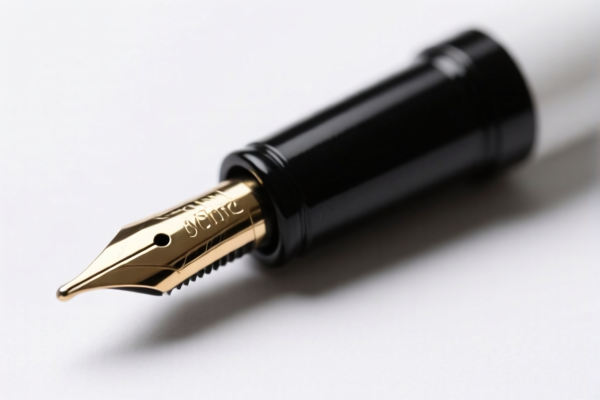
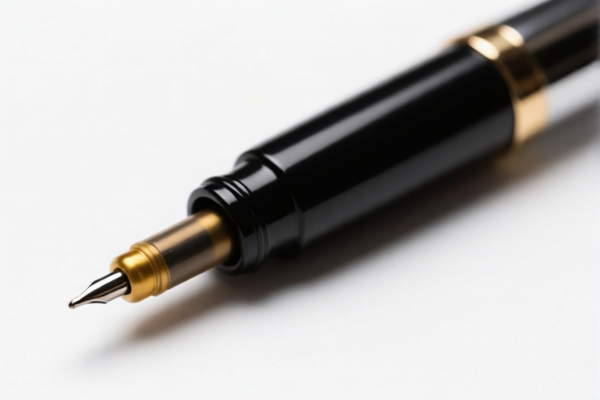
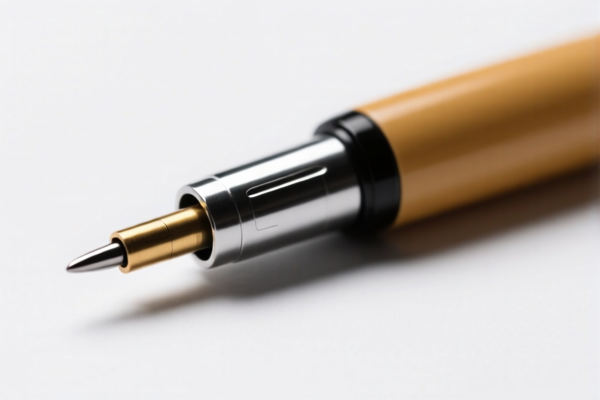
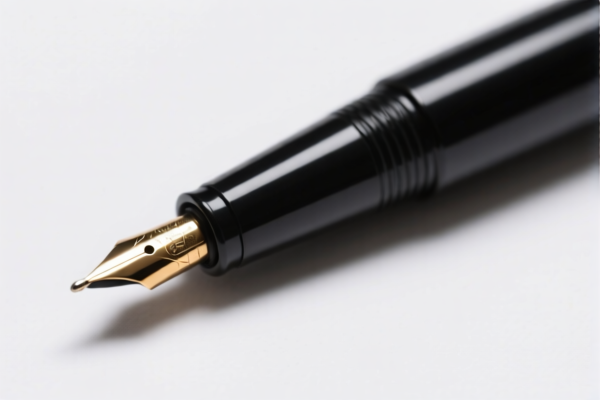
AI Analysis
🖊️ Pen Without Refill (Unfilled Pen Body/Shell)
🌐 HS Code Reference & Customs Clearance Guide | 2026 Latest Tariff Analysis | Professional Clearance Strategy
📌 I. Product Definition & Classification: Do You Really Understand an "Empty Pen"?
A pen without refill (often referred to as a pen body, shell, or casing) is a critical component in the writing instrument industry. In international trade, its classification depends heavily on whether it is viewed strictly as a part of a writing instrument or as a plastic article/accessory.
Key Distinction: - As a Pen Part: The pen body is integral to the function of the pen, housing the ink reservoir and mechanism. → Classified under Chapter 96. - As a Plastic Accessory: If the classification focuses solely on the material (plastic) and it is deemed a generic "article" or "accessory" rather than a specific "part," it may fall under Chapter 39.
⚠️ Critical Note:
- No Ink Inside: The absence of ink does not change the fundamental nature of the item as a "pen part."
- Material vs. Function: Customs authorities often debate whether the primary characteristic is the function (writing instrument part) or the material (plastic). This leads to different HS Codes and tax rates.
📦 II. HS Code Classification Details (2026 Latest Tariff Authority Comparison)
Based on the provided data, there are four possible classifications. Here is the detailed breakdown:
| HS Code | Product Description | Applicable Scenario | Reason for Classification | Total Tax Rate |
|---|---|---|---|---|
9608.99.40.00 |
Pen Part (Plastic/Metal) | Pen body without ink, fits parts of 9608.10/9608.30 products | Classified as a part of writing instruments. No material conflict. | 17.5% |
9608.99.60.00 |
Pen Part (General) | Pen body fits the category of pen parts in classification explanations | Fits the functional definition of "pen parts." Lack of ink does not affect attribute judgment. | 17.5% |
3926.90.10.00 |
Plastic Article Accessory | Pen body (without ink) considered a plastic accessory or article | Classified as an accessory to plastic articles or "other plastic articles" under Chapter 39. | 20.9% |
3926.10.00.00 |
Plastic Office Supplies | Pen body made of plastic, fits office supplies material attributes | Classified as office supplies made of plastic under Chapter 39. | 15.3% |
🔍 Key Observation:
- Chapter 96 (9608.xxxx) is generally preferred if the item is clearly identifiable as a part of a writing instrument.
- Chapter 39 (3926.xxxx) is used if the classification focuses on the plastic material or if the item is considered a generic accessory or office supply.
- Tax Rate Variation: The total tax rate ranges from 15.3% to 20.9%, depending on the chosen HS Code.
💰 III. 2026 Latest Tariff Rate Details (Including Additional Taxes & Policies)
✅ Applicable Country: United States (US)
✅ Origin: China (CN)
✅ Effective Time: Current tariffs apply (Note: Data reflects base + Section 301 + Section 302/122 tariffs)
🎯 1. 9608.99.40.00 & 9608.99.60.00 —— Pen Parts (Chapter 96)
| Item | Details |
|---|---|
| Base Duty Rate | 0.0% (ad valorem) |
| Section 301 Additional Duty | 7.5% |
| Section 302 (122 Clause) Duty | 10% |
| Total Tariff Rate | 17.5% |
| Tax Calculation | CIF Value × 17.5% |
| De Minimis Exemption | ❌ Not Applicable (High tariff rate usually excludes de minimis benefits for this category) |
📌 Explanation:
- The 0% base duty is standard for many pen parts under Chapter 96.
- The 7.5% is the standard Section 301 additional tariff for many Chinese goods.
- The 10% is the "122 Clause" tariff (likely referring to specific retaliatory or trade enforcement duties).
- Total: 17.5%. This is a moderate-to-high tariff compared to base rates.
🎯 2. 3926.90.10.00 —— Plastic Accessories/Articles (Chapter 39)
| Item | Details |
|---|---|
| Base Duty Rate | 3.4% |
| Section 301 Additional Duty | 7.5% |
| Section 302 (122 Clause) Duty | 10% |
| Total Tariff Rate | 20.9% |
| Tax Calculation | CIF Value × 20.9% |
| De Minimis Exemption | ❌ Not Applicable |
📌 Explanation:
- Higher base duty (3.4%) leads to a higher total rate.
- Total: 20.9%. This is the highest tax option among the given codes.
- Recommended only if Chapter 96 classification is rejected by customs.
🎯 3. 3926.10.00.00 —— Plastic Office Supplies (Chapter 39)
| Item | Details |
|---|---|
| Base Duty Rate | 5.3% |
| Section 301 Additional Duty | 0.0% (Note: Data shows 0.0% for this specific subheading) |
| Section 302 (122 Clause) Duty | 10% |
| Total Tariff Rate | 15.3% |
| Tax Calculation | CIF Value × 15.3% |
| De Minimis Exemption | ❌ Not Applicable |
📌 Explanation:
- Lowest Total Tax Rate at 15.3%.
- Why? The Section 301 additional duty is listed as 0.0% for this specific subheading (3926.10.00.00).
- Caveat: This classification relies on the pen body being deemed "office supplies" rather than a "pen part." Customs may challenge this if the item is clearly a pen component.
🛠️ IV. Customs Clearance Practical Advice (Real-World Pitfall Avoidance)
✅ 1. Recommended HS Code Selection Strategy
| Priority | HS Code | Total Tax | Reason for Selection |
|---|---|---|---|
| 🥇 Best for Cost | 3926.10.00.00 |
15.3% | Lowest total tax. If you can justify "plastic office supply," choose this. |
| 🥈 Best for Accuracy | 9608.99.40.00 / 9608.99.60.00 |
17.5% | Most technically accurate for "pen parts." Lower risk of customs dispute. |
| 🥉 Avoid | 3926.90.10.00 |
20.9% | Highest tax. Only use if other classifications are rejected. |
💡 Pro Tip:
- If the pen body is custom-molded for a specific pen model (e.g., with a clip, grip, or thread for refill), Chapter 96 is safer.
- If the pen body is generic (e.g., plain tube used for multiple pen types), Chapter 39 might be more acceptable.
✅ 2. Required Documentation for Customs
| Document | Mandatory? | Description |
|---|---|---|
| ✅ Product Specifications | ✔️ | Detailed description: "Pen Body, Plastic, No Ink, For Pen Model XYZ" |
| ✅ Product Photos | ✔️ | Clear images showing no ink, no writing tip, no refill. |
| ✅ Bill of Lading/Invoice | ✔️ | Clearly state "Pen Body (Unfilled)" or "Pen Shell." Do NOT write "Pen" alone. |
| ✅ Material Declaration | ✔️ | Confirm material is plastic (e.g., ABS, PP, Acrylic). |
| ✅ Origin Certificate | ✔️ | To verify China origin for Section 301/302 applicability. |
✅ 3. Declaration Tips (Key Phrases to Use)
🔥 “Declare as Part, Not as Pen! No Ink, Just Shell!”
| Scenario | Correct Declaration | Incorrect Declaration | Risk |
|---|---|---|---|
| Empty Pen Body | Pen Body (Unfilled), Plastic Part, HS 9608.99.40.00 |
Pen, Plastic, HS 9608.10.00.00 |
Misclassification, penalty, higher tax |
| Generic Plastic Tube | Plastic Accessory for Office Supplies, HS 3926.10.00.00 |
Plastic Tube, General Use |
Unclear purpose, customs query |
| Pen with Ink | Ballpoint Pen, Filled, HS 9608.10.00.00 |
Pen Body |
Major violation, confiscation |
⚠️ Critical Warning:
- Never declare "Pen" if there is no ink. It will be flagged as missing components or misdeclared.
- Always specify "Unfilled" or "Without Refill" in the commercial invoice and packing list.
✅ 4. Special Considerations
| Situation | Advice |
|---|---|
| OEM Custom Pen Bodies | Provide design drawings to prove they are specific "parts" of a pen → Supports Chapter 96. |
| Bulk Generic Pen Shells | Use "Plastic Office Supplies" → Supports Chapter 39, possibly lower tax. |
| Mixed Containers | If shipping pens with ink and empty bodies together, separate declarations are required. Do not mix. |
| Pre-Ruling | Apply for an Advance Ruling from US Customs (CBP) if the volume is high. This locks in the HS Code and tax rate. |
🌍 V. Global Market Comparison (2026)
| Country/Region | Recommended HS Code | Total Tax (China Origin) | Notes |
|---|---|---|---|
| 🇺🇸 USA | 9608.99.40.00 / 3926.10.00.00 |
15.3% - 17.5% | High Section 301/302 tariffs apply. |
| 🇨🇳 China | 9608.99 |
~5-10% | Lower base tariffs. |
| 🇪🇺 EU | 9608.99 |
~2-4% | No Section 301/302. |
| 🇬🇧 UK | 9608.99 |
~2-4% | Post-Brexit tariffs similar to EU. |
| 🇯🇵 Japan | 9608.99 |
~3-5% | Favorable for pen parts. |
📌 Conclusion:
- USA is the most expensive market for Chinese pen parts due to Section 301 and 302 tariffs.
- Optimize for 15.3% if possible, but ensure compliance with "office supply" definition.
- 17.5% is the safer, more accurate rate for "pen parts."
📌 VI. Common Mistakes & Pitfalls (Lessons Learned)
❌ Mistake 1: Declaring "Pen" when it's just a shell
👉 Consequence: Customs怀疑 (suspects) missing ink, fines, or delayed clearance.
✅ Fix: Always declare "Pen Body (Unfilled)" or "Pen Shell."
❌ Mistake 2: Ignoring the "122 Clause" (Section 302)
👉 Consequence: Unexpected 10% additional tax on top of 301.
✅ Fix: Calculate total tax as Base + 301 + 302.
❌ Mistake 3: Choosing the wrong HS Code for tax savings
👉 Consequence: If you choose 3926.10.00.00 (15.3%) but customs insists on 9608.99.40.00 (17.5%), you pay back taxes + penalties.
✅ Fix: Use Advance Ruling to confirm HS Code before shipping.
🎯 VII. Conclusion: Smart Classification, Lower Costs!
🎯 Remember the Formula:
🔹 "Unfilled = Part or Accessory"
🔹 "Chapter 96 = 17.5% (Accurate)"
🔹 "Chapter 39.10 = 15.3% (Lowest Risk)"
🔹 "Chapter 39.90 = 20.9% (Avoid)"🔹 "Declare 'Unfilled' clearly to avoid penalties!"
📌 Action Items:
1. Check Product Design: Is it a generic tube or a custom pen part?
2. Select HS Code: Prefer 3926.10.00.00 for cost, 9608.99.40.00 for accuracy.
3. Prepare Documentation: Clearly state "No Ink" and "Pen Body" on all shipping docs.
4. Consider Pre-Ruling: For large volumes, get an official HS Code ruling from CBP.
📣 Final Tip:
📞 Consult a Professional Customs Broker in the US before shipping.
🚀 Accurate classification saves time, money, and avoids customs headaches!
✨ Professional Clearance Starts with Precise Classification!
💼 Every penny in tariff costs should be calculated precisely!
Customer Reviews
About HS Code Classification
The Harmonized System (HS) is an internationally standardized nomenclature developed by the World Customs Organization (WCO) to classify traded products. Over 200 countries use the HS system as the basis for customs tariffs, trade statistics, and import/export regulations.
Each HS code follows a hierarchical structure:
- Chapter (2 digits) — Broad category of goods (e.g., Chapter 84: Machinery and Mechanical Appliances)
- Heading (4 digits) — More specific grouping within the chapter
- Subheading (6 digits) — Internationally standardized breakdown, used by all WCO member countries
- National subdivisions (8-10 digits) — Country-specific extensions for further classification, such as US HTSUS 10-digit codes
Correct HS code classification is essential for smooth customs clearance, accurate duty payment, and compliance with trade regulations. Misclassification can lead to customs delays, overpayment of duties, or penalties.
When importing from CN to US, the applicable tariff rates may include:
- Most-Favored-Nation (MFN) rate — The standard duty rate applied to WTO members
- General rate — Applied to countries without trade agreements
- Trade remedy duties — Additional tariffs such as Section 301 (anti-dumping), Section 232 (national security), or countervailing duties
The information provided on this page is for reference purposes only. For official classification, please consult with your local customs authority or a licensed customs broker.