pencil lead
CN → US| HS Code | Tariff Rate | Origin | Destination | Doc |
|---|---|---|---|---|
| 9609204000 | 17.5% | CN | US | Official Doc |
| 9609202000 | 17.5% | CN | US | Official Doc |
| 3801105090 | 35.0% | CN | US | Official Doc |
| 6815992000 | 35.0% | CN | US | Official Doc |
Product Images
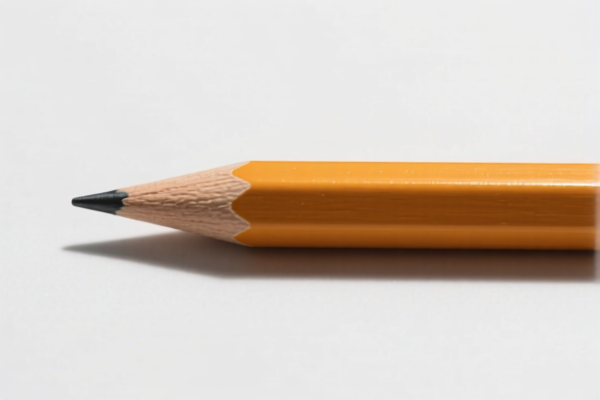
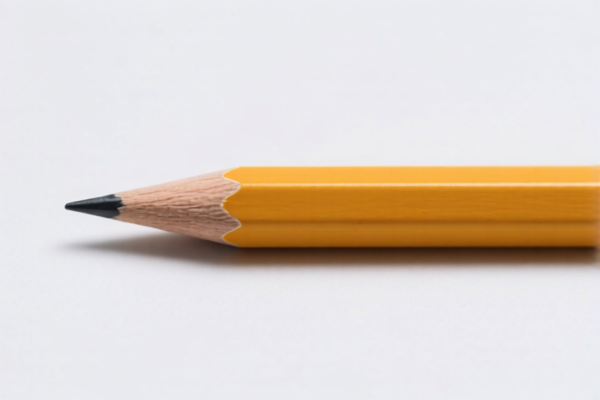
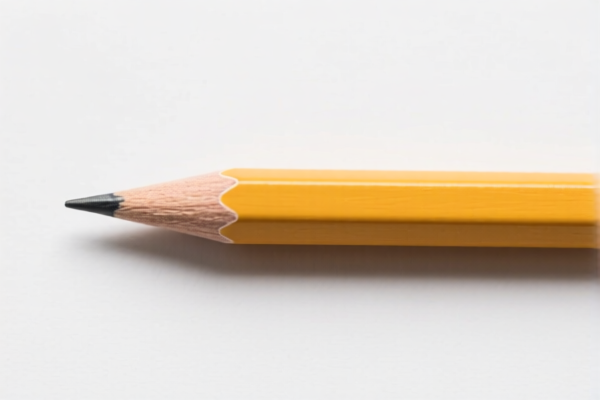
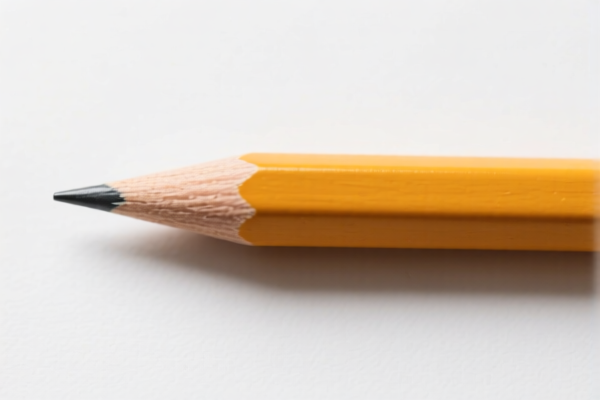
AI Analysis
✏️ Pencil Lead (Pencil Cores/Graphite Leads)
🌐 HS Code Reference & Customs Clearance Guide | 2026 Latest Tariff Analysis | Professional Customs Strategy
📌 Part 1: Product Definition & Classification: Do You Truly Understand "Pencil Lead"?
In international trade, "Pencil Lead" is often a misnomer. Most modern "pencil leads" are not made of lead metal but of graphite mixed with clay. However, even traditional graphite leads are classified under specific headings depending on their form and intended use.
There are two primary categories for customs purposes: 1. Graphite Cores (Graphite Pencils): Specifically designed for mechanical pencils or standard wooden pencils, characterized by the specific shape (cylindrical rods) and packaging as "leads." 2. Raw Graphite Products: Loose graphite powder, blocks, or industrial graphite materials not specifically configured as pencil leads.
⚠️ Key Distinction Point:
- If the product is shaped specifically as a pencil core (cylindrical rod), intended for writing instruments → Classify under Chapter 96 (Miscellaneous Manufactured Articles) specifically 9609 (Pencil leads, crayons, etc.).
- If the product is raw graphite material (powder, blocks, flakes) used for industrial purposes (e.g., lubricants, electrodes, battery materials) → Classify under Chapter 38 or Chapter 68.
📦 Part 2: HS Code Classification Details (Based on Provided Data)
Based on the provided dataset, here are the precise classifications for "Pencil Lead" and related graphite products.
| HS Code | Product Description | Applicable Scenario | Key Differentiator |
|---|---|---|---|
9609.20.40.00 |
Graphite Pencil Leads | Mechanical pencil refills, standard wooden pencil cores | Match Successful. Material is graphite; Use is specifically for pencil cores. |
9609.20.20.00 |
Pencil Leads (Graphite) | General pencil cores, traditional graphite leads | Consistent Form. Material is graphite (described as "lead" in common parlance); Use is for pencils. |
3801.10.50.90 |
Other Artificial Graphite Products | Industrial graphite, graphite blocks, non-pencil graphite items | No Conflict. Material is graphite, but use is "other artificial graphite," not for writing. |
6815.99.20.00 |
Stone Products (Graphite) | Processed mineral graphite, industrial stone-like graphite | No Conflict. Material is considered a mineral/stone form, processed for industrial use. |
🔍 Critical Reminder:
- Do NOT confuse pencil leads (9609) with raw graphite (3801/6815).
- If the item is packaged as pencil refills, it MUST go to9609.
- If the item is bulk graphite for industrial use, it goes to3801or6815.
💰 Part 3: 2026 Latest Tariff Rate Breakdown (Including Surtaxes & Policy Add-ons)
✅ Applicable Country: United States (US)
✅ Origin: China (CN)
✅ Effective Date: Ongoing (Based on current tariff structure)
🎯 1. 9609.20.40.00 —— Graphite Pencil Leads (Specifically Matched)
| Item | Detail |
|---|---|
| Base Tariff | 0.0% (Ad Valorem) |
| Section 301 Surtax | +7.5% (Additional Duty under Section 301) |
| Section 122 Duty | +10% (Specific 122 Clause Tariff) |
| Total Tariff Rate | 17.5% |
| Tax Calculation | CIF Value × 17.5% |
| De Minimis Exemption? | ❌ No (Not eligible for de minimis exemption under current enforcement for these specific codes) |
| Legal Basis Path | HTSUS:9609.20.40 → Section 301: 7.5% → Section 122: 10% |
📌 Explanation:
- This is the correct classification for commercial pencil leads.
- Despite the low base rate (0%), the 17.5% total duty significantly impacts cost.
- The Section 122 duty is a specific add-on that often catches importers off guard.
🎯 2. 9609.20.20.00 —— Pencil Leads (Graphite/Lead Form)
| Item | Detail |
|---|---|
| Base Tariff | 0.0% (Ad Valorem) |
| Section 301 Surtax | +7.5% (Additional Duty under Section 301) |
| Section 122 Duty | +10% (Specific 122 Clause Tariff) |
| Total Tariff Rate | 17.5% |
| Tax Calculation | CIF Value × 17.5% |
| De Minimis Exemption? | ❌ No |
| Legal Basis Path | HTSUS:9609.20.20 → Section 301: 7.5% → Section 122: 10% |
📌 Note:
- Tariff rate is identical to9609.20.40.00.
- Whether labeled as "Graphite" or "Lead" (chemically incorrect but common in trade), if it’s a pencil core, it falls here.
- Consistency is key: Do not switch codes arbitrarily to avoid scrutiny.
🎯 3. 3801.10.50.90 —— Other Artificial Graphite Products
| Item | Detail |
|---|---|
| Base Tariff | 0.0% (Ad Valorem) |
| Section 301 Surtax | +25.0% (Additional Duty under Section 301) |
| Section 122 Duty | +10% (Specific 122 Clause Tariff) |
| Total Tariff Rate | 35.0% |
| Tax Calculation | CIF Value × 35.0% |
| De Minimis Exemption? | ❌ No |
| Legal Basis Path | HTSUS:3801.10.50 → Section 301: 25.0% → Section 122: 10% |
📌 Warning:
- This code is NOT for pencil leads.
- It applies to industrial graphite.
- The tariff is double that of pencil leads. Misclassifying pencil leads here will result in overpayment; misclassifying industrial graphite as pencil leads will result in underpayment penalties.
🎯 4. 6815.99.20.00 —— Stone Products (Graphite)
| Item | Detail |
|---|---|
| Base Tariff | 0.0% (Ad Valorem) |
| Section 301 Surtax | +25.0% (Additional Duty under Section 301) |
| Section 122 Duty | +10% (Specific 122 Clause Tariff) |
| Total Tariff Rate | 35.0% |
| Tax Calculation | CIF Value × 35.0% |
| De Minimis Exemption? | ❌ No |
| Legal Basis Path | HTSUS:6815.99.20 → Section 301: 25.0% → Section 122: 10% |
📌 Warning:
- Similar to3801, this is for mineral/stone-based graphite products.
- High tariff risk if used incorrectly for writing instruments.
🛠️ Part 4: Customs Clearance Practical Advice (Battle-Tested Pitfall Guide)
✅ 1. Documentation Checklist (Non-Negotiable)
| Document | Required? | Explanation |
|---|---|---|
| ✅ Product Specification Sheet | ✔️ | Must specify: Material (Graphite/Clay), Diameter, Length, HB/B Scale, Intended Use (Pencil Refill). |
| ✅ Product Photos | ✔️ | Clear images of the leads in packaging showing "Pencil Lead" or "Mechanical Pencil Refill" labeling. |
| ✅ Commercial Invoice | ✔️ | Description must clearly state "Graphite Pencil Leads" or "Pencil Cores," NOT "Graphite Powder" or "Industrial Graphite." |
| ✅ Packing List | ✔️ | Detail net/gross weight, quantity of cores. |
| ✅ Origin Certificate (CO) | ✔️ | If claiming any potential exemptions (rare for China origin in this category), though generally China-origin graphite leads face 17.5%. |
✅ 2. Declaration Tips (Critical Mnemonics)
🔥 "Shape Determines Code, Use Dictates Tax!"
| Scenario | Correct HS Code | Incorrect Code | Consequence |
|---|---|---|---|
| Mechanical Pencil Refills | 9609.20.40.00 |
3801.10.50.90 |
Overpayment (17.5% vs 35%) |
| Wooden Pencil Cores | 9609.20.20.00 |
3801.10.50.90 |
Overpayment (17.5% vs 35%) |
| Bulk Graphite for Batteries | 3801.10.50.90 |
9609.20.40.00 |
Underpayment Penalty + Fines (17.5% vs 35%) |
| Graphite Blocks for Lubrication | 6815.99.20.00 |
9609.20.40.00 |
Underpayment Penalty + Fines (17.5% vs 35%) |
📌 Key Advice:
- Always declare exact form: "Cylindrical Graphite Cores" vs "Graphite Powder."
- Never use vague terms like "Graphite Product" without specifying use.
- If the product is packaged for retail as pencil refills, it MUST be9609.
✅ 3. Special Circumstances Handling
| Situation | Handling Advice |
|---|---|
| Mixed Shipments | If a container has both pencil leads and industrial graphite, must split declarations. Mixed declarations can lead to audits of the entire shipment. |
| Custom Branding | If packaging says "Art Supplies," ensure the HS code is still 9609 if the product is a pencil lead. |
| Sample Shipments | Even samples are subject to the same HS classification and tariffs. Do not declare as "Free of Value" to avoid tariff; customs values will be assigned. |
| Origin Labeling | Ensure "Made in China" is clearly visible on the product/packaging to avoid origin fraud allegations. |
🌍 Part 5: Global Market Comparison (2026 Latest)
| Country/Region | Recommended HS Code | Tariff (China Origin) | Certification Requirements | Notes |
|---|---|---|---|---|
| 🇺🇸 USA | 9609.20.40.00 |
17.5% | None specific for leads | High scrutiny on Section 122 compliance. |
| 🇨🇳 China | 9609.20.40.00 |
0% | None | Domestic trade has no tariff. |
| 🇪🇺 EU | 9609.20.90 |
0% | CE (if marketed as toy/accessory) | No Section 301/122 equivalent. |
| 🇬🇧 UK | 9609.20.90 |
0% | UKCA | Post-Brexit alignment with EU standards. |
| 🇯🇵 Japan | 9609.20.00 |
0% | PSE (if applicable) | Generally low tariffs on stationery. |
📌 Conclusion:
- The USA imposes significant tariffs (17.5%) on pencil leads due to Section 301 and Section 122.
- Other major markets (EU, UK, Japan, China) generally have 0% tariff for this item.
- Strategic Tip: For US-bound goods, consider sourcing pencil leads from non-China origins (e.g., Vietnam, Thailand) if feasible, to avoid the 17.5% surtax.
📌 Part 6: Common Errors & Pitfall Guide (Lessons Learned)
❌ Error 1: Declaring "Pencil Leads" as "Graphite Powder" to reduce perceived risk
👉 Consequence: Customs will inspect, find it's shaped as cores, reclassify to 9609 (17.5%) and issue penalty for misdeclaration.
❌ Error 2: Using 3801 for pencil leads to save money
👉 Consequence: Underpayment of 17.5% vs 35% is not the issue here, but 3801 is wrong code. If customs audits, they will assess 35% retroactively + interest + fines.
❌ Error 3: Ignoring Section 122 Duty
👉 Consequence: The 10% Section 122 duty is often overlooked in generic tariff calculators. Failing to account for it leads to cash flow surprises.
❌ Error 4: Vague Description "Graphite Items"
👉 Consequence: Customs officer uses Responsible Judgment (R2), likely assigning the highest duty code (3801 or 6815 at 35%) due to ambiguity.
✅ Correct Approach:
"Graphite Pencil Leads, Mechanical Pencil Refills, 0.7mm Diameter, HB Grade, Packaged in Retail Box, Model XYZ, Made in China"
🎯 Part 7: Conclusion: Precise Classification, Profit Protection!
🎯 Remember the Mnemonic:
🔹 "Pencil Lead = 9609 (17.5%),
🔹 "Industrial Graphite = 3801/6815 (35%),
🔹 "Wrong Code = Fine + Delay + Cost!"
📌 Pro Tip:
- For US Imports: Budget for 17.5% duty.
- For Non-US Imports: Check if 0% duty applies.
- Always keep product photos and spec sheets ready for customs inspection.
📣 Immediate Action:
📞 Consult a licensed customs broker to verify the exact formulation and packaging.
📋 Prepare a detailed Commercial Invoice with precise product descriptions.
🚀 Ensure your HS Code is9609.20.40.00or9609.20.20.00for pencil leads to avoid penalties.
✨ Professional Customs Clearance Starts with Accurate Classification!
💼 Every percentage point matters in global trade!
Customer Reviews
About HS Code Classification
The Harmonized System (HS) is an internationally standardized nomenclature developed by the World Customs Organization (WCO) to classify traded products. Over 200 countries use the HS system as the basis for customs tariffs, trade statistics, and import/export regulations.
Each HS code follows a hierarchical structure:
- Chapter (2 digits) — Broad category of goods (e.g., Chapter 84: Machinery and Mechanical Appliances)
- Heading (4 digits) — More specific grouping within the chapter
- Subheading (6 digits) — Internationally standardized breakdown, used by all WCO member countries
- National subdivisions (8-10 digits) — Country-specific extensions for further classification, such as US HTSUS 10-digit codes
Correct HS code classification is essential for smooth customs clearance, accurate duty payment, and compliance with trade regulations. Misclassification can lead to customs delays, overpayment of duties, or penalties.
When importing from CN to US, the applicable tariff rates may include:
- Most-Favored-Nation (MFN) rate — The standard duty rate applied to WTO members
- General rate — Applied to countries without trade agreements
- Trade remedy duties — Additional tariffs such as Section 301 (anti-dumping), Section 232 (national security), or countervailing duties
The information provided on this page is for reference purposes only. For official classification, please consult with your local customs authority or a licensed customs broker.