pendant
CN → US| HS Code | Tariff Rate | Origin | Destination | Doc |
|---|---|---|---|---|
| 7117909000 | 28.5% | CN | US | Official Doc |
| 7116201500 | 24.0% | CN | US | Official Doc |
| 7113195095 | 23.0% | CN | US | Official Doc |
| 7113195091 | 15.5% | CN | US | Official Doc |
| 7116200500 | 13.3% | CN | US | Official Doc |
Product Images
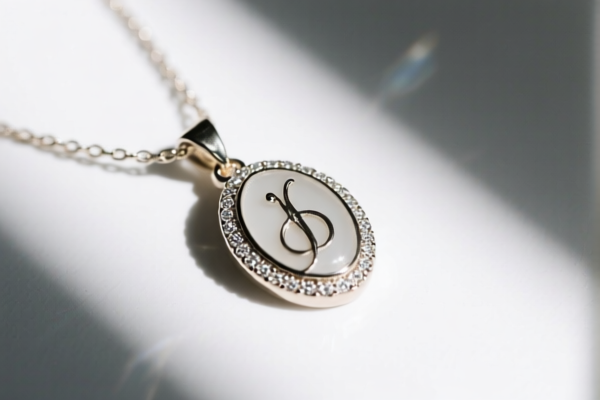
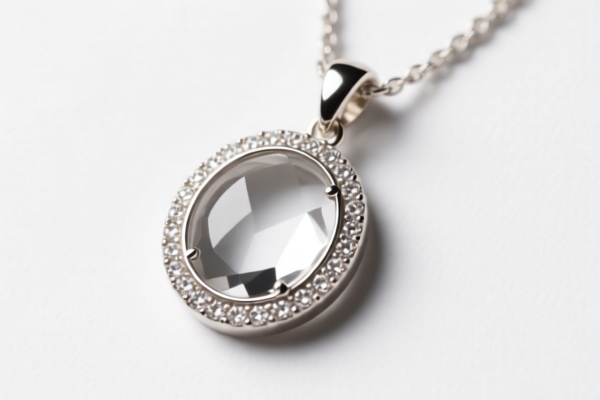
AI Analysis
📿 Pendant (Jewelry/Pendant)
🌐 HS Code Reference & Customs Clearance Guide | 2026 Latest Tariff Analysis | Professional Clearance Strategy
📌 I. Product Definition & Classification: Do You Really Understand "Pendants"?
A Pendant is a decorative ornament that hangs from a chain or cord, worn around the neck. In international trade, its classification hinges entirely on material composition and manufacturing nature (genuine vs. imitation).
Key Distinction Points: * Precious Metals (Gold/Silver/Platinum): Classified under Chapter 71, heading 7113. * Base Metals (Plated/Unplated) or Semi-Precious Stones: Often classified under 7116 or 7117 depending on material value and imitation status. * Imitation Jewelry: Classified under heading 7117 if not made of precious metals/stones.
⚠️ Critical Classification Logic:
- If made of precious metal (even if plated/base metal with precious metal content) → 7113
- If made of semi-precious stones/gems as main feature → 7116
- If made of base metal/imitation materials → 7117
📦 II. HS Code Classification Details (2026 Latest Tariff Authority Comparison)
| HS Code | Product Description | Material Inference | Applicable Scenario | Conflict Check |
|---|---|---|---|---|
7113.19.50.95 |
Pendants of precious metal or metal clad with precious metal | Precious Metal / Clad | High-end jewelry, gold/silver pendants | ❌ No Conflict |
7113.19.50.91 |
Pendants of precious metal or metal clad with precious metal (Other) | Precious Metal / Clad | Standard precious metal pendants | ❌ No Conflict |
7116.20.05.00 |
Jewelry articles of semi-precious stones | Semi-Precious Stone | Gemstone/Agate/Jade pendants | ❌ No Conflict |
7117.90.90.00 |
Imitation jewelry | Base Metal / Synthetic | Fashion jewelry, alloy pendants | ❌ No Conflict |
7116.20.15.00 |
Jewelry articles of semi-precious stones (Other) | Precious/Semi-Precious Stone | Mixed material stone pendants | ❌ No Conflict |
🔍 Key Reminder:
- 7113 covers precious metals. Even if it's "gold-plated base metal," it often falls here if the plating is significant.
- 7116 covers gemstones/semi-precious stones. If the pendant's value is in the stone, not the metal, use this.
- 7117 is the "catch-all" for imitation jewelry. If it’s cheap alloy, plastic, or costume jewelry, use this.
💰 III. 2026 Latest Tariff Rate Breakdown (Including Additional Taxes & Policy Surcharges)
✅ Applicable Country: United States (US)
✅ Country of Origin: China (CN)
✅ Effective Date: From 2025-11-10 onwards (including subsequent imports)
🎯 1. 7113.19.50.95 —— Pendants of Precious Metal/Clad (High-Tax Scenario)
| Item | Content |
|---|---|
| Base Tariff | 5.5% |
| Section 301 Surcharge | +7.5% |
| Section 122 Surcharge | +10.0% |
| Total Tariff Rate | 23.0% |
| Tax Calculation | CIF Value × 23.0% |
| De Minimis Eligibility | ❌ No (Denied) |
| Legal Basis Path | Base: 5.5% → 301: 7.5% → 122: 10% |
📌 Explanation:
- Base 5.5%: Standard MFN rate for precious metal jewelry.
- Section 301 (7.5%): Added tariff on Chinese goods.
- Section 122 (10%): Specific surcharge for certain jewelry articles.
- Total 23.0%: High cost for precious metal pendants from China.
🎯 2. 7113.19.50.91 —— Pendants of Precious Metal (Standard Precious Metal)
| Item | Content |
|---|---|
| Base Tariff | 5.5% |
| Section 301 Surcharge | +0.0% |
| Section 122 Surcharge | +10.0% |
| Total Tariff Rate | 15.5% |
| Tax Calculation | CIF Value × 15.5% |
| De Minimis Eligibility | ❌ No (Denied) |
| Legal Basis Path | Base: 5.5% → 301: 0.0% → 122: 10% |
📌 Note:
- This code is for precious metal pendants exempt from Section 301 surcharge but still subject to Section 122.
- Lower than 23.0% – Check if your product qualifies for this specific subheading.
🎯 3. 7116.20.05.00 —— Jewelry of Semi-Precious Stones (Lowest Tax Scenario)
| Item | Content |
|---|---|
| Base Tariff | 3.3% |
| Section 301 Surcharge | +0.0% |
| Section 122 Surcharge | +10.0% |
| Total Tariff Rate | 13.3% |
| Tax Calculation | CIF Value × 13.3% |
| De Minimis Eligibility | ❌ No (Denied) |
| Legal Basis Path | Base: 3.3% → 301: 0.0% → 122: 10% |
📌 Strategic Advantage:
- Lowest total tariff (13.3%) among the options.
- If your pendant is primarily made of jade, agate, turquoise, or other semi-precious stones, this is the optimal classification.
🎯 4. 7117.90.90.00 —— Imitation Jewelry (Highest Tax Scenario)
| Item | Content |
|---|---|
| Base Tariff | 11.0% |
| Section 301 Surcharge | +7.5% |
| Section 122 Surcharge | +10.0% |
| Total Tariff Rate | 28.5% |
| Tax Calculation | CIF Value × 28.5% |
| De Minimis Eligibility | ❌ No (Denied) |
| Legal Basis Path | Base: 11.0% → 301: 7.5% → 122: 10% |
📌 Warning:
- Highest tariff (28.5%).
- Only use this for pure imitation/costume jewelry (alloy, plastic, non-precious).
- Do NOT misclassify precious metals as imitation to avoid duty – Customs will seize and fine.
🎯 5. 7116.20.15.00 – Jewelry of Semi-Precious Stones (Other)
| Item | Content |
|---|---|
| Base Tariff | 6.5% |
| Section 301 Surcharge | +7.5% |
| Section 122 Surcharge | +10.0% |
| Total Tariff Rate | 24.0% |
| Tax Calculation | CIF Value × 24.0% |
| De Minimis Eligibility | ❌ No (Denied) |
| Legal Basis Path | Base: 6.5% → 301: 7.5% → 122: 10% |
📌 Note:
- For semi-precious stone jewelry that doesn’t fit into7116.20.05.00.
- Higher than7116.20.05.00due to base tariff and Section 301.
🛠️ IV. Customs Clearance Practical Advice (Real-World Pitfall Avoidance)
✅ 1. Document Checklist (Must-Prepare)
| Document | Mandatory | Description |
|---|---|---|
| ✅ Product Specification Sheet | ✔️ | Material breakdown (e.g., "925 Silver with 0.5g Gold Plating"), stone type (e.g., "Natural Agate"), weight |
| ✅ Material Certificate | ✔️ | From supplier proving precious metal content or stone authenticity |
| ✅ Product Photos (Label & Close-up) | ✔️ | Show hallmark (e.g., "925", "AU750"), stone setting, chain attachment |
| ✅ Commercial Invoice | ✔️ | Must state: "Pendant, [Material], for Fashion/Jewelry Use" |
| ✅ Packing List | ✔️ | Include chain if sold together (often declared as a set) |
✅ 2. Declaration Tips (Key Mantra)
🔥 “Material Defines Code, Not Name! ‘Pendant’ is Generic, ‘Material’ is King!”
| Scenario | Correct Declaration | Wrong Declaration |
|---|---|---|
| Gold-plated pendant | 7113.19.50.91 (if precious metal clad) |
"Jewelry" → Ambiguous, risk of audit |
| Jade pendant | 7116.20.05.00 (Semi-precious stone) |
"Stone Pendant" → Too vague |
| Alloy fashion pendant | 7117.90.90.00 (Imitation) |
"Silver Pendant" → False declaration, fines |
| Diamond pendant | Note: Diamonds fall under 7102/7104, not listed in DATA | Check specific gemstone codes |
⚠️ Critical:
- If you declare a precious metal pendant as imitation jewelry (7117), Customs may classify it as 7113 and charge the correct rate + penalties.
- If you declare a stone pendant as precious metal (7113), you overpay.
- Accuracy saves money.
✅ 3. Special Cases
| Situation | Handling Advice |
|---|---|
| Set with Chain | If chain is not precious metal, still classify as pendant if pendant is the primary value. |
| Enamel/Diamond Accents | If base is precious metal, still 7113. If base is stone, still 7116. |
| Mixed Materials | Classify by principal material/value. e.g., Gold setting with small stone → 7113. |
🌍 V. Global Market Clearance Comparison (2026 Latest)
| Country/Region | Recommended HS Code | Tariff Rate | Certification | Notes |
|---|---|---|---|---|
| 🇺🇸 USA | 7116.20.05.00 (Best for Stone) / 7113.19.50.91 (Best for Metal) |
13.3% ~ 15.5% | N/A | Section 122 (10%) applies. Avoid 7117 (28.5%) if possible. |
| 🇨🇳 China | 7113 / 7116 / 7117 |
5% ~ 11% | N/A | No Section 301/122. Lower cost for export to China. |
| 🇪🇺 EU | 7113 / 7116 / 7117 |
0% ~ 5% | CE (if electronic components) | No additional US-style surcharges. |
| 🇬🇧 UK | 7113 / 7116 / 7117 |
0% ~ 5% | N/A | Post-Brexit, similar to EU. |
📌 Conclusion:
- USA has the highest effective tariff due to Section 122 (10%).
- Opt for7116.20.05.00(13.3%) if your pendants contain semi-precious stones.
- Opt for7113.19.50.91(15.5%) if made of precious metal clad.
- Avoid7117.90.90.00(28.5%) unless it’s genuinely costume jewelry.
📌 VI. Common Errors & Pitfall Guide (Lessons Learned)
❌ Error 1: Declaring all pendants as 7117.90.90.00 (Imitation)
👉 Consequence: If Customs finds gold/silver, they reclassify to 7113 → Back taxes + Penalties!
❌ Error 2: Using generic "Jewelry" in description
👉 Consequence: Customs assigns default code → Likely 7113 or 7117 → Unpredictable tax (15.5%-28.5%).
❌ Error 3: Ignoring Section 122 (10%)
👉 Consequence: Underestimating cost by 10% → Profit margin erosion.
✅ Correct Practice:
"Pendant, 925 Sterling Silver with 14K Gold Plating, Natural Agate Stone, 10g" →
7113.19.50.91or7116.20.05.00depending on primary value.
🎯 VII. Conclusion: Precise Classification for Maximum Profit
🎯 Remember the Mantra:
🔹 “Stone = 13.3%, Precious Metal Clad = 15.5%, Imitation = 28.5%!”
🔹 “Section 122 is Non-Negotiable (10%) for All Jewelry!”
🔹 “Declare Material, Not Just ‘Pendant’!”
📌 Pro Tip:
- If you are importing semi-precious stone pendants (jade, agate, turquoise), always use 7116.20.05.00 for the lowest tariff (13.3%).
- If you are importing gold/silver pendants, check if they qualify for 7113.19.50.91 (15.5%) to avoid the higher 7113.19.50.95 (23.0%) rate.
- Never misclassify precious metals as imitation jewelry. The risk of audit and penalty is too high.
📣 Immediate Action:
📞 Consult a Customs Broker + Provide Material Certificates + Apply for Advance Ruling if volume is high.
🚀 Maximize Profit by Minimizing Duty!
✨ Professional Clearance Starts with Accurate Classification!
💼 Your Cost is Your Competitiveness – Optimize It!
Customer Reviews
About HS Code Classification
The Harmonized System (HS) is an internationally standardized nomenclature developed by the World Customs Organization (WCO) to classify traded products. Over 200 countries use the HS system as the basis for customs tariffs, trade statistics, and import/export regulations.
Each HS code follows a hierarchical structure:
- Chapter (2 digits) — Broad category of goods (e.g., Chapter 84: Machinery and Mechanical Appliances)
- Heading (4 digits) — More specific grouping within the chapter
- Subheading (6 digits) — Internationally standardized breakdown, used by all WCO member countries
- National subdivisions (8-10 digits) — Country-specific extensions for further classification, such as US HTSUS 10-digit codes
Correct HS code classification is essential for smooth customs clearance, accurate duty payment, and compliance with trade regulations. Misclassification can lead to customs delays, overpayment of duties, or penalties.
When importing from CN to US, the applicable tariff rates may include:
- Most-Favored-Nation (MFN) rate — The standard duty rate applied to WTO members
- General rate — Applied to countries without trade agreements
- Trade remedy duties — Additional tariffs such as Section 301 (anti-dumping), Section 232 (national security), or countervailing duties
The information provided on this page is for reference purposes only. For official classification, please consult with your local customs authority or a licensed customs broker.