perforated pattern drafting ruler
CN → US| HS Code | Tariff Rate | Origin | Destination | Doc |
|---|---|---|---|---|
| 9017208040 | 39.6% | CN | US | Official Doc |
| 9017207000 | 35.0% | CN | US | Official Doc |
| 3926100000 | 15.3% | CN | US | Official Doc |
Product Images
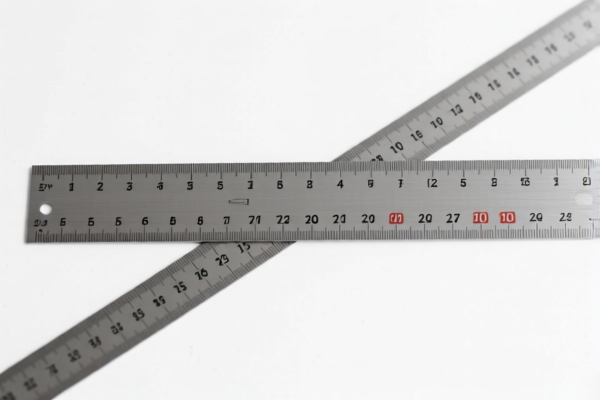
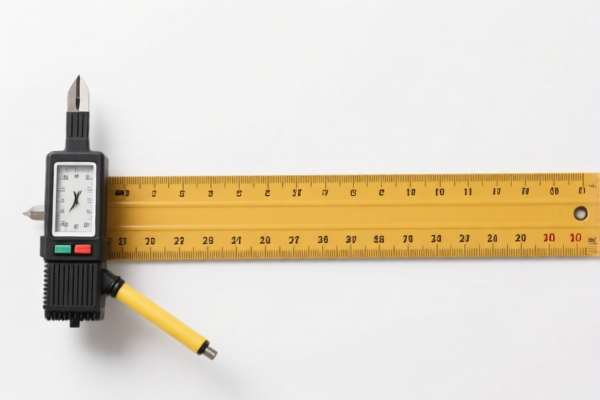
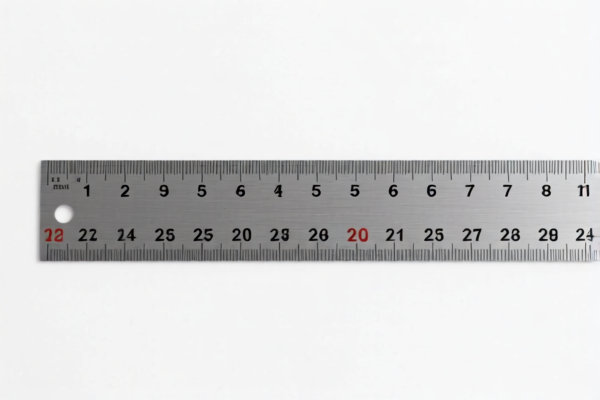
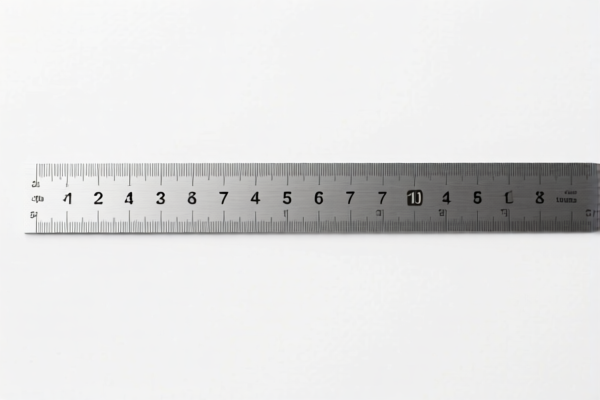
AI Analysis
📐 Perforated Pattern Drafting Ruler (穿孔图案打版尺)
🌐 HS Code Reference & Customs Clearance Guide | 2026 Latest Tariff Analysis | Professional Clearance Strategy
📌 I. Product Definition & Classification: Do You Really Understand "Drafting Rulers"?
A Perforated Pattern Drafting Ruler is a specialized tool used in fashion design, textile manufacturing, and industrial pattern making. It features pre-drilled holes to facilitate the tracing of specific geometric shapes (circles, ellipses, curves) directly onto fabric or paper.
In international trade, these tools often face classification disputes because they can be viewed as: 1. Measuring/Plotting Instruments (Precision tools for drafting); 2. Plastic Articles (Simple office/school supplies made of plastic); 3. Other Measuring Devices.
⚠️ Key Distinction Point:
- If the item is primarily a precision measuring/plottting instrument (often metal or high-precision plastic with specific drafting functions) → Tends toward Chapter 90 or Chapter 99 exclusions.
- If the item is a generic plastic ruler with holes, lacking complex mechanical/precision calibration features → Tends toward Chapter 39 (Plastics).
📦 II. HS Code Classification Details (2026 Latest Tariff Authority Comparison)
Based on the provided data, here are the three possible HS Codes and their corresponding logic:
| HS Code | Product Description | Applicable Scenario | Material/Function Logic |
|---|---|---|---|
9017.20.80.40 |
Perforated Pattern Drafting Ruler | Professional pattern making, drafting aids | Marking/Plotting Tool: Considered an auxiliary tool for digitizers/plotters. No material conflict found. |
9017.20.70.00 |
Marking/Mathematical Calculation Instruments | General drafting, mathematical plotting | Function Match: Fits "Marking or Mathematical Calculation Instruments." Function aligns with 9017.20. No material conflict. |
3926.10.00.00 |
Articles of Plastic: Office/School Supplies | Generic plastic rulers with perforations | Material Based: Inferred as plastic based on "perforated" shape and common manufacturing. No material conflict. |
🔍 Critical Reminder:
- Chapter 90 (9017.20) generally commands higher tariffs due to added Section 301 tariffs.
- Chapter 39 (3926.10) is considered a general plastic article and may have lower base tariffs, but still subject to specific trade provisions.
- The choice between 9017 and 3926 depends heavily on whether customs views the item as a "Precision Drafting Instrument" or a "Generic Plastic Article."
💰 III. 2026 Latest Tariff Rate Breakdown (Including Additional Taxes, Policy Surcharges)
✅ Applicable Country: United States (US)
✅ Country of Origin: China (CN)
✅ Effective Time: 2025 November 10 onwards (including subsequent imports)
🎯 1. 9017.20.80.40 — Perforated Pattern Drafting Ruler (Auxiliary Plotting Tool)
| Item | Detail |
|---|---|
| Base Tariff | 4.6% |
| Section 301 Tariff | +25.0% |
| Section 122 Tariff | +10.0% |
| Total Tariff Rate | 39.6% |
| Tax Calculation | CIF Value × 39.6% |
| De Minimis Exemption | ❌ Not Eligible (High tariff threshold) |
| Legal Basis Path | Base Tariff → Sec 301 → Sec 122 |
📌 Explanation:
- Base (4.6%): Standard duty for plotting/measuring instruments under 9017.
- Sec 301 (+25%): Significant addition due to US-China trade tensions affecting Chapter 90 products.
- Sec 122 (+10%): Additional surcharge applied to specific categories.
- Total 39.6%: This is a high-cost classification. Importers must budget accordingly.
🎯 2. 9017.20.70.00 — Marking or Mathematical Calculation Instruments
| Item | Detail |
|---|---|
| Base Tariff | 0.0% |
| Section 301 Tariff | +25.0% |
| Section 122 Tariff | +10.0% |
| Total Tariff Rate | 35.0% |
| Tax Calculation | CIF Value × 35.0% |
| De Minimis Exemption | ❌ Not Eligible |
| Legal Basis Path | Base Tariff → Sec 301 → Sec 122 |
📌 Note:
- Base (0.0%): Free entry for certain marking/mathematical instruments.
- Sec 301 (+25%) & Sec 122 (+10%): Still fully applicable.
- Total 35.0%: Slightly better than the 80.40 subheading, but still very high.
🎯 3. 3926.10.00.00 — Articles of Plastic: Office or School Supplies
| Item | Detail |
|---|---|
| Base Tariff | 5.3% |
| Section 301 Tariff | 0.0% |
| Section 122 Tariff | +10.0% |
| Total Tariff Rate | 15.3% |
| Tax Calculation | CIF Value × 15.3% |
| De Minimis Exemption | ❌ Not Eligible (Due to Sec 122) |
| Legal Basis Path | Base Tariff → Sec 122 |
📌 Note:
- Base (5.3%): Standard duty for plastic office/school supplies.
- Sec 301 (0.0%): Crucial Advantage! This HS Code appears exempt from the 25% Section 301 tariff.
- Sec 122 (+10%): Still applies.
- Total 15.3%: This is the most cost-effective classification.
- Risk: Must successfully argue the product is a "generic plastic article" rather than a "precision drafting instrument."
🛠️ IV. Customs Clearance Practical Advice (Combat Pitfalls Guide)
✅ 1. Preparation Checklist (Non-Negotiable)
| Document | Required | Explanation |
|---|---|---|
| ✅ Product Specification Sheet | ✔️ | Must detail dimensions, hole patterns, material (e.g., ABS, Acrylic), and tolerance levels. |
| ✅ High-Resolution Photos | ✔️ | Show the ruler, perforations, scale markings, and packaging. |
| ✅ Material Composition Certificate | ✔️ | Essential to prove plastic content for 3926.10 classification. |
| ✅ Usage Description | ✔️ | Clearly state it is for "pattern drafting" or "textile marking," not medical or precision metrology. |
| ✅ Commercial Invoice | ✔️ | Use precise wording: "Plastic Perforated Ruler for Pattern Making" (avoids "Precision Drafting Instrument"). |
| ✅ Packing List | ✔️ | Standard commercial packing. |
✅ 2. Declaration Strategies (Key Mnemonics)
🔥 “Plastic vs. Precision: Name it Right, Save Big!”
| Scenario | Correct Declaration Strategy | Wrong Approach |
|---|---|---|
| Generic Plastic Ruler | Use 3926.10.00.00. Emphasize "Plastic Article." Avoid words like "Precision," "Metrology," "Calibrated." |
Call it "Drafting Instrument" → Triggers 9017 → 35-39.6% Tariff. |
| High-Precision Drafting Tool | Use 9017.20.xxxxxx. Provide technical docs proving precision/measurement function. |
Call it "Plastic Ruler" → Risk of reclassification & penalties. |
| Kit with Multiple Tools | Declare each item separately if possible, or use the highest tariff item for the kit. | Bundle high-tariff items with low-tariff items without clarity. |
✅ 3. Special Case Handling
| Situation | Handling Advice |
|---|---|
| OEM/White Label | Ensure the supplier’s invoice matches your declared HS Code. If they list it as "Plastic Ruler," use 3926.10. |
| Mixed Materials | If the ruler has metal hinges or inserts, it may no longer qualify as "Plastic Article" under 3926. Consult a classifier. |
| Pre-Ruling Request | Strongly recommended. File an Advance Ruling with US CBP to confirm if your specific design qualifies for 3926.10 (15.3%) instead of 9017 (35-39.6%). |
🌍 V. Global Market Comparison (2026 Latest)
| Country/Region | Recommended HS Code | Tariff Rate (China Origin) | Certification | Remarks |
|---|---|---|---|---|
| 🇺🇸 USA | 3926.10.00.00 |
15.3% (Lowest) | No specific | Avoid 9017 due to 301/122 taxes. |
| 🇺🇸 USA | 9017.20.70.00 |
35.0% | No specific | High tax, hard to justify. |
| 🇨🇳 China | 3926.10.00.00 |
~5% | None | No additional surcharges. |
| 🇪🇺 EU | 3926.10.00.00 |
~6.5% | CE (if applicable) | No Section 301/122 equivalents. |
📌 Conclusion:
- USA is the critical market where classification drastically changes cost (15.3% vs 35%+).
- Strategy: Aim for3926.10.00.00(Plastic Article) to save ~20% in duties.
- Risk Mitigation: Use clear product descriptions that emphasize "Plastic" and "Office/Pattern Supply" over "Precision Instrument."
📌 VI. Common Errors & Pitfalls (Blood & Tears Lessons)
❌ Error 1: Describing the product as "Precision Drafting Instrument" in the invoice.
👉 Consequence: Customs may classify under 9017 → 35-39.6% Tariff.
❌ Error 2: Ignoring Section 122 Tariff.
👉 Consequence: Even if base rate is low, 10% Sec 122 applies to all three codes. You cannot escape this.
❌ Error 3: Assuming "De Minimis" ($800) exemption applies.
👉 Consequence: No De Minimis for these HS codes under current US regulations for Chinese origin. Full duty applies even for small shipments.
❌ Error 4: Using vague descriptions like "Stationery Item."
👉 Consequence: Customs may assign a default code with higher duties. Be specific: "Plastic Perforated Ruler."
✅ Correct Practice:
"Plastic Perforated Ruler for Pattern Making, 30cm Length, ABS Material, Model XYZ"
🎯 VII. Conclusion: Precise Classification Saves 20%+ in Duties!
🎯 Remember the Mantra:
🔹 "Plastic Article = 15.3% (Save Big!)"
🔹 "Drafting Instrument = 35-39.6% (Expensive!)"
🔹 "Section 122 = 10% (Unavoidable)"
📌 Pro Tip:
If your product is made in Vietnam, Thailand, or Malaysia, you may be exempt from Section 301 and Section 122 tariffs, reducing the rate to ~5.3% (Base only) for 9017 or similar.
Recommendation:
📞 Contact a professional customs broker.
🚀 File for an Advance Ruling to lock in the3926.10.00.00classification.
💼 Your profit margin depends on this 20% difference!
✨ Professional Clearance Starts with Accurate Classification!
💼 Every dollar saved in duty is pure profit!
Customer Reviews
About HS Code Classification
The Harmonized System (HS) is an internationally standardized nomenclature developed by the World Customs Organization (WCO) to classify traded products. Over 200 countries use the HS system as the basis for customs tariffs, trade statistics, and import/export regulations.
Each HS code follows a hierarchical structure:
- Chapter (2 digits) — Broad category of goods (e.g., Chapter 84: Machinery and Mechanical Appliances)
- Heading (4 digits) — More specific grouping within the chapter
- Subheading (6 digits) — Internationally standardized breakdown, used by all WCO member countries
- National subdivisions (8-10 digits) — Country-specific extensions for further classification, such as US HTSUS 10-digit codes
Correct HS code classification is essential for smooth customs clearance, accurate duty payment, and compliance with trade regulations. Misclassification can lead to customs delays, overpayment of duties, or penalties.
When importing from CN to US, the applicable tariff rates may include:
- Most-Favored-Nation (MFN) rate — The standard duty rate applied to WTO members
- General rate — Applied to countries without trade agreements
- Trade remedy duties — Additional tariffs such as Section 301 (anti-dumping), Section 232 (national security), or countervailing duties
The information provided on this page is for reference purposes only. For official classification, please consult with your local customs authority or a licensed customs broker.