perfume bottles and perfume clips
CN → US| HS Code | Tariff Rate | Origin | Destination | Doc |
|---|---|---|---|---|
| 7010903010 | 40.2% | CN | US | Official Doc |
| 3923300090 | 38.0% | CN | US | Official Doc |
| 7013993000 | 26.5% | CN | US | Official Doc |
| 7010903020 | 40.2% | CN | US | Official Doc |
| 3923300010 | 38.0% | CN | US | Official Doc |
Product Images
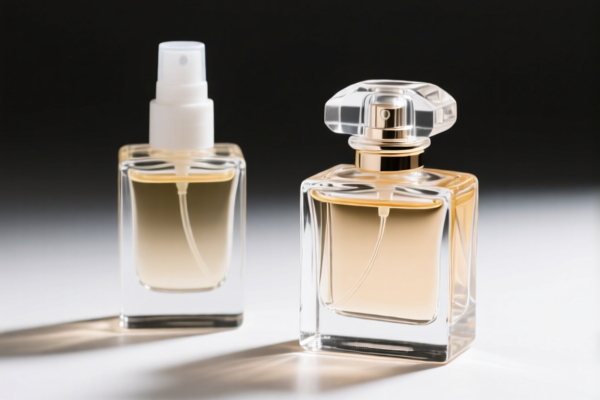
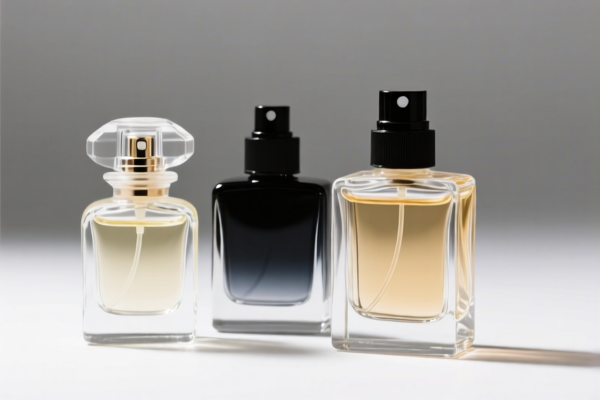
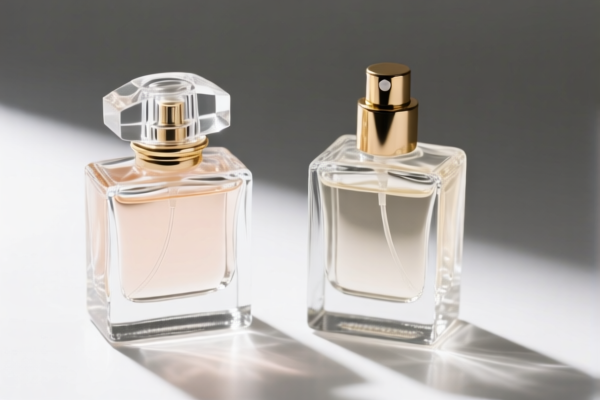
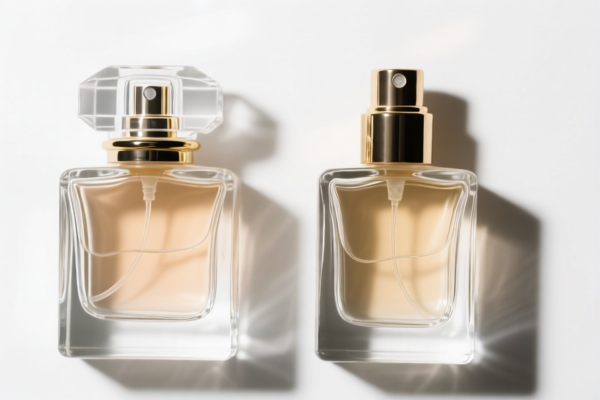
AI Analysis
🧴 Perfume Bottles & Clips: The Ultimate HS Code Guide & Customs Clearance Strategy (2024-2025 Edition)
🌐 HS Code Reference & Customs Guide | 2026 Latest Tariff Analysis | Professional Clearance Strategy
📌 I. Product Definition & Classification: Do You Really Understand "Perfume Bottles"?
Perfume bottles are not just containers; they are critical components of the luxury cosmetics industry. In international trade, their classification depends entirely on material composition and function. Perfume clips (often decorative or functional accessories) are generally treated differently than the bottles themselves, but for this analysis, we focus on the bottles as the primary declarable items, as clips are often packed within or attached.
International trade classifies perfume bottles into two main material categories: * Glass Perfume Bottles: High-end, transparent, or colored glass containers. * Plastic Perfume Bottles: Polymer-based containers, often for lighter fragrances or travel sizes.
⚠️ Key Distinction:
- If made of Glass → Look at Chapter 70 (Chapter 70.10 or 70.13).
- If made of Plastic → Look at Chapter 39 (Chapter 39.23).
- Do not assume all "bottles" are the same; material dictates the HS Code and Tax Rate.
📦 II. HS Code Classification Details (2026 Latest Tariff Authority)
Based on the provided data, here are the exact HS Codes for Glass and Plastic Perfume Bottles.
| HS Code | Product Description | Material | Key Feature / Use Case | Total Tax Rate |
|---|---|---|---|---|
7010.90.30.10 |
Perfume Bottles, Glass Material | Glass | Specifically for perfume packaging | 40.2% |
7010.90.30.20 |
Perfume Bottles, Glass Material, Glass Containers | Glass | General glass container use | 40.2% |
7013.99.30.00 |
Perfume Bottles, Glass Material, Glass Articles | Glass | Glass products, consistent usage | 26.5% |
3923.30.00.90 |
Perfume Bottles, Plastic Material, Other Categories | Plastic | Other categories, plastic bottle containers | 38.0% |
3923.30.00.10 |
Perfume Bottles, Plastic Material, Packaging Supplies | Plastic | Bottled shape, packaging supplies | 38.0% |
🔍 Important Note:
- Glass vs. Plastic: Glass bottles (7010/7013) generally have higher base tariffs than Plastic (3923), but specific sub-categories for glass (7013.99.30.00) offer a lower total rate (26.5%) compared to the standard perfume glass codes (40.2%).
- Clip Integration: If perfume clips are small accessories, they may be deemed "accessories" and declared with the bottle. If sold separately, they might fall under Chapter 71 (Jewelry) or 39 (Plastics) depending on material. This guide focuses on the bottles as per the provided data.
💰 III. 2026 Latest Tariff Rate Breakdown (Including Surtaxes & Policy Add-ons)
✅ Applicable Country: USA (US)
✅ Origin: China (CN)
✅ Effective Date: 2025-11-10 (Including subsequent imports)
🎯 1. Glass Perfume Bottles (7010.90.30.10 / 7010.90.30.20)
Specifically for perfume packaging, glass material.
| Item | Content |
|---|---|
| Base Tariff | 5.2% |
| USITC Surtax (Section 301) | +25.0% |
| 122 Clause Tariff (IEEPA) | +10.0% |
| Total Tax Rate | 40.2% |
| Tax Calculation | CIF Value × 40.2% |
| De Minimis Exemption? | ❌ No (High risk of seizure if undervalued) |
| Legal Path | USITC:7010.90.30.10 → SECTION301:5.2%+25% → IEEPA:122Clause |
📌 Explanation:
- The 5.2% base rate is standard for glass containers.
- The 25% Section 301 tax applies to Chinese glass goods.
- The 10% IEEPA tax is an additional surcharge under Section 122 for specific national security/trade concerns.
- Total Cost Impact: For a $10,000 shipment, you pay $4,020 in duties alone.
🎯 2. Glass Perfume Bottles (7013.99.30.00)
Glass articles, consistent usage (Non-perfume specific glassware classification).
| Item | Content |
|---|---|
| Base Tariff | 9.0% |
| USITC Surtax (Section 301) | +7.5% |
| 122 Clause Tariff (IEEPA) | +10.0% |
| Total Tax Rate | 26.5% |
| Tax Calculation | CIF Value × 26.5% |
| De Minimis Exemption? | ❌ No |
| Legal Path | USITC:7013.99.30.00 → SECTION301:7.5% → IEEPA:122Clause |
📌 Strategy Alert:
- This code has a higher base rate (9.0%) but a much lower Section 301 surtax (7.5% vs 25%).
- Total Rate: 26.5% is significantly cheaper than the 40.2% rate.
- Use Case: Use this if the bottle can be classified as "general glass articles" rather than "specific perfume packaging." Requires careful product description justification.
🎯 3. Plastic Perfume Bottles (3923.30.00.10 / 3923.30.00.90)
Plastic material, packaging supplies or other categories.
| Item | Content |
|---|---|
| Base Tariff | 3.0% |
| USITC Surtax (Section 301) | +25.0% |
| 122 Clause Tariff (IEEPA) | +10.0% |
| Total Tax Rate | 38.0% |
| Tax Calculation | CIF Value × 38.0% |
| De Minimis Exemption? | ❌ No |
| Legal Path | USITC:3923.30.00.10 → SECTION301:3%+25% → IEEPA:122Clause |
📌 Comparison:
- Plastic bottles have a very low base rate (3.0%) but still face the 25% Section 301 tax.
- Total Rate: 38.0% is slightly lower than the premium glass perfume bottles (40.2%) but higher than the generic glass article code (26.5%).
🛠️ IV. Customs Clearance Practical Advice (Real-World Pitfall Avoidance)
✅ 1. Required Documentation Checklist (Non-negotiable)
| Document | Must Provide? | Purpose |
|---|---|---|
| ✅ Product Specifications | ✔️ | Material (Glass/Plastic), Dimensions, Capacity, Neck Type |
| ✅ Material Certificate | ✔️ | Proves Glass (HS 70) vs. Plastic (HS 39) |
| ✅ Product Photos | ✔️ | Clear images of bottle, clip, and labeling |
| ✅ Commercial Invoice | ✔️ | Must clearly state "Perfume Bottle, [Material], No Fragrance Inside" |
| ✅ Packing List | ✔️ | Item count, weight, dimensions |
| ✅ Origin Certificate | ✔️ | If not China, to claim FTZ benefits |
🚫 Critical Warning:
- NEVER declare "Perfume Bottles" containing actual perfume without declaring the perfume itself. Empty bottles only.
- If perfume is present, it falls under Chapter 33 (Perfumes), which has different tax rules and regulations (FDA/EPA if aerosol).
✅ 2. Declaration Strategy (Key Formulas)
🔥 "Material First, Then Use, Description Precise, Tax Minimized!"
| Scenario | Correct Declaration | Wrong Declaration | Consequence |
|---|---|---|---|
| Glass Bottle for Perfume | 7010.90.30.10 - "Glass Perfume Bottles, Empty" |
"Glass Containers" | Risk of audit, potential reclassification |
| Generic Glass Vessel | 7013.99.30.00 - "Glass Articles, Non-Perfume Specific" |
"Perfume Bottles" | Lower tax (26.5% vs 40.2%) if justified |
| Plastic Bottle | 3923.30.00.10 - "Plastic Packaging, Bottles" |
"Plastic Containers" | Correct classification for 38.0% rate |
| Perfume Clips (Metal/Jewelry) | Chapter 71 (Separate Declaration) | Included in Bottle Value | Misclassification risk if separate items |
✅ 3. Special Cases & Mitigation
| Situation | Handling Advice |
|---|---|
| OEM Custom Bottles | Provide design drawings to prove "Perfume Bottle" specificity. If not specific, argue for 7013.99.30.00 to save 13.7%. |
| Bottle + Clip Sets | Declare as "Set." If clip is primary value, re-evaluate HS Code. If bottle is primary, declare as bottle. |
| Aerosol Cans | NOT perfume bottles. These are Chapter 39 or 73 with high fire safety regulations. |
| Small Glass Chips (Broken) | Declare as "Glass Waste/Scrap" if not reusable. Different tax rate. |
🌍 V. Global Market Customs Comparison (2026 Latest)
| Country/Region | Recommended HS Code | Tariff (China Origin) | Certification | Notes |
|---|---|---|---|---|
| 🇺🇸 USA | 7010.90.30.10 |
40.2% (Glass) 38.0% (Plastic) |
FDA (if contact), RoHS | High Section 301 tax. Consider 7013.99.30.00 if possible. |
| 🇨🇳 China | 7010.90.30.10 |
9.0% | CCC (if applicable) | Lower base rate. No Section 301. |
| 🇪🇺 EU | 7010.90.30.10 |
6.0% | REACH, LFGB | No Section 301. Focus on chemical compliance. |
| 🇬🇧 UK | 7010.90.30.10 |
6.0% | UKCA | Post-Brexit rules. |
| 🇯🇵 Japan | 7010.90.30.10 |
5.5% | JIS | Low base rate. |
📌 Conclusion:
- USA is the most expensive market due to Section 301 and IEEPA taxes.
- EU/UK/Japan have lower base rates but require strict chemical compliance (REACH/LFGB).
- Optimization Tip: For US imports, try to classify generic glass bottles under7013.99.30.00(26.5%) if product design allows.
📌 VI. Common Errors & Pitfall Guide (Lessons Learned)
❌ Error 1: Declaring "Perfume Bottles" but shipping them filled with perfume.
👉 Consequence: Smuggling of regulated goods. FDA/EPA seizure. Heavy fines.
❌ Error 2: Classifying Plastic Bottles as Glass to avoid plastic-specific regulations.
👉 Consequence: Customs audit, penalty for misdeclaration, potential 40.2% tax instead of correct rate.
❌ Error 3: Ignoring the Clip as a separate item.
👉 Consequence: If the clip is high-value (e.g., gold-plated), it should be declared separately under Chapter 71. Mixing values can lead to under-valuation penalties.
❌ Error 4: Using "Container" as a generic description without material specification.
👉 Consequence: Customs will ask for clarification, causing delay and storage fees.
✅ Correct Declaration Example:
"Glass Perfume Bottles, Empty, 50ml, Colorless, Model XYZ, Not for Human Consumption, HS Code: 7010.90.30.10"
🎯 VII. Conclusion: Precise Classification Saves Money!
🎯 Remember the Key Takeaways:
🔹 "Glass vs. Plastic: Check the Material First!"
🔹 "7013.99.30.00: The 26.5% Hero for Generic Glass!"
🔹 "7010.90.30.10: The 40.2% Reality for Perfume-Specific Glass!"
🔹 "Plastic: 38.0% Total, Low Base, High Surtax!"📌 Pro Tip:
- If you are exporting to the US, consult a customs broker to see if your glass bottle can be classified under7013.99.30.00to save 13.7%.
- Always ensure bottles are empty and clean.
- Keep material certificates ready for audit.
📣 Take Action Now:
📞 Contact a licensed customs broker.
📝 Provide product samples/photos.
🚀 Apply for a Binding Tariff Information (BTI) or Advance Ruling for US imports.
✨ Professional Customs Clearance Starts with Accurate Classification!
💼 Every Percent of Tariff Saved is Profit Gained!
Customer Reviews
About HS Code Classification
The Harmonized System (HS) is an internationally standardized nomenclature developed by the World Customs Organization (WCO) to classify traded products. Over 200 countries use the HS system as the basis for customs tariffs, trade statistics, and import/export regulations.
Each HS code follows a hierarchical structure:
- Chapter (2 digits) — Broad category of goods (e.g., Chapter 84: Machinery and Mechanical Appliances)
- Heading (4 digits) — More specific grouping within the chapter
- Subheading (6 digits) — Internationally standardized breakdown, used by all WCO member countries
- National subdivisions (8-10 digits) — Country-specific extensions for further classification, such as US HTSUS 10-digit codes
Correct HS code classification is essential for smooth customs clearance, accurate duty payment, and compliance with trade regulations. Misclassification can lead to customs delays, overpayment of duties, or penalties.
When importing from CN to US, the applicable tariff rates may include:
- Most-Favored-Nation (MFN) rate — The standard duty rate applied to WTO members
- General rate — Applied to countries without trade agreements
- Trade remedy duties — Additional tariffs such as Section 301 (anti-dumping), Section 232 (national security), or countervailing duties
The information provided on this page is for reference purposes only. For official classification, please consult with your local customs authority or a licensed customs broker.