pet car seat cushion
CN → US| HS Code | Tariff Rate | Origin | Destination | Doc |
|---|---|---|---|---|
| 6307907500 | 14.3% | CN | US | Official Doc |
| 6307909891 | 24.5% | CN | US | Official Doc |
| 9401806023 | 35.0% | CN | US | Official Doc |
| 8708998180 | 12.5% | CN | US | Official Doc |
| 8708295160 | 0.0% | CN | US | Official Doc |
Product Images
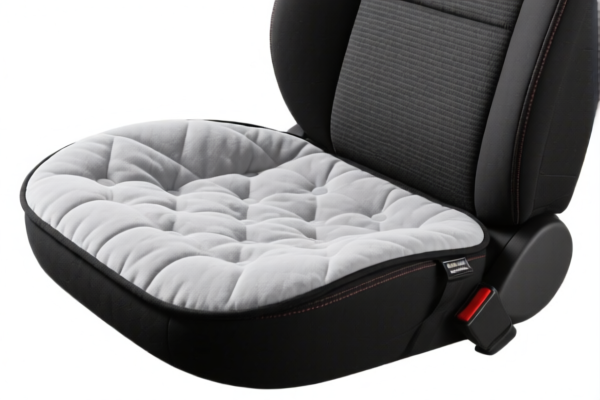
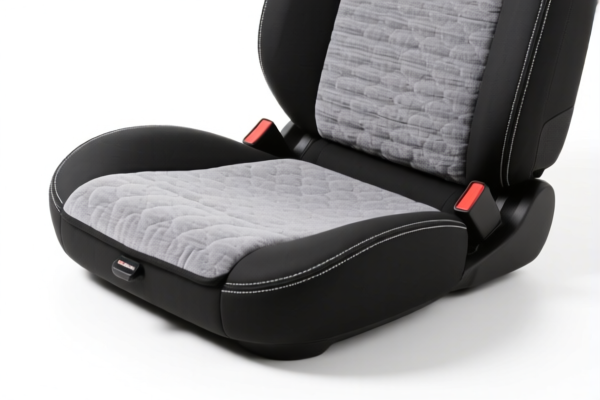
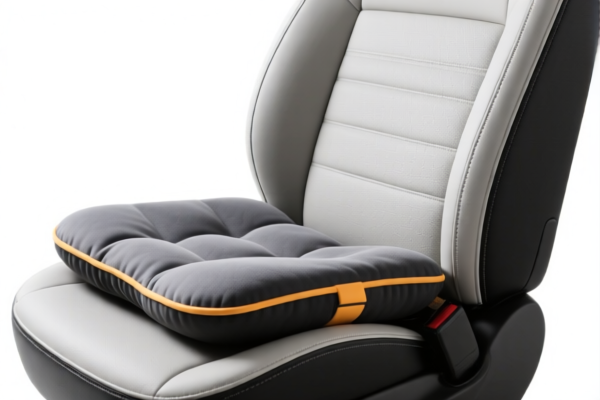
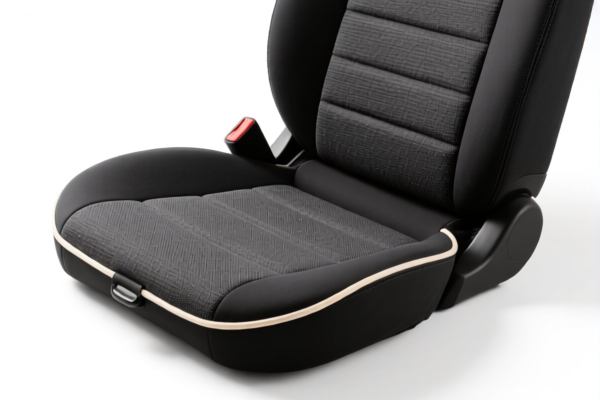
AI Analysis
🚗 Pet Car Seat Cushion: HS Code Classification & US Customs Clearance Guide (2026)
🌐 HS Code Reference & Customs Clearance Strategy | 2026 Latest Tariff Analysis | Professional-Level Entry Guide
📌 I. Product Definition & Classification: Do You Really Understand "Pet Car Seat Cushions"?
A Pet Car Seat Cushion is a specialized accessory designed to protect vehicle interiors from pet hair, dirt, and scratches while providing comfort for pets during travel. In international trade, these products are ambiguous because they straddle the line between textiles, furniture/accessories, and automotive parts.
The classification depends heavily on the primary material and the specific function: * Textile-focused: If made primarily of fabric (polyester, nylon) for protection, it leans towards Chapter 63. * Automotive-focused: If marketed strictly as a "vehicle part" or attachment, it might fall under Chapter 87. * Furniture-focused: If structured like a small chair/seat, it may fall under Chapter 94.
⚠️ Key Distinction Point:
- If it is primarily a fabric cover for protection → 6307.90.75.00 or 6307.90.98.91
- If it is structured as a seat/Chair for pets → 9401.80.60.23
- If declared as an automotive accessory/pad → 8708.99.81.80 or 8708.29.51.60
📦 II. HS Code Classification Details (Based on Provided Data)
| HS Code | Product Description | Applicable Scenario | Material/Function Note |
|---|---|---|---|
6307.90.75.00 |
Made of textile materials for pet supplies | Fits inference based on car seat material | 🧵 Textile-based; best for fabric covers |
6307.90.98.91 |
Other made-up articles; no material conflict as car accessory | Universal fallback if material is mixed | 🧩 Generic textile/fabric; low risk of material conflict |
9401.80.60.23 |
Seat category; fits child/pet purpose seat classification | Structured seats with padding/frames | 🪑 Structured seat; implies chair-like form |
8708.99.81.80 |
Auto parts & accessories; used as car seat accessory | Declared strictly as automotive part | 🚗 Automotive part; focuses on vehicle integration |
8708.29.51.60 |
Body附件; fallback category for in-vehicle pet supplies | Broad automotive accessory category | 🛠️ Broad automotive; higher tax burden due to metal/Al/Cu clauses |
🔍 Key Reminder:
- The "Textile" codes (63xx) often have lower base tariffs but may face high total rates due to specific trade measures.
- The "Automotive" codes (87xx) are risky if the product is clearly just a fabric cushion, as customs may reclassify it, leading to penalties.
- Code 8708.29.51.60 includes a special clause for Steel/Aluminum/Copper products (+50%), which is dangerous if the cushion has metal frames!
💰 III. 2026 Latest Tariff Rate Details (Including Surtaxes & Policy Add-ons)
✅ Applicable Country: United States (US)
✅ Origin: China (CN)
✅ Effective Date: Post-2025 (Based on provided data context)
🎯 1. 6307.90.75.00 —— Textile Material Pet Supplies (Best for Fabric Cushions)
| Item | Detail |
|---|---|
| Base Tariff | 4.3% |
| Additional Tariff | 0.0% |
| Section 301 / 122 Clause | +10% |
| Total Effective Tax Rate | 14.3% |
| Tax Calculation | CIF Value × 14.3% |
| De Minimis Eligibility | ⚠️ Check Specifics: Generally, Section 301/122 goods may be excluded from de minimis if value exceeds $800, but verify current CBP rulings. |
| Legal Basis Path | Base: 6307 → 122 Clause: +10% → Total: 14.3% |
📌 Interpretation:
- This is likely the most cost-effective option if the product is purely textile.
- The "122 Clause" (often referring to specific trade remedy or national security measures) adds 10%.
- Low risk: As it’s a "pet supply," it’s less likely to be scrutinized as an automotive part.
🎯 2. 6307.90.98.91 —— Other Made-up Articles (Universal Fallback)
| Item | Detail |
|---|---|
| Base Tariff | 7.0% |
| Additional Tariff | 7.5% |
| Section 301 / 122 Clause | +10% |
| Total Effective Tax Rate | 24.5% |
| Tax Calculation | CIF Value × 24.5% |
| De Minimis Eligibility | ❌ Likely Not Eligible (High base tariff + surcharges) |
| Legal Basis Path | Base: 6307 → Additional: 7.5% → 122 Clause: +10% → Total: 24.5% |
📌 Interpretation:
- Use this if the product contains mixed materials that don’t fit "Pet Supplies" strictly.
- Higher cost: 10.2% more expensive than the previous code.
- Safe from "material conflict" charges but expensive.
🎯 3. 9401.80.60.23 —— Seat Category (Structured Seats)
| Item | Detail |
|---|---|
| Base Tariff | 0.0% |
| Additional Tariff | 25.0% |
| Section 301 / 122 Clause | +10% |
| Total Effective Tax Rate | 35.0% |
| Tax Calculation | CIF Value × 35.0% |
| De Minimis Eligibility | ❌ Not Eligible |
| Legal Basis Path | Base: 9401 → Additional: 25% → 122 Clause: +10% → Total: 35.0% |
📌 Interpretation:
- Only use if the cushion is structured like a chair (e.g., with a wooden/plastic frame and upholstery).
- Highest base risk: The 25% additional tariff is significant.
- Not recommended for simple fabric mats or hammocks.
🎯 4. 8708.99.81.80 —— Auto Parts & Accessories (Car Seat Accessory)
| Item | Detail |
|---|---|
| Base Tariff | 2.5% |
| Additional Tariff | 0.0% |
| Section 301 / 122 Clause | +10% |
| Total Effective Tax Rate | 12.5% |
| Tax Calculation | CIF Value × 12.5% |
| De Minimis Eligibility | ⚠️ Uncertain: Automotive parts sometimes face stricter scrutiny. |
| Legal Basis Path | Base: 8708 → 122 Clause: +10% → Total: 12.5% |
📌 Interpretation:
- Lowest Total Tax Rate (12.5%).
- High Compliance Risk: Customs may reject this if the product isn’t clearly an "auto part" (i.e., if it’s just a generic pet bed).
- Strategy: Use only if you have strong labeling/marketing as an "Automotive Interior Accessory" with clear vehicle-specific mounting.
🎯 5. 8708.29.51.60 —— Body Attachments (Fallback Automotive Category)
| Item | Detail |
|---|---|
| Base Tariff | 2.5% |
| Additional Tariff | 25.0% |
| Section 301 / 122 Clause | +10% |
| Special Clause (Steel/Al/Cu) | +50% (If applicable) |
| Total Effective Tax Rate | 2.5% + 85.0% (Base + Additional + 122 + Metal Clause) |
| Tax Calculation | CIF Value × (2.5% + 25% + 10% + 50% Metal if present) |
| De Minimis Eligibility | ❌ Not Eligible |
| Legal Basis Path | Base: 8708 → Additional: 25% → 122 Clause: +10% → Metal Clause: +50% |
📌 Interpretation:
- DANGER ZONE: If your cushion has metal zippers, frames, or stiffeners, this code triggers the 50% metal surcharge.
- Total tax can exceed 85%.
- Avoid unless absolutely necessary and you confirm zero metal content.
🛠️ IV. Customs Clearance Practical Advice (Battle-Tested Pitfall Guide)
✅ 1. Required Documentation Checklist (Non-negotiable)
| Document | Mandatory? | Explanation |
|---|---|---|
| ✅ Product Specification Sheet | ✔️ | Must list materials (e.g., 100% Polyester, Foam Padding), dimensions, and weight. |
| ✅ Material Composition Label | ✔️ | Crucial for distinguishing between 6307 (Textile) and 8708 (Auto). |
| ✅ Product Photos (Clear) | ✔️ | Show the product in use in a car. Highlight any hooks, seatbelt straps, or non-textile parts. |
| ✅ Commercial Invoice | ✔️ | Must use precise language: "Textile Pet Car Seat Cover" (for 6307) or "Automotive Interior Accessory" (for 8708). Avoid vague terms like "Pad". |
| ✅ Packing List | ✔️ | Separate line items for cushions and any hardware (hooks/clips). |
✅ 2. Declaration Strategy (Key Mantra)
🔥 "Material Defines Code, Function Defines Risk, Labeling Prevents Seizure!"
| Scenario | Recommended HS Code | Why? |
|---|---|---|
| Pure Fabric Hammock/Blanket | 6307.90.75.00 |
Lowest risk, lowest tax (14.3%). Clearly a textile pet product. |
| Mixed Material Cushion (Foam + Fabric) | 6307.90.98.91 |
Safe fallback. Avoids "Auto Part" scrutiny. Tax: 24.5%. |
| Structured Seat with Frame | 9401.80.60.23 |
Only if it’s a "Chair". Tax: 35%. Don’t use for mats. |
| Car-Specific Accessory with Mounts | 8708.99.81.80 |
Lowest tax (12.5%) but high audit risk. Use only if marketed as "Auto Part". |
| Cushion with Metal Zippers/Clips | ⚠️ AVOID | Do NOT use 8708.29.51.60 if metal parts > negligible amount. Risk of 85%+ tax. |
✅ 3. Special Situation Handling
| Situation | Advice |
|---|---|
| Product has Metal Zippers | Do not use 8708.29.51.60. Use 6307.90.75.00 and declare as "Textile with minor metal fasteners". |
| Product is Shaped for a Specific Car Model | You might argue for 8708.99.81.80, but provide a compatibility chart to justify "Automotive" nature. |
| Product is a "Pet Bed" Not Attached | Use 6307.90.75.00. Do not try to classify as auto part. |
| OEM/White Label Goods | Ensure invoice matches the actual material description. Mislabeling leads to massive penalties. |
🌍 V. Global Market Comparison (2026 Context)
| Country/Region | Recommended HS Code | Estimated Tax | Notes |
|---|---|---|---|
| 🇺🇸 USA | 6307.90.75.00 |
14.3% | Best balance of cost and safety. |
| 🇺🇸 USA (High Risk) | 8708.29.51.60 |
>85% | Avoid unless you have metal exemption proof. |
| 🇪🇺 EU | N/A (Not in Data) | Variable | EU uses different codes (e.g., 630790). Usually lower duties but high VAT. |
| 🇨🇳 China | N/A (Not in Data) | Variable | China imports textiles at lower duties. |
📌 Conclusion:
- For the US Market,6307.90.75.00(14.3%) is the safest and most cost-effective for most pet cushions.
-8708.99.81.80(12.5%) is a tempting low-tax option but carries high classification risk.
- Never use8708.29.51.60if your product has any significant metal content.
📌 VI. Common Mistakes & Pitfall Guide (Lessons from the Field)
❌ Mistake 1: Calling it "Car Seat" instead of "Car Seat Cushion"
👉 Consequence: Customs may classify as 9401 (Furniture) → 35% Tax!
👉 Fix: Always use "Cushion," "Cover," or "Mat" in the description.
❌ Mistake 2: Declaring as "Auto Part" for a generic dog blanket
👉 Consequence: Rejected by CBP, delayed clearance, or forced to pay back duties.
👉 Fix: If it’s not vehicle-specific (e.g., universal size), use Textile codes.
❌ Mistake 3: Ignoring Metal Content in 8708.29.51.60
👉 Consequence: 50% Surtax applied retroactively.
👉 Fix: Use Textile codes (6307) for products with metal zippers/clips.
❌ Mistake 4: Vague Description "Pet Item"
👉 Consequence: High scrutiny, manual exam, high storage fees.
👉 Fix: Be specific: "Polyester Pet Car Seat Cover with Non-Slip Bottom."
✅ Correct Declaration Example:
"Textile Pet Car Seat Cushion, 100% Polyester Cover with Foam Insert, Non-Slip Bottom, Model XYZ, No Metal Frame."
🎯 VII. Conclusion: Precise Classification for Maximum Profit
🎯 Remember the Mantra:
🔹 "Textile First, Auto Second, Metal Avoided!"
🔹 "14.3% is the Sweet Spot, 85% is the Trap!"
📌 Pro Tip:
If your product is simple (fabric + foam), stick to 6307.90.75.00. It offers a strong balance of low tax (14.3%) and low audit risk. Only consider automotive codes if you have a very strong case for "Vehicle Integration."
📣 Immediate Action:
📞 Review your product’s material composition.
📸 Take clear photos highlighting materials.
📝 Prepare invoices with precise "Textile Pet Supply" language.
🚀 Clear Customs Smoothly, Protect Margins, Scale Faster!
✨ Professional Classification, Smarter Trade!
💼 Every Dollar Saved in Duties is Pure Profit!
Customer Reviews
About HS Code Classification
The Harmonized System (HS) is an internationally standardized nomenclature developed by the World Customs Organization (WCO) to classify traded products. Over 200 countries use the HS system as the basis for customs tariffs, trade statistics, and import/export regulations.
Each HS code follows a hierarchical structure:
- Chapter (2 digits) — Broad category of goods (e.g., Chapter 84: Machinery and Mechanical Appliances)
- Heading (4 digits) — More specific grouping within the chapter
- Subheading (6 digits) — Internationally standardized breakdown, used by all WCO member countries
- National subdivisions (8-10 digits) — Country-specific extensions for further classification, such as US HTSUS 10-digit codes
Correct HS code classification is essential for smooth customs clearance, accurate duty payment, and compliance with trade regulations. Misclassification can lead to customs delays, overpayment of duties, or penalties.
When importing from CN to US, the applicable tariff rates may include:
- Most-Favored-Nation (MFN) rate — The standard duty rate applied to WTO members
- General rate — Applied to countries without trade agreements
- Trade remedy duties — Additional tariffs such as Section 301 (anti-dumping), Section 232 (national security), or countervailing duties
The information provided on this page is for reference purposes only. For official classification, please consult with your local customs authority or a licensed customs broker.