pet electric clippers
CN → US| HS Code | Tariff Rate | Origin | Destination | Doc |
|---|---|---|---|---|
| 8510209000 | 39.0% | CN | US | Official Doc |
| 8214909000 | 0.0% | CN | US | Official Doc |
| 8467290015 | 17.5% | CN | US | Official Doc |
| 8214906000 | 0.0% | CN | US | Official Doc |
| 8510201000 | 39.0% | CN | US | Official Doc |
Product Images
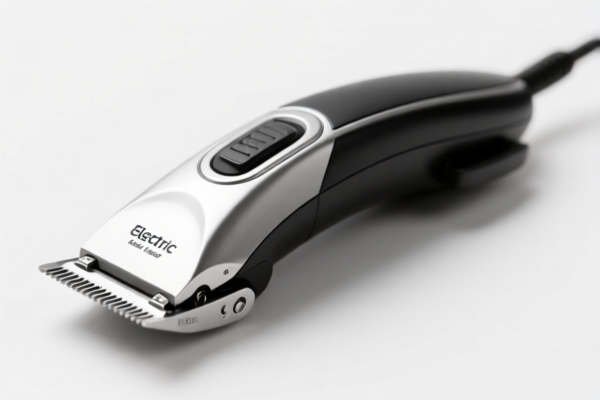
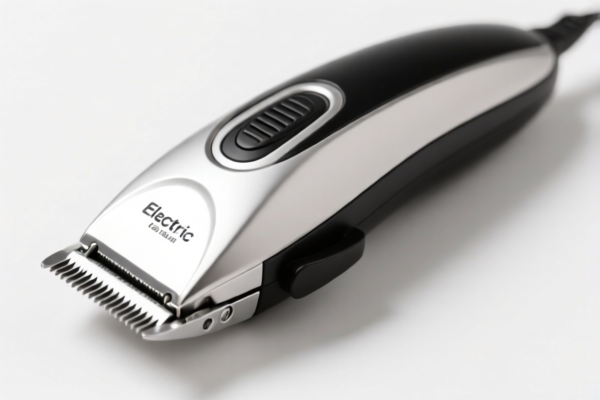
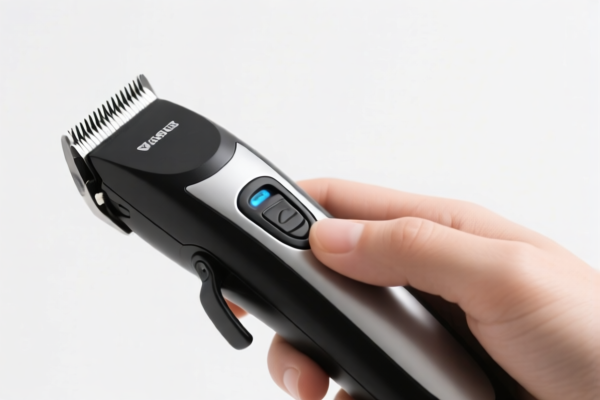

AI Analysis
🐾 Pet Electric Clippers (Electric Hair Clippers)
🌐 HS Code Reference & Clearance Guide | 2026 Latest Tariff Analysis | Professional Customs Strategy
📌 I. Product Definition & Classification: Do You Really Understand "Electric Clippers"?
Electric Clippers for pets are specialized grooming tools designed for trimming, shaping, and maintaining animal coats. In international trade, the classification is critical because material composition and power source dictate the HS Code and, consequently, the tariff burden.
Key Distinctions: 1. Electric Hair Clippers (Chapter 85): Devices with a built-in electric motor. These fall under heading 8510. 2. Manual Cutting Tools (Chapter 82): If the device is manually operated (even if it has metal blades), it falls under heading 8214 (Manual tools, non-electric) or 8467 (Tools for working in the hand). 3. Blade Material: Is the blade made of base metal (iron/steel) or precious metal? Most clippers use base metal.
⚠️ Key Distinction Point:
- If it has a self-contained electric motor → Go to 8510 (High Tariff due to 301/IEEPA).
- If it is manual or lacks a motor → Go to 8214 or 8467 (Potentially Lower Tariff, but specific conditions apply).
- Note: The term "Electric" in the prompt explicitly points to motorized devices, making 8510 the primary candidate, but other codes are provided for comparative analysis based on potential misclassification or specific product variations.
📦 II. HS Code Classification Details (2026 Latest Tariff Authority Cross-Reference)
| HS Code | Product Description | Matching Logic & Summary |
|---|---|---|
8510.20.90.00 |
Electric Hair Clippers | Primary Match: The name "Electric Hair Clippers" aligns with "Electric Hair Cutters" in the classification explanation. It possesses the key feature of a self-contained electric motor. No material or form conflicts. |
8214.90.90.00 |
Other Cutlery / Cutting Tools | Alternative Match: If classified as a "cutting tool" for hair, it falls under "Other cutlery articles (e.g., hair clippers)." No material conflict inferred, but typically requires manual operation or specific blade definitions. |
8467.29.00.15 |
Hand-Operated Tools for Cutting | Alternative Match: Classified as a manual cutting tool. Inferred material is metal or plastic. Used for trimming. No logical conflict, but "Electric" in the name makes this a less accurate fit unless the motor is external/unrelated. |
8214.90.60.00 |
Other Cutting Tools (Base Metal) | Alternative Match: "Clippers" are cutting tools. Inferred base metal material. Fits "Other cutting tools" and "Other" category. No material conflict. |
8510.20.10.00 |
Electric Hair Clippers (Specific Sub-category) | Variant Match: Shape matches "Hair Clippers." Inferred use for pet hair extends the human hair clipper category. No material/form conflict. Likely a specific tariff sub-line for certain import volumes or origins. |
🔍 Key Reminder:
- The presence of "Electric" is the strongest classifier. Codes under 8510 are generally the most accurate for motorized clippers.
- Codes under 8214 and 8467 may apply if the device is deemed "hand-held tools" without a self-contained motor or if customs officials interpret the "electric" component differently (e.g., cordless without battery storage in some jurisdictions, though rare for this item).
💰 III. 2026 Latest Tariff Rate Detailed Explanation (Including Surtaxes & Policy Add-ons)
✅ Applicable Country: United States (US)
✅ Origin: China (CN) (Assumed based on "122 Clause" and typical trade context)
✅ Effective Date: From November 10, 2025 (and subsequent imports)
🎯 1. 8510.20.90.00 —— Electric Hair Clippers (Motorized)
| Item | Detail |
|---|---|
| Base Tariff | 4.0% |
| Section 301 Surtax | 25.0% |
| Section 122 Tariff | 10.0% |
| Total Tariff Rate | 39.0% |
| Tax Calculation | CIF Value × 39.0% |
| De Minimis Eligibility | ❌ Not Eligible (High tariff rate triggers scrutiny; Section 301 items are typically excluded from 800/8000 USD de minimis benefits depending on current enforcement). |
| Legal Basis Path | HTSUS: 8510.20.90 → USITC: Section 301 → Section 122 |
📌 Explanation:
- This is the standard classification for electric hair clippers.
- Total 39% is a significant cost. The 25% is from the US Trade Representative’s Section 301 list (China-origin electrical machinery).
- The 10% is likely a specific policy add-on (Section 122) applied to certain goods from specific regions.
🎯 2. 8214.90.90.00 —— Other Cutlery / Cutting Tools
| Item | Detail |
|---|---|
| Base Tariff | 1.4¢ each + 3.2% ad valorem |
| Section 301 Surtax | 0.0% |
| Section 122 Tariff | 10.0% |
| Total Tariff Rate | 1.4¢ each + 3.2% + 10.0% |
| Tax Calculation | (1.4¢ × Qty) + (CIF Value × 13.2%) |
| De Minimis Eligibility | ⚠️ Possible (If unit value is low, de minimis might apply, but check specific enforcement). |
| Legal Basis Path | HTSUS: 8214.90.90 → Section 122 |
📌 Note:
- If correctly classified as a non-motorized cutting tool (or if the motor is not considered part of the "cutting tool" definition for tariff purposes), the ad valorem rate is much lower (3.2% vs 4.0%).
- However, it still incurs the 10% Section 122 tariff.
- The 25% Section 301 tax is 0%, which is a major savings if the item is not classified under Chapter 85.
🎯 3. 8467.29.00.15 —— Hand-Operated Tools for Cutting
| Item | Detail |
|---|---|
| Base Tariff | 0.0% |
| Section 301 Surtax | 7.5% |
| Section 122 Tariff | 10.0% |
| Total Tariff Rate | 17.5% |
| Tax Calculation | CIF Value × 17.5% |
| De Minimis Eligibility | ❌ Likely Not Eligible (Due to Section 122). |
| Legal Basis Path | HTSUS: 8467.29.00 → Section 122 |
📌 Explanation:
- This code is for hand-held power tools not elsewhere specified.
- Total 17.5% is significantly lower than the 39% for8510.
- Risk: Customs may reject this if the product clearly has a self-contained electric motor designed for hair cutting, as8510is more specific. Misclassification can lead to penalties.
🎯 4. 8214.90.60.00 —— Other Cutting Tools (Base Metal)
| Item | Detail |
|---|---|
| Base Tariff | 0.2¢ each + 3.1% ad valorem |
| Section 301 Surtax | 0.0% |
| Section 122 Tariff | 10.0% |
| Total Tariff Rate | 0.2¢ each + 3.1% + 10.0% |
| Tax Calculation | (0.2¢ × Qty) + (CIF Value × 13.1%) |
| De Minimis Eligibility | ⚠️ Possible |
| Legal Basis Path | HTSUS: 8214.90.60 → Section 122 |
📌 Note:
- Similar to8214.90.90, this leverages the base metal cutting tool classification.
- Total effective rate is low (13.1% + small per-unit fee).
- Crucial: Must justify that it is a "cutting tool" of base metal and not primarily an "electric appliance."
🎯 5. 8510.20.10.00 —— Electric Hair Clippers (Specific)
| Item | Detail |
|---|---|
| Base Tariff | 4.0% |
| Section 301 Surtax | 25.0% |
| Section 122 Tariff | 10.0% |
| Total Tariff Rate | 39.0% |
| Tax Calculation | CIF Value × 39.0% |
| De Minimis Eligibility | ❌ Not Eligible |
| Legal Basis Path | HTSUS: 8510.20.10 → USITC: Section 301 → Section 122 |
📌 Explanation:
- This is a specific sub-category under8510.20.
- Same high tariff as8510.20.90.
- Use this if the USITC has specific data for this sub-code, but the financial impact is identical to the general90.00code.
🛠️ IV. Customs Clearance Practical Advice (Avoid Pitfalls)
✅ 1. Preparation Checklist (Missing documents cause delays)
| Document | Required | Note |
|---|---|---|
| ✅ Product Specifications | ✔️ | Must clearly state "Electric Motor," Voltage, Wattage. |
| ✅ Photos (Inside & Out) | ✔️ | Show the motor housing and blades. |
| ✅ Commercial Invoice | ✔️ | Describe as "Electric Pet Hair Clippers, Model XYZ." |
| ✅ Certifications | ✔️ | FCC (for US electronics), UL/ETL (safety). |
| ✅ Parts List | ✔️ | Separate blades from the motor unit if sold separately. |
✅ 2. Declaration Strategy (Key Tips)
🔥 "Declare the Motor, Don't Hide the Function!"
| Scenario | Correct Declaration | Incorrect Declaration |
|---|---|---|
| Motorized Clippers | 8510.20.90.00 |
Misdeclare as "Manual Scissors" → 8214 → Penalty for Fraud |
| Cordless Clippers | 8510.20.90.00 |
Declare as "Batteries Only" → Wrong classification |
| Replacement Blades Only | 8214.90.60.00 or 8510.90.00 |
Declare as "Electric Clippers" → Wrong unit value |
| Blades Sold Separately | Must declare separately | Bundling blades with clippers in one line item → Confusion |
📌 Critical Advice:
- If you sell replacement blades only, do NOT use8510. Use8214(if base metal) or9014(if optical/medical, though unlikely for pets).
- For complete units,8510is the only accurate code. Trying to misclassify as8214to save 25% is high-risk and can result in audits.
✅ 3. Special Cases
| Situation | Handling Advice |
|---|---|
| OEM Custom Clippers | Provide client design sheets. Ensure branding matches the invoice. |
| Battery-Operated | Still 8510. Lithium batteries require additional MSDS and UN38.3 testing for air freight. |
| Sets (Clippers + Guide Combs + Oil) | Declare as one item under 8510.20.90.00. Do not split unless instructed by customs broker. |
| Low-Value Shipments | Even if under $800, Section 301 and 122 taxes may still apply depending on current de minimis waivers. Check current CBP orders. |
🌍 V. Global Market Comparison (2026 Latest)
| Country/Region | Recommended HS Code | Tariff (China Origin) | Certifications | Note |
|---|---|---|---|---|
| 🇺🇸 USA | 8510.20.90.00 |
39.0% (4% + 25% + 10%) | FCC + UL | High tariff due to 301 & 122. |
| 🇬🇧 UK | 8510.10.00.00 |
~0-5% (Post-Brexit) | UKCA | No Section 301/122. |
| 🇪🇺 EU | 8510.10.00 |
~0-4% | CE + RoHS | No punitive surtaxes. |
| 🇨🇦 Canada | 8510.10.00 |
~0-6% | IC (Industrial Canada) | No Section 301. |
| 🇦🇺 Australia | 8510.10.00 |
~5-10% | RCM | No punitive surtaxes. |
📌 Conclusion:
- The US market is the most expensive for electric pet clippers due to geopolitical tariffs.
- Alternative Markets: Consider exporting to EU, UK, or Canada for lower duty burdens if US sales are margin-sensitive.
- Supply Chain: If you have non-Chinese origins (e.g., Vietnam), you might avoid the 25% Section 301 tax, reducing US duty to ~10-14%.
📌 VI. Common Errors & Pitfalls (Blood Lessons)
❌ Error 1: Declaring "Electric Clippers" as "Manual Hair Cutters" to avoid 301 tariffs.
👉 Consequence: Customs detects motor/wiring → Confiscation + Heavy Fines + 25% Back Taxes.
❌ Error 2: Ignoring the 10% Section 122 Tariff.
👉 Consequence: Underpayment of duty. CBP audits will recover the 10% + interest.
❌ Error 3: Not separating Batteries.
👉 Consequence: Air freight rejection. Lithium batteries must be declared separately with proper packaging.
❌ Error 4: Misdeclaring Replacement Blades as "Clippers."
👉 Consequence: Wrong duty rate. Blades are cheaper to classify but have different tariff lines.
✅ Correct Practice:
"Electric Pet Hair Clippers, Cordless, 4000mAh Battery, Includes Guide Combs & Charging Cable, Model XYZ, FCC Certified"
HS Code:8510.20.90.00
Duty: 39%
🎯 VII. Conclusion: Professional Declaration, Cost Control, Efficiency!
🎯 Remember the Golden Rules:
🔹 "Electric = 8510. Motor is King!"
🔹 "301 is 25%, 122 is 10%. Total 39% for US!"
🔹 "Don't risk fraud for 25% savings. The audit penalty is worse."
📌 Pro Tip:
If you are shipping to the US, consider:
1. Advance Ruling: Request an HS Code ruling from CBP for your specific product.
2. Origin Strategy: If possible, source or assemble in a country not subject to Section 301 (e.g., Vietnam, India) to reduce the 25% tariff.
3. Bonded Warehouses: Use for inventory management to defer duty payment.
📣 Take Action Now:
📞 Consult a licensed US Customs Broker
📤 Provide FCC Reports & Product Photos
🚀 Optimize your supply chain to handle the 39% US Tariff efficiently!
✨ Professional Clearance Starts with Accurate Classification!
💼 Every Percent of Duty Saved is Pure Profit!
Customer Reviews
About HS Code Classification
The Harmonized System (HS) is an internationally standardized nomenclature developed by the World Customs Organization (WCO) to classify traded products. Over 200 countries use the HS system as the basis for customs tariffs, trade statistics, and import/export regulations.
Each HS code follows a hierarchical structure:
- Chapter (2 digits) — Broad category of goods (e.g., Chapter 84: Machinery and Mechanical Appliances)
- Heading (4 digits) — More specific grouping within the chapter
- Subheading (6 digits) — Internationally standardized breakdown, used by all WCO member countries
- National subdivisions (8-10 digits) — Country-specific extensions for further classification, such as US HTSUS 10-digit codes
Correct HS code classification is essential for smooth customs clearance, accurate duty payment, and compliance with trade regulations. Misclassification can lead to customs delays, overpayment of duties, or penalties.
When importing from CN to US, the applicable tariff rates may include:
- Most-Favored-Nation (MFN) rate — The standard duty rate applied to WTO members
- General rate — Applied to countries without trade agreements
- Trade remedy duties — Additional tariffs such as Section 301 (anti-dumping), Section 232 (national security), or countervailing duties
The information provided on this page is for reference purposes only. For official classification, please consult with your local customs authority or a licensed customs broker.