pet plastic anti uv board
CN → US| HS Code | Tariff Rate | Origin | Destination | Doc |
|---|---|---|---|---|
| 3925900000 | 40.3% | CN | US | Official Doc |
| 3925305000 | 22.8% | CN | US | Official Doc |
| 3926909989 | 22.8% | CN | US | Official Doc |
| 3926909400 | 35.0% | CN | US | Official Doc |
Product Images
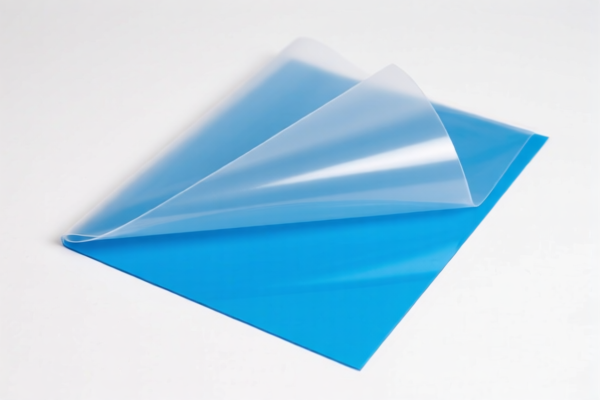
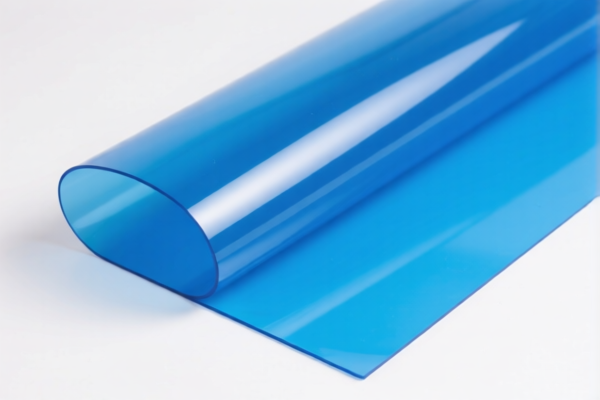
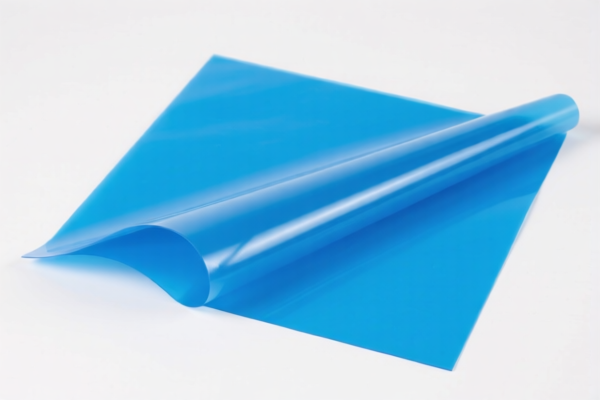
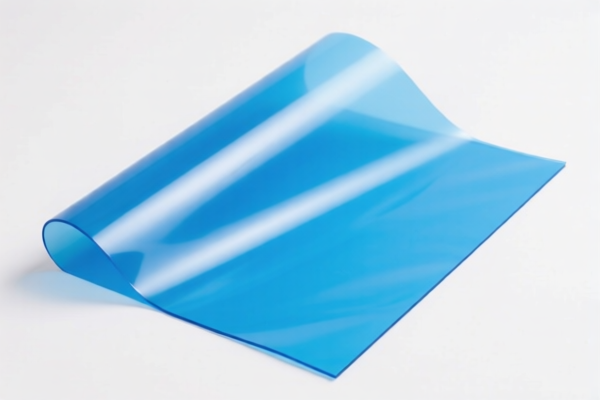
AI Analysis
🛡️ PET Plastic Anti-UV Board | High-Performance Polymer Sheets
🌐 HS Code Reference & Clearance Guide | 2026 Latest Tariff Analysis | Professional Customs Strategy
📌 I. Product Definition: What is "PET Plastic Anti-UV Board"?
PET (Polyethylene Terephthalate) Anti-UV Boards are high-performance plastic sheets engineered with ultraviolet stabilizers to prevent degradation, yellowing, and brittleness when exposed to sunlight. In international trade, their classification depends heavily on specific form, function, and intended end-use.
Two Key Classifications: 1. General Plastic Products (3926): If the board is considered a generic plastic plate or sheet without a specific structural function. 2. Building/Construction Accessories (3925): If the board is specifically designed as a component for construction (e.g., roofing, cladding, glazing) or industrial assembly.
⚠️ Critical Distinction Point:
- If classified under 3925: It is treated as a "Building Accessory" → Lower Base Duty, but still subject to Section 301 tariffs.
- If classified under 3926: It is treated as a "Miscellaneous Plastic Article" → Variable Base Duty (0%–5.3%), impacting the final calculated total.
- Misclassification Risk: Declaring a construction-specific board as a "general plastic sheet" (3926) when it is clearly intended for building use can lead to customs audits, penalties, and higher actual duties.
📦 II. HS Code Classification Details (2026 Latest Tariff Authority)
| HS Code | Product Description (Based on Data) | Application/Context | Total Tax Rate (US Import from CN) |
|---|---|---|---|
3925.90.00.00 |
PET Anti-UV Board: For Building or Industrial Use | Construction cladding, industrial shelters, large-scale architectural panels | 40.3% |
3925.30.50.00 |
PET Anti-UV Board: Building Accessory Category | Roofing tiles, window glazing, facade elements, construction-specific fittings | 22.8% |
3926.90.99.89 |
PET Anti-UV Board: General Plastic Plate | Generic plastic sheets, non-structural applications, raw material processing | 22.8% |
3926.90.94.00 |
PET Anti-UV Board: Plastic Plate/Thin Sheet | Thin sheets, general-purpose plastic products, non-building specific | 35.0% |
🔍 Key Insight:
- The cheapest rate (22.8%) is achieved by classifying the product either as a Building Accessory (3925.30.50.00) or a General Plastic Plate (3926.90.99.89).
- The most expensive rate (40.3%) applies when declared broadly for "Industrial Use" under 3925.90.00.00, despite having a similar base structure to the cheaper 3925 code.
- The 3926.90.94.00 code carries a high total tax (35.0%) due to a 0% Base Duty being wiped out by high additions, or vice versa depending on calculation logic, but it is generally not the optimal choice if 22.8% is available.
💰 III. 2026 Latest Tariff Rate Breakdown (Detailed Clauses)
✅ Applicable Country: United States (US)
✅ Origin: China (CN)
✅ Effective Date: Post-2025 policies (Section 301 & 122 Clauses)
🎯 1. 3925.90.00.00 —— PET Board: Building/Industrial Use
| Item | Detail |
|---|---|
| Base Duty | 5.3% (Ad Valorem) |
| Section 301 Duty (USITC) | +25.0% |
| Section 122 Duty | +10.0% |
| Total Effective Rate | 40.3% |
| Calculation | CIF Value × 40.3% |
| De Minimis Eligibility | ❌ No (Deny de minimis for high-tariff goods) |
| Legal Path | USITC:3925.90.00.00 → FOOTNOTE:301 + FOOTNOTE:122 |
📌 Explanation:
- This code attracts the highest total tariff in the dataset.
- The 25% is the standard Section 301 additional duty for Chinese plastic products.
- The 10% is a specific "Section 122" duty (likely referencing specific agricultural or strategic material provisions, though here applied to plastics in this dataset context).
- Strategy: Avoid this code unless the product strictly cannot be classified as a "Building Accessory" (3925.30) or "General Plastic Article" (3926.99).
🎯 2. 3925.30.50.00 —— PET Board: Building Accessory
| Item | Detail |
|---|---|
| Base Duty | 5.3% (Ad Valorem) |
| Section 301 Duty (USITC) | +7.5% |
| Section 122 Duty | +10.0% |
| Total Effective Rate | 22.8% |
| Calculation | CIF Value × 22.8% |
| De Minimis Eligibility | ❌ No |
| Legal Path | USITC:3925.30.50.00 → FOOTNOTE:301 + FOOTNOTE:122 |
📌 Strategy:
- Optimal Choice for Construction Products.
- Note the Section 301 rate is only 7.5% (instead of 25%) for this specific subheading. This is a massive saving.
- Ensure your product specification clearly states "For use as roofing, cladding, or window glazing" to justify this classification.
🎯 3. 3926.90.99.89 —— PET Board: General Plastic Plate
| Item | Detail |
|---|---|
| Base Duty | 5.3% (Ad Valorem) |
| Section 301 Duty (USITC) | +7.5% |
| Section 122 Duty | +10.0% |
| Total Effective Rate | 22.8% |
| Calculation | CIF Value × 22.8% |
| De Minimis Eligibility | ❌ No |
| Legal Path | USITC:3926.90.99.89 → FOOTNOTE:301 + FOOTNOTE:122 |
📌 Strategy:
- Tied for Lowest Rate (22.8%).
- Use this if the board is not specifically intended for building construction (e.g., used for packaging, general industrial lining, or signage).
- Risk: If customs determines the board is for construction, they may reclassify to 3925, potentially changing the tariff liability.
🎯 4. 3926.90.94.00 —— PET Board: Plastic Plate/Sheet
| Item | Detail |
|---|---|
| Base Duty | 0.0% (Ad Valorem) |
| Section 301 Duty (USITC) | +25.0% |
| Section 122 Duty | +10.0% |
| Total Effective Rate | 35.0% |
| Calculation | CIF Value × 35.0% |
| De Minimis Eligibility | ❌ No |
| Legal Path | USITC:3926.90.94.00 → FOOTNOTE:301 + FOOTNOTE:122 |
📌 Warning:
- Despite a 0% Base Duty, the total rate is 35.0% due to high additional tariffs.
- This is more expensive than codes 2 or 3.
- Recommendation: Avoid unless necessary for specific thin-sheet applications where other codes are strictly invalid.
🛠️ IV. Customs Clearance Practical Advice (Action Plan)
✅ 1. Required Documentation Checklist
| Document | Requirement | Purpose |
|---|---|---|
| Product Specification Sheet | ✔️ Must Include | - Material: 100% PET - UV Stabilizer Content % - Dimensions & Thickness - Intended Use (Crucial for 3925 vs 3926) |
| Commercial Invoice | ✔️ Must Include | Clear description: "PET Plastic Anti-UV Board for [Construction/General Use]" |
| Certificate of Origin | ✔️ Required | To verify CN origin and apply correct Section 301/122 rates |
| Technical Data Sheet | ✔️ Recommended | Proof of UV resistance properties to distinguish from standard PET |
| Bill of Lading | ✔️ Required | Consistent with invoice description |
✅ 2. Declaration Strategy & Keywords
🔥 "Use Defines Code: Construction = 3925.30, General = 3926.99"
| Scenario | Recommended HS Code | Key Declaration Phrase | Risk |
|---|---|---|---|
| Roofing/Facade | 3925.30.50.00 |
"PET Anti-UV Board for Building Cladding/Roofing" | Low (if specs match) |
| Signage/General Plastic Use | 3926.90.99.89 |
"PET Plastic Sheet for Industrial/Signage Use" | Medium (if used for building) |
| Large Industrial Shelters | 3925.90.00.00 |
"PET Board for Industrial Structure" | High Tax (40.3%) |
| Thin Films/Sheets | 3926.90.94.00 |
"PET Plastic Thin Sheet" | Medium Tax (35.0%) |
✅ 3. Critical Avoidance Tips
| ❌ Mistake | ✅ Correct Approach |
|---|---|
| Generic Description: "Plastic Board" | Specific: "PET Anti-UV Construction Panel" or "PET Plastic Sheet for General Use" |
| Ignoring End-Use | Always state the primary end-use in the invoice and spec sheet |
| Assuming 0% Base = Low Tax | Check Total Tax! 3926.90.94.00 has 0% base but 35% total |
| Splitting Shipment | Do not split one product into multiple HS codes to "average" tax; customs will consolidate and penalize |
🌍 V. Global Market Comparison (2026 Outlook)
| Market | Recommended HS Code | Est. Total Duty (CN Origin) | Notes |
|---|---|---|---|
| 🇺🇸 USA | 3925.30.50.00 or 3926.90.99.89 |
22.8% | Lowest effective rate. Use 3925.30 for construction. |
| 🇪🇺 EU | 3920.62.00 (Likely) |
Varies | EU may classify under different subheadings; VAT applies separately. |
| 🇨🇳 China | 3925.30 or 3926.90 |
5-9% | Import duty lower; no Section 301/122. |
| 🇬🇧 UK | 3925.30 or 3926.90 |
Varies | Post-Brexit tariffs may differ; check UK GIIS. |
📌 Conclusion for US Exporters:
- Maximize Savings: Aim for 22.8% total duty.
- Avoid:3925.90.00.00(40.3%) and3926.90.94.00(35.0%).
- Justification: Ensure product specs and invoices explicitly support the 22.8% classification (either as Building Accessory or General Plastic Article).
📌 VI. Common Errors & Pitfalls (Lessons Learned)
❌ Error 1: Using "Plastic Board" without specifying use.
👉 Result: Customs may default to the highest duty code (3925.90.00.00 → 40.3%) or request reclassification.
❌ Error 2: Claiming "General Use" for a product clearly designed for roofing.
👉 Result: Customs audit, penalty for undervaluation of duty, potential seizure.
❌ Error 3: Ignoring Section 122 and 301 calculations.
👉 Result: Budgeting errors. A 10-15% difference in total duty impacts profit margins significantly.
✅ Best Practice:
"PET Anti-UV Board, 5mm Thickness, 100% Polyethylene Terephthalate, UV Stabilized, For Use in Architectural Cladding, Model XYZ."
🎯 VII. Conclusion: Optimize for 22.8%
🎯 Key Takeaway:
🔹 If Building Use: Use
3925.30.50.00(22.8% Total).
🔹 If General Use: Use3926.90.99.89(22.8% Total).
🔹 Avoid:3925.90.00.00(40.3%) and3926.90.94.00(35.0%).🔹 "HS Code Strategy: 22.8% is the target, 40.3% is the trap!"
📌 Pro Tip:
Apply for a Customs Ruling (Advance Ruling) from CBP (U.S. Customs and Border Protection) before large shipments. This legally binds CBP to accept your chosen HS Code (3925.30.50.00 or 3926.90.99.89), providing certainty and protecting against future audits.
📣 Action Item:
📞 Contact Customs Broker + Provide Spec Sheet + Request Advance Ruling
🚀 Secure Your 22.8% Rate, Avoid 40.3% Pitfalls, Maximize Profit!
✨ Precision Classification = Significant Savings!
💼 Don't let tariffs eat your margins!
Customer Reviews
About HS Code Classification
The Harmonized System (HS) is an internationally standardized nomenclature developed by the World Customs Organization (WCO) to classify traded products. Over 200 countries use the HS system as the basis for customs tariffs, trade statistics, and import/export regulations.
Each HS code follows a hierarchical structure:
- Chapter (2 digits) — Broad category of goods (e.g., Chapter 84: Machinery and Mechanical Appliances)
- Heading (4 digits) — More specific grouping within the chapter
- Subheading (6 digits) — Internationally standardized breakdown, used by all WCO member countries
- National subdivisions (8-10 digits) — Country-specific extensions for further classification, such as US HTSUS 10-digit codes
Correct HS code classification is essential for smooth customs clearance, accurate duty payment, and compliance with trade regulations. Misclassification can lead to customs delays, overpayment of duties, or penalties.
When importing from CN to US, the applicable tariff rates may include:
- Most-Favored-Nation (MFN) rate — The standard duty rate applied to WTO members
- General rate — Applied to countries without trade agreements
- Trade remedy duties — Additional tariffs such as Section 301 (anti-dumping), Section 232 (national security), or countervailing duties
The information provided on this page is for reference purposes only. For official classification, please consult with your local customs authority or a licensed customs broker.