pet plastic colored strip
CN → US| HS Code | Tariff Rate | Origin | Destination | Doc |
|---|---|---|---|---|
| 3916903000 | 41.5% | CN | US | Official Doc |
| 5404198040 | 41.9% | CN | US | Official Doc |
| 5404900000 | 35.0% | CN | US | Official Doc |
| 3916905000 | 40.8% | CN | US | Official Doc |
| 3926909905 | 22.8% | CN | US | Official Doc |
| 3926909989 | 22.8% | CN | US | Official Doc |
Product Images
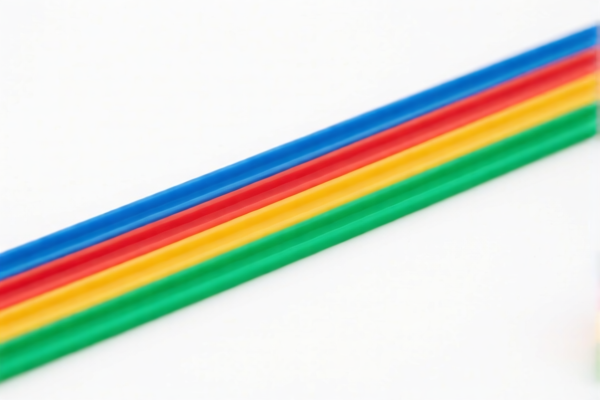

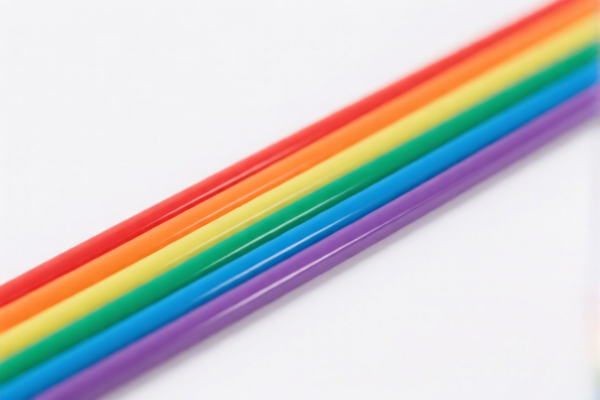
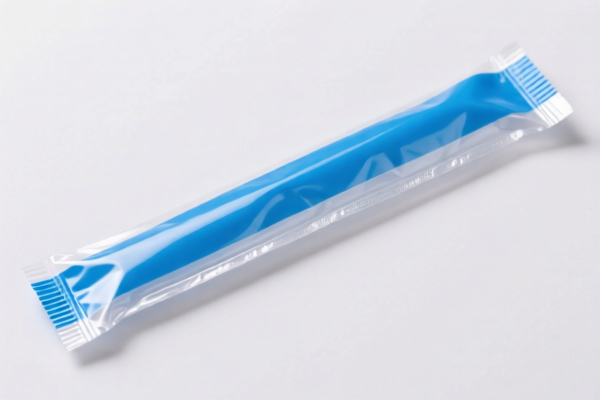
AI Analysis
🎨 PET Plastic Colored Strip (Polyethylene Terephthalate Strips)
🌐 HS Code Reference & Customs Clearance Guide | 2025 Tax Regime Analysis | Expert Strategy
📌 I. Product Definition & Classification: Do You Truly Understand "PET Strips"?
The PET Plastic Colored Strip is a versatile synthetic material derived from Polyethylene Terephthalate (PET), widely used in packaging, weaving, reinforcement, crafts, and industrial applications. In international trade, its classification depends heavily on material composition, shape, and intended use.
🧐 Key Distinctions:
- Plastic Profile (Rod/Bar): If the strip is thick, rigid, and used as a structural "rod" or "bar" (Chapter 39).
- Monofilament/Strand: If the strip is a continuous single filament or thin strand (Chapter 54).
- Synthetic Fiber Band: If the strip is flat and used for bundling or binding (Chapter 54 or 39 depending on finish).
- Finished Plastic Article: If the strip is a specialized finished product (e.g., decorative strips) (Chapter 39).
⚠️ Critical Warning:
- Chapter 39 (Plastics) vs. Chapter 54 (Textiles/Fibers): A "strip" can be classified under either depending on whether it is viewed as a plastic profile or a textile fiber. - Duty Impact: The difference between a 35.0% total duty and a 41.9% total duty can make or break your profit margin.
📦 II. Detailed HS Code Classification (2025/2026 Data)
| HS Code | Product Description | Shape/Feature | Applicable Scenario | Total Duty Rate | | :--- | :--- | :--- | :--- :--- | | 3916.90.30.00 | Plastic Color Strips (PET) | Strip/Bar | Classified under "Other Plastic Shapes"; rigid plastic bars. | 41.5% | | 5404.19.80.40 | PET Synthetic Fibers | Monofilament/Strand | Classified as "Other Single Filaments/Strands"; textile-like strips. | 41.9% | | 5404.90.00.00 | Synthetic Fiber Strips | Band/Strap | Classified as "Synthetic Fiber Bands"; used for binding/woven applications. | 35.0% | | 3916.90.50.00 | PET Plastic Profiles | Rod/Bar/Profile | Classified as "Rods, Bars, and Profiles"; structural plastic forms. | 40.8% | | 3926.90.99.05 | All-Plastic Strips | Strip | "Other Plastic Articles"; specific finished plastic strip forms. | 22.8% | | 3926.90.99.89 | PET Plastic Articles | Other Articles | General "Other Plastic Articles"; decorative or specialized non-structural strips. | 22.8% |
🔍 Key Insight:
- Lowest Duty (22.8%): Found in 3926 (Finished Plastic Articles). If your product is a "finished strip" not intended for weaving, this is your best bet. - Highest Duty (41.9%): Found in 5404 (Fibers) or 3916 (Rods). If the strip is very thin and acts like a thread, it hits this high rate. - Middle Ground (35.0%): 5404.90 (Bands). If the strip is flat and used for tying/binding.
💰 III. 2025/2026 Tariff Rate Breakdown (Including Surcharges)
✅ Target Market: United States (US)
✅ Origin: China (CN)
✅ Applicable Policies: Base Tariff + 301 Section Surcharges + 122 Section Tariffs (2024/2025 Era)
🎯 1. 3916.90.30.00 & 3916.90.50.00 (Plastic Rods/Profiles)
| Item | Content |
|---|---|
| Base Tariff | 6.5% / 5.8% |
| Section 301 Surcharge | +25.0% |
| Section 122 Tariff | +10.0% |
| Total Effective Duty | 40.8% – 41.5% |
| De Minimis Exemption | ❌ No (High risk of seizure if <800 USD) |
| Legal Basis | 19 U.S.C. § 301 / 19 C.F.R. Part 178 |
📌 Explanation:
- 301 Tariff (25%): Applied to specific Chinese steel/plastic products. - 122 Tariff (10%): Specific "Section 122" penalty tariff often applied to strategic sectors. - Result: Almost 41% total duty makes this expensive for low-margin goods.
🎯 2. 5404.19.80.40 (Synthetic Fibers - Monofilaments)
| Item | Content |
|---|---|
| Base Tariff | 6.9% |
| Section 301 Surcharge | +25.0% |
| Section 122 Tariff | +10.0% |
| Total Effective Duty | 41.9% |
| De Minimis Exemption | ❌ No |
| Legal Basis | 19 U.S.C. § 301 / HTSUS Subheading 5404 |
📌 Explanation:
- Classified as "Other Synthetic Filaments." - Highest Rate (41.9%): This is the most punitive classification. Avoid if possible unless the product is strictly a filament for weaving.
🎯 3. 5404.90.00.00 (Synthetic Fiber Bands)
| Item | Content |
|---|---|
| Base Tariff | 0.0% (Benefit!) |
| Section 301 Surcharge | +25.0% |
| Section 122 Tariff | +10.0% |
| Total Effective Duty | 35.0% |
| De Minimis Exemption | ❌ No |
| Legal Basis | 19 U.S.C. § 301 / HTSUS Subheading 5404.90 |
📌 Explanation:
- 0% Base Tariff saves money, but the 301/122 surcharges remain. - Strategy: If your strip is flat and used for binding, try to prove it fits here (5404.90) rather than 5404.19.
🎯 4. 3926.90.99.05 & 3926.90.99.89 (Finished Plastic Articles)
| Item | Content |
|---|---|
| Base Tariff | 5.3% |
| Section 301 Surcharge | +7.5% (Reduced!) |
| Section 122 Tariff | +10.0% |
| Total Effective Duty | 22.8% |
| De Minimis Exemption | ❌ No |
| Legal Basis | 19 U.S.C. § 301 / HTSUS Subheading 3926 |
📌 Explanation:
- Best Option (22.8%): - 301 Surcharge is only 7.5% (not 25%) because "Finished Articles" often fall under a different 301 exclusions list or lower tier. - Base Tariff is slightly higher (5.3%) but the surcharge savings dominate. - Requirement: Must be a finished article, not raw material for weaving.
🛠️ IV. Customs Clearance Practical Advice (Pitfall Avoidance)
✅ 1. Material Preparation Checklist (Must-Haves)
| Document | Requirement | Purpose |
|---|---|---|
| Material Safety Data Sheet (MSDS) | ✔️ Mandatory | Proves material is PET (not PVC/PP) and confirms chemical composition. |
| Product Technical Spec Sheet | ✔️ Mandatory | Details width, thickness, tensile strength, color, and density. |
| Usage Declaration | ✔️ Critical | Explicitly state: "Used for [Decorative/Finishing/Bundling], NOT for weaving fabric." |
| Sample Photos | ✔️ Mandatory | Show cross-section (round? flat? hollow?) to prove "Strip" vs. "Rod". |
| Certificate of Origin | ✔️ Mandatory | Essential for 122/301 duty determination. |
✅ 2. Declaration Strategy (The "Golden Rules")
🔥 "Define Shape, Define Use, Avoid Fiber Labels!"
| Scenario | Correct HS Code | Wrong Code (Risk) |
|---|---|---|
| Thick, Rigid, Structural | 3916.90.50.00 |
5404.19.80.40 (41.9% vs 40.8%) |
| Flat, Flexible, for Bundling | 5404.90.00.00 |
3926.90.99.05 (35.0% vs 22.8% - Wait, check 3926 if finished) |
| Finished Decorative Strip | 3926.90.99.05 |
5404.19.80.40 (22.8% vs 41.9%!) |
| Raw Filament for Weaving | 5404.19.80.40 |
3926.90.99.89 (41.9% vs 22.8% - Risk of underpayment) |
Pro Tip: If the strip is a finished product (e.g., a specific color strip for a toy or craft kit), always argue for Chapter 3926. If it is a raw material for weaving, it must be Chapter 54.
✅ 3. Special Scenarios & Solutions
| Situation | Solution |
|---|---|
| "Is it a Rod or a Strip?" | Measure thickness. >10mm = Rod (3916). <10mm but flat = Band (5404). Thin round = Filament (5404). |
| "How to get 22.8% duty?" | Ensure the product is a finished article (e.g., pre-cut to size, packaged for end-use). Do not sell as "bulk raw material." |
| "What if Customs rejects 3926?" | Provide a "Letter of Non-Woven Use" stating the strip is NOT for textile manufacturing. |
| "Is De Minimis ($800) available?" | NO. Most 301/122 duty goods are excluded from the $800 exemption. Expect duties on every shipment. |
🌍 V. Global Market Comparison (2025/2026)
| Country | Recommended HS Code | Duty (Base + Surcharges) | Notes |
|---|---|---|---|
| 🇺🇸 USA | 3926.90.99.05 |
22.8% | Best rate for finished strips. Avoid 5404 if possible. |
| 🇪🇺 EU | 3926.90.99 |
0% - 4.5% | Lower 301 impact (no Section 301), but CE/RoHS required. |
| 🇨🇦 Canada | 3926.90.99 |
0% | No Section 301. Check CETA/USMCA rules. |
| 🇯🇵 Japan | 3926.90.99 |
0% - 2.5% | Low duty, strict PSE certification if electrical use. |
📌 Conclusion:
- USA is the Hardest Market: High 301/122 duties.
- Strategy: Reclassify from "Fiber" (5404) to "Finished Plastic Article" (3926) whenever technically possible to save ~18-19% in duty.
📌 VI. Common Mistakes & "Blood Tears" (Lessons Learned)
❌ Mistake 1: Calling it "Polyester Thread" when it's a "Plastic Strip".
👉 Result: Classified as 5404 (41.9%) → Overpay 19%.
✅ Fix: Call it "PET Decorative Strip" and provide usage photos.
❌ Mistake 2: Shipping in bulk "rolls" without specifying end-use.
👉 Result: Customs assumes it's for weaving (5404.19).
✅ Fix: Ship with pre-cut lengths and packaging that implies "finished use."
❌ Mistake 3: Ignoring the 122 Section Tariff.
👉 Result: Unexpected 10% surcharge on top of 25% 301.
✅ Fix: Factor 10% into your cost sheet immediately.
🎯 VII. Final Verdict: Action Plan
🎯 The Winning Strategy:
🔹 Step 1: Determine if the strip is a finished article or raw fiber. 🔹 Step 2: If finished → Claim 3926.90.99.05 (Total: 22.8%). 🔹 Step 3: If raw fiber → Accept 5404.90.00.00 (Total: 35.0%) or try to prove
5404.19is necessary (41.9%). 🔹 Step 4: Do NOT claim De Minimis ($800) exemption; prepare to pay full duty.
📌 Tip: If your strip is colored, ensure the dye is non-toxic and labeled "PET" clearly to avoid "Plastic Scrap" classification (which has higher penalties).
📣 Take Action Now:
📞 Contact your Freight Forwarder: Ask for "Section 301 & 122 Duty Calculation." 📄 Prepare Documentation: MSDS + Technical Spec + "Non-Textile Use" Letter. 🚀 Optimize Classification: Push for 3926 to save ~18% in US duties!
✨ Precision Classification = Profit Protection!
💼 Don't let a wrong HS Code cost you your margin!
Customer Reviews
About HS Code Classification
The Harmonized System (HS) is an internationally standardized nomenclature developed by the World Customs Organization (WCO) to classify traded products. Over 200 countries use the HS system as the basis for customs tariffs, trade statistics, and import/export regulations.
Each HS code follows a hierarchical structure:
- Chapter (2 digits) — Broad category of goods (e.g., Chapter 84: Machinery and Mechanical Appliances)
- Heading (4 digits) — More specific grouping within the chapter
- Subheading (6 digits) — Internationally standardized breakdown, used by all WCO member countries
- National subdivisions (8-10 digits) — Country-specific extensions for further classification, such as US HTSUS 10-digit codes
Correct HS code classification is essential for smooth customs clearance, accurate duty payment, and compliance with trade regulations. Misclassification can lead to customs delays, overpayment of duties, or penalties.
When importing from CN to US, the applicable tariff rates may include:
- Most-Favored-Nation (MFN) rate — The standard duty rate applied to WTO members
- General rate — Applied to countries without trade agreements
- Trade remedy duties — Additional tariffs such as Section 301 (anti-dumping), Section 232 (national security), or countervailing duties
The information provided on this page is for reference purposes only. For official classification, please consult with your local customs authority or a licensed customs broker.