pet plastic scrap
CN → US| HS Code | Tariff Rate | Origin | Destination | Doc |
|---|---|---|---|---|
| 3926904590 | 38.5% | CN | US | Official Doc |
| 3915900010 | 35.0% | CN | US | Official Doc |
| 3907995010 | 41.5% | CN | US | Official Doc |
| 3907995050 | 41.5% | CN | US | Official Doc |
| 3926909989 | 22.8% | CN | US | Official Doc |
Product Images
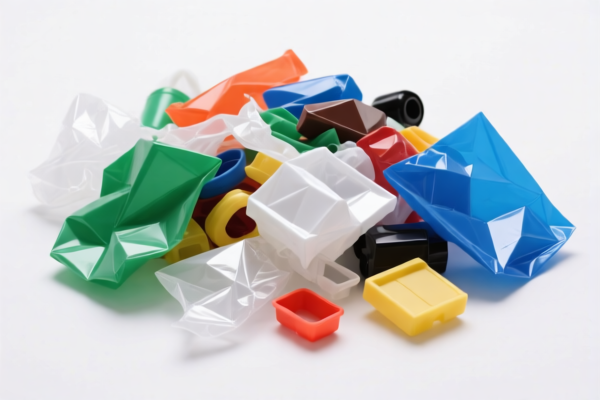

AI Analysis
🚛 PET Plastic Scrap (Polyethylene Terephthalate Waste)
🌐 HS Code Reference & Clearance Guide | 2026 Latest Tariff Analysis | Professional Entry Strategies
📌 I. Product Definition & Classification: Is It "Scrap" or a "Product"?
PET Plastic Scrap is a critical raw material in the recycling industry, derived from used bottles, films, or manufacturing leftovers. However, in international trade, the line between "waste/scrap" (regulated) and "semi-finished products/plastic articles" (commercial goods) is thin and highly scrutinized. Misclassification can lead to severe penalties, cargo detention, or rejection.
In this dataset, four distinct HS Codes are presented for PET Plastic Scrap, ranging from 22.8% to 41.5% in total tax rates. The key differentiator is the physical state and intended use: 1. Waste/Offcuts: Raw, unprocessed waste (HS 3915). 2. Articles/Products: Recycled or processed into usable forms (HS 3926). 3. Primary Forms: Pellets/flakes considered as raw material (HS 3907).
⚠️ Key Distinction Point:
- If it is loose, mixed, or dirty waste → Likely 3915.90.00.10.
- If it is sorted, clean, and intended for re-melting into pellets → Likely 3907.99.50.x0.
- If it is sorted into shapes or non-film forms → Likely 3926.90.x0.
📦 II. HS Code Classification Details (2026 Latest Tariff Authority对照)
| HS Code | Product Description | Applicability Scenario | Tax Rate | Key Characteristic |
|---|---|---|---|---|
3915.90.00.10 |
PET Plastic Scrap (Waste/Offcuts/Trimming) | Raw waste from manufacturing, post-industrial scraps, unsorted film waste | 35.0% | Waste Category: Raw, unprocessed, often dirty. |
3926.90.45.90 |
PET Plastic Scrap (Other Plastic Articles) | Sorted PET parts, specific shapes, or processed scrap not classified as waste | 38.5% | Article Category: Processed into identifiable articles, not raw waste. |
3907.99.50.10 |
PET Plastic Scrap (Polyester Primary Forms) | Clean flakes, regrind, or pellets intended for chemical/mechanical recycling | 41.5% | Raw Material: Considered "primary forms" of polyester, high value. |
3907.99.50.50 |
PET Plastic Scrap (Other Polyesters) | Other polyester forms not specified elsewhere (e.g., specific granules) | 41.5% | Raw Material: Broad category for polyester raw materials. |
3926.90.99.89 |
PET Plastic Scrap (Other Plastic Articles) | Miscellaneous PET scrap not fitting other subheadings, often lower grade | 22.8% | Article Category: Lowest tax rate among options, but strict definition required. |
🔍 Critical Reminder:
-3915(Waste) is heavily regulated due to environmental concerns (Basel Convention). Ensure documentation proves it is industrial scrap, not household waste.
-3907(Primary Forms) is often preferred by recyclers as it is treated as a raw material, but requires proof of cleanliness and processing (washing, crushing).
-3926(Articles) applies if the scrap has been processed into specific shapes or is not merely waste.
💰 III. 2026 Latest Tariff Rate Breakdown (Including Surcharges & Policy Add-ons)
✅ Applicable Country: United States (US)
✅ Origin: China (CN)
✅ Effective Time: Post-November 2025 (Current Trade Environment)
🎯 1. 3915.90.00.10 —— PET Plastic Scrap (Waste/Offcuts)
| Item | Content |
|---|---|
| Base Tariff | 0.0% (ad valorem) |
| Section 301 Surcharge | +25.0% (USITC Footnote 9903.88.01) |
| Section 122 Surcharge | +10.0% (Additional duty on Chinese goods) |
| Total Rate | 35.0% |
| Tax Calculation | CIF Value × 35.0% |
| De Minimis Exemption | ❌ Not Eligible |
| Legal Basis | USITC:3915.90.00.10 → SECTION301:9903.88.01 → SECTION122:10% |
📌 Explanation:
- Waste plastic is often duty-free at the base level, but the 25% Section 301 tariff applies to most Chinese plastic products.
- The 10% Section 122 tariff adds an additional layer, bringing the total to 35%.
- Risk: High scrutiny on "waste" vs. "scrap" to prevent illegal dumping.
🎯 2. 3926.90.45.90 —— PET Plastic Scrap (Other Plastic Articles)
| Item | Content |
|---|---|
| Base Tariff | 3.5% |
| Section 301 Surcharge | +25.0% |
| Section 122 Surcharge | +10.0% |
| Total Rate | 38.5% |
| Tax Calculation | CIF Value × 38.5% |
| De Minimis Exemption | ❌ Not Eligible |
| Legal Basis | USITC:3926.90.45.90 → SECTION301:9903.88.01 → SECTION122:10% |
📌 Explanation:
- This code carries a 3.5% base tariff, making it more expensive than the waste category (3915).
- Use this only if the product is clearly not waste but a processed plastic article.
🎯 3. 3907.99.50.10 & 3907.99.50.50 —— PET Plastic Scrap (Polyester Primary Forms)
| Item | Content |
|---|---|
| Base Tariff | 6.5% |
| Section 301 Surcharge | +25.0% |
| Section 122 Surcharge | +10.0% |
| Total Rate | 41.5% |
| Tax Calculation | CIF Value × 41.5% |
| De Minimis Exemption | ❌ Not Eligible |
| Legal Basis | USITC:3907.99.50.10/50 → SECTION301:9903.88.01 → SECTION122:10% |
📌 Explanation:
- These are the highest tax rates (41.5%).
- Why so high? These codes treat PET scrap as primary raw material (like chips or pellets), which is a high-value commodity. The 6.5% base reflects its industrial value.
- Strategy: Avoid these codes unless you are exporting high-quality, cleaned, and sorted PET flakes intended for direct re-pelletizing, and the cost structure allows for it.
🎯 4. 3926.90.99.89 —— PET Plastic Scrap (Other Plastic Articles)
| Item | Content |
|---|---|
| Base Tariff | 5.3% |
| Section 301 Surcharge | +7.5% (Reduced Section 301 rate for certain items) |
| Section 122 Surcharge | +10.0% |
| Total Rate | 22.8% |
| Tax Calculation | CIF Value × 22.8% |
| De Minimis Exemption | ❌ Not Eligible |
| Legal Basis | USITC:3926.90.99.89 → SECTION301:7.5% → SECTION122:10% |
📌 Explanation:
- This is the most cost-effective option (22.8%)!
- The Section 301 surcharge is only 7.5% (instead of 25%) for certain "other plastic articles."
- Crucial: You must prove the goods fall under this specific subheading, not as "waste" (3915) or "primary forms" (3907). This often requires the material to be processed into a specific, non-waste form (e.g., sorted, cleaned, and packaged as a commodity, not loose waste).
🛠️ IV. Clearance Practical Advice (Real-World Pitfall Avoidance)
✅ 1. Documentation Checklist (Non-negotiable)
| Document | Mandatory | Description |
|---|---|---|
| ✅ Detailed Packing List | ✔️ | Must specify weight, volume, and condition (clean/dirty, flakes/films). |
| ✅ Product Description | ✔️ | Explicitly state "PET Plastic Scrap" or "PET Waste" but align with HS Code. |
| ✅ Certificate of Analysis | ✔️ | For 3907 codes, proof of purity and moisture content is critical. |
| ✅ Letter of Non-Waste | ✔️ | If using 3926 or 3907, provide a statement that it is recyclable raw material, not hazardous waste. |
| ✅ Commercial Invoice | ✔️ | Value must reflect the scrap market price, not new PET price. |
| ✅ Photos | ✔️ | Show loading, packaging, and material condition (color, size). |
✅ 2. Declaration Tips (Key Mantra)
🔥 "Condition Determines Code, Waste is High Tax, Articles Can Be Lower!"
| Scenario | Correct HS Code | Tax Rate | Why? |
|---|---|---|---|
| Loose, dirty, mixed waste from production lines | 3915.90.00.10 |
35.0% | Classified as waste; higher scrutiny. |
| Clean, sorted PET flakes/pellets for recycling | 3907.99.50.10 |
41.5% | Treated as raw material; highest tax but highest commercial value. |
| Processed PET items, not waste, specific subcategory | 3926.90.45.90 |
38.5% | Intermediate tax; requires clear definition as "article." |
| Miscellaneous PET scrap, specific exclusion | 3926.90.99.89 |
22.8% | Best Rate! Requires proof it fits this specific "other" category with reduced 301 tariff. |
✅ 3. Special Handling Cases
| Case | Handling Advice |
|---|---|
| Contaminated Scrap | Must declare as 3915.90.00.10. Do not attempt to hide contamination; EPA/CBP will inspect. |
| High-Quality Flakes | Consider 3907.99.50.10. Although tax is 41.5%, it is often the only compliant code for clean recycling feedstock. |
| Mixed Plastics | If PET is mixed with other plastics, it may be classified under "Mixed Plastic Waste" (3915.90.00.90), leading to higher scrutiny and potential rejection. |
| Section 301 Exclusion | Check if the specific HS code was ever excluded from Section 301. Most plastic scrap codes are not excluded. |
🌍 V. Global Market Clearance Comparison (2026 Latest)
| Country/Region | Recommended HS Code | Tariff (China Origin) | Certification | Notes |
|---|---|---|---|---|
| 🇺🇸 USA | 3926.90.99.89 |
22.8% | N/A | Lowest tax rate; requires precise classification. |
| 🇪🇺 EU | 3915.90.00.90 |
0% (Base) + 6% (Recycled) | REACH, EPR | EU has strict waste regulations; EPR fees apply. |
| 🇨🇳 China | 3915.90.00.10 |
0% | N/A | China imports significant plastic scrap; ensure it meets GB standards. |
| 🇬🇧 UK | 3915.90.00.90 |
0% | UKCA | Similar to EU post-Brexit. |
| 🇦🇪 UAE | 3915.90.00.90 |
5% | N/A | Lower tariffs; growing recycling hub. |
📌 Conclusion:
- The USA has the most complex and high-tax regime for PET scrap due to Section 301 and Section 122.
-3926.90.99.89(22.8%) is the most strategic code for the US if the product qualifies, saving up to 12.2% compared to waste classification.
📌 VI. Common Errors & Pitfall Guide (Blood Lessons)
❌ Error 1: Declaring "Clean Flakes" as "Waste" (3915)
👉 Consequence: Misses the opportunity for 3926.90.99.89 (22.8%) → Overpay 12.2%.
❌ Error 2: Declaring "Mixed/Dirty Waste" as "Primary Forms" (3907)
👉 Consequence: CBP inspection reveals contamination → Cargo detained, fines, and 41.5% tax + penalties.
❌ Error 3: Ignoring Section 122 Tariff
👉 Consequence: Assuming only 301 tariff applies → Under-declaration of 10%.
❌ Error 4: Using "Plastic Granules" for Loose Scrap
👉 Consequence: Misclassification → Customs rejection because granules are processed, scrap is not.
✅ Correct Approach:
"Clean, Sorted PET Flakes, 80% Purity, for Mechanical Recycling, 10mm Size"
➡️ Consider3907.99.50.10(41.5%) or3926.90.99.89(22.8%) based on physical form and customs advice.
🎯 VII. Conclusion: Professional Declaration, Cost Savings!
🎯 Remember the Mantra:
🔹 "Waste is 35%, Primary is 41.5%, Other Articles Can Be 22.8%!"
🔹 "Clean your scrap, sort your grades, and pick the lowest tax code that fits!"
📌 Pro Tip:
If your PET scrap is clean, sorted, and packaged, argue for 3926.90.99.89 to save 12.2% in taxes.
If it is dirty or mixed, accept 3915.90.00.10 (35%) to avoid severe penalties for misdeclaring waste.
Always apply for an Advance Ruling (CBP Ruling) if the product is borderline.
📣 Immediate Action:
📞 Contact a licensed customs broker + Provide product photos + Submit for HS Code Advance Ruling
🚀 Ensure smooth clearance, avoid delays, and maximize your recycling profits!
✨ Professional Clearance Starts with Accurate Classification!
💼 Every percentage point of tax saved is pure profit!
Customer Reviews
About HS Code Classification
The Harmonized System (HS) is an internationally standardized nomenclature developed by the World Customs Organization (WCO) to classify traded products. Over 200 countries use the HS system as the basis for customs tariffs, trade statistics, and import/export regulations.
Each HS code follows a hierarchical structure:
- Chapter (2 digits) — Broad category of goods (e.g., Chapter 84: Machinery and Mechanical Appliances)
- Heading (4 digits) — More specific grouping within the chapter
- Subheading (6 digits) — Internationally standardized breakdown, used by all WCO member countries
- National subdivisions (8-10 digits) — Country-specific extensions for further classification, such as US HTSUS 10-digit codes
Correct HS code classification is essential for smooth customs clearance, accurate duty payment, and compliance with trade regulations. Misclassification can lead to customs delays, overpayment of duties, or penalties.
When importing from CN to US, the applicable tariff rates may include:
- Most-Favored-Nation (MFN) rate — The standard duty rate applied to WTO members
- General rate — Applied to countries without trade agreements
- Trade remedy duties — Additional tariffs such as Section 301 (anti-dumping), Section 232 (national security), or countervailing duties
The information provided on this page is for reference purposes only. For official classification, please consult with your local customs authority or a licensed customs broker.