pet工业包装膜
CN → US| HS Code | Tariff Rate | Origin | Destination | Doc |
|---|---|---|---|---|
| 3920992000 | 39.2% | CN | US | Official Doc |
| 3920620090 | 39.2% | CN | US | Official Doc |
| 3919905060 | 40.8% | CN | US | Official Doc |
| 3919905040 | 40.8% | CN | US | Official Doc |
| 3920992000 | 39.2% | CN | US | Official Doc |
Product Images


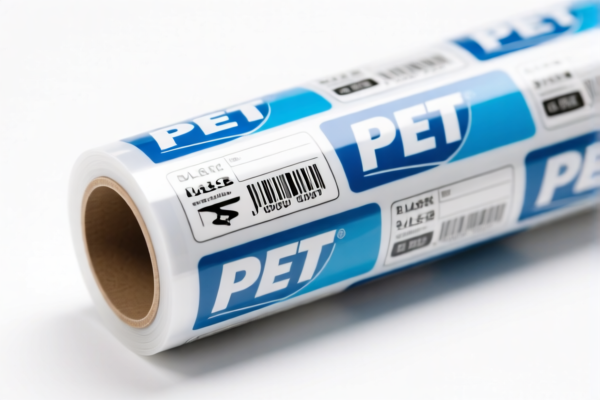
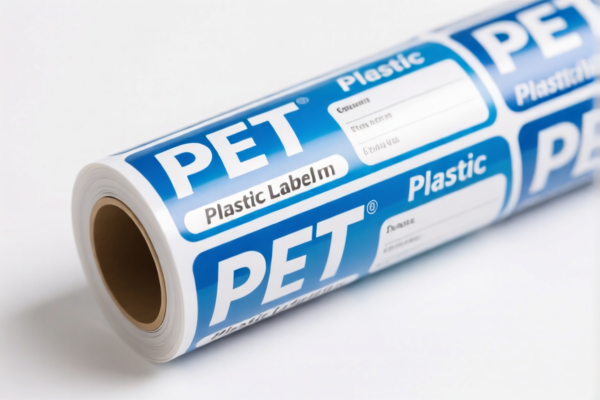
AI Analysis
📦 PET Industrial Packaging Film
🌐 HS Code Classification & Tariff Guide | 2026 Latest Tariff Breakdown | Professional Customs Clearance Strategy
📌 One, Product Definition & Classification: What Exactly Is "PET Industrial Packaging Film"?
PET (Polyethylene Terephthalate) Industrial Packaging Film is a high-performance, transparent or semi-transparent plastic film made from PET resin. It is widely used in industrial applications such as:
- Wrapping heavy-duty goods (e.g., machinery, steel coils, lumber)
- Protective covering for construction materials
- Stretch wrap for palletized cargo
- Lamination layer in composite packaging
- Barrier film in food & pharmaceutical packaging (non-food contact)
⚠️ Key Classification Criteria:
- Made from PET (Polyethylene Terephthalate) — a thermoplastic polymer
- In the form of film, sheet, or strip (not molded or extruded into rigid shapes)
- Used primarily for industrial packaging, not consumer labeling or self-adhesive tapes
- Not self-adhesive unless specifically coated (then may fall under different subheading)
📦 Two, HS Code Classification Details (2026 Official Tariff Reference)
| HS Code | Product Description | Applicable Use Case | Is It Self-Adhesive? |
|---|---|---|---|
3920.99.20.00 |
Other plastic films, sheets, strips, foils, and flat profiles of PET, not elsewhere specified | General industrial packaging film, protective wrapping, stretch wrap, non-adhesive | ❌ No |
3920.62.00.90 |
PET film, conforming to polyethylene terephthalate film classification | High-clarity industrial films, used in packaging, insulation, or barrier layers | ❌ No |
3919.90.50.60 |
Other self-adhesive plastic films or strips (PET-based), not elsewhere specified | PET film with adhesive coating (e.g., for labeling or temporary protection) | ✅ Yes |
3919.90.50.40 |
Self-adhesive PET plastic film, based on material and form | Similar to above — adhesive-coated PET film for industrial or packaging use | ✅ Yes |
3920.99.20.00 |
PET industrial packaging film, classified under plastic films | Repeated entry for emphasis — same as first code | ❌ No |
🔍 Critical Note:
- Non-adhesive PET film →3920.99.20.00or3920.62.00.90
- Adhesive-coated PET film →3919.90.50.60or3919.90.50.40
- Even minor surface treatment (e.g., corona treatment, coating) may change the classification!
💰 Three, 2026 Latest Tariff Breakdown (With Full Tax Clause Explanation)
✅ Applicable Country: United States (US)
✅ Origin Country: China (CN)
✅ Effective Date: November 10, 2025 (and onward)
🎯 1. 3920.99.20.00 — PET Industrial Packaging Film (Non-Adhesive)
| Item | Detail |
|---|---|
| Base Duty Rate | 4.2% (ad valorem) |
| Section 301 (USITC) Additional Duty | +25.0% |
| Section 122 (IEEPA) Additional Duty | +10.0% |
| Total Effective Tariff | 39.2% |
| Tax Calculation | CIF Value × 39.2% |
| De Minimis Threshold | ❌ Not applicable (denied under U.S. de minimis rules) |
| Legal Basis Path | IEEPA:9903.01.25 → IEEPA:9903.01.24 → USITC:3920.99.20.00 → FOOTNOTE:9903.88.01 |
📌 Explanation: - USITC 25%: Imposed under Section 301 of the Trade Act of 1974, targeting unfair trade practices by China. - IEEPA 10%: Imposed under the International Emergency Economic Powers Act (IEEPA), applicable to goods from China and Hong Kong. - Total: 39.2% — one of the highest tariffs on non-metallic plastic films. - No de minimis exemption → even small shipments are fully taxed.
🎯 2. 3920.62.00.90 — PET Film (Conforming to PET Classification)
| Item | Detail |
|---|---|
| Base Duty Rate | 4.2% |
| USITC Additional Duty | +25.0% |
| IEEPA Additional Duty | +10.0% |
| Total Effective Tariff | 39.2% |
| Tax Calculation | CIF × 39.2% |
| De Minimis | ❌ Not applicable |
| Legal Basis Path | IEEPA:9903.01.25 → IEEPA:9903.01.24 → USITC:3920.62.00.90 → FOOTNOTE:9903.88.01 |
📌 Note:
- This code is functionally identical to3920.99.20.00in tariff treatment. - Used when the film is specifically identified as PET film under international standards. - Must be clearly documented in technical specs.
🎯 3. 3919.90.50.60 — Self-Adhesive PET Plastic Film (Non-Adhesive Coating)
| Item | Detail |
|---|---|
| Base Duty Rate | 5.8% |
| USITC Additional Duty | +25.0% |
| IEEPA Additional Duty | +10.0% |
| Total Effective Tariff | 40.8% |
| Tax Calculation | CIF × 40.8% |
| De Minimis | ❌ Not applicable |
| Legal Basis Path | IEEPA:9903.01.25 → IEEPA:9903.01.24 → USITC:3919.90.50.60 → FOOTNOTE:9903.88.01 |
📌 Why Higher?
- Higher base rate (5.8%) due to classification under self-adhesive plastic films (more complex manufacturing). - Still subject to 25% USITC + 10% IEEPA — same as non-adhesive films. - Total: 40.8% — the highest tariff in this category.
🎯 4. 3919.90.50.40 — Self-Adhesive PET Plastic Film (Form-Based Classification)
| Item | Detail |
|---|---|
| Base Duty Rate | 5.8% |
| USITC Additional Duty | +25.0% |
| IEEPA Additional Duty | +10.0% |
| Total Effective Tariff | 40.8% |
| Tax Calculation | CIF × 40.8% |
| De Minimis | ❌ Not applicable |
| Legal Basis Path | IEEPA:9903.01.25 → IEEPA:9903.01.24 → USITC:3919.90.50.40 → FOOTNOTE:9903.88.01 |
📌 Important Distinction:
- This code is identical in tariff to3919.90.50.60but applies when classification is based on physical form rather than function. - Used for coated PET films with adhesive layers, even if not labeled as “labeling film”.
🛠️ Four, Customs Clearance Best Practices (Pro Tips to Avoid Penalties)
✅ 1. Required Documentation (Must-Have Checklist)
| Document | Required? | Purpose |
|---|---|---|
| ✅ Product Specification Sheet | ✔️ | Confirm PET material, thickness, width, and use |
| ✅ Technical Drawing / Material Safety Data Sheet (MSDS) | ✔️ | Prove non-adhesive vs. adhesive coating |
| ✅ Product Photos (with label, roll, edge) | ✔️ | Show surface finish, color, thickness |
| ✅ Third-Party Test Report (e.g., ASTM, ISO) | ✔️ | Verify PET composition, non-adhesive status |
| ✅ Commercial Invoice | ✔️ | Clearly state: "PET Industrial Packaging Film, Non-Adhesive, for Wrapping" |
| ✅ Certificate of Origin (CO) | ✔️ | If from China, expect full tariff; if from Vietnam/Mexico, may qualify for IEEPA exemption |
| ✅ Packing List | ✔️ | Show roll dimensions, weight, and packaging method |
✅ 2.申报技巧(Key Rules to Remember)
🔥 "Non-adhesive = 39.2%, Adhesive = 40.8%, De Minimis = Dead, Label = Life!"
| Scenario | Correct HS Code | Wrong Code | Risk |
|---|---|---|---|
| Non-adhesive PET film, 100m roll, 150μm thick | 3920.99.20.00 |
3919.90.50.60 |
1.6% higher tax + possible audit |
| Adhesive-coated PET film, 50m roll | 3919.90.50.40 |
3920.99.20.00 |
40.8% vs 39.2% — cost difference! |
| Film with corona treatment but no adhesive | 3920.99.20.00 |
3919.90.50.60 |
Misclassification risk |
| Film used in food packaging (non-contact) | 3920.99.20.00 |
3919.90.50.60 |
Only if adhesive is involved |
✅ 3. Special Cases & Workarounds
| Situation | Recommended Action |
|---|---|
| Film from Vietnam/Mexico/Thailand | Apply for IEEPA exemption — may reduce tariff to 0% |
| Film used in medical or aerospace packaging | Request special use classification — may qualify for lower duty |
| Film with temporary adhesive (e.g., release liner) | Must be declared as adhesive film → use 3919.90.50.60 |
| Film with anti-static coating | Still falls under PET film — no change in HS code unless adhesive is added |
🌍 Five, Global Customs Comparison (2026)
| Country | Recommended HS Code | Base Tariff | Additional Duties | Notes |
|---|---|---|---|---|
| 🇺🇸 United States | 3920.99.20.00 |
4.2% | +25% +10% → 39.2% | No de minimis |
| 🇨🇳 China | 3920.99.20.00 |
5% | None | No extra tariffs |
| 🇪🇺 EU | 3920.99.20.00 |
0% | None (if CE compliant) | No additional duties |
| 🇦🇺 Australia | 3920.99.20.00 |
5% | None | No IEEPA/USITC |
| 🇯🇵 Japan | 3920.99.20.00 |
0% | None | No extra charges |
📌 Takeaway:
- The U.S. is the only market with 39.2%–40.8% total tariffs on PET packaging film from China. - China, EU, Australia, Japan have no additional tariffs — ideal for export.
📌 Six, Common Mistakes & Risk Warnings (Avoid These!)
❌ Mistake 1: Declaring adhesive-coated film as 3920.99.20.00
👉 Result: Underpayment of duty → $50k+ penalties + interest
❌ Mistake 2: Using "plastic wrap" or "film" as product name without specifying PET and non-adhesive
👉 Result: HS Code mismatch → delayed clearance or seizure
❌ Mistake 3: Not providing MSDS or test reports
👉 Result: Customs may request reclassification → costly delays
❌ Mistake 4: Assuming all PET film is the same
👉 Result: Wrong code → wrong tariff → overpayment or underpayment
✅ Correct Labeling Example:
"PET Industrial Packaging Film, 150 Micron, Non-Adhesive, 100m Roll, for Heavy-Duty Wrapping, Made in China"
🎯 Seven, Conclusion: Precision Pays Off!
🎯 Remember the Golden Rule:
🔹 "Non-adhesive = 39.2%, Adhesive = 40.8%, De Minimis = Dead, Document = King!"
🔹 "One wrong HS Code = 1.6% more tax = $10,000 extra per container!"
📌 Pro Tip:
If your PET film is produced in Vietnam, Mexico, or Malaysia, apply for IEEPA exemption — you could avoid the 10% IEEPA tariff entirely and reduce total duty to ~35%.
📣 Act Now:
📞 Contact a U.S.-licensed customs broker + submit product samples + technical docs
🚀 Get an Advance Ruling (Pre-Clearance) for your HS Code — avoid surprises!
✨ Professional Customs Starts with Accurate Classification!
💼 Your profit margin depends on every percentage point.
🚀 Don’t let a wrong code sink your shipment!
Customer Reviews
About HS Code Classification
The Harmonized System (HS) is an internationally standardized nomenclature developed by the World Customs Organization (WCO) to classify traded products. Over 200 countries use the HS system as the basis for customs tariffs, trade statistics, and import/export regulations.
Each HS code follows a hierarchical structure:
- Chapter (2 digits) — Broad category of goods (e.g., Chapter 84: Machinery and Mechanical Appliances)
- Heading (4 digits) — More specific grouping within the chapter
- Subheading (6 digits) — Internationally standardized breakdown, used by all WCO member countries
- National subdivisions (8-10 digits) — Country-specific extensions for further classification, such as US HTSUS 10-digit codes
Correct HS code classification is essential for smooth customs clearance, accurate duty payment, and compliance with trade regulations. Misclassification can lead to customs delays, overpayment of duties, or penalties.
When importing from CN to US, the applicable tariff rates may include:
- Most-Favored-Nation (MFN) rate — The standard duty rate applied to WTO members
- General rate — Applied to countries without trade agreements
- Trade remedy duties — Additional tariffs such as Section 301 (anti-dumping), Section 232 (national security), or countervailing duties
The information provided on this page is for reference purposes only. For official classification, please consult with your local customs authority or a licensed customs broker.