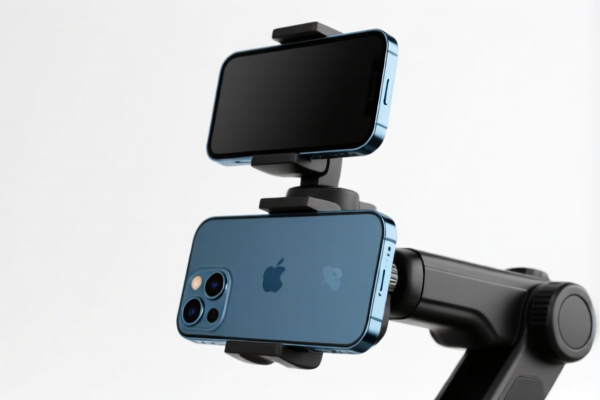
phone mount
CN → US| HS Code | Tariff Rate | Origin | Destination | Doc |
|---|---|---|---|---|
| 3926902500 | 24.0% | CN | US | Official Doc |
| 3926909989 | 22.8% | CN | US | Official Doc |
| 7326908688 | 87.9% | CN | US | Official Doc |
| 7326200090 | 88.9% | CN | US | Official Doc |
| 8529909800 | 35.0% | CN | US | Official Doc |
Product Images



AI Analysis
📱 Phone Mounts (Cell Phone Holders & Stands)
🌐 HS Code Reference & Customs Clearance Guide | 2024/2025 Tariff Structure | Strategic Duty Optimization
📌 Part 1: Product Definition & Classification – Is Your Mount a "Gadget" or a "Part"?
Phone mounts are ubiquitous in modern life, securing smartphones for navigation, entertainment, and productivity. However, in international trade, their classification depends heavily on material composition and functional role. They are not a single unified category but fall into three distinct buckets:
- Plastic Accessories (The "Fallback" Category): Mostly plastic, generic holders.
- Metal/Steel Structures (The "Heavy" Category): Iron, steel, aluminum, or copper components.
- Electronic Parts (The "Component" Category): Treated as parts of telecommunications or data processing equipment.
⚠️ Critical Distinction:
- If made primarily of plastic with no complex electronic integration → Chapter 39
- If made of steel/iron with significant structural mass → Chapter 73 (Highest Risk!)
- If marketed specifically as a component for mobile devices → Chapter 85
📦 Part 2: HS Code Classification Matrix (Detailed Breakdown)
| HS Code | Product Description | Material Composition | Classification Logic |
|---|---|---|---|
3926.90.25.00 |
Other plastic articles (General Fallback) | Plastic only | Generic plastic phone holders without specific functional coding elsewhere. |
3926.90.99.89 |
Other plastic articles (General Fallback) | Plastic/Mixed | Plastic mounts, possibly with minor non-metal parts. A common "catch-all" for mixed-material plastic units. |
7326.90.86.88 |
Other articles of iron/steel | Iron/Steel | Structural metal stands. High Duty Risk. Classified under heavy metal goods due to primary material. |
7326.20.00.90 |
Articles of wire of iron/steel | Iron/Steel | Wire-frame or heavy-duty steel mounts. The ultimate "fallback" for steel items. |
8529.90.98.00 |
Parts of apparatus | Metal/Plastic | Classified as a part of telecommunications or data processing machinery. Lower base duty, but subject to Section 301. |
8529.90.77.00 |
Parts of apparatus (Other) | Metal/Plastic | Another "parts" classification for electronic device accessories. |
💰 Part 3: 2024/2025 Tariff Rate Analysis (USA Origin: China)
✅ Target Market: United States (US)
✅ Origin: China (CN)
⚠️ Warning: High tariffs apply due to Section 301 and List 122.
🎯 Scenario A: Plastic Phone Mounts (Lowest Duty Risk)
1. HS Code: 3926.90.25.00 (Plastic, General Fallback)
| Item | Detail |
|---|---|
| Base Duty | 6.5% |
| Section 301 (List 3) | +7.5% |
| Section 122 (New Tariff) | +10.0% |
| Total Effective Rate | 24.0% |
| Calculation | CIF Value × 24% |
| De Minimis (Section 321) | ❌ Not Eligible (Valued above $800 or specific exclusions may apply; check latest CBP rulings) |
2. HS Code: 3926.90.99.89 (Plastic/Mixed)
| Item | Detail |
|---|---|
| Base Duty | 5.3% |
| Section 301 (List 3) | +7.5% |
| Section 122 (New Tariff) | +10.0% |
| Total Effective Rate | 22.8% |
| Calculation | CIF Value × 22.8% |
📌 Expert Insight:
Plastic mounts are the most tariff-efficient option. Between the two plastic codes,3926.90.99.89is slightly cheaper (22.8% vs 24.0%), but both are significantly safer than metal classifications.
🚨 Scenario B: Metal/Steel Phone Mounts (HIGHEST Duty Risk)
3. HS Code: 7326.90.86.88 (Steel/Iron)
| Item | Detail |
|---|---|
| Base Duty | 2.9% |
| Section 301 (List 3) | +25.0% |
| Section 122 (New Tariff) | +10.0% |
| Steel/Aluminum/Copper Surcharge | +50.0% |
| Total Effective Rate | 87.9% |
| Calculation | CIF Value × 87.9% |
4. HS Code: 7326.20.00.90 (Steel Wire/General Fallback)
| Item | Detail |
|---|---|
| Base Duty | 3.9% |
| Section 301 (List 3) | +25.0% |
| Section 122 (New Tariff) | +10.0% |
| Steel/Aluminum/Copper Surcharge | +50.0% |
| Total Effective Rate | 88.9% |
| Calculation | CIF Value × 88.9% |
⚠️ CRITICAL WARNING:
- DO NOT classify steel phone mounts as7326if you can avoid it. The 50% surcharge on steel/aluminum/copper items pushes duties to nearly 90%. - This is often a classification trap. If the mount has electronic components or is clearly a "part" of a phone, it might qualify for Chapter 85.
🛠️ Scenario C: Electronic Parts Classification (The "Smart" Strategy)
5. HS Code: 8529.90.98.00
6. HS Code: 8529.90.77.00
| Item | Detail |
|---|---|
| Base Duty | 0.0% |
| Section 301 (List 3) | +25.0% |
| Section 122 (New Tariff) | +10.0% |
| Total Effective Rate | 35.0% |
| Calculation | CIF Value × 35.0% |
📌 Strategic Advantage:
- Classifying a phone mount as a "part of an apparatus" (e.g., a telecommunications accessory) yields a 35.0% total duty. - This is dramatically lower than the 87-88% for steel mounts and competitive with plastic mounts (22-24%). - Justification Required: You must prove the mount is an integral part or accessory designed specifically for use with telecommunications equipment (e.g., a dedicated mount for a mobile radio or data terminal), OR argue that it falls under "other parts" of data processing machines if used in an office setting.
🛡️ Part 4: Customs Clearance Strategy & Recommendations
✅ 1. Material Choice is Key to Cost Control
| Material | HS Code Category | Total Duty | Risk Level | Recommendation |
|---|---|---|---|---|
| Plastic | 3926 | ~23-24% | 🟢 Low | Best for cost. Use ABS or Polycarbonate. |
| Electronic Part | 8529 | 35.0% | 🟡 Medium | Good alternative. Requires strong technical justification. |
| Steel/Iron | 7326 | ~88-89% | 🔴 High | AVOID. The steel surcharge destroys margins. |
✅ 2. Documentation & Justification Tips
| Document | Purpose | Key Detail to Include |
|---|---|---|
| Product Description | Clear Identification | "Cell Phone Holder, Plastic/ABS Material, Non-Electronic" OR "Accessory Part for Mobile Telecommunications Device" |
| Technical Specs | Classification Proof | If claiming 8529, include diagrams showing how it integrates with electronic devices. |
| Bill of Lading | Consistency | Ensure weight and description match the commercial invoice. |
| Origin Certificate | Tariff Eligibility | Confirm Country of Origin is China (if applicable) to trigger correct surcharges. If shipped from Vietnam/Mexico, tariffs may be lower. |
✅ 3. Common Pitfalls & How to Avoid Them
❌ Pitfall 1: Overlooking the Steel Surcharge
👉 Result: Paying 88% duty instead of 35%.
👉 Fix: If your mount has a metal frame, check if it can be classified as a "part" (Chapter 85) or if the metal content is minimal enough to be considered "plastic dominant." If it's >50% steel by weight/value, Chapter 73 is likely forced, leading to high duties.
❌ Pitfall 2: Vague Descriptions
👉 Result: Customs examiners default to the highest duty rate (often steel/metal).
👉 Fix: Be specific. "Plastic Phone Mount" is better than "Holder." "Electronic Accessory Mount" is better for Chapter 85.
❌ Pitfall 3: Ignoring Section 122
👉 Result: Surprise 10% tariff on top of existing 301 tariffs.
👉 Fix: Factor in the +10% List 122 tariff for all Chinese-origin goods, regardless of HS Code. It applies to Chapters 39, 73, and 85 equally.
🌍 Part 5: Global Market Comparison (Quick Reference)
| Destination | Base Duty | US-China Surcharges | Total Effective Duty (China Origin) | Notes |
|---|---|---|---|---|
| USA | Varies | +30-75% (301 + 122) | 22.8% - 88.9% | High Risk. Material choice is critical. |
| EU | 0-6.5% | None | 0-6.5% | Low duty, but VAT (19-27%) applies. |
| Canada | 0-5% | None (CUSMA) | 0-5% | Favorable if manufactured in NA. |
| UK | 0-5% | None | 0-5% | Stable post-Brexit regime. |
| China | 0-6.5% | None | 0-6.5% | Low import duty, high VAT (13%). |
📌 Strategic Takeaway:
If your primary market is the USA, Plastic Phone Mounts (3926) are the most cost-effective.
If you must use metal, try to argue for8529(Parts) to save ~50% in duties compared to7326(Steel Articles).
📝 Conclusion: Optimize Your HS Code Today
🎯 Final Recommendation:
1. Prioritize Plastic Materials for US-bound phone mounts to stay under 24% total duty.
2. Avoid Steel Classifications (7326) unless absolutely necessary, due to the punitive 88% duty rate.
3. Explore Chapter 85 (8529) if your mount has electronic integration or is marketed as a technical accessory, offering a 35% middle-ground option.
📣 Action Step:
🔍 Review your Bill of Materials (BOM). If your mount is >50% steel by weight/value, consult a customs broker immediately about potential "Part of Apparatus" classification under Chapter 85 to avoid the steel surcharge.
💼 Precision in classification is not just compliance—it’s profit protection.
Customer Reviews
About HS Code Classification
The Harmonized System (HS) is an internationally standardized nomenclature developed by the World Customs Organization (WCO) to classify traded products. Over 200 countries use the HS system as the basis for customs tariffs, trade statistics, and import/export regulations.
Each HS code follows a hierarchical structure:
- Chapter (2 digits) — Broad category of goods (e.g., Chapter 84: Machinery and Mechanical Appliances)
- Heading (4 digits) — More specific grouping within the chapter
- Subheading (6 digits) — Internationally standardized breakdown, used by all WCO member countries
- National subdivisions (8-10 digits) — Country-specific extensions for further classification, such as US HTSUS 10-digit codes
Correct HS code classification is essential for smooth customs clearance, accurate duty payment, and compliance with trade regulations. Misclassification can lead to customs delays, overpayment of duties, or penalties.
When importing from CN to US, the applicable tariff rates may include:
- Most-Favored-Nation (MFN) rate — The standard duty rate applied to WTO members
- General rate — Applied to countries without trade agreements
- Trade remedy duties — Additional tariffs such as Section 301 (anti-dumping), Section 232 (national security), or countervailing duties
The information provided on this page is for reference purposes only. For official classification, please consult with your local customs authority or a licensed customs broker.