photo base paper home printing
CN → US| HS Code | Tariff Rate | Origin | Destination | Doc |
|---|---|---|---|---|
| 4802554000 | 35.0% | CN | US | Official Doc |
| 4811909080 | 35.0% | CN | US | Official Doc |
| 4802541000 | 35.0% | CN | US | Official Doc |
| 4811592000 | 35.0% | CN | US | Official Doc |
Product Images


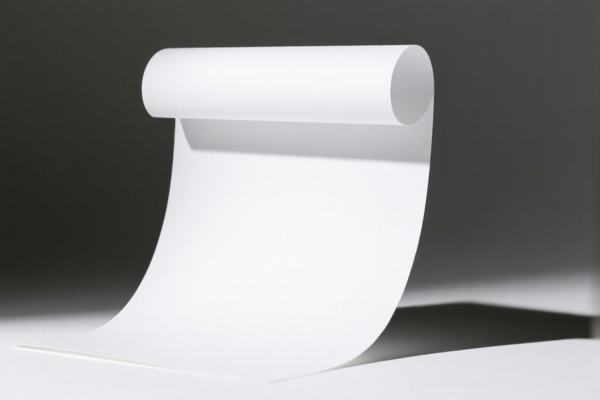
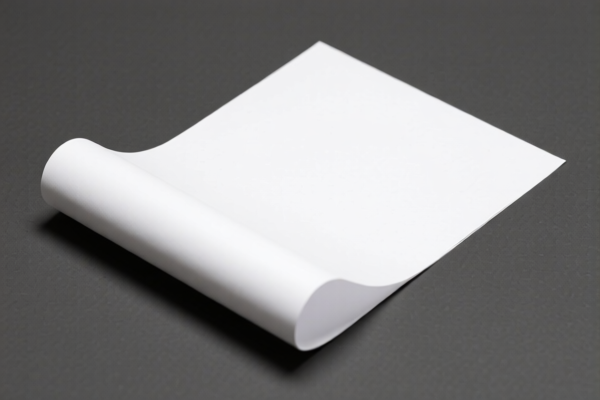
AI Analysis
📸 Photo Base Paper: Home Printing | HS Code Classification & Clearance Guide
🌐 HS Code Reference & Clearance Guide | 2026 Latest Tariff Analysis | Professional-Level Strategy for Paper Goods
📌 I. Product Definition: What is "Photo Base Paper"?
"Photo base paper" generally refers to high-quality paper specifically designed for inkjet or laser printing, offering superior color reproduction, brightness, and texture compared to standard office paper. In the context of home printing, it serves as the substrate for high-resolution photographic prints.
In international trade, this product is not a single unified entity but varies significantly based on its surface treatment (coated vs. uncoated) and grammage. The customs classification hinges on whether the paper has been chemically or mechanically treated to enhance printability.
⚠️ Key Distinction:
- Uncoated Paper (Basic texture, absorbs ink naturally): Falls under Heading 4802.
- Coated/Surface-Treated Paper (Smooth, bright, specialized coating for ink adhesion): Falls under Heading 4811.
📦 II. HS Code Classification Details (Based on Provided Data)
Based on the specific attributes of "Photo Base Paper for Home Printing," here are the four potential HS Codes from your data, categorized by their physical and functional properties.
| HS Code | Product Description & Logic | Application Scenario | Taxation Profile |
|---|---|---|---|
4802.55.40.00 |
Uncoated Printing Paper Matches the attributes of uncoated paper and board, specifically intended for printing. |
Basic photo paper (matte, uncoated feel), standard high-quality office paper. | 35.0% (0% Base + 25% Section 301 + 10% IEEPA 122) |
4811.90.90.80 |
Coated/Surface-Treated Paper Falls under the category of coated or surface-treated paper products. |
Glossy photo paper, semi-gloss, or paper with a specific coating layer for enhanced color vibrancy. | 35.0% (0% Base + 25% Section 301 + 10% IEEPA 122) |
4802.54.10.00 |
Writing/Printing Paper (Similar to Writing Paper) Material consistency with writing paper, used in general paper application scenarios. |
Multi-purpose photo paper that shares physical characteristics with standard writing paper but is designated for printing. | 35.0% (0% Base + 25% Section 301 + 10% IEEPA 122) |
4811.59.20.00 |
Printable Paper (Reasonable Inference) Matches the usage characteristics of printing paper, inferred to be specified-grade paper. |
Specialized photo paper where the coating or treatment is essential for the "photo" quality, falling under broader coated categories. | 35.0% (0% Base + 25% Section 301 + 10% IEEPA 122) |
🔍 Critical Note:
All four HS codes listed in your provided data carry an identical total tariff rate of 35.0% for imports from China to the US (or relevant jurisdiction with these specific duties). However, the classification logic differs: - Choose 4802.xx codes if the paper is primarily defined by its fiber content and lack of surface coating. - Choose 4811.xx codes if the paper is defined by its post-production surface treatment (coating, glazing, etc.).
💰 III. Tariff Rate Breakdown (Detailed Clause Analysis)
✅ Applicable Market: US (Based on typical Section 301 & IEEPA structure)
✅ Origin: China (CN)
✅ Total Effective Tax Rate: 35.0%
🎯 Universal Tax Structure for All Listed HS Codes
| Tax Component | Rate | Legal/Policy Basis | Explanation |
|---|---|---|---|
| Base Tariff | 0.0% | General Tariff Schedule | Most printing papers enjoy a low or zero base duty under normal trade conditions. |
| Section 301 Tariff | 25.0% | US Trade Law Section 301 | Additional duty imposed on specific Chinese goods, including many paper products. |
| IEEPA / Section 122 Tariff | 10.0% | International Emergency Economic Powers Act (IEEPA) / Specific Provision 122 | Additional duty targeting specific categories of Chinese imports under emergency economic powers. |
| Total Tax Rate | 35.0% | Sum of above | Critical for Cost Calculation. |
📌 Explanation:
- The 35.0% rate is not negotiable through standard HTS codes unless a specific exemption applies (which is rare for paper).
- "122 Clause Tariff 10%" refers to a specific provision (likely IEEPA 122 or similar emergency authority) that adds a flat or percentage-based surcharge on top of the standard 301 duties.
- Calculation Example: For a $1,000 CIF value, the tax due is $350.
🛠️ IV. Clearance Practical Advice (Risk Avoidance Guide)
✅ 1. Preparation Checklist (Essential Documents)
| Document | Requirement | Purpose |
|---|---|---|
| ✅ Product Specification Sheet | ✔️ Must Specify | Grammage (gsm), surface type (glossy/matte/uncoated), coating type (if any). |
| ✅ Material Safety Data Sheet (MSDS) | ✔️ If Applicable | If the paper contains any chemical coatings, MSDS may be required for customs review. |
| ✅ Commercial Invoice | ✔️ Clear Description | Use precise terms: "Photo Base Paper, Uncoated, 200gsm, for Inkjet Home Printing" or "Coated Photo Paper, Glossy, 250gsm". Avoid vague terms like "Paper." |
| ✅ Packing List | ✔️ Detailed | Itemize rolls vs. sheets, bundle counts, and net/gross weights. |
| ✅ Origin Certificate | ✔️ If Claiming Exemption | Not applicable for 35% rate, but required for proving CN origin to avoid misdeclaration penalties. |
✅ 2. Declaration Strategy (Key Tips)
🔥 "Coating Defines Code, Paper Defines Heading"
| Scenario | Recommended HS Code | Reason |
|---|---|---|
| Uncoated Photo Paper | 4802.55.40.00 |
It is uncoated but fits the "printing" definition under 4802. |
| Glossy/Coated Photo Paper | 4811.90.90.80 |
The coating process moves it to Chapter 4811 (Processed Paper). |
| Multi-Use Paper (Write/Print) | 4802.54.10.00 |
If it closely resembles standard writing paper in texture and usage. |
| Specialty Treated Paper | 4811.59.20.00 |
If the treatment is specific and doesn't fit the generic "coated" bucket of 4811.90. |
⚠️ Warning:
- Do not declare "Photo Paper" generically. Customs officers will inspect the physical characteristics.
- If you declare4802(Uncoated) but the paper is visibly glossy/coated, you risk re-classification and penalties.
- If you declare4811(Coated) but the paper is uncoated, you may face over-duty claims or audits for misdeclaration.
✅ 3. Special Handling Cases
| Case | Advice |
|---|---|
| Bulk Rolls vs. Cut Sheets | Ensure the invoice specifies if it is in rolls or cut sheets, as some sub-tariff notes may differentiate based on form. |
| Packaging with Ink | If sold as a "Kit" (Paper + Ink), customs may apply the "Essential Character" rule. Typically, the printer or ink might dominate, but if it's just paper, stay with 48xx. |
| Samples for Home Use | Commercial shipments are taxed. Personal effects may have different thresholds, but commercial samples are subject to the 35% rate. |
🌍 V. Global Market Comparison (2026 Context)
| Market | Recommended HS Code | Base Duty | Additional Duties | Total Est. Rate | Notes |
|---|---|---|---|---|---|
| 🇺🇸 United States | 4802.55.40.00 / 4811.90.90.80 |
0% | 35% (25% Sec 301 + 10% IEEPA) | 35% | Highest cost due to trade restrictions. |
| 🇨🇳 China (Import) | 4802 or 4811 Series |
5-10% | None | ~5-10% | Domestic production dominates; low import barrier. |
| 🇪🇺 European Union | 4802 or 4811 Series |
0% | None (if EORI compliant) | 0% | Generally duty-free for paper under normal trade. |
| 🇬🇧 United Kingdom | 4802 or 4811 Series |
0% | None | 0% | Post-Brexit, standard MFN rates apply, usually 0% for paper. |
📌 Conclusion:
The 35% tariff is specific to US-China trade relations. If you are exporting from China to the US, this cost is inevitable unless you:
1. Relocate manufacturing to a non-China country (e.g., Vietnam, Mexico) to avoid Section 301.
2. Apply for an Exclusion (if available for your specific product type in the current year).
3. Structure the supply chain to include significant processing in a third country (Rule of Origin).
📌 VI. Common Mistakes & Pitfalls
❌ Mistake 1: Declaring "Photo Paper" without specifying coating status.
👉 Consequence: Customs may classify it as the highest-tariff or most restricted category, leading to delays.
❌ Mistake 2: Ignoring the "122 Clause" (IEEPA 10%).
👉 Consequence: Underestimating landed cost. Many importers only budget for the 25% Section 301, forgetting the extra 10%.
❌ Mistake 3: Using "Office Paper" for high-end photo paper.
👉 Consequence: If the paper is visibly coated, customs will reject the 4802 code and reclassify to 4811, potentially causing discrepancies in the original declaration.
✅ Correct Declaration Example:
"Photo Base Paper, Inkjet Compatible, Coated Surface, Glossy Finish, 200gsm, Cut Sheets, Origin: China"
→ HS Code:4811.90.90.80→ Tax: 35%
🎯 VII. Conclusion: Cost Control & Clearance Success
🎯 Key Takeaway:
🔹 "Coating changes the code, but not the cost (in this specific dataset)."
🔹 "Budget 35% for US imports from China, not 25%."
🔹 "Always distinguish between Uncoated (4802) and Coated (4811) to ensure compliance."
📌 Pro Tip:
If you are importing large volumes, consider pre-ruling with US Customs (CBP) to confirm the exact HS code for your specific product formulation. This prevents post-clearance audits and retroactive tax demands.
📣 Immediate Action Items:
📞 Consult your customs broker with your paper's technical data sheet.
📊 Calculate landed cost including the full 35% duty + freight + insurance.
🚀 Evaluate supply chain alternatives if the 35% duty erodes your margin.
✨ Professional clearance starts with precise classification!
💼 Your profit margin depends on accurate HS code selection!
Customer Reviews
About HS Code Classification
The Harmonized System (HS) is an internationally standardized nomenclature developed by the World Customs Organization (WCO) to classify traded products. Over 200 countries use the HS system as the basis for customs tariffs, trade statistics, and import/export regulations.
Each HS code follows a hierarchical structure:
- Chapter (2 digits) — Broad category of goods (e.g., Chapter 84: Machinery and Mechanical Appliances)
- Heading (4 digits) — More specific grouping within the chapter
- Subheading (6 digits) — Internationally standardized breakdown, used by all WCO member countries
- National subdivisions (8-10 digits) — Country-specific extensions for further classification, such as US HTSUS 10-digit codes
Correct HS code classification is essential for smooth customs clearance, accurate duty payment, and compliance with trade regulations. Misclassification can lead to customs delays, overpayment of duties, or penalties.
When importing from CN to US, the applicable tariff rates may include:
- Most-Favored-Nation (MFN) rate — The standard duty rate applied to WTO members
- General rate — Applied to countries without trade agreements
- Trade remedy duties — Additional tariffs such as Section 301 (anti-dumping), Section 232 (national security), or countervailing duties
The information provided on this page is for reference purposes only. For official classification, please consult with your local customs authority or a licensed customs broker.