photographic film within 200m width
CN → US| HS Code | Tariff Rate | Origin | Destination | Doc |
|---|---|---|---|---|
| 3707903290 | 35.0% | CN | US | Official Doc |
| 3707100090 | 38.0% | CN | US | Official Doc |
| 3701996060 | 35.0% | CN | US | Official Doc |
| 3702410100 | 38.7% | CN | US | Official Doc |
| 3701300000 | 35.0% | CN | US | Official Doc |
Product Images
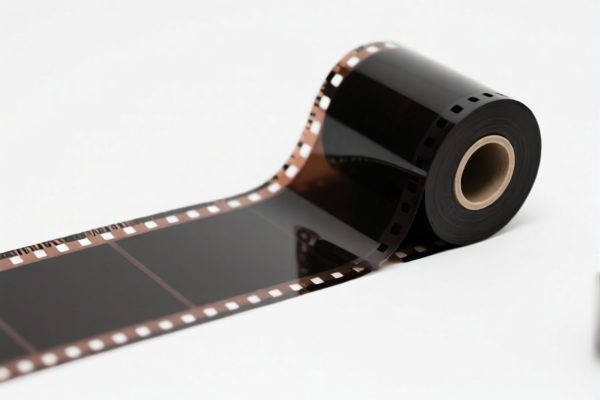



AI Analysis
🎞️ Photographic Film (Width ≤ 200m)
🌐 HS Code Reference & Customs Clearance Guide | 2026 Latest Tariff Analysis | Professional Clearance Strategy
📌 I. Product Definition: What is "Photographic Film"?
Photographic film refers to flexible plastic sheeting coated with light-sensitive emulsion, used for capturing images via chemical development. In international trade, classification depends heavily on three factors: 1. Form: Roll, sheet, or specific packaging. 2. Material/Base: Non-paper, plastic, or other synthetic materials. 3. Dimensions/Size: Specifically width (≤200m is a critical threshold in some classifications) and format (rolled vs. flat).
⚠️ Key Distinction:
- Chemical Products vs. Sensitized Materials: If the film is unexposed and sensitized, it falls under Chapter 37 (Photographic Goods). If it is merely raw photographic chemicals, it falls under 3707. - Paper vs. Non-Paper: Film bases are rarely paper-based; they are typically polyester, cellulose acetate, or triacetate. Paper-based light-sensitive goods are rare in modern consumer/industrial contexts.
📦 II. HS Code Classification Details (2026 Latest Tariff Authoritative Comparison)
Based on the provided data, here are the five specific HS codes applicable to "Photographic Film within 200m Width," depending on exact characteristics:
| HS Code | Product Description | Applicable Scenario | Key Differentiator |
|---|---|---|---|
3707.90.32.90 |
Other photographic chemicals | Liquid developers, fixers, or non-film photographic chemicals | ❌ Not Film: For chemicals only, no physical film base |
3707.10.00.90 |
Other photographic consumables | General photographic supplies not elsewhere specified | ❌ Consumables: Broad category, less precise for film |
3701.99.60.60 |
Sensitized film, non-paper, not in rolls | Sheet film or Flat packs of sensitized photographic film | ✅ Sheet/Flat: Non-rolled, non-paper base |
3702.41.01.00 |
Sensitized film, in rolls, width > 105mm | Rolled film (e.g., 35mm, medium format, large roll) | ✅ Rolled/Large Width: Specifically for rolls wider than 105mm |
3701.30.00.00 |
Sensitized material, sheet, large size | Large format sheets (e.g., 4x5, 8x10 inch sheets) | ✅ Large Sheet: For very large format photography |
🔍 Critical Analysis:
- "Within 200m Width": This phrase likely refers to the length of the roll or the width of the film strip.
- If it is a roll (continuous strip) with a width typically >105mm (e.g., 35mm is ~36mm, but industrial rolls can be wider),3702.41.01.00is the most precise fit for rolled film.
- If it is sheet film (individual sheets, not rolled),3701.99.60.60applies.
- If it is large format sheet (e.g., 8x10 inches),3701.30.00.00may apply.
- Exclusions:3707codes are for chemicals (liquids/powders), not the physical film base. Do not use these for film unless you are importing the developer fluids only.
💰 III. 2026 Latest Tariff Rate Breakdown (Including Surcharges & Policy Add-ons)
✅ Applicable Country: United States (US)
✅ Origin: China (CN)
✅ Effective Date: November 10, 2025 (and subsequent imports)
🎯 1. 3707.90.32.90 – Other Photographic Chemicals
| Item | Content |
|---|---|
| Base Tariff | 0.0% (ad valorem) |
| Section 301 Surcharge | +25.0% |
| 122 Clause Surcharge | +10.0% |
| Total Tax Rate | 35.0% |
| Tax Calculation | CIF Value × 35% |
| De Minimis Exemption | ❌ Not Available (denied for Section 301 goods) |
| Legal Basis | USITC Section 301 Footnote + IEEPA 122 Clause |
📌 Explanation:
- This code is for photographic chemicals (e.g., developers, fixers), NOT film.
- Warning: Do not misdeclare film as "chemicals" to avoid higher taxes. The 35% rate applies to liquids/powders.
🎯 2. 3707.10.00.90 – Other Photographic Consumables
| Item | Content |
|---|---|
| Base Tariff | 3.0% |
| Section 301 Surcharge | +25.0% |
| 122 Clause Surcharge | +10.0% |
| Total Tax Rate | 38.0% |
| Tax Calculation | CIF Value × 38% |
| De Minimis Exemption | ❌ Not Available |
| Legal Basis | USITC Section 301 + IEEPA 122 Clause |
📌 Note:
- This is a broad "catch-all" for other consumables. Higher base rate (3%) makes it more expensive than3707.90.
🎯 3. 3701.99.60.60 – Sensitized Film, Non-Paper, Not in Rolls (Sheet Film)
| Item | Content |
|---|---|
| Base Tariff | 0.0% |
| Section 301 Surcharge | +25.0% |
| 122 Clause Surcharge | +10.0% |
| Total Tax Rate | 35.0% |
| Tax Calculation | CIF Value × 35% |
| De Minimis Exemption | ❌ Not Available |
| Legal Basis | USITC Section 301 + IEEPA 122 Clause |
📌 Key Point:
- Applies to sheet film (flat packs).
- 0% base rate, but 35% total with surcharges.
🎯 4. 3702.41.01.00 – Sensitized Film, in Rolls, Width > 105mm
| Item | Content |
|---|---|
| Base Tariff | 3.7% |
| Section 301 Surcharge | +25.0% |
| 122 Clause Surcharge | +10.0% |
| Total Tax Rate | 38.7% |
| Tax Calculation | CIF Value × 38.7% |
| De Minimis Exemption | ❌ Not Available |
| Legal Basis | USITC Section 301 + IEEPA 122 Clause |
📌 Most Likely for "Rolls":
- If your "Photographic Film within 200m Width" means rolls (e.g., 35mm is ~36mm wide, but industrial rolls can be wider), this is the precise code.
- Highest Total Rate (38.7%) due to 3.7% base tariff.
🎯 5. 3701.30.00.00 – Sensitized Material, Sheet, Large Size
| Item | Content |
|---|---|
| Base Tariff | 0.0% |
| Section 301 Surcharge | +25.0% |
| 122 Clause Surcharge | +10.0% |
| Total Tax Rate | 35.0% |
| Tax Calculation | CIF Value × 35% |
| De Minimis Exemption | ❌ Not Available |
| Legal Basis | USITC Section 301 + IEEPA 122 Clause |
📌 Large Format:
- For large sheet film (e.g., 8x10 inches).
- 0% base rate, 35% total.
🛠️ IV. Customs Clearance Practical Advice (Real-World Pitfall Guide)
✅ 1. Document Checklist (All Mandatory)
| Document | Required | Explanation |
|---|---|---|
| ✅ Product Specification Sheet | ✔️ | Must specify: Form (Roll/Sheet), Base Material (Plastic/Paper), Width, Length, Sensitivity Type |
| ✅ Product Photos (Clear Labeling) | ✔️ | Show packaging, label, and any barcode. Label must say "Photographic Film" |
| ✅ Commercial Invoice | ✔️ | Must explicitly state "Sensitized Photographic Film, Plastic Base, Roll/Sheet" |
| ✅ Packing List | ✔️ | Detail dimensions and weight per roll/sheet |
| ✅ Certificate of Origin (CO) | ✔️ | If not from China, to determine eligibility for duty-free treatment |
| ✅ Third-Party Test Report | Optional | If required by customer, for safety (RoHS, REACH) |
✅ 2. Declaration Tips (Critical Mnemonics)
🔥 “Rolls go to 3702, Sheets go to 3701, Chemicals go to 3707. Mislabeling = 35-40% Tax!”
| Scenario | Correct HS Code | Error Consequence |
|---|---|---|
| 35mm Film Rolls | 3702.41.01.00 |
Misdeclare as 3701 (Sheet) → Potential fine/delay |
| Large Sheet Film | 3701.30.00.00 |
Misdeclare as 3702 (Roll) → Incorrect tax calculation |
| Photographic Developer Fluid | 3707.90.32.90 |
Misdeclare as Film → Wrong chapter, high penalty |
| Mixed Shipment (Film + Chemicals) | Separate Declarations | Combine in one HS → Audit risk, delayed clearance |
✅ 3. Special Case Handling
| Scenario | Handling Advice |
|---|---|
| OEM Custom Film | Provide customer order + technical drawings to prove specifications |
| Film with Printer Built-in | If the printer is the main function, it may be 8443 (Printer), not film. Clarify with CBP |
| Digital Film Scanners | Different chapter (9006 or 8525). Do not confuse with photographic film |
| Unexposed vs. Exposed | Unexposed: Chapter 37. Exposed: May be considered waste or different classification. Assume Unexposed for this guide |
🌍 V. Global Market Clearance Comparison (2026 Latest)
| Country/Region | Recommended HS Code | Tariff Rate | Certification Required | Notes |
|---|---|---|---|---|
| 🇺🇸 USA | 3702.41.01.00 (Rolls) / 3701.30.00.00 (Sheets) |
35.0% - 38.7% | None specific, but label in English | High Surcharge (35-38.7%) due to Section 301 & 122 Clause |
| 🇨🇳 China | 3702.41.01.00 |
0% - 3% | CCC (if applicable) | Low duty, but import quotas may apply |
| 🇪🇺 EU | 3702.41.00 |
0% | CE (if electronic components), REACH | No surcharges, low base duty |
| 🇬🇧 UK | 3702.41.00 |
0% | UKCA | Post-Brexit, aligned with EU in many cases |
| 🇯🇵 Japan | 3702.41.00 |
0% - 3% | PSE (if electronic) | No surcharges |
📌 Conclusion:
- USA is the most expensive market due to Section 301 (25%) + 122 Clause (10%).
- EU, UK, Japan, and China have significantly lower or zero tariffs.
- Strategy: If targeting the US, ensure precise HS classification to avoid penalties. Consider sourcing from non-Chinese origins to potentially mitigate IEEPA surcharges (if eligible).
📌 VI. Common Mistakes & Pitfall Guide (Lessons Learned)
❌ Mistake 1: Declaring "Rolls" as "Sheets"
👉 Result: Incorrect HS Code (3701 vs 3702) → Potential penalty for misdeclaration.
❌ Mistake 2: Confusing "Film" with "Chemicals"
👉 Result: Using 3707 codes for physical film → Wrong Chapter, high risk of seizure or fine.
❌ Mistake 3: Ignoring the "122 Clause"
👉 Result: Underestimating total tax by 10%. Total tax is 35-38.7%, not just 25%.
❌ Mistake 4: Vague Description "Photographic Supplies"
👉 Result: Customs holds shipment for clarification → Delays, storage fees.
✅ Correct Practice:
"Sensitized Photographic Film, Polyester Base, in Rolls, Width 36mm, Length 200m, Model XYZ, Unexposed"
🎯 VII. Conclusion: Precise Classification Saves Money!
🎯 Remember Mnemonic:
🔹 "Rolls >105mm: 3702, Sheets: 3701, Chemicals: 3707. Base 0-3.7%, Surcharge 35%. Total Tax: 35-38.7%."
🔹 "US Market: High Tax. EU/Japan: Low Tax. Precision is Key!"
📌 Pro Tip:
If your film is originating from Vietnam, Mexico, Thailand, or Malaysia, you may be eligible to avoid the IEEPA 10% surcharge, reducing total tax to 25% (Section 301 only).
Recommend Advance Ruling from US Customs and Border Protection (CBP) to confirm HS Code before shipment.
📣 Immediate Action:
📞 Contact a professional customs broker + Provide product specs + Apply for HS Code Advance Ruling
🚀 Ensure smooth clearance, minimize tax burden, and protect your supply chain!
✨ Professional Clearance Starts with Accurate Classification!
💼 Every Percentage Point Matters!
Customer Reviews
About HS Code Classification
The Harmonized System (HS) is an internationally standardized nomenclature developed by the World Customs Organization (WCO) to classify traded products. Over 200 countries use the HS system as the basis for customs tariffs, trade statistics, and import/export regulations.
Each HS code follows a hierarchical structure:
- Chapter (2 digits) — Broad category of goods (e.g., Chapter 84: Machinery and Mechanical Appliances)
- Heading (4 digits) — More specific grouping within the chapter
- Subheading (6 digits) — Internationally standardized breakdown, used by all WCO member countries
- National subdivisions (8-10 digits) — Country-specific extensions for further classification, such as US HTSUS 10-digit codes
Correct HS code classification is essential for smooth customs clearance, accurate duty payment, and compliance with trade regulations. Misclassification can lead to customs delays, overpayment of duties, or penalties.
When importing from CN to US, the applicable tariff rates may include:
- Most-Favored-Nation (MFN) rate — The standard duty rate applied to WTO members
- General rate — Applied to countries without trade agreements
- Trade remedy duties — Additional tariffs such as Section 301 (anti-dumping), Section 232 (national security), or countervailing duties
The information provided on this page is for reference purposes only. For official classification, please consult with your local customs authority or a licensed customs broker.