pickled buffalo hide
CN → US| HS Code | Tariff Rate | Origin | Destination | Doc |
|---|---|---|---|---|
| 4107124000 | 12.5% | CN | US | Official Doc |
| 4107194000 | 12.5% | CN | US | Official Doc |
| 4101503500 | 19.9% | CN | US | Official Doc |
| 4101203500 | 19.9% | CN | US | Official Doc |
| 4104413060 | 12.4% | CN | US | Official Doc |
Product Images
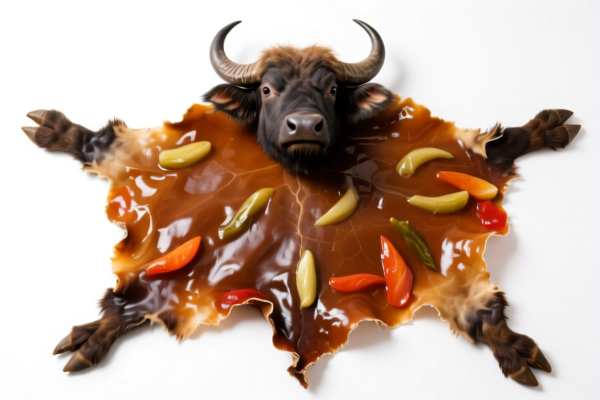
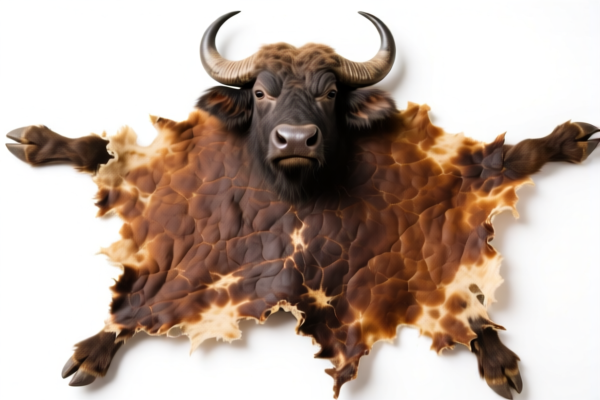
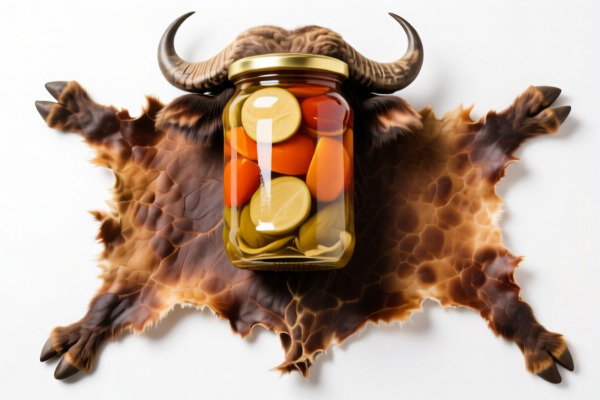
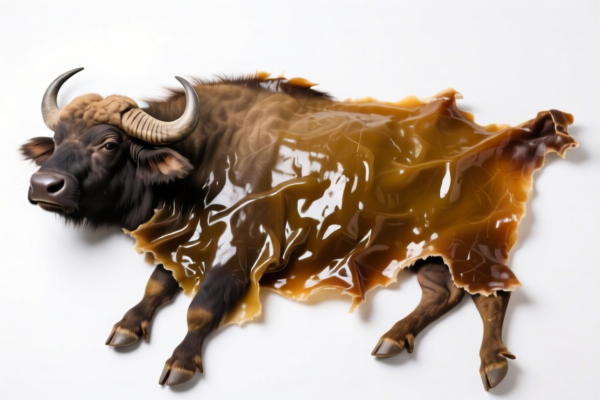
AI Analysis
🐃 Pickled Buffalo Hide (Preserved Buffalo Raw Hides)
🌐 HS Code Reference & Customs Clearance Guide | 2026 Latest Tariff Analysis | Professional Clearance Strategy
📌 I. Product Definition & Classification: Do You Truly Understand "Pickled Buffalo Hide"?
Pickled Buffalo Hide refers to buffalo raw hides that have undergone a preservation process, typically using salt and acid (pickling), to prevent decomposition during storage and transport. In international trade, these are classified as raw hides (not processed leather). The distinction is critical because "pickled" hides are considered unprocessed animal skins, subject to different tariff structures than cured or tanned leather.
⚠️ Key Distinction Point:
- If the hide is fresh, salted, or pickled but not tanned → Classified under Chapter 41 (Raw Hides and Skins)
- If the hide is tanned, crust, or finished → Classified under Chapter 41 (Leather)
- Crucial Note: "Pickled" implies preservation but NOT tanning. Therefore, it falls under 4101 (Raw Hides and Skins, other than fur skins, whether fresh, salted, dried, limed, pickled, or otherwise preserved).
📦 II. HS Code Classification Details (2026 Latest Tariff Authority Comparison)
Based on the provided data, here are the relevant HS Codes for Pickled Buffalo Hides:
| HS Code | Product Description | Key Characteristics | Tax Status |
|---|---|---|---|
4101.20.35.00 |
Buffalo raw hides, meeting species and material requirements | Includes fresh, salted, or pickled buffalo hides; meets species definition | ❌ High Tariff |
4101.50.35.00 |
Buffalo raw hides, conforming to species and material definition | Similar to above; specific subcategory for preservation type | ❌ High Tariff |
4107.12.40.00 |
Buffalo leather, matching material and form | Note: This is for processed leather, not pickled raw hides. Included for contrast. | ✅ Lower Tariff |
4107.19.40.00 |
Buffalo leather, explicitly including material and form | Processed leather variant. Not applicable to pickled raw hides. | ✅ Lower Tariff |
4104.41.30.60 |
Buffalo, conforming to core material definition under category | Ambiguous description; likely refers to specific processed variants. Not primary for pickled raw hides. | ✅ Lower Tariff |
🔍 Critical Clarification:
- Pickled Buffalo Hides are raw hides, not leather. Therefore, the correct HS Codes are4101.20.35.00and4101.50.35.00.
- Codes4107.12.40.00,4107.19.40.00, and4104.41.30.60refer to processed leather or ambiguous categories. Do not use these for pickled raw hides unless the product has been tanned and processed beyond the pickling stage.
💰 III. 2026 Latest Tariff Rate Breakdown (Including Surtaxes, Policy Surcharges)
✅ Applicable Country: United States (US)
✅ Country of Origin: China (CN)
✅ Effective Date: 2025 onwards (including subsequent imports)
🎯 1. 4101.20.35.00 —— Buffalo Raw Hides (Pickled/Salted)
| Item | Details |
|---|---|
| Base Duty Rate | 2.4% (ad valorem) |
| Section 301 Surtax | +7.5% (additional duty on Chinese products) |
| Section 122 Duty | +10% (specific tariff clause) |
| Total Duty Rate | 19.9% |
| Tax Calculation | CIF Value × 19.9% |
| De Minimis Eligibility | ❌ Not Eligible (Raw hides are generally excluded from de minimis exemptions) |
| Legal Basis Path | HTSUS:4101.20.35 → Section 301:7.5% → Section 122:10% |
📌 Explanation:
- "Section 301 Surtax 7.5%" is part of the ongoing US-China trade war tariffs.
- "Section 122 Duty 10%" is a specific additional duty applicable to certain raw materials.
- Total 19.9% is significantly higher than processed leather variants due to the raw material status and surtaxes.
🎯 2. 4101.50.35.00 —— Buffalo Raw Hides (Alternative Subcategory)
| Item | Details |
|---|---|
| Base Duty Rate | 2.4% (ad valorem) |
| Section 301 Surtax | +7.5% (additional duty on Chinese products) |
| Section 122 Duty | +10% (specific tariff clause) |
| Total Duty Rate | 19.9% |
| Tax Calculation | CIF Value × 19.9% |
| De Minimis Eligibility | ❌ Not Eligible |
| Legal Basis Path | HTSUS:4101.50.35 → Section 301:7.5% → Section 122:10% |
📌 Note:
- Identical tariff structure to4101.20.35.00.
- Both codes apply to pickled, salted, or dried buffalo raw hides.
- Do not confuse with processed leather codes (4107.xxxx), which have a total tax of 12.5% (Base 2.5% + Section 122 10%).
🛠️ IV. Customs Clearance Practical Advice (Real-World Pitfall Avoidance)
✅ 1. Required Documentation Checklist (Mandatory)
| Document | Required? | Explanation |
|---|---|---|
| ✅ Product Specification Sheet | ✔️ | Must specify: Species (Buffalo), Preservation Method (Pickled/Salted), Weight, Dimensions |
| ✅ Preservation Certificate | ✔️ | Proof of pickling process (acid/salt treatment) to distinguish from tanned leather |
| ✅ Commercial Invoice | ✔️ | Must clearly state: "Pickled Buffalo Raw Hides, Not Tanned" |
| ✅ Packing List | ✔️ | Detail number of hides, gross/net weight, and packaging type |
| ✅ Certificate of Origin | ✔️ | To determine country of origin for tariff calculation |
| ✅ Health/Sanitary Certificate | ✔️ | Required for animal products; must confirm no disease contamination |
✅ 2. Declaration Tips (Key Mnemonic)
🔥 "Raw Not Tanned, Pickled Is Raw, Declare Correctly, Avoid Delays!"
| Scenario | Correct Declaration | Wrong Practice |
|---|---|---|
| Pickled Buffalo Hides | 4101.20.35.00 or 4101.50.35.00 |
Misdeclaring as "Leather" (4107.xxxx) → Underpayment of tax + penalties |
| Tanned Buffalo Leather | 4107.12.40.00 or 4107.19.40.00 |
Misdeclaring as "Raw Hides" → Overpayment of tax + audit risk |
| Mixed Shipment (Raw + Tanned) | Split declaration by HS Code | Combined declaration → Customs seizure |
✅ 3. Special Cases Handling
| Case | Handling Advice |
|---|---|
| OEM Custom Pickled Hides | Provide customer specifications + preservation method details to avoid classification disputes |
| Hides with Residual Flesh | Must declare as "Raw Hides"; if cleaned, may still be raw, but ensure no tanning agents are present |
| Transport in Cold Chain | Mention temperature control in invoice to justify preservation integrity |
| Dispute on "Pickled" vs "Tanned" | Provide lab test results showing no chrome/tanning agents; only acid/salt residues |
🌍 V. Global Market Comparison (2026 Latest)
| Country/Region | Recommended HS Code | Duty Rate | Certification Required | Notes |
|---|---|---|---|---|
| 🇺🇸 USA | 4101.20.35.00 / 4101.50.35.00 |
19.9% (China Origin) | Health/Sanitary Cert | High duty due to surtaxes |
| 🇨🇳 China | 4101.20.35.00 |
2.4% | None | No surtaxes for domestic trade |
| 🇪🇺 EU | 4101.20.35.00 |
0-4% | CE/EU Health Cert | No Section 301 surtax |
| 🇦🇺 Australia | 4101.20.35.00 |
0-5% | Biosecurity Import Permit | Strict animal product controls |
📌 Conclusion:
- USA has the highest duty burden (19.9%) due to Section 301 and Section 122 surtaxes.
- EU and Australia have lower duties but stricter health/biosecurity regulations.
- Always verify preservation method to avoid misclassification between raw hides and processed leather.
📌 VI. Common Mistakes & Pitfall Avoidance (Lessons Learned)
❌ Mistake 1: Declaring "Pickled Buffalo Hide" as "Leather" (4107.xxxx)
👉 Consequence: Tax underpayment (12.5% vs 19.9%) → Back taxes + fines + audit
❌ Mistake 2: Failing to provide a preservation certificate
👉 Consequence: Customs doubts if product is raw or tanned → Delay in clearance + storage fees
❌ Mistake 3: Using vague terms like "Buffalo Skin" without specifying preservation
👉 Consequence: Ambiguous classification → Higher duty assessment (worst-case scenario)
❌ Mistake 4: Ignoring Section 122 Duty (10%)
👉 Consequence: Unexpected tax liability → Cash flow disruption
✅ Correct Practice:
"Pickled Buffalo Raw Hides, Not Tanned, Preserved with Salt and Acid, for Leather Processing, Model XYZ, Certified Healthy, CIF Value $10,000"
🎯 VII. Conclusion: Precise Declaration Saves Money and Time!
🎯 Remember the Mnemonic:
🔹 "Raw Hides Pickled, 19.9% Tax High; Leather Processed, 12.5% Low. Declare Correctly, Avoid Pain!"
🔹 "HS Code Determines Tax, Difference of 7.4% is Significant. Declaration Error, Fine is Huge!"
📌 Pro Tip:
If your pickled buffalo hides are sourced from Vietnam, Thailand, or India, you may qualify for preferential tariffs under trade agreements (e.g., ASEAN, GSP).
Recommendation: Apply for Advance Ruling (Ruling Letter) from US Customs to confirm HS Code classification before shipment.
📣 Immediate Action:
📞 Contact a Licensed Customs Broker + Provide Product Photos + Apply for HS Code Advance Ruling
🚀 Ensure Smooth Clearance, Cost Efficiency, and Compliance!
✨ Professional Clearance Starts with Accurate Classification!
💼 Every Cent of Duty is Worth Precise Calculation!
Customer Reviews
About HS Code Classification
The Harmonized System (HS) is an internationally standardized nomenclature developed by the World Customs Organization (WCO) to classify traded products. Over 200 countries use the HS system as the basis for customs tariffs, trade statistics, and import/export regulations.
Each HS code follows a hierarchical structure:
- Chapter (2 digits) — Broad category of goods (e.g., Chapter 84: Machinery and Mechanical Appliances)
- Heading (4 digits) — More specific grouping within the chapter
- Subheading (6 digits) — Internationally standardized breakdown, used by all WCO member countries
- National subdivisions (8-10 digits) — Country-specific extensions for further classification, such as US HTSUS 10-digit codes
Correct HS code classification is essential for smooth customs clearance, accurate duty payment, and compliance with trade regulations. Misclassification can lead to customs delays, overpayment of duties, or penalties.
When importing from CN to US, the applicable tariff rates may include:
- Most-Favored-Nation (MFN) rate — The standard duty rate applied to WTO members
- General rate — Applied to countries without trade agreements
- Trade remedy duties — Additional tariffs such as Section 301 (anti-dumping), Section 232 (national security), or countervailing duties
The information provided on this page is for reference purposes only. For official classification, please consult with your local customs authority or a licensed customs broker.