pickled sheepskins without wool for industrial use
CN → US| HS Code | Tariff Rate | Origin | Destination | Doc |
|---|---|---|---|---|
| 4115200000 | 17.5% | CN | US | Official Doc |
| 4115100000 | 35.0% | CN | US | Official Doc |
| 4102210065 | 17.5% | CN | US | Official Doc |
| 4102210095 | 17.5% | CN | US | Official Doc |
Product Images
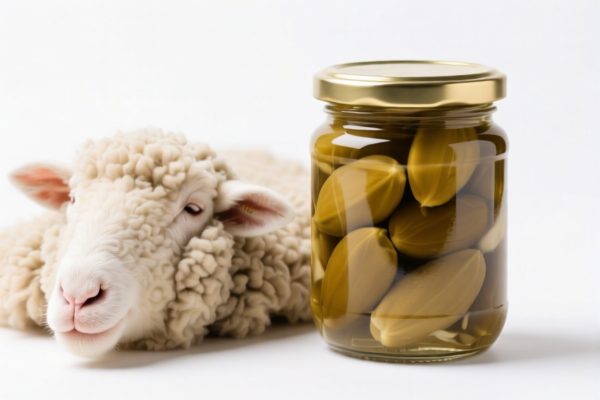
AI Analysis
🐑 Pickled Sheepskins Without Wool (Industrial Use)
🌐 HS Code Reference & Customs Clearance Guide | 2026 Latest Tariff Breakdown | Pro-Level Import Strategy
📌 One, Product Definition & Classification: What Exactly Are "Pickled Sheepskins Without Wool"?
Pickled sheepskins without wool refer to raw sheep or lamb skins that have been preserved using pickling (acidic treatment) to prevent decay, without any wool attached, and not tanned, parchment-dressed, or further processed. These are primarily used in industrial applications such as:
- Leather production (as a base material for further processing)
- Chemical intermediate in industrial leather manufacturing
- Raw material for composition leather or parings/waste recovery
⚠️ Critical Distinction:
- If wool is present → excluded under Note 1(c) of Chapter 41 → not covered here
- If tanned or finished → not eligible for this HS code
- If split or processed beyond pickling → may fall under different subheadings
This product is not for direct consumer use (e.g., clothing, upholstery), but rather as an industrial raw material.
📦 Two, HS Code Classification Details (2026 Official Tariff Match)
| HS Code | Product Description | Applicable Use Case | Wool Present? | Split? |
|---|---|---|---|---|
4102.21.00.65 |
Raw skins of sheep or lambs, pickled, without wool on, not split | Industrial raw material, bulk supply, leather processing | ❌ No | ❌ No |
4102.21.00.95 |
Raw skins of sheep or lambs, pickled, without wool on, other (i.e., split or unspecified) | Split skins, irregular shapes, waste recovery, industrial blending | ❌ No | ✅ Yes or Mixed |
🔍 Key Insight:
-4102.21.00.65→ "Not split" → typically whole or intact skins
-4102.21.00.95→ "Other" → includes split, trimmed, or non-standard pieces
- Both are exempt from basic tariff, but subject to additional duties
💰 Three, 2026 Latest Tariff Breakdown (Including附加 Taxes & Policy Rules)
✅ Target Country: United States (US)
✅ Origin: China (CN)
✅ Effective Date: November 10, 2025 (inclusive)
✅ Trade Status: Subject to Section 301 & IEEPA tariffs
🎯 1. 4102.21.00.65 — Pickled Sheepskins, Without Wool, Not Split
| Item | Detail |
|---|---|
| Base Duty Rate | 0.0% (ad valorem) |
| USITC Section 301 Additional Duty | +7.5% (from USITC Footnote 9903.88.01) |
| IEEPA Emergency Economic Powers Duty | +7.5% (applies to goods from China/HK) |
| Total Effective Duty | 15.0% |
| Tax Calculation Basis | CIF Value × 15.0% |
| De Minimis Threshold | ❌ Not eligible (denied de minimis) |
| Legal Reference Path | IEEPA:9903.01.25 → IEEPA:9903.01.24 → USITC:4102.21.00.65 → FOOTNOTE:9903.88.01 |
📌 Explanation:
- The 7.5% USITC duty stems from the U.S. Trade Act of 1974, Section 301, targeting Chinese goods deemed unfair trade practices.
- The 7.5% IEEPA duty is under the International Emergency Economic Powers Act, imposed due to national security concerns regarding Chinese imports.
- Combined total: 15.0% — significant cost impact for industrial importers.
🎯 2. 4102.21.00.95 — Pickled Sheepskins, Without Wool, Other (Split or Otherwise)
| Item | Detail |
|---|---|
| Base Duty Rate | 0.0% |
| USITC Section 301 Additional Duty | +7.5% |
| IEEPA Emergency Economic Powers Duty | +7.5% |
| Total Effective Duty | 15.0% |
| Tax Calculation Basis | CIF Value × 15.0% |
| De Minimis Threshold | ❌ Not eligible |
| Legal Reference Path | IEEPA:9903.01.25 → IEEPA:9903.01.24 → USITC:4102.21.00.95 → FOOTNOTE:9903.88.01 |
📌 Note:
- Despite being "other" (including split skins), the same tariff treatment applies as4102.21.00.65.
- No distinction in duty between split and not split — both are subject to 15.0% total.
🛠️ Four, Customs Clearance Best Practices (Real-World Tips)
✅ 1. Required Documentation (Must-Have Checklist)
| Document | Required? | Purpose |
|---|---|---|
| ✅ Commercial Invoice | ✔️ | Clearly state: “Pickled Sheepskins, Without Wool, Not Split” or “Other” |
| ✅ Packing List | ✔️ | Detail quantity, weight, packaging type, and whether split |
| ✅ Product Photos (with labels) | ✔️ | Show skin condition, absence of wool, and split status |
| ✅ Certificate of Origin (CO) | ✔️ | If from China, expect 15% duty; if from Vietnam/Mexico, check for possible exemptions |
| ✅ Technical Specs / Material Sheet | ✔️ | Confirm "not tanned", "not parchment-dressed", "only pickled" |
| ✅ Third-Party Test Report | ✔️ | Optional, but helpful for dispute avoidance |
| ✅ Bill of Lading / Air Waybill | ✔️ | Proof of shipment and origin |
✅ 2.申报技巧 (Key Pro Tips)
🔥 “No wool, no split, no tax? Wrong. No wool, pickled, China origin → 15% total!”
| Scenario | Correct HS Code | Wrong Practice | Risk |
|---|---|---|---|
| Whole pickled skins, no wool, not split | 4102.21.00.65 |
Misreport as 4102.21.00.95 |
Higher risk of audit |
| Split or irregular pieces, no wool | 4102.21.00.95 |
Report as 4102.21.00.65 |
Under-declaration risk |
| No wool, pickled, but tanned | ❌ Not eligible | Misclassify as raw | Severe penalties |
| Wool still attached | ❌ Excluded by Note 1(c) | Attempt to declare | Rejection + fines |
✅ 3. Special Cases & Solutions
| Situation | Recommended Action |
|---|---|
| Skins from Vietnam, Mexico, or Thailand | Apply for IEEPA exemption → may qualify for 0% duty if origin is non-China |
| Bulk industrial supply to U.S. tannery | Submit Advance Ruling Request to IRS/USCB for pre-approval of HS Code |
| Mixed batches (split + not split) | Declare separately or use 4102.21.00.95 as "other" to avoid risk |
| Used in composition leather production | Still falls under this HS code — do not use 4115.10.00.00 unless fully processed |
🌍 Five, Global Market Comparison (2026 Update)
| Country/Region | Recommended HS Code | Duty Rate | Certification Required | Notes |
|---|---|---|---|---|
| 🇺🇸 United States | 4102.21.00.65 / 4102.21.00.95 |
15.0% (China-origin) | None | High risk if China-origin |
| 🇨🇳 China | 4102.21.00.65 / 4102.21.00.95 |
0% | None | No extra tariffs |
| 🇪🇺 European Union | 4102.21.00.65 / 4102.21.00.95 |
0% (if CE-compliant) | CE, REACH | No附加 taxes |
| 🇦🇺 Australia | 4102.21.00.65 |
5% | RCM | No IEEPA/301 |
| 🇯🇵 Japan | 4102.21.00.65 |
0% | PSE | No additional duties |
📌 Takeaway:
- Only the U.S. imposes 15% total duty on Chinese-origin pickled sheepskins without wool.
- Switching origin to Vietnam/Mexico can reduce cost by 15 percentage points.
📌 Six, Common Mistakes & How to Avoid Them (Pro Tips)
❌ Mistake 1: Declaring "pickled sheepskins" as "tanned leather"
👉 Result: Wrong HS Code → $5,000+ in penalties + delay
❌ Mistake 2: Not specifying “without wool” on invoice
👉 Result: Customs may assume wool is present → rejection or reclassification
❌ Mistake 3: Using 4115.10.00.00 (composition leather) for raw skins
👉 Result: 25% duty instead of 15% → overpayment + audit risk
❌ Mistake 4: Merging split and whole skins into one shipment without split declaration
👉 Result: Risk of being charged under 4102.21.00.95 → higher scrutiny
✅ Correct Approach:
“Pickled Sheepskins, Without Wool, Not Split, 100 kg, 100 pcs, Origin: China, Not Tanned, Not Parchment-Dressed, For Industrial Leather Production”
🎯 Seven, Conclusion: Precision in Classification = Profit Protection
🎯 Remember the Golden Rule:
🔹 “No wool, pickled, not tanned → HS Code 4102.21.00.65 or .95”
🔹 “China origin → 15.0% total duty”
🔹 “Split? Use .95. Not split? Use .65”
🔹 “Do NOT use 4115.10.00.00 — that’s for finished composition leather!”
📌 Pro Tip:
If your supply chain is China-based, consider relocating production to Vietnam or Mexico to avoid the 15% duty.
✅ Apply for Advance Ruling (Pre-Approval) from U.S. CBP to lock in HS Code and avoid surprises.
📣 Act Now:
📞 Contact a U.S.-licensed customs broker + Provide photos + Request HS Code pre-ruling
🚀 Save 15% on every shipment — and avoid costly penalties!
✨ Smart Importing Starts with Smart Classification!
💼 Your cost, your risk, your control — get it right the first time!
Customer Reviews
About HS Code Classification
The Harmonized System (HS) is an internationally standardized nomenclature developed by the World Customs Organization (WCO) to classify traded products. Over 200 countries use the HS system as the basis for customs tariffs, trade statistics, and import/export regulations.
Each HS code follows a hierarchical structure:
- Chapter (2 digits) — Broad category of goods (e.g., Chapter 84: Machinery and Mechanical Appliances)
- Heading (4 digits) — More specific grouping within the chapter
- Subheading (6 digits) — Internationally standardized breakdown, used by all WCO member countries
- National subdivisions (8-10 digits) — Country-specific extensions for further classification, such as US HTSUS 10-digit codes
Correct HS code classification is essential for smooth customs clearance, accurate duty payment, and compliance with trade regulations. Misclassification can lead to customs delays, overpayment of duties, or penalties.
When importing from CN to US, the applicable tariff rates may include:
- Most-Favored-Nation (MFN) rate — The standard duty rate applied to WTO members
- General rate — Applied to countries without trade agreements
- Trade remedy duties — Additional tariffs such as Section 301 (anti-dumping), Section 232 (national security), or countervailing duties
The information provided on this page is for reference purposes only. For official classification, please consult with your local customs authority or a licensed customs broker.