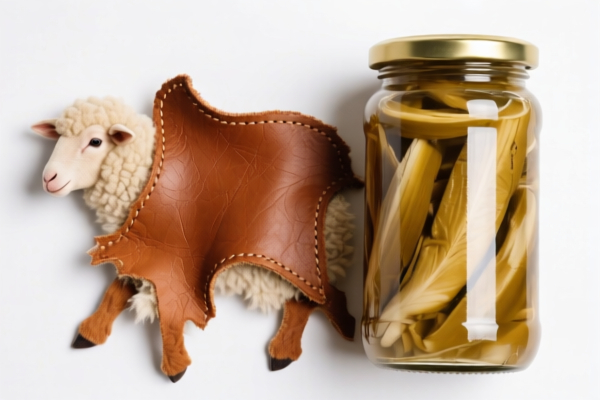
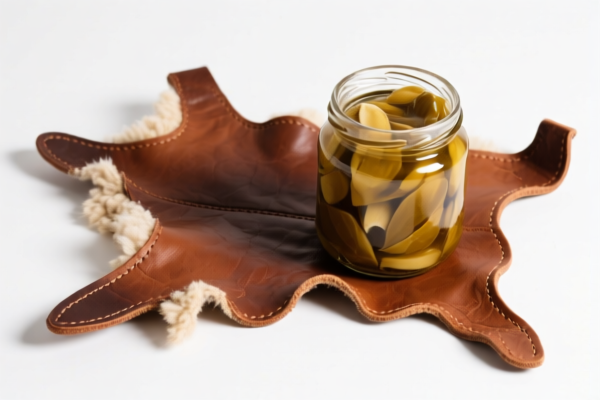
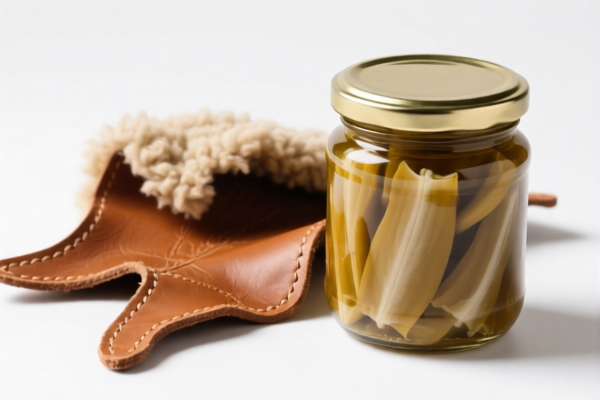
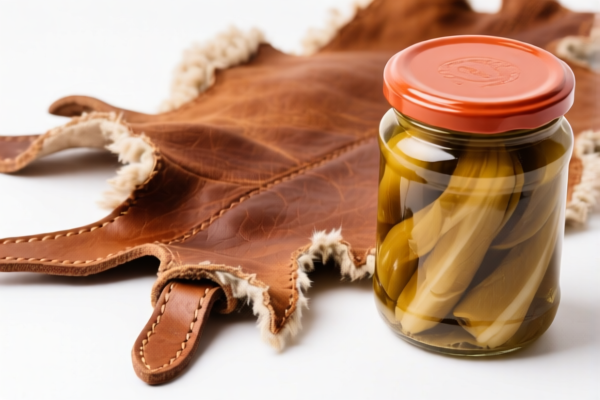
pickled sheepskins without wool for leather goods
CN → USProduct Images
AI Analysis
🐑 Pickled Sheepskins (Without Wool) for Leather Goods
🌐 HS Code Reference & Customs Clearance Guide | 2026 Latest Tariff Analysis | Professional Clearance Strategy
📌 I. Product Definition & Classification: Do You Really Understand "Pickled Sheepskins"?
Pickled sheepskins without wool are raw animal hides that have undergone a specific preservation process (pickling) to prepare them for tanning. In international trade, they are classified under Chapter 41 of the Harmonized System, specifically as "Other than heads, tails, claws, hides and skins of Chapter 2."
Key characteristics: - Material: Sheepskin/Sheep pelt. - State: Raw, preserved (pickled), not tanned yet. - Condition: Without wool (de-haired or bare skin). - Purpose: Intermediate raw material for leather goods manufacturing.
⚠️ Critical Distinction:
- If the sheepskin still has wool/fur attached, it is classified as Chapter 43 (Furskins).
- If the sheepskin is tanned (chrome-tanned, vegetable-tanned, etc.), it is classified as Chapter 41 but under different headings (e.g., 4104/4105 for tanned leather).
- Pickling is a preservation method, not tanning. Therefore, these goods remain in Chapter 41 under Heading 4102.
📦 II. HS Code Classification Details (2026 Latest Tariff Authority Comparison)
| HS Code | Product Description | Applicable Scenario | Condition |
|---|---|---|---|
| 4102.21.00.00 | Sheep or lamb skins, only pickled, whether or not split | Pickled sheepskins without wool, in the raw state before tanning | ✅ Pickled, No Wool |
| 4102.29.00.00 | Sheep or lamb skins, other than those of 4102.21 (e.g., salted, dried, but not pickled) | Sheepskins preserved by salting or drying only | ❌ Not Pickled |
| 4302.19.00.00 | Sheep or lamb furskins, prepared (with wool) | Sheepskins with wool attached, processed for fur garments | ✅ With Wool |
| 4104.41.00.00 | Chrome-tanned sheep leather, without wool | Already tanned leather ready for manufacturing | ❌ Already Tanned |
🔍 Key Reminder:
- 4102.21.00.00 is the only correct HS code for pickled sheepskins without wool.
- Do not confuse with 4302 (furs) – if wool is removed, it is 4102.
- Do not confuse with 4104/4105 (tanned leather) – pickling is not tanning.
💰 III. 2026 Latest Tariff Rate Details (Including Surcharge & Policy Add-ons)
✅ Applicable Country: United States (US)
✅ Origin: China (CN)
✅ Effective Date: From November 10, 2025 (including subsequent imports)
🎯 1. 4102.21.00.00 —— Sheep or Lamb Skins, Only Pickled, Without Wool
| Item | Content |
|---|---|
| Base Tariff Rate | 0% (ad valorem) |
| USITC Surcharge | +25% (from USITC Footnote 9903.88.01) |
| IEEPA Surcharge | +10% (against Chinese/HK products, from Nov 10, 2025) |
| Total Tariff Rate | 35% |
| Tax Calculation | CIF Value × 35% |
| De Minimis Eligibility | ❌ Not Eligible (deny_de_minimis) |
| Legal Basis Path | IEEPA:9903.01.25 → IEEPA:9903.01.24 → USITC:4102.21.00.00 → FOOTNOTE:9903.88.01 |
📌 Explanation:
- The 25% USITC surcharge is applied under Section 301 of the Trade Act for certain raw animal hides.
- The 10% IEEPA surcharge is an additional anti-China tariff.
- Total 35% is a high tariff rate, which must be anticipated in cost calculations.
🎯 2. 4102.29.00.00 —— Other Sheep Skins (Salted/Dried, Not Pickled)
| Item | Content |
|---|---|
| Base Tariff Rate | 0% |
| USITC Surcharge | +25% |
| IEEPA Surcharge | +10% |
| Total Tariff Rate | 35% |
| Tax Calculation | CIF × 35% |
| De Minimis Eligibility | ❌ Not Eligible |
| Legal Basis Path | IEEPA:9901.25 → IEEPA:9903.01.24 → USITC:4102.29.00.00 → FOOTNOTE:9903.88.01 |
📌 Note:
- Same tariff structure as pickled sheepskins.
- Even if preserved by salting or drying, if it’s sheepskin without wool, it falls under Chapter 41 and faces the same surcharges.
🛠️ IV. Customs Clearance Practical Advice (Combat Pitfall Guide)
✅ 1. Required Documentation List (None Can Be Missing)
| Document | Must Provide | Explanation |
|---|---|---|
| ✅ Product Specification Sheet | ✔️ | Includes type of sheepskin, weight, size, preservation method (pickled/salted) |
| ✅ Photos (Including Labels) | ✔️ | Clear images showing no wool, pickling condition, and batch numbers |
| ✅ Certificate of Origin (CO) | ✔️ | If non-China origin, may qualify for preferential rates |
| ✅ Commercial Invoice | ✔️ | Must clearly state “Pickled Sheepskins Without Wool” |
| ✅ Packing List | ✔️ | Detail gross/net weight, number of pieces |
| ✅ Non-Wool Certification | ✔️ | Declaration that wool has been completely removed |
| ✅ Fumigation Certificate | ✔️ | Required for animal products to prevent pests |
✅ 2. Declaration Tips (Key Mantra)
🔥 “No Wool = Chapter 41; Pickled ≠ Tanned; Be Precise!”
| Scenario | Correct Declaration | Wrong Practice |
|---|---|---|
| Pickled sheepskins, no wool | 4102.21.00.00 |
Misdeclare as “Tanned Leather” → 20% base + surcharges |
| Sheepskins with wool | 4302.19.00.00 |
Misdeclare as “Sheepskins” → Higher duty + regulatory issues |
| Salted sheepskins (not pickled) | 4102.29.00.00 |
Misdeclare as “Pickled” → May face inspection delays |
| Animal by-products without wool | 4102.21.00.00 |
Misdeclare as “Textile” → 100%+ duty + penalties |
✅ 3. Special Situation Handling
| Situation | Handling Advice |
|---|---|
| OEM Custom Pickling | Provide customer order + pickling process description to avoid misclassification |
| Mixed Bundles (Pickled + Salted) | Declare separately; mixed bundles may cause customs confusion |
| Sheepskins with Residual Wool | If wool is not fully removed, may be classified as 4302 (Furs) → Higher duty + stricter regulation |
| Animal Health Certificate | Ensure import country’s animal health standards are met (e.g., BSE-free declaration) |
🌍 V. Global Major Market Clearance Comparison (2026 Latest)
| Country/Region | Recommended HS Code | Tariff | Certification Requirements | Notes |
|---|---|---|---|---|
| 🇺🇸 USA | 4102.21.00.00 |
35% (China-origin) | Animal Health Cert + Fumigation | 35% is high; plan cost accordingly |
| 🇨🇳 China | 4102.21.00.00 |
8% | N/A | No surcharge |
| 🇪🇺 EU | 4102.21.00.00 |
4% | CE/REACH (if processed further) | No surcharge |
| 🇦🇺 Australia | 4102.21.00.00 |
5% | Biosecurity Approval | Strict animal import rules |
| 🇯🇵 Japan | 4102.21.00.00 |
8% | Animal Quarantine Certificate | N/A |
📌 Conclusion:
- USA imposes the highest total tariff (35%) due to Section 301 and IEEPA surcharges.
- China, EU, Australia, and Japan have lower or moderate tariffs.
- Origin matters significantly – non-China origins may avoid IEEPA surcharges.
📌 VI. Common Mistakes & Pitfall Guide (Lessons Learned)
❌ Mistake 1: Declaring pickled sheepskins as “Tanned Leather”
👉 Consequence: Misclassification → 20% base + 25% + 10% = 55% → Overpayment & Penalties!
❌ Mistake 2: Not declaring “Without Wool” clearly
👉 Consequence: Customs may classify as 4302 (Furs) → Higher duty + stricter inspection → Delays & Returns!
❌ Mistake 3: Ignoring Animal Health Certificates
👉 Consequence: Rejected at border → Return or Destruction!
❌ Mistake 4: Using “Leather” instead of “Pickled Skins” in invoice
👉 Consequence: Customs cannot verify preservation status → Suspension for Inspection!
✅ Correct Practice:
“Pickled Sheepskins Without Wool, Raw State, For Tanning, Batch No. XYZ, Fumigated, BSE-Free”
🎯 VII. Conclusion: Professional Declaration, Save Time, Reduce Cost!
🎯 Remember the Mantra:
🔹 “Pickled ≠ Tanned, No Wool = Chapter 41, Base 0% + 25% + 10% = 35%!”
🔹 “HS Code Determines Destiny, 35% Difference, Declaration Matters!”
📌 Pro Tip:
If your sheepskins are originated from New Zealand, Australia, or EU, you may avoid IEEPA surcharge, reducing total tariff to 25%.
Recommend Applying for Advance Ruling to avoid clearance risks.
📣 Immediate Action:
📞 Contact Professional Customs Broker + Provide Product Photos + Apply for HS Code Advance Ruling
🚀 Ensure your pickled sheepskins, smooth clearance, efficient export, profit maximization!
✨ Professional Clearance, Starting with Accurate Classification!
💼 Every Cost Cent, Worthy of Precise Calculation!
Customer Reviews
About HS Code Classification
The Harmonized System (HS) is an internationally standardized nomenclature developed by the World Customs Organization (WCO) to classify traded products. Over 200 countries use the HS system as the basis for customs tariffs, trade statistics, and import/export regulations.
Each HS code follows a hierarchical structure:
- Chapter (2 digits) — Broad category of goods (e.g., Chapter 84: Machinery and Mechanical Appliances)
- Heading (4 digits) — More specific grouping within the chapter
- Subheading (6 digits) — Internationally standardized breakdown, used by all WCO member countries
- National subdivisions (8-10 digits) — Country-specific extensions for further classification, such as US HTSUS 10-digit codes
Correct HS code classification is essential for smooth customs clearance, accurate duty payment, and compliance with trade regulations. Misclassification can lead to customs delays, overpayment of duties, or penalties.
When importing from CN to US, the applicable tariff rates may include:
- Most-Favored-Nation (MFN) rate — The standard duty rate applied to WTO members
- General rate — Applied to countries without trade agreements
- Trade remedy duties — Additional tariffs such as Section 301 (anti-dumping), Section 232 (national security), or countervailing duties
The information provided on this page is for reference purposes only. For official classification, please consult with your local customs authority or a licensed customs broker.