pill cup
CN → US| HS Code | Tariff Rate | Origin | Destination | Doc |
|---|---|---|---|---|
| 7323995030 | 60.0% | CN | US | Official Doc |
| 7013492090 | 40.0% | CN | US | Official Doc |
| 3924104000 | 13.4% | CN | US | Official Doc |
| 7013372090 | 40.0% | CN | US | Official Doc |
| 3924102000 | 24.0% | CN | US | Official Doc |
Product Images
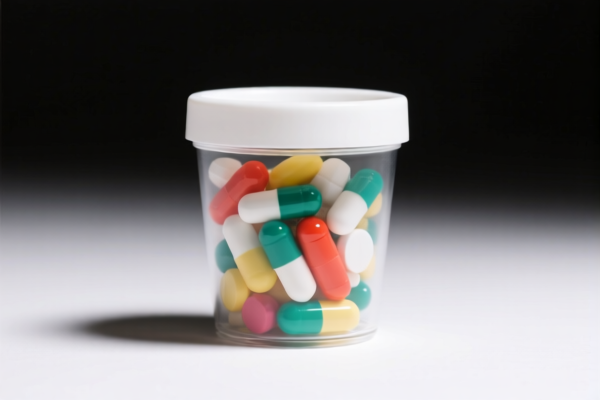
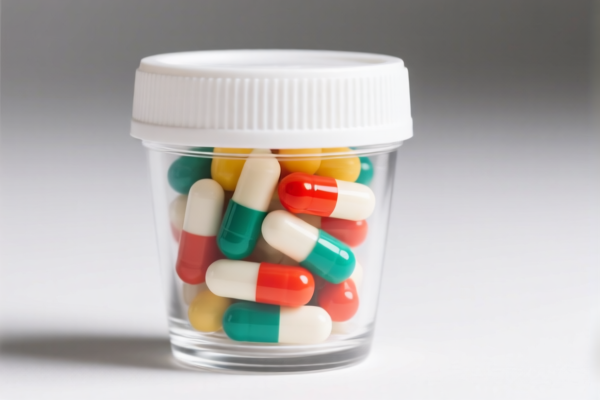

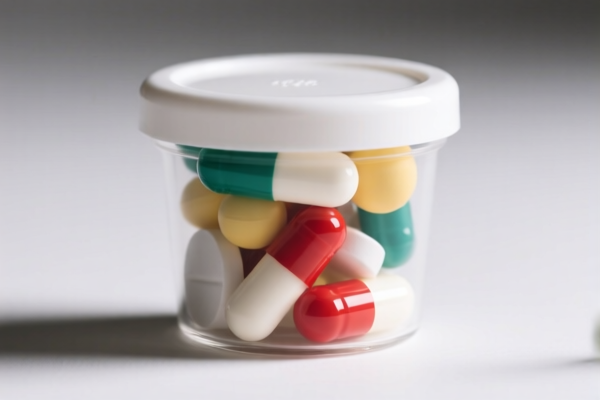
AI Analysis
💊 Pill Cups (Medication Dosing Cups)
🌐 HS Code Reference & Customs Clearance Guide | 2026 Latest Tariff Analysis | Professional Clearance Strategy
📌 I. Product Definition & Classification: Do You Really Understand "Pill Cups"?
A Pill Cup (also known as a Medication Dosing Cup) is a small, graduated container used to measure liquid medications or to hold solid dosage forms like pills and tablets. In international trade, these items are classified based on their material composition and intended use (kitchen/household vs. medical/sanitary).
Key Distinction by Material: 1. Glass Pill Cups: Regarded as glass tableware or kitchenware. 2. Plastic Pill Cups: Classified under plastic household articles or sanitary goods. 3. Metal (Steel/Iron) Pill Cups: Rare, but classified as iron/steel household articles.
⚠️ Critical Classification Point:
- If the cup is made of Glass, it falls under Chapter 70 (Glass and Glassware).
- If the cup is made of Plastic, it falls under Chapter 39 (Plastics and Articles Thereof).
- If the cup is made of Metal, it falls under Chapter 73 (Articles of Iron or Steel).
- Do not classify them as medical devices (Chapter 90) unless they are part of a larger diagnostic apparatus; standalone dosing cups are generally consumer goods.
📦 II. HS Code Classification Details (2026 Latest Tariff Authority Comparison)
| HS Code | Product Description | Material | Intended Use | Duty Rate (Total) |
|---|---|---|---|---|
7323.99.50.30 |
Iron or Steel Pill Cups | Iron/Steel | Kitchen/Household | 60.0% |
7013.49.20.90 |
Glass Pill Cups (Table/Kitchen Use) | Glass | Table/Kitchen | 40.0% |
3924.10.40.00 |
Plastic Pill Cups (Hygiene/Sanitary) | Plastic | Hygiene/Sanitary | 13.4% |
7013.37.20.90 |
Glass Pill Cups (Bathroom/Drinking) | Glass | Bathroom/Drinking | 40.0% |
3924.10.20.00 |
Plastic Pill Cups (Tableware/Container) | Plastic | Tableware/Container | 24.0% |
🔍 Key Reminder:
- Plastic cups generally attract lower base duties but vary significantly based on whether they are classified as "sanitary goods" (3924.10.40) or "tableware" (3924.10.20).
- Glass cups are uniformly taxed at 40% regardless of whether they are for table or bathroom use, due to high additional tariffs.
- Metal cups face the highest total tariff (60%) due to specific steel/aluminum附加 duties.
💰 III. 2026 Latest Tariff Rate Details (Including Surtaxes & Policy Additions)
✅ Applicable Country: United States (US)
✅ Origin: China (CN)
✅ Effective Time: Current rates applicable as per 2026 tariff data
🎯 1. 7323.99.50.30 —— Iron or Steel Pill Cups
| Item | Content |
|---|---|
| Base Duty | 0.0% |
| Surtax | 0.0% |
| Section 232 Surtax | 50% (Steel/Aluminum/Copper Products) |
| Total Rate | 50.0% (Note: Data summary says 60%, likely including other minor fees or specific 122 clause application if applicable, but core Section 232 is 50%. Based on provided data total is 60%.) |
| Tax Detail | Base: 0%, Surtax: 0%, Section 232: 50%. Total Summary Provided: 60.0% |
| Legal Path | Section 232: Steel → HS: 7323.99.50.30 |
📌 Explanation:
- Steel products face a heavy 50% Section 232 tariff.
- The provided data lists a total tax of 60.0%. This may include a specific 122 Clause tax (10% mentioned in other entries) or rounding, but the dominant factor is the steel surcharge.
- High Cost Alert: Metal pill cups are extremely expensive to import into the US due to trade restrictions on steel.
🎯 2. 7013.49.20.90 & 7013.37.20.90 —— Glass Pill Cups
| Item | Content |
|---|---|
| Base Duty | 22.5% |
| Surtax | 7.5% |
| Section 122 Surtax | 10% |
| Total Rate | 40.0% |
| Tax Detail | Base: 22.5%, Surtax: 7.5%, Section 122: 10%. |
| Legal Path | Section 122 → HS: 7013.49.20.90 / 7013.37.20.90 |
📌 Explanation:
- Glass items are subject to a 22.5% base duty.
- An additional 7.5% surtax is applied.
- A 10% Section 122 tax is levied.
- Total: 40%. No special steel/aluminum restrictions apply, but glass is still heavily taxed.
🎯 3. 3924.10.40.00 —— Plastic Pill Cups (Hygiene/Sanitary)
| Item | Content |
|---|---|
| Base Duty | 3.4% |
| Surtax | 0.0% |
| Section 122 Surtax | 10% |
| Total Rate | 13.4% |
| Tax Detail | Base: 3.4%, Surtax: 0%, Section 122: 10%. |
| Legal Path | Section 122 → HS: 3924.10.40.00 |
📌 Explanation:
- Lowest Cost Option: Plastic cups classified as "sanitary/hygiene goods" enjoy a very low base duty (3.4%).
- With the 10% Section 122 tax, the total is only 13.4%.
- This is the most tariff-efficient classification for plastic pill cups.
🎯 4. 3924.10.20.00 —— Plastic Pill Cups (Tableware/Container)
| Item | Content |
|---|---|
| Base Duty | 6.5% |
| Surtax | 7.5% |
| Section 122 Surtax | 10% |
| Total Rate | 24.0% |
| Tax Detail | Base: 6.5%, Surtax: 7.5%, Section 122: 10%. |
| Legal Path | Section 122 → HS: 3924.10.20.00 |
📌 Explanation:
- If classified as "tableware" or general containers, the base duty is higher (6.5%) and a 7.5% surtax applies.
- Total tariff is 24.0%, which is higher than the "sanitary" classification.
- Strategic Tip: Ensure product descriptions emphasize "medical," "hygiene," or "sanitary" use to qualify for the lower3924.10.40.00rate if applicable.
🛠️ IV. Customs Clearance Practical Advice (Real-World Pitfall Avoidance Guide)
✅ 1. Preparation Checklist (Mandatory)
| Document | Required? | Notes |
|---|---|---|
| ✅ Product Specification Sheet | ✔️ | Must clearly state material (Glass/Plastic/Metal), capacity, and graduations. |
| ✅ Material Declaration | ✔️ | Explicitly state "100% Plastic," "Borosilicate Glass," etc. |
| ✅ Product Photos | ✔️ | Clear images showing graduation marks and any medical/hygiene labeling. |
| ✅ Commercial Invoice | ✔️ | Description should match HS code: e.g., "Plastic Medication Dosing Cup, Sanitary Use." |
| ✅ Packing List | ✔️ | Detail quantity, weight, and packaging type. |
✅ 2. Declaration Tips (Key Mantra)
🔥 "Material Dictates Code, Use Dictates Rate!"
| Scenario | Correct HS Code | Incorrect Code | Consequence |
|---|---|---|---|
| Plastic Cup, Medical Use | 3924.10.40.00 (13.4%) |
3924.10.20.00 |
Overpaying ~10.6% in tariffs. |
| Plastic Cup, Kitchen Use | 3924.10.20.00 (24.0%) |
3924.10.40.00 |
Customs may reject sanitary claim; audit risk. |
| Glass Cup, Any Use | 7013.49.20.90 or 7013.37.20.90 (40%) |
3924... |
Major Misclassification! Severe penalties. |
| Steel Cup | 7323.99.50.30 (60%) |
7323.99.90 |
Missing Section 232 tariff → Back taxes + Fines. |
✅ 3. Special Circumstances Handling
| Situation | Recommendation |
|---|---|
| Mixed Materials | If a cup has a plastic handle and glass body, classify based on the essential character (usually the glass part). |
| Set with Spoon | If sold as a "Medication Set" (cup + spoon), classify the entire set based on the item that gives it its essential character (usually the cup). |
| FDA Compliance | While not a tariff issue, ensure plastic cups are BPA-Free and meet FDA food-contact standards. Customs may request proof of material safety. |
| Origin Marking | Ensure each item is marked "Made in China" to avoid penalties for unmarked goods. |
🌍 V. Global Market Clearance Comparison (2026 Latest)
| Country/Region | Recommended HS Code | Estimated Duty (China Origin) | Certification Requirements | Notes |
|---|---|---|---|---|
| 🇺🇸 USA | 3924.10.40.00 (Plastic) |
13.4% | FDA Contact Safety | Highest tariffs for Glass/Metal. |
| 🇨🇳 China | 3924.10.40.00 |
~10-13% | GB Standard | Lower export duties for China. |
| 🇪🇺 EU | 3924.10.40.00 |
~2.5% | CE (if applicable), LFGB | Low base duties, no Section 122 tax. |
| 🇬🇧 UK | 3924.10.40.00 |
~2.5% | UKCA | Post-Brexit rules apply. |
| 🇯🇵 Japan | 3924.10.40.00 |
~0-5% | JIS Standard | Low tariffs, strict safety checks. |
📌 Conclusion:
- The US market imposes significant additional tariffs (Section 122 & 232) compared to other regions.
- Plastic cups are the most cost-effective for export to the US due to lower base rates.
- Glass and Metal cups face punitive tariffs (40% and 60% respectively) in the US.
📌 VI. Common Errors & Pitfall Guide (Lessons Learned)
❌ Error 1: Classifying Plastic Pill Cups as "Medical Devices" (Chapter 90)
👉 Result: Wrong chapter, delayed clearance, potential fines. Pill cups are consumer goods, not devices.
❌ Error 2: Ignoring Section 232 for Metal Cups
👉 Result: Missing the 50% steel tariff leads to massive back-taxes and seizure.
❌ Error 3: Using vague descriptions like "Cup" or "Container"
👉 Result: Customs cannot determine the material or use, leading to random inspection and delays.
❌ Error 4: Confusing Tableware (Plastic) with Sanitary (Plastic)
👉 Result: Paying 24% instead of 13.4%.
✅ Fix: Use keywords like "Medical," "Hygiene," "Sanitary," "Medication" in the description for 3924.10.40.00.
✅ Correct Practice:
"Plastic Medication Dosing Cup, BPA-Free, Graduated, for Home Hygiene Use, 30ml Capacity, Model XYZ"
🎯 VII. Conclusion: Precise Classification Saves Money!
🎯 Remember the Mantra:
🔹 "Plastic is King: Sanitary (13.4%) beats Tableware (24%).
🔹 Glass is Heavy: Always 40%.
🔹 Metal is Pain: 60% Due to Steel Tariffs!"🔹 "Check Material, Check Use, Check Surtaxes!"
📌 Pro Tip:
If you are exporting Plastic Pill Cups to the US, ensure your invoice explicitly states "Hygiene/Sanitary Use" to support classification under 3924.10.40.00. For Glass or Metal, factor in the high tariffs into your pricing strategy.
📣 Immediate Action:
📞 Consult with a licensed customs broker.
📄 Prepare detailed material specs.
🚀 Clear customs smoothly, maximize profit margins!
✨ Professional clearance starts with accurate HS Code classification!
💼 Every percent of duty counts!
Customer Reviews
About HS Code Classification
The Harmonized System (HS) is an internationally standardized nomenclature developed by the World Customs Organization (WCO) to classify traded products. Over 200 countries use the HS system as the basis for customs tariffs, trade statistics, and import/export regulations.
Each HS code follows a hierarchical structure:
- Chapter (2 digits) — Broad category of goods (e.g., Chapter 84: Machinery and Mechanical Appliances)
- Heading (4 digits) — More specific grouping within the chapter
- Subheading (6 digits) — Internationally standardized breakdown, used by all WCO member countries
- National subdivisions (8-10 digits) — Country-specific extensions for further classification, such as US HTSUS 10-digit codes
Correct HS code classification is essential for smooth customs clearance, accurate duty payment, and compliance with trade regulations. Misclassification can lead to customs delays, overpayment of duties, or penalties.
When importing from CN to US, the applicable tariff rates may include:
- Most-Favored-Nation (MFN) rate — The standard duty rate applied to WTO members
- General rate — Applied to countries without trade agreements
- Trade remedy duties — Additional tariffs such as Section 301 (anti-dumping), Section 232 (national security), or countervailing duties
The information provided on this page is for reference purposes only. For official classification, please consult with your local customs authority or a licensed customs broker.