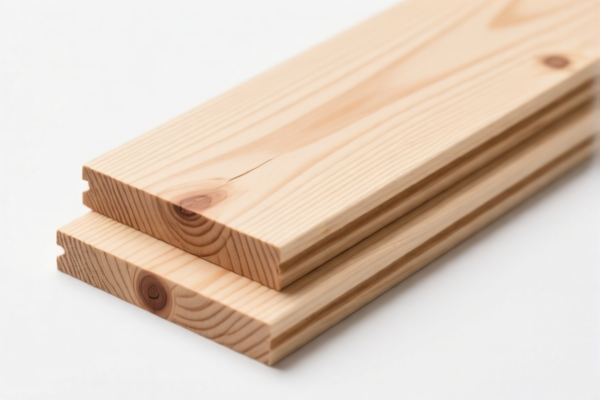
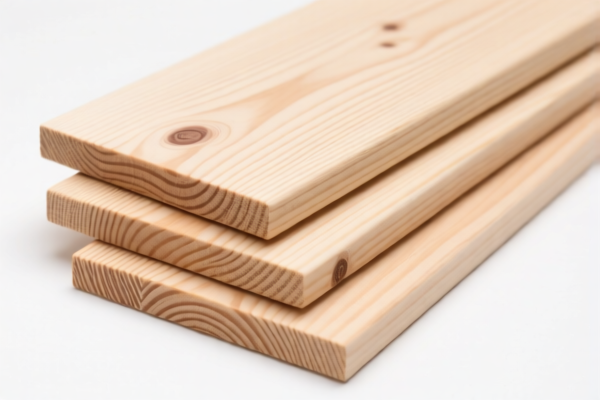
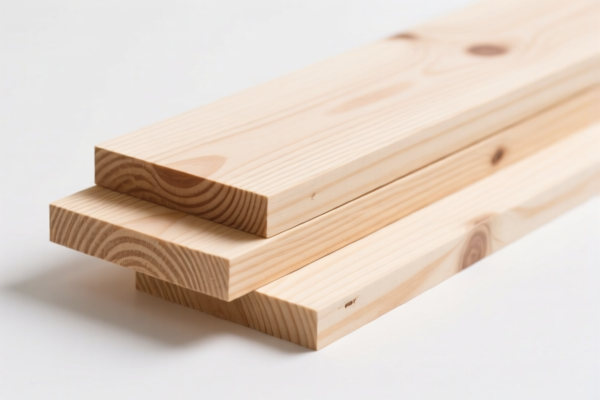
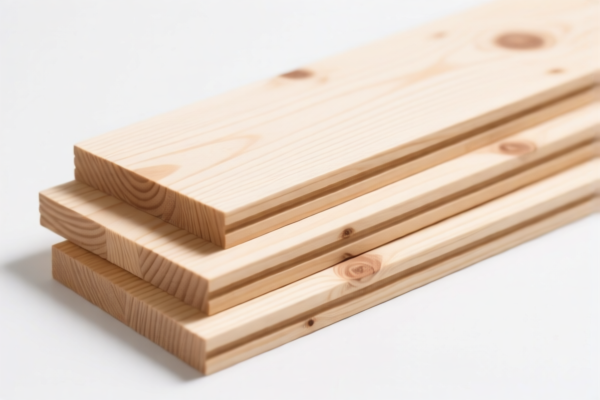
pine finger jointed sanded board
CN → US| HS Code | Tariff Rate | Origin | Destination | Doc |
|---|---|---|---|---|
| 4407110001 | 35.0% | CN | US | Official Doc |
| 4407190001 | 35.0% | CN | US | Official Doc |
Product Images
AI Analysis
🌲 Pine Finger-Jointed Sanded Board (Wood Products)
🌐 HS Code Reference & Customs Clearance Guide | 2026 Latest Tariff Analysis | Professional Clearance Strategy
📌 One, Product Definition & Classification: Do You Really Understand "Pine Finger-Jointed Board"?
Pine finger-jointed sanded board is a high-value engineered wood product. It is not raw timber, but a processed material where small pieces of pine wood are cut with interlocking "fingers," glued together, and then planed/sanded to a smooth finish.
In international trade, it falls under Chapter 44 (Wood and Articles of Wood). The key to correct classification lies in two factors: 1. Thickness: Must exceed 6mm (if ≤6mm, it might be considered veneer or plywood). 2. Processing Level: It is sawn/chipped, lengthwise, planed, sanded, and end-jointed (finger-jointed).
⚠️ Critical Distinction:
- If it is not finger-jointed (e.g., solid planks or simple edge-joined boards), it falls under other subheadings (e.g., 4407.19.00.01 "Other").
- If it is finger-jointed, it requires specific HS codes based on whether it is Pine (Pinus spp.) or Other Coniferous.
- Note: In the provided data, both Pine and Other Coniferous finger-jointed boards share the same tax rate, but the HS Codes are distinct for statistical and regulatory purposes.
📦 Two. HS Code Classification Details (2026 Latest Tariff Authority Comparison)
| HS Code | Product Description | Application Scenario | Key Feature |
|---|---|---|---|
4407.11.00.01 |
Pine (Pinus spp.) Finger-jointed Wood | Furniture parts, cabinetry, interior trim, DIY projects | Specific Species: Must be Pine (Pinus genus) |
4407.19.00.01 |
Other Coniferous Finger-jointed Wood | Alternative softwoods (e.g., Spruce, Fir, Larch) used in similar applications | Non-Pine Conifer: Includes Spruce, Fir, etc. |
🔍 Key Reminder:
- "Sanded": The description includes "whether or not planed, sanded." Sanding does not change the HS Code if the wood remains >6mm thick.
- "Finger-Jointed": This refers to end-jointing. If the board is only edge-joined (butt joint), it does not qualify for these codes.
- Species Identification: You must provide documentation proving the wood species. Misidentifying Spruce as Pine can lead to customs delays or penalties.
💰 Three. 2026 Latest Tariff Rate Details (Including Surcharge & Policy Add-ons)
✅ Applicable Country: USA (US)
✅ Country of Origin: China (CN)
✅ Effective Time: 2025+ (Current Trade Policy Context)
🎯 1. 4407.11.00.01 — Pine (Pinus spp.) Finger-Jointed Wood
| Item | Content |
|---|---|
| Base Tariff Rate | 0.0% (ad valorem) |
| Section 301 Surcharge | +25.0% |
| Total Tariff Rate | 25.0% |
| Tax Calculation | CIF Value × 25% |
| De Minimis Exemption | ❌ Not Eligible (Most shipments subject to full duty) |
| Legal Basis | HTSUS 4407.11.00 + USITC Footnote for Section 301 |
📌 Explanation:
- The 0% base rate reflects the WTO standard for processed wood.
- The 25% surcharge is imposed under Section 301 of the Trade Act of 1974 against Chinese-origin goods.
- Total Duty: 25%. This is a significant cost factor for exporters.
🎯 2. 4407.19.00.01 — Other Coniferous Finger-Jointed Wood
| Item | Content |
|---|---|
| Base Tariff Rate | 0.0% (ad valorem) |
| Section 301 Surcharge | +25.0% |
| Total Tariff Rate | 25.0% |
| Tax Calculation | CIF Value × 25% |
| De Minimis Exemption | ❌ Not Eligible |
| Legal Basis | HTSUS 4407.19.00 + USITC Footnote for Section 301 |
📌 Note:
- Although the species is different (e.g., Spruce/Fir instead of Pine), the tariff rate is identical to Pine finger-jointed boards.
- Ensure your Commercial Invoice and Bill of Lading clearly state the wood species to avoid customs queries.
🛠️ Four. Customs Clearance Practical Advice (Real-World Pitfall Avoidance Guide)
✅ 1. Required Documentation Checklist (Missing Any = Delay)
| Document | Mandatory? | Description |
|---|---|---|
| ✅ Commercial Invoice | ✔️ | Must explicitly state: "Pine Finger-Jointed Sanded Board" or "Spruce Finger-Jointed..." and HS Code. |
| ✅ Packing List | ✔️ | Detail dimensions, volume (CBM), and weight. |
| ✅ Wood Treatment Certificate | ✔️ | ISPM 15 Compliance: Wood packaging material must be heat-treated (HT) or fumigated (MB). Note: The product itself may require phytosanitary cert if raw, but processed wood often has exemptions; verify latest CBP rules. |
| ✅ Species Declaration | ✔️ | Proof of origin species (Pine vs. Other Conifer) to support HS Code 4407.11 vs 4407.19. |
| ✅ Material Safety Data Sheet (MSDS) | ✔️ | If glued with specific adhesives, some ports require this to confirm no prohibited formaldehyde levels (if applicable). |
| ✅ Bill of Lading | ✔️ | Clean on-board bill. |
✅ 2. Declaration Tips (Key Mantra)
🔥 "Species Clear, Joint Type Specific, Thickness >6mm, No Confusion with Veneer!"
| Scenario | Correct Declaration | Wrong Practice |
|---|---|---|
| Pine Finger-Jointed | 4407.11.00.01 |
Misdeclare as "Wood Panel" → Generic inspection |
| Spruce/Fir Finger-Jointed | 4407.19.00.01 |
Declare as Pine → Species mismatch penalty |
| Thickness ≤ 6mm | Incorrect HS | Must re-classify to Chapter 44 (Veneer/Plywood) |
| Solid Plank (No Fingers) | 4407.19.00.01 (Other) or 4407.10 |
Claim finger-jointed when not → Fraud/False Declaration |
✅ 3. Special Case Handling
| Situation | Handling Advice |
|---|---|
| Mixed Species in One Container | If both Pine and Spruce are present, split the declaration or use the code that covers the majority. Best practice: Keep shipments species-segregated to avoid customs scrutiny. |
| High-Formaldehyde Adhesives | If using urea-formaldehyde resins, ensure compliance with CARB Phase 2 or TSCA Title VI standards. Provide test reports to avoid FDA/CPSC holds. |
| Wood Packaging | Ensure pallets/crates are ISPM 15 marked. Unmarked wood packaging will cause rejection or destruction at US ports. |
🌍 Five. Global Major Market Clearance Comparison (2026 Latest)
| Country/Region | Recommended HS Code | Tariff (China Origin) | Certification Requirements | Remarks |
|---|---|---|---|---|
| 🇺🇸 USA | 4407.11.00.01 / 4407.19.00.01 |
25% (Section 301) | None specific (but ISPM 15 for packaging) | High duty burden |
| 🇨🇳 China | 4407.11.00 / 4407.19.00 |
0-5% (MFN) | N/A (Import) | Low duty if imported into China |
| 🇪🇺 EU | 4407.11 / 4407.19 |
~5.4% | FSC/PEFC (often required by buyers), EUDR (Deforestation Regulation) compliance | EUDR effective 2025 requires proof of no deforestation |
| 🇬🇧 UK | 4407.11 / 4407.19 |
~5.4% | Similar to EU | Post-Brexit rules apply |
| 🇦🇺 Australia | 4407.11 / 4407.19 |
5% | AQIS Requirements for wood | Biosecurity is strict |
📌 Conclusion:
- USA is the most expensive market due to the 25% Section 301 tariff.
- EU and UK have lower base tariffs but are introducing strict environmental due diligence (EUDR). Exporters must prove sustainable sourcing.
- China has low tariffs but is primarily an exporter of such goods.
📌 Six. Common Errors & Pitfall Guide (Blood & Tears Lessons)
❌ Error 1: Misclassifying "Finger-Jointed" as "Solid Wood" or "Plywood"
👉 Consequence: If declared as plywood (4412), you may face anti-dumping duties or incorrect tariff assessment. If declared as solid planks, you might be accused of false origin/species.
❌ Error 2: Ignoring the 6mm Thickness Rule
👉 Consequence: If boards are ≤6mm, they are considered veneer or thin wood sheets, falling under different HS codes (e.g., 4408.10). Misclassification leads to immediate customs holds.
❌ Error 3: No Species Declaration on Invoice
👉 Consequence: Customs cannot verify 4407.11 (Pine) vs 4407.19 (Other). They may apply the higher scrutiny rate or detain goods for species testing.
❌ Error 4: Unmarked Wood Pallets
👉 Consequence: US CBP will refuse entry or order fumigation/destruction of the entire load due to ISPM 15 violations.
✅ Correct Practice:
"Pine (Pinus spp.) Finger-Jointed Sanded Board, Thickness: 15mm, Finish: Sanded, Adhesive: Water-Resistant, ISPM 15 Packaging"
🎯 Seven. Conclusion: Precise Classification Saves Money!
🎯 Remember the Mantra:
🔹 "Pine vs. Other Conifer, Finger-Jointed Not Solid, >6mm Thick, 25% Duty in USA."
🔹 "HS Code determines the cost, 25% is the price of entry, get it right from the start."
📌 Pro Tip:
If your pine is sourced from Canada, Russia, or other non-China countries, the 25% Section 301 tariff does NOT apply. You may pay only the base rate (0% or minimal).
👉 Action: Always verify the Country of Origin on the commercial invoice. If it’s not China, you could save 25% instantly.
📣 Immediate Action:
📞 Contact your freight forwarder + Provide Species Proof + Confirm Thickness >6mm
🚀 Let your wood products clear customs smoothly, reduce costs, and maximize profit!
✨ Professional Clearance Starts with Accurate Classification!
💼 Your every cent of cost deserves to be calculated precisely!
Customer Reviews
About HS Code Classification
The Harmonized System (HS) is an internationally standardized nomenclature developed by the World Customs Organization (WCO) to classify traded products. Over 200 countries use the HS system as the basis for customs tariffs, trade statistics, and import/export regulations.
Each HS code follows a hierarchical structure:
- Chapter (2 digits) — Broad category of goods (e.g., Chapter 84: Machinery and Mechanical Appliances)
- Heading (4 digits) — More specific grouping within the chapter
- Subheading (6 digits) — Internationally standardized breakdown, used by all WCO member countries
- National subdivisions (8-10 digits) — Country-specific extensions for further classification, such as US HTSUS 10-digit codes
Correct HS code classification is essential for smooth customs clearance, accurate duty payment, and compliance with trade regulations. Misclassification can lead to customs delays, overpayment of duties, or penalties.
When importing from CN to US, the applicable tariff rates may include:
- Most-Favored-Nation (MFN) rate — The standard duty rate applied to WTO members
- General rate — Applied to countries without trade agreements
- Trade remedy duties — Additional tariffs such as Section 301 (anti-dumping), Section 232 (national security), or countervailing duties
The information provided on this page is for reference purposes only. For official classification, please consult with your local customs authority or a licensed customs broker.