pine logs unplaned or roughly squared
CN → US| HS Code | Tariff Rate | Origin | Destination | Doc |
|---|---|---|---|---|
| 4407110044 | 35.0% | CN | US | Official Doc |
| 4407110042 | 35.0% | CN | US | Official Doc |
| 4403210130 | 35.0% | CN | US | Official Doc |
| 4403220120 | 35.0% | CN | US | Official Doc |
| 4407110053 | 35.0% | CN | US | Official Doc |
| 4407110052 | 35.0% | CN | US | Official Doc |
Product Images
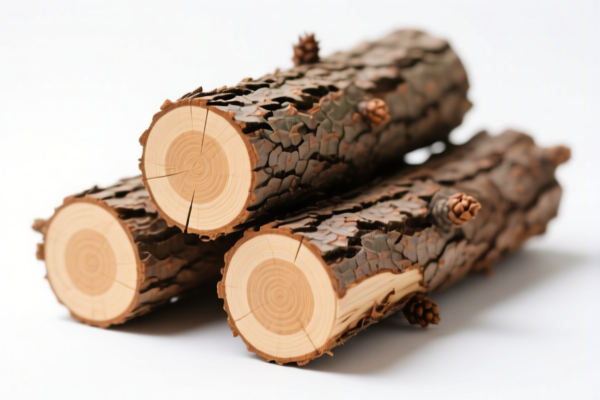
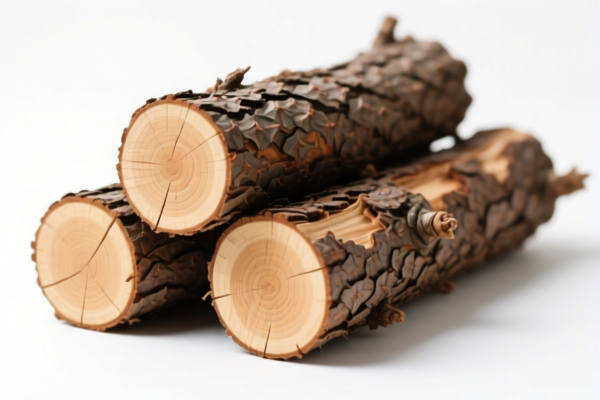
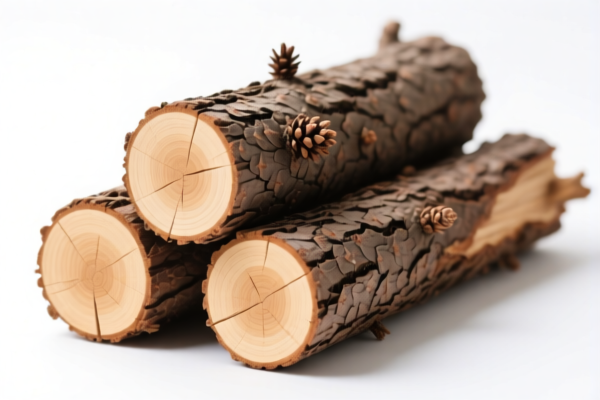
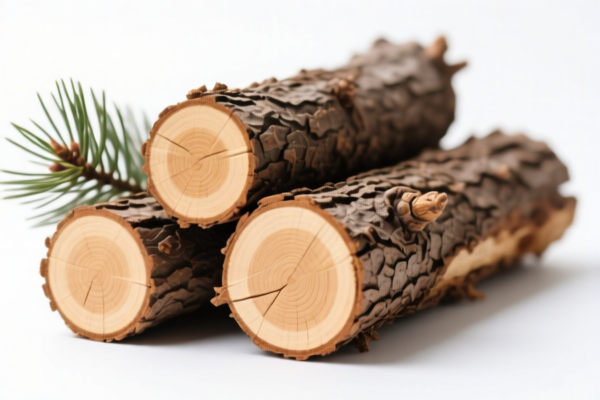
AI Analysis
🌲 Pine Logs: Unplaned or Roughly Squared (Unprocessed Pine Timber)
🌐 HS Code Reference & Customs Clearance Guide | 2026 Latest Tariff Analysis | Professional-Level Compliance Strategy
📌 I. Product Definition & Classification: What Exactly Are "Unplaned Pine Logs"?
Pine logs, unplaned or roughly squared, refer to raw or semi-processed pine timber that has undergone initial sawing but lacks final finishing. In international trade, these products are strictly categorized based on their physical state and processing level. They are distinct from finished lumber, plywood, or processed wood products.
Key Characteristics: 1. Material: Must be Pine (Pinus spp.). If the species is not specified as pine, different HS codes apply (e.g., Oak, Maple). 2. Processing Level: * Unplaned: The surface is not smoothed by planing machines. * Roughly Squared: The logs have been sawn to approximate rectangular shapes but edges are not precise or finished. * Raw State: No chemical treatment, staining, or veneer application.
⚠️ Critical Distinction:
- If the pine is in round log form (cylindrical, bark removed or not) → It falls under Chapter 44, Heading 4403.
- If the pine has been sawn longitudinally (even roughly) into beams, planks, or squared timber → It falls under Chapter 44, Heading 4407.
- Do NOT confuse with "Sawn Wood Planed" (Heading 4409) or "Veneer Sheets" (Heading 4408).
📦 II. HS Code Classification Details (2026 Authoritative Tariff Alignment)
Based on the provided <DATA>, the following HS Codes apply specifically to Pine Wood (Unplaned/Roughly Squared or Raw Logs). All items below are subject to identical tariff structures due to their origin and material nature.
| HS Code | Product Description | Application Scenario | Processing State |
|---|---|---|---|
4403.21.01.30 |
Unprocessed Pine Logs (Raw) | Raw timber rounds, construction logs, pulpwood precursors | 🌲 Raw/Cylindrical |
4403.22.01.20 |
Unprocessed Pine Logs (Raw) | Raw timber rounds, construction logs, pulpwood precursors | 🌲 Raw/Cylindrical |
4407.11.00.44 |
Other Pine, Unplaned/Roughly Sawed | Rough beams, squared timber, construction framing wood | 🪵 Sawn/Plank |
4407.11.00.42 |
Other Pine, Unplaned/Roughly Sawed | Rough beams, squared timber, construction framing wood | 🪵 Sawn/Plank |
4407.11.00.53 |
Other Pine (Unplaned/Roughly Squared) | Custom rough-sawn pine, architectural timber | 🪵 Sawn/Squared |
4407.11.00.52 |
Other Pine (Unplaned/Roughly Squared) | Custom rough-sawn pine, architectural timber | 🪵 Sawn/Squared |
🔍 Key Clarification:
- HS Codes 4403.21.01.30 / 4403.22.01.20: Apply to round logs or minimal processing. "Unprocessed" means no longitudinal sawing into standard lumber sizes.
- HS Codes 4407.11.00.42 / 4407.11.00.44 / 4407.11.00.52 / 4407.11.00.53: Apply to sawn wood that is still rough. The term "Roughly Squared" indicates the log has been cut into rectangular cross-sections but not planed smooth.
- All listed HS Codes in the provided data share the same tax rate structure.
💰 III. 2026 Latest Tariff Rate Breakdown (Including Additional Taxes & Policy Surcharges)
✅ Applicable Market: United States (US)
✅ Country of Origin: China (CN)
✅ Effective Date: Current regulations apply to all imports from China.
🎯 1. General Tariff Structure for All Listed Pine HS Codes
All HS codes provided in <DATA> share the same total tax liability. Here is the detailed breakdown:
| Component | Rate | Explanation |
|---|---|---|
| Base MFN Tariff | 0.0% | Most-Favored-Nation rate for wood products is generally low or zero under normal circumstances. |
| Section 301 Additional Tariff | +25.0% | Imposed under US Trade Law Section 301 against China. Applies to specific wood product categories. |
| Section 122 Tariff | +10.0% | Specific surcharge referenced in data (likely related to specific trade remedies or administrative fees). |
| Total Effective Tax Rate | 35.0% | 0% + 25% + 10% = 35% |
📌 Critical Note:
- The 35% total tax is applied on the CIF Value (Cost, Insurance, and Freight) of the shipment.
- De Minimis Exemption: ❌ NOT ELIGIBLE. Wood products from China are explicitly excluded from the $800 de minimis exemption (Section 321). Every single shipment, regardless of value, is subject to declaration and full tariff payment.
- Legal Basis Path:
USITC:4403.xxxx.xxxx.xxxx→SECTION301:Footnote9903.88.01(or equivalent for 4407) →ADDITIONAL_TAX:10% (Section 122/Specific)→ Total 35%.
🛠️ IV. Customs Clearance Practical Advice (Risk Mitigation Guide)
✅ 1. Required Documentation Checklist (Non-Negotiable)
| Document | Mandatory? | Purpose |
|---|---|---|
| ✅ Commercial Invoice | ✔️ | Must clearly state: "Pine Logs," "Unplaned," "Roughly Squared," HS Code, CIF Value. |
| ✅ Packing List | ✔️ | Detail wood volume (cubic meters/board feet), weight, and number of bundles. |
| ✅ Phytosanitary Certificate | ✔️ | Critical for wood. Issued by the exporting country’s agricultural authority. Must certify no pests/diseases. |
| ✅ Fumigation Certificate | ✔️ | Often required in addition to Phytosanitary. Proves treatment for insects (e.g., MB or Heat Treatment). |
| ✅ Bill of Lading (B/L) | ✔️ | Original or Telex Release. Must match invoice details. |
| ✅ Species Declaration | ✔️ | Confirm "Pinus" species. Misdeclaration (e.g., calling Pine "Oak") leads to massive penalties. |
⚠️ Warning: Without a valid Phytosanitary Certificate, US Customs and Border Protection (CBP) and the Animal and Plant Health Inspection Service (APHIS) will reject or destroy the shipment.
✅ 2. Declaration Tips (Key Rules)
🔥 "Be Specific on Species & State: 'Pine' Not 'Wood'!"
| Scenario | Correct Declaration | Incorrect Declaration | Consequence |
|---|---|---|---|
| Roughly Squared Pine Beams | "Pine, Unplaned, Roughly Squared, HS: 4407.11.00.42" | "Wood Planks" | ❌ Misclassification → Audit, Fine, Delay |
| Raw Pine Logs | "Unprocessed Pine Logs, HS: 4403.21.01.30" | "Lumber" | ❌ Wrong Heading → 35% Tax + Penalties |
| Treated Pine | If chemically treated, may shift to HS 4403.20/4403.90. Check data. | "Natural Pine" | ❌ Underpayment Risk if treated wood has different rates. |
📌 Note:
- Do NOT split shipments to avoid tariffs. CBP aggregates shipments from the same supplier within a short period.
- Ensure "Roughly Squared" is documented with photos if asked. If it’s actually planed smooth, it moves to HS 4409, which may have different tax implications (though likely still 35% under Section 301).
✅ 3. Special Considerations
| Issue | Solution |
|---|---|
| Fumigation Failure | If APHIS inspects and finds pests, the entire shipment may be returned or destroyed at your cost. Pre-shipment inspection is recommended. |
| Origin Fraud | Do NOT label non-China wood as "China Pine" to manipulate rules, nor vice versa. Origin is strictly verified via tree rings, isotope testing, or supplier audits. |
| Volume Measurement | CBP may verify cubic meter (CBM) calculations. Ensure your packing list matches physical volume exactly. |
🌍 V. Global Market Context (2026)
| Region | Tariff Impact on Chinese Pine | Key Requirement |
|---|---|---|
| 🇺🇸 USA | 35% (0% Base + 25% Sec 301 + 10% Sec 122) | Phytosanitary Cert, Fumigation Cert |
| 🇨🇳 China (Import) | Low MFN rates (varies by pine species) | CCC Certification (if processed) |
| 🇪🇺 EU | 0% MFN (but strict EU Timber Regulation) | EUTR Due Diligence Statement |
| 🇦🇺 Australia | 0-5% MFN | Biosecurity Import Permit |
📌 Conclusion for US Importers:
The 35% total tax is a significant cost driver.
- Mitigation Strategy: Consider sourcing pine from non-China countries (e.g., Canada, Russia, Baltic states, or Southeast Asia) to potentially avoid the 25% Section 301 tariff.
- Alternative: If the pine is further processed in a third country (e.g., Canada) before entering the US, check if Substantial Transformation rules apply to change the country of origin.
📌 VI. Common Mistakes & Pitfalls (Blood Lessons)
❌ Mistake 1: Declaring "Pine Lumber" when it’s actually "Raw Logs"
👉 Result: Wrong HS Code (4407 vs 4403). While tax might be similar, APHIS requirements differ. Logs often face stricter scrutiny.
❌ Mistake 2: Forgetting the Phytosanitary Certificate
👉 Result: Shipment held at port for weeks. Risk of destruction. Cost of re-export or fumigation on-site can exceed the wood value.
❌ Mistake 3: Assuming "De Minimis" applies because shipment is small
👉 Result: No de minimis for wood from China. You must file a formal entry (10+1) and pay 35% tax on every single container, no matter how small.
❌ Mistake 4: Vague Description ("Wood")
👉 Result: CBP will request additional info, causing 2-4 week delays. Always use "Pine, Unplaned, Roughly Squared."
✅ Best Practice:
Pre-Screen Shipments:
1. Verify Phytosanitary Certificate before shipping.
2. Confirm HS Code with a licensed US Customs Broker.
3. Budget for 35% Tax in your landed cost calculation.
🎯 VII. Conclusion: Professional Clearance Saves Money
🎯 Remember These Key Points:
🔹 "35% is the floor" – For Chinese Pine, expect 35% total tax.
🔹 "Phytosanitary is King" – No cert = No entry.
🔹 "Be Specific" – Use exact HS codes from<DATA>:4403.21.01.30,4403.22.01.20,4407.11.00.44,4407.11.00.42,4407.11.00.53,4407.11.00.52.
📌 Pro Tip:
If you are importing large volumes, consider Advanced Ruling (Ruling Letter) from CBP to confirm the exact HS Code and tax applicability before the first shipment. This reduces audit risk.
📣 Immediate Action:
📞 Contact a Licensed Customs Broker
📄 Ensure Phytosanitary & Fumigation Docs are Ready
💰 Budget 35% Tariff + Brokerage + Port Fees
✨ Precision in Classification, Peace of Mind in Clearance
💼 Your Timber Supply Chain, Optimized for Compliance
Customer Reviews
About HS Code Classification
The Harmonized System (HS) is an internationally standardized nomenclature developed by the World Customs Organization (WCO) to classify traded products. Over 200 countries use the HS system as the basis for customs tariffs, trade statistics, and import/export regulations.
Each HS code follows a hierarchical structure:
- Chapter (2 digits) — Broad category of goods (e.g., Chapter 84: Machinery and Mechanical Appliances)
- Heading (4 digits) — More specific grouping within the chapter
- Subheading (6 digits) — Internationally standardized breakdown, used by all WCO member countries
- National subdivisions (8-10 digits) — Country-specific extensions for further classification, such as US HTSUS 10-digit codes
Correct HS code classification is essential for smooth customs clearance, accurate duty payment, and compliance with trade regulations. Misclassification can lead to customs delays, overpayment of duties, or penalties.
When importing from CN to US, the applicable tariff rates may include:
- Most-Favored-Nation (MFN) rate — The standard duty rate applied to WTO members
- General rate — Applied to countries without trade agreements
- Trade remedy duties — Additional tariffs such as Section 301 (anti-dumping), Section 232 (national security), or countervailing duties
The information provided on this page is for reference purposes only. For official classification, please consult with your local customs authority or a licensed customs broker.