pine pole body logs
CN → US| HS Code | Tariff Rate | Origin | Destination | Doc |
|---|---|---|---|---|
| 4403210130 | 35.0% | CN | US | Official Doc |
| 4403220130 | 35.0% | CN | US | Official Doc |
| 4401110000 | 35.0% | CN | US | Official Doc |
| 4403990195 | 35.0% | CN | US | Official Doc |
| 4401120000 | 35.0% | CN | US | Official Doc |
Product Images
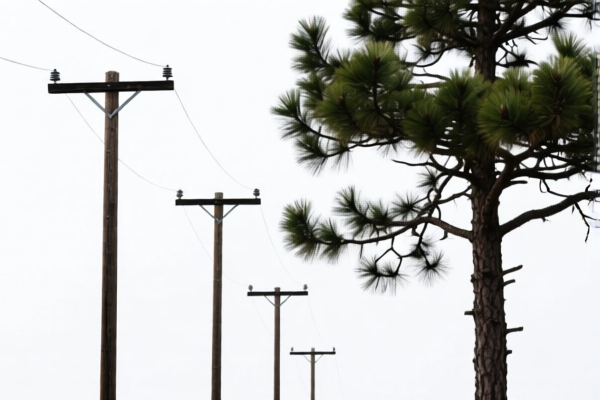
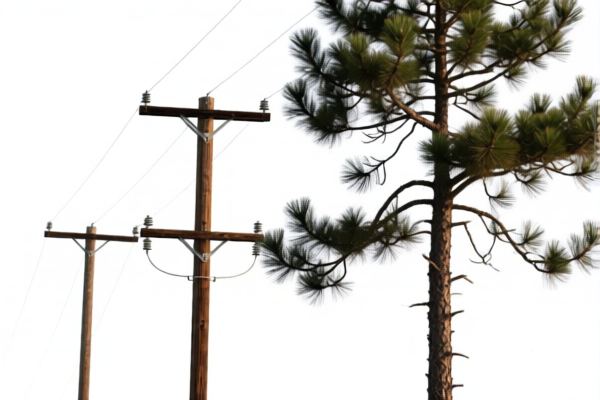
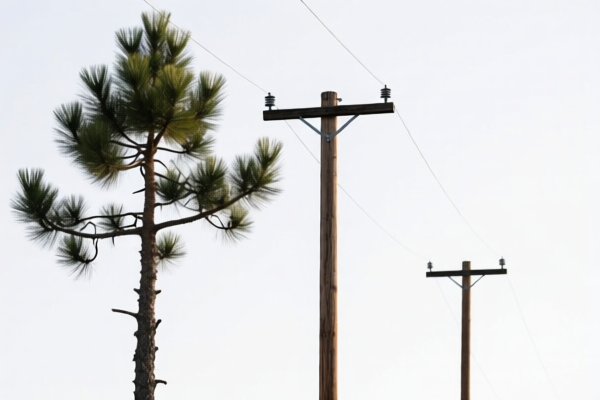
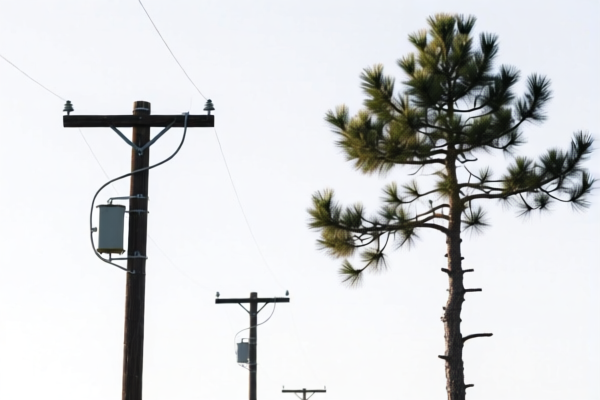
AI Analysis
🌲 Pine Pole Body Logs (Unprocessed Timber)
🌐 HS Code Reference & Customs Clearance Guide | 2026 Latest Tariff Analysis | Professional Strategy for Raw Timber
📌 I. Product Definition & Classification: What Exactly Are "Pine Pole Body Logs"?
Pine Pole Body Logs refer to raw, unprocessed timber primarily composed of pine wood, intended for further processing (such as milling into lumber, plywood, or pulp) or direct use. In international trade, the classification of logs depends heavily on the species (softwood/hardwood), state (roughly squared, round, or debarked), and end-use (industrial vs. fuel).
⚠️ Key Distinction Points:
- Species Specificity: Is it specifically Pinus (Pine)? Or is it a generic softwood?
- Processing Level: Is it just cut to length with bark intact (Log) or slightly squared (Semi-squared)?
- End-Use: Is it for construction/lumber or strictly for burning/biomass?
Primary Classification Logic:
1. Specific Pine Logs: If clearly identified as Pine (Pinus) and meeting softwood criteria → 4403.21 or 4403.22.
2. Generic Logs (Non-Fuel): If species is unknown or mixed, but not for burning → 4403.99.
3. Fuel Wood Logs: If intended for burning or classified as such regardless of species → 4401.11 or 4401.12.
📦 II. HS Code Classification Details (2026 Latest Tariff Authority Cross-Reference)
Based on the provided data, here are the precise HS Codes for "Pine Pole Body Logs" and the rationale for each:
| HS Code | Product Description | Application Scenario | Rationale for Classification |
|---|---|---|---|
4403.21.01.30 |
Pine Logs (Softwood) | Coniferous wood classification; specifically Pinus species. | Matches "Pine logs," fitting the definition of coniferous pine logs. |
4403.22.01.30 |
Pine Logs (Softwood) | Description matches "Coniferous / Pine Logs." | Matches "Pine logs," fitting the description of coniferous pine logs. |
4401.11.00.00 |
Logs (Fuel Wood) | Primary form of wood for energy/biomass. | Matches "Logs," belonging to the primary form of wood, classified as fuel wood. |
4403.99.01.95 |
Other Logs (Softwood) | Fallback category for other logs; coarse sawn/log material attribute. | Matches "Logs," fitting the coarse sawn/log material attribute; serves as the "other" catch-all category. |
4401.12.00.00 |
Logs (Fuel Wood) | Fuel wood morphology; inferred non-coniferous or mixed coniferous fuel wood. | Matches "Logs," fitting the fuel wood morphology description; inferred as non-coniferous or mixed coniferous fuel wood. |
🔍 Critical Reminder:
- 4403 Series: Used for structural/lumber timber. High specificity required (e.g., "Pine").
- 4401 Series: Used for fuel/biomass. Broader, but tax implications are identical in this dataset.
- Misclassification Risk: Declaring "Pine" as "Generic Fuel Wood" to avoid scrutiny can lead to audits if the wood type is verified.
💰 III. 2026 Latest Tariff Rate Breakdown (Including Surtaxes & Policy Add-ons)
✅ Applicable Country: United States (US)
✅ Origin: China (CN) [Inferred from Tax Details]
✅ Effective Date: Current rates apply (25% Section 301 + 10% IEEPA)
🎯 1. 4403.21.01.30 & 4403.22.01.30 —— Pine Logs (Specific Species)
| Item | Content |
|---|---|
| Base Tariff | 0.0% (ad valorem) |
| Section 301 Surcharge | +25.0% (From USITC Footnote 9903.44.03) |
| Section 122 / IEEPA Surcharge | +10.0% (Targeting China/China-origin products) |
| Total Tax Rate | 35.0% |
| Tax Calculation | CIF Value × 35% |
| De Minimis Eligibility | ❌ None (deny_de_minimis) |
| Legal Basis Path | Section 301: 9903.44.03 → IEEPA: 9903.01.25 → USITC: 4403.21/22 |
📌 Explanation:
- "Section 301 25%": The standard additional tariff on Chinese timber products.
- "Section 122 / IEEPA 10%": Additional levy under the International Emergency Economic Powers Act targeting specific Chinese origins.
- Total 35%: This is a high-cost entry. Buyers must budget for significant landed costs.
🎯 2. 4401.11.00.00 & 4401.12.00.00 —— Logs (Fuel Wood)
| Item | Content |
|---|---|
| Base Tariff | 0.0% (ad valorem) |
| Section 301 Surcharge | +25.0% |
| Section 122 / IEEPA Surcharge | +10.0% |
| Total Tax Rate | 35.0% |
| Tax Calculation | CIF Value × 35% |
| De Minimis Eligibility | ❌ None |
| Legal Basis Path | Section 301: 9903.44.01 → IEEPA: 9903.01.25 → USITC: 4401.11/12 |
📌 Note:
- Even if declared as "Fuel Wood," the total tax remains 35%.
- Do not assume fuel wood is cheaper; the surcharges are applied broadly to Chinese wood products.
🎯 3. 4403.99.01.95 —— Other Logs (Catch-All)
| Item | Content |
|---|---|
| Base Tariff | 0.0% (ad valorem) |
| Section 301 Surcharge | +25.0% |
| Section 122 / IEEPA Surcharge | +10.0% |
| Total Tax Rate | 35.0% |
| Tax Calculation | CIF Value × 35% |
| De Minimis Eligibility | ❌ None |
| Legal Basis Path | Section 301: 9903.44.99 → IEEPA: 9903.01.25 → USITC: 4403.99 |
📌 Warning:
- The "Other" category is a fallback. It does not offer a lower tax rate.
- Using this code for "Pine" when it is explicitly Pine may trigger customs audits for misclassification.
🛠️ IV. Customs Clearance Practical Advice (Real-World Pitfall Avoidance)
✅ 1. Required Documentation Checklist (Non-negotiable)
| Document | Mandatory? | Explanation |
|---|---|---|
| ✅ Commercial Invoice | ✔️ | Must clearly state "Pine Logs" or "Timber Logs," not just "Wood." |
| ✅ Packing List | ✔️ | Detail weight, volume (CBM), and number of logs. |
| ✅ Phytosanitary Certificate | ✔️ | Crucial for wood. Issued by the country of origin to prove pest-free status. |
| ✅ Species Declaration | ✔️ | Must specify Pinus species (e.g., White Pine, Loblolly Pine) if using 4403.2x. |
| ✅ Bill of Lading | ✔️ | Original clean bill of lading. |
| ✅ Fumigation Certificate | ✔️ | If bark is removed, fumigation may still be required by US Customs/USDA. |
✅ 2. Declaration Tips (Key Mantra)
🔥 "Specify Species, Declare State, Separate Fuel from Lumber!"
| Situation | Correct Declaration | Wrong Practice |
|---|---|---|
| Specific Pine | 4403.21.01.30 |
Declaring as "Generic Logs" → 4403.99 → Audit Risk |
| Fuel Wood | 4401.11.00.00 |
Declaring as "Pine Logs" for Lumber → Misuse of Tariff |
| Mixed Species | 4403.99.01.95 |
Claiming it's 100% Pine without proof |
| Packaging | Whole Lot Declaration | Splitting logs into "branches" and "stems" → Each item taxed separately |
💡 Pro Tip: If the logs are debarked, ensure the invoice states "Debarked Pine Logs." If bark is intact, state "Roughly Squared Logs with Bark." This affects the HS subheading.
✅ 3. Special Circumstances Handling
| Situation | Handling Advice |
|---|---|
| ISPM 15 Compliance | Ensure wooden pallets/containers are heat-treated and marked. Wood logs themselves must meet USDA APHIS entry requirements. |
| USDA Entry | Pine logs from certain regions may require pre-entry notification to USDA. |
| Countervailing Duties | Check if any specific anti-dumping duties apply to pine products from the specific Chinese province. |
| Valuation | Customs may challenge CIF if the price is unusually low. Provide contracts to prove fair market value. |
🌍 V. Global Market Comparison (2026 Latest)
| Country/Region | Recommended HS Code | Tariff (China Origin) | Certification Requirement | Notes |
|---|---|---|---|---|
| 🇺🇸 USA | 4403.21.01.30 / 4401.11.00.00 |
35% (0% Base + 25% 301 + 10% IEEPA) | Phytosanitary + ISPM 15 | High barrier. 35% is significant. |
| 🇨🇳 China | 4403.21.00.00 |
0% - 5% (Import Duty) | None | China is a net importer of some pines, but mostly exporter. |
| 🇪🇺 EU | 4403.21.00 |
0% (Free Trade Agreements?) | FLEGT / EUTR | Strict due diligence on illegal logging. |
| 🇯🇵 Japan | 4403.21.00 |
3.2% - 5% | Phytosanitary | Lower tariffs, but strict quality checks. |
📌 Conclusion:
- USA is the highest cost market due to the 35% composite tariff.
- Phytosanitary compliance is as critical as the tariff itself. Failure here leads to quarantine or destruction.
📌 VI. Common Mistakes & Pitfalls (Blood-Learning Lessons)
❌ Mistake 1: Declaring "Pine Logs" as "Wood Chunks" (4401.11) to avoid species scrutiny
👉 Consequence: If found to be structural timber, classified as 4403.21 → No real savings, but audit risk.
👉 Tax: Still 35%.
❌ Mistake 2: Omitting the Phytosanitary Certificate
👉 Consequence: Goods held at port for fumigation or returned/deported.
👉 Cost: Demurrage + Fumigation fees > Tax Savings.
❌ Mistake 3: Misidentifying Species (e.g., Pine vs. Fir)
👉 Consequence: Even within 4403.2x, different subcodes may have different inspection requirements.
👉 Risk: Delayed clearance.
❌ Mistake 4: Assuming "Fuel Wood" is exempt from Section 301
👉 Consequence: It is not. Tax is 35% for fuel wood too.
👉 Lesson: Do not use 4401 to dodge 25% tariff if the product is clearly lumber-grade pine.
✅ Correct Declaration Example:
"Pine Logs (Pinus spp.), Roughly Squared, Debarked, Length 2.4m, For Lumber Processing, Origin: China, Phytosanitary Cert No.: XXXXX"
🎯 VII. Conclusion: Professional Declaration, Cost Control
🎯 Remember the Mantra:
🔹 "Species Matters, Tax is 35%, Phytosanitary is Key, Fuel vs. Lumber Must Be Clear!"
🔹 "HS Code decides the fate, 35% tax is fixed, declare correctly to avoid delays!"
📌 Tips:
- If your pine logs are originating from Vietnam or Thailand (processed there), you may apply for non-China origin certificates, potentially reducing tariffs to 0%-5%.
- Consider Advance Rulings from US Customs and Border Protection (CBP) if the shipment volume is large.
📣 Immediate Action:
📞 Contact a licensed customs broker + Provide Photos of Logs + Apply for Pre-Arrival Processing.
🚀 Let your pine logs clear customs smoothly, control costs, and maximize profits!
✨ Professional Customs Clearance Starts with Accurate Classification!
💼 Every percent of tax saved is pure profit!
Customer Reviews
About HS Code Classification
The Harmonized System (HS) is an internationally standardized nomenclature developed by the World Customs Organization (WCO) to classify traded products. Over 200 countries use the HS system as the basis for customs tariffs, trade statistics, and import/export regulations.
Each HS code follows a hierarchical structure:
- Chapter (2 digits) — Broad category of goods (e.g., Chapter 84: Machinery and Mechanical Appliances)
- Heading (4 digits) — More specific grouping within the chapter
- Subheading (6 digits) — Internationally standardized breakdown, used by all WCO member countries
- National subdivisions (8-10 digits) — Country-specific extensions for further classification, such as US HTSUS 10-digit codes
Correct HS code classification is essential for smooth customs clearance, accurate duty payment, and compliance with trade regulations. Misclassification can lead to customs delays, overpayment of duties, or penalties.
When importing from CN to US, the applicable tariff rates may include:
- Most-Favored-Nation (MFN) rate — The standard duty rate applied to WTO members
- General rate — Applied to countries without trade agreements
- Trade remedy duties — Additional tariffs such as Section 301 (anti-dumping), Section 232 (national security), or countervailing duties
The information provided on this page is for reference purposes only. For official classification, please consult with your local customs authority or a licensed customs broker.