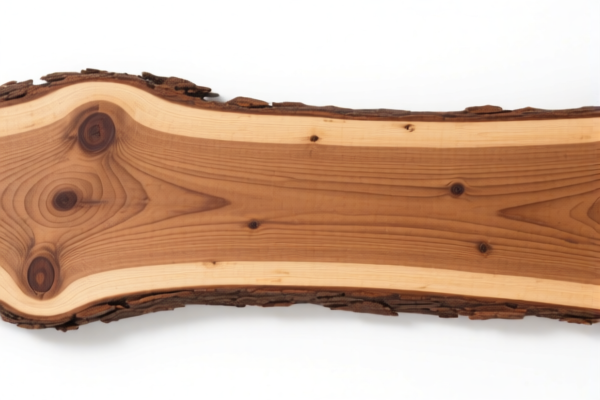
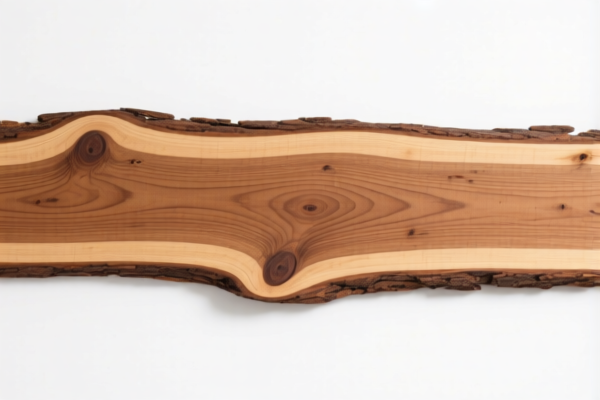
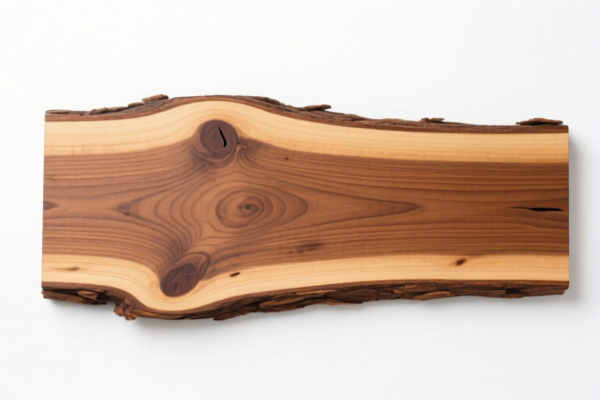
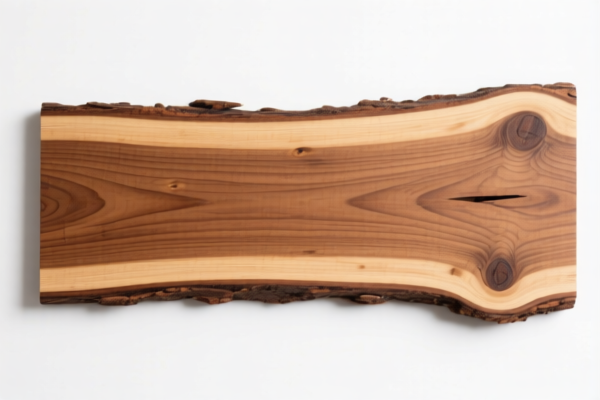
pine preserved wood board
CN → US| HS Code | Tariff Rate | Origin | Destination | Doc |
|---|---|---|---|---|
| 4407110002 | 35.0% | CN | US | Official Doc |
| 4407190002 | 35.0% | CN | US | Official Doc |
Product Images
AI Analysis
🌲 Pine Preserved Wood Board (Coniferous Timber)
🌐 HS Code Reference & Customs Clearance Guide | 2026 Latest Tariff Analysis | Professional Clearance Strategy
📌 I. Product Definition & Classification: What Exactly is "Pine Preserved Wood"?
Pine Preserved Wood Board refers to wood that has been sawn, chipped lengthwise, sliced, or peeled, with a thickness exceeding 6 mm. Crucially, it has undergone treatment with paint, stain, creosote, or other preservatives. In international trade, this falls under Chapter 44 (Wood and Articles of Wood).
The classification hinges on two key factors: 1. Species: Is it Pine (Pinus spp.) or Other Coniferous wood? 2. Treatment: Is it treated with preservatives/paint/stain? (Yes for this input).
⚠️ Critical Distinction:
- If it is Pine and Treated → It falls under specific Pine codes.
- If it is Other Coniferous (e.g., Spruce, Fir) and Treated → It falls under Other Coniferous codes.
- Note: The input "Pine Preserved Wood Board" primarily points to Pine, but customs often require precise species identification. If the species is ambiguous, it may be classified under "Other Coniferous."
📦 II. HS Code Classification Details (Based on Provided Data)
According to the provided <DATA>, there are two primary HS Codes for treated coniferous wood of thickness > 6mm. Both carry the same tax rate.
| HS Code | Product Description | Key Characteristics | Tax Rate (China Origin → US) |
|---|---|---|---|
4407.11.00.02 |
Coniferous: Of Pine (Pinus spp.) Other: Treated with paint, stain, creosote or other preservative | • Species: Pine (Pinus) • Condition: Treated • Thickness: > 6 mm • Method: Sawn, chipped, sliced, or peeled |
25.0% (Base: 0% + Additional: 25%) |
4407.19.00.02 |
Coniferous: Other Other: Treated with paint, stain, creosote or other preservative | • Species: Other Coniferous (Not Pine) • Condition: Treated • Thickness: > 6 mm • Method: Sawn, chipped, sliced, or peeled |
25.0% (Base: 0% + Additional: 25%) |
🔍 Key Reminder:
- Both codes apply to wood that has been sawn, chipped, sliced, or peeled and is > 6mm thick. - "Treated" includes any application of paint, stain, creosote, or preservatives. - If you are unsure of the species, using4407.19.00.02(Other Coniferous) is safer if it’s definitely not Pinus, but if it is Pine,4407.11.00.02is more precise. Tax impact is identical.
💰 III. 2026 Latest Tariff Rate Details (Including Additional Duties)
✅ Applicable Country: United States (US)
✅ Origin: China (CN)
✅ Effective Time: Current trade war tariffs apply (Section 301)
🎯 1. 4407.11.00.02 — Treated Pine Wood Board
| Item | Content |
|---|---|
| Basic Tariff | 0.0% (ad valorem) |
| Section 301 Additional Tariff | +25.0% |
| Total Tax Rate | 25.0% |
| Tax Calculation | CIF Value × 25% |
| De Minimis Exemption | ❌ Not Applicable (Denied for wood products under Section 301) |
| Legal Basis | HTSUS:4407.11.00.02 → Section 301: Footnote 9903.88.01 |
📌 Explanation:
- Wood products from China are subject to 25% additional tariff under Section 301. - There is no basic duty for this specific subheading, making the 25% the total cost. - No de minimis exemption applies; even small shipments are subject to this tariff.
🎯 2. 4407.19.00.02 — Treated Other Coniferous Wood Board
| Item | Content |
|---|---|
| Basic Tariff | 0.0% (ad valorem) |
| Section 301 Additional Tariff | +25.0% |
| Total Tax Rate | 25.0% |
| Tax Calculation | CIF Value × 25% |
| De Minimis Exemption | ❌ Not Applicable |
| Legal Basis | HTSUS:4407.19.00.02 → Section 301: Footnote 9903.88.01 |
📌 Note:
- Identical tax treatment to Pine wood. - Applies to other conifers like Spruce, Fir, Larch, etc., if treated.
🛠️ IV. Customs Clearance Practical Advice (Real-World Pitfall Avoidance)
✅ 1. Required Documentation Checklist (Non-Negotiable)
| Document | Must Provide? | Explanation |
|---|---|---|
| ✅ Product Specification Sheet | ✔️ | Must state: Species (Pinus spp. or other), Treatment Type (e.g., Creosote, Pressure-Treated), Thickness, Dimensions. |
| ✅ Treatment Certificate | ✔️ | Proof of preservative/paint application. Critical for HS Code 4407.xx.xx.02 (Treated). |
| ✅ Commercial Invoice | ✔️ | Must clearly state: "Treated Pine Wood Board," HS Code, Country of Origin, CIF Value. |
| ✅ Packing List | ✔️ | Include gross/net weight, number of packages, dimensions. |
| ✅ ISPM 15 Marking (If applicable) | ✔️ | If raw wood, phytosanitary certificate may be needed. Treated wood often requires specific fumigation/treatment marks. |
| ✅ Photographs | ✔️ | Show wood grain, treatment color, end-joints, and any labels/stamps. |
✅ 2. Declaration Tips (Key Mnemonics)
🔥 “Species First, Treatment Second, Thickness Matters, Tariff is 25%!”
| Scenario | Correct Declaration | Wrong Action |
|---|---|---|
| Pine Wood, Treated | 4407.11.00.02 |
Misclassifying as "Untreated" → Higher tariff risk or penalty. |
| Other Conifer, Treated | 4407.19.00.02 |
Misclassifying as Pine → Potential audit if species mismatch. |
| Wood < 6mm Thick | ❌ Not applicable | This HS Code requires > 6mm. Thinner wood falls under different codes (e.g., 4408/4409). |
| Untreated Wood | ❌ Wrong HS Code | Untreated Pine is 4407.11.00.00 (0% + 25% = 25%, but description differs). Treated wood must be declared as such to avoid false declaration claims. |
✅ 3. Special Cases & Handling
| Situation | Handling Advice |
|---|---|
| Mixed Species | If pine and other conifers are mixed, classify based on majority species or split the shipment. Misclassification can lead to penalties. |
| End-Jointed Wood | If the wood is end-jointed, it still qualifies under 4407 as long as it’s > 6mm thick and treated. |
| Fumigation Required | Even if treated with preservatives, ISPM 15 phytosanitary certification may be required by USDA APHIS. Check with your freight forwarder. |
| Hazmat Concerns | If treated with creosote or certain chemicals, it may be classified as hazardous. Declare accurately to avoid safety holds. |
🌍 V. Global Market Customs Comparison (2026 Update)
| Country/Region | Recommended HS Code | Tariff (China Origin) | Certification Requirements | Notes |
|---|---|---|---|---|
| 🇺🇸 USA | 4407.11.00.02 or 4407.19.00.02 |
25% | ISPM 15, Treatment Certificate | Section 301 applies. No de minimis. |
| 🇨🇳 China | 4407.11.00.00 (Untreated) / 4407.11.00.02 (Treated) |
0-5% | Phytosanitary Certificate | Domestic trade may vary. |
| 🇪🇺 EU | 4407.11.00 |
0-6.5% | FUMI Certificate, REACH Compliance | Treated wood may require chemical compliance checks. |
| 🇬🇧 UK | 4407.11.00 |
0-6.5% | UKCA Marking (if applicable) | Post-Brexit rules apply. |
| 🇯🇵 Japan | 4407.11.00 |
0-5% | Phytosanitary Certificate | Strict on pest control. |
📌 Conclusion:
- The US is the only major market with a flat 25% additional tariff on Chinese wood products.
- EU and UK may require additional chemical compliance (REACH) for treated wood, which can add cost and time.
- China origin is the key driver for the 25% tariff in the US.
📌 VI. Common Errors & Pitfall Guide (Lessons Learned)
❌ Error 1: Declaring "Treated Wood" as "Untreated Wood"
👉 Consequence: False declaration. Potential penalty, seizure, or forced re-classification with back taxes.
❌ Error 2: Ignoring the "> 6mm Thickness" Rule
👉 Consequence: If wood is ≤ 6mm, it falls under different HS codes (e.g., 4408 or 4409). Wrong code = Wrong tariff = Audit risk.
❌ Error 3: Forgetting Treatment Documentation
👉 Consequence: Customs may classify as "Untreated" if no proof is provided, leading to different tariff codes and potential penalties for misdeclaration.
❌ Error 4: Assuming "De Minimis" Applies
👉 Consequence: Section 301 tariffs on Chinese goods do not apply to de minimis ($800) exemption. Even small samples are taxed at 25%.
✅ Correct Practice:
"Pressure-Treated Pine Lumber, 2x4x8, Pressure-Treated with Alkaline Copper Quaternary (ACQ), Thickness 25mm, HS Code 4407.11.00.02, Country of Origin: China"
🎯 VII. Conclusion: Professional Declaration, Save Money, Avoid Delays!
🎯 Remember the Mnemonic:
🔹 "Pine Treated = 4407.11.00.02 | Other Treated = 4407.19.00.02 | Both = 25% Tax | No De Minimis!"
🔹 "Thickness > 6mm, Treatment Proof Required, Origin China = 25% Hit!"
📌 Pro Tip:
If your wood is not from China (e.g., Canada, Russia, Vietnam), check if it qualifies for FTAA or other preferential tariffs. For Chinese origin, plan for the 25% additional cost.
📣 Immediate Action:
📞 Consult a licensed customs broker.
📄 Prepare Treatment Certificates and Species Verification.
🚀 Accurate HS Code classification is critical to avoid 25% surprise costs!
✨ Professional Customs Clearance Starts with Accurate Classification!
💼 Every percentage point of duty matters!
Customer Reviews
About HS Code Classification
The Harmonized System (HS) is an internationally standardized nomenclature developed by the World Customs Organization (WCO) to classify traded products. Over 200 countries use the HS system as the basis for customs tariffs, trade statistics, and import/export regulations.
Each HS code follows a hierarchical structure:
- Chapter (2 digits) — Broad category of goods (e.g., Chapter 84: Machinery and Mechanical Appliances)
- Heading (4 digits) — More specific grouping within the chapter
- Subheading (6 digits) — Internationally standardized breakdown, used by all WCO member countries
- National subdivisions (8-10 digits) — Country-specific extensions for further classification, such as US HTSUS 10-digit codes
Correct HS code classification is essential for smooth customs clearance, accurate duty payment, and compliance with trade regulations. Misclassification can lead to customs delays, overpayment of duties, or penalties.
When importing from CN to US, the applicable tariff rates may include:
- Most-Favored-Nation (MFN) rate — The standard duty rate applied to WTO members
- General rate — Applied to countries without trade agreements
- Trade remedy duties — Additional tariffs such as Section 301 (anti-dumping), Section 232 (national security), or countervailing duties
The information provided on this page is for reference purposes only. For official classification, please consult with your local customs authority or a licensed customs broker.