pine telecommunication poles
CN → US| HS Code | Tariff Rate | Origin | Destination | Doc |
|---|---|---|---|---|
| 4421997040 | 35.0% | CN | US | Official Doc |
| 4403220112 | 35.0% | CN | US | Official Doc |
| 4403210112 | 35.0% | CN | US | Official Doc |
| 4418300100 | 38.2% | CN | US | Official Doc |
| 4418890000 | 38.2% | CN | US | Official Doc |
Product Images
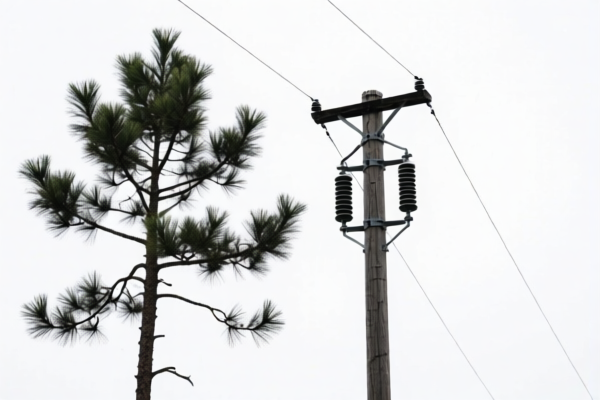
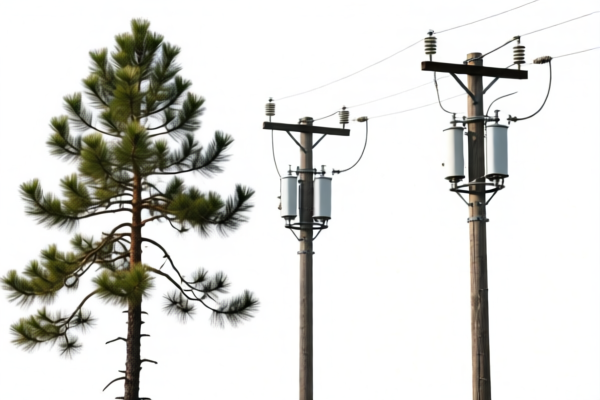
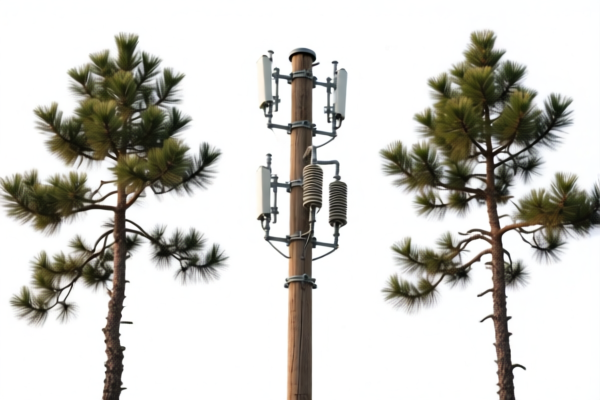
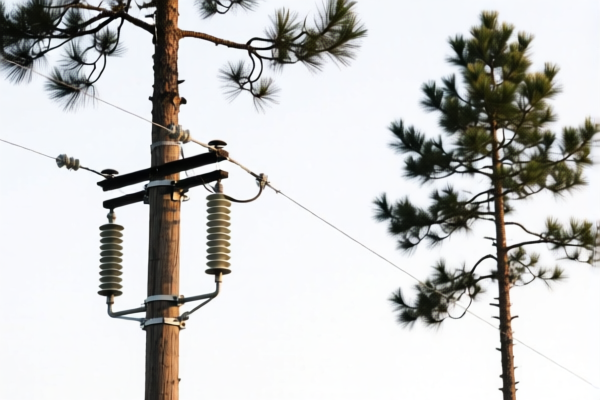
AI Analysis
🌲 Pine Telecommunication Poles: The Ultimate HS Code Classification & Customs Clearance Guide
🌐 HS Code Reference & Customs Strategy | 2026 Updated Tariff Structure | Professional Clearance Tactics
📌 I. Product Definition & Classification: What Exactly Are "Pine Telecommunication Poles"?
Pine telecommunication poles are treated not as simple agricultural timber, but as engineered construction materials. In international trade, their classification hinges on two critical factors:
1. Material: Softwood (Pine/Fir/Spruce).
2. Function: Engineered for structural support (telecom, power, or construction).
⚠️ Critical Distinction:
- If simply "raw timber" intended for general use → May fall under general softwood logs (4403).
- If specifically treated, shaped, or designated for telecom/structural use → Must fall under engineering structures or specific poles (4403.21,4421.99).
- Misclassification Risk: Declaring as general construction wood (4418) often attracts higher base tariffs (3.2% vs 0%).
📦 II. HS Code Classification Matrix (2026 Latest Tariff Schedule)
Based on the provided data, here are the five potential HS Codes for Pine Telecommunication Poles, ranked by specificity and cost-efficiency.
| HS Code | Product Description | Application Scenario | Why This Code? | Total Tax Rate |
|---|---|---|---|---|
4403.21.01.12 |
Pine Wood (Softwood), Specifically for Telephone/Telegraph/Power Poles | Dedicated telecom infrastructure | Most Specific Match. Explicitly covers poles for telecom/power. | 35.0% |
4403.22.01.12 |
Pine Wood (Softwood), Specific Use Poles/Pylons | General engineered poles | Matches "specific use" for poles/piles. Very similar to 4403.21. | 35.0% |
4421.99.70.40 |
Pine Wood, Sawn Poles/Posts/Fences/Rails | General wooden poles & posts | Classified as "Other Wood Products." Broader category. | 35.0% |
4418.30.01.00 |
Pine Wood, Poles/Posts/Beams (Joinery) | Construction joinery components | Classified as "Wooden Joinery." Higher base duty applies. | 38.2% |
4418.89.00.00 |
Pine Wood, Engineering Structural Products | Heavy engineering structures | Classified as "Other Wooden Builders’ Joinery." | 38.2% |
🔍 Key Insight:
- Codes4403.21.01.12and4403.22.01.12are the most accurate for telecom-specific poles because they explicitly mention "telephone, telegraph, and electric wires."
- Codes4418.30.01.00and4418.89.00.00are less ideal because they carry a 3.2% Base Duty (vs. 0% for the 4403 series), leading to a 3.2% higher total cost.
-4421.99.70.40is a safe "other products" fallback but lacks the specificity of the 4403 codes.
💰 III. 2026 Tariff Rate Breakdown (Detailed Tax Analysis)
✅ Origin: China (CN)
✅ Destination: United States (US)
✅ Effective Date: November 10, 2025, onwards
All listed codes are subject to identical tariff structures due to current trade policies.
🎯 1. Base Duty Rates
| HS Code Group | Base Duty Rate | Reason |
|---|---|---|
4403.21.01.12, 4403.22.01.12, 4421.99.70.40 |
0.0% | Softwood timber/poles often have zero base MFN duty. |
4418.30.01.00, 4418.89.00.00 |
3.2% | Wood products for construction/joinery carry a small base duty. |
🎯 2. Additional Duties (The "China Surcharge")
All five HS codes are subject to the following mandatory surcharges for Chinese-origin goods:
| Surcharge Type | Rate | Legal Basis | Description |
|---|---|---|---|
| Section 301 Duty (USITC) | 25.0% | Footnote 9903.88.01 / USITC Rule | Standard "China Tariff" for most wood products. |
| IEEPA Duty (Bipartisan Law) | 10.0% | IEEPA:9903.01.25 / 9903.01.24 | New "122 Clause" tariff targeting Chinese imports. |
| Total Additional | 35.0% | — | Combined effect of 301 + IEEPA. |
🎯 3. Total Tax Calculation
| HS Code | Base Duty | 301 Duty | IEEPA Duty | TOTAL TAX |
|---|---|---|---|---|
4403.21.01.12 |
0.0% | 25.0% | 10.0% | 35.0% |
4403.22.01.12 |
0.0% | 25.0% | 10.0% | 35.0% |
4421.99.70.40 |
0.0% | 25.0% | 10.0% | 35.0% |
4418.30.01.00 |
3.2% | 25.0% | 10.0% | 38.2% |
4418.89.00.00 |
3.2% | 25.0% | 10.0% | 38.2% |
📌 Critical Warning:
- De Minimis Exemption: ❌ NOT APPLICABLE.
Wood products classified under these HS codes are excluded from the $800 de minimis exemption. All shipments, regardless of value, must undergo full customs entry and pay taxes.
- Legal Path:IEEPA:9903.01.25→USITC:4403.21.01.12→FOOTNOTE:9903.88.01.
🛠️ IV. Customs Clearance Strategy & Compliance Tips
✅ 1. Documentation Checklist (Must-Have)
| Document | Requirement | Purpose |
|---|---|---|
| Commercial Invoice | Must specify "Pine Wood Telecommunication Pole" | Avoids generic "Wood" description which triggers higher scrutiny. |
| HS Code Declaration | Explicitly cite 4403.21.01.12 (Recommended) |
Proves specificity and justifies 0% base duty. |
| Certificate of Origin (CO) | Form A or Standard CO | Required to verify Chinese origin for 301/IEEPA calculation. |
| Fumigation Phytosanitary Certificate | ISPM 15 Compliant | Mandatory for all wood products entering the US. No certificate = Rejection/Destruction. |
| Product Specifications | Include treatment type (e.g., CCA, ACQ), length, diameter | Helps customs confirm it’s an "engineered pole" not raw logs. |
✅ 2. Classification Strategy: Which Code to Choose?
| Strategy | Recommended HS Code | Pros | Cons |
|---|---|---|---|
| 🏆 Optimal (Most Specific) | 4403.21.01.12 |
Lowest base duty (0%); Most accurate for telecom use. | Requires clear documentation that poles are for telecom/power. |
| ✅ Safe Fallback | 4403.22.01.12 |
Also 0% base duty; Broad "specific use" coverage. | Slightly less specific than .21. |
| ⚠️ Risky (Higher Cost) | 4418.30.01.00 |
Acceptable if treated as construction joinery. | 3.2% higher cost due to base duty. |
💡 Pro Tip:
Use4403.21.01.12if your poles are exclusively for telecom/power.
Use4403.22.01.12if they are for general structural purposes (e.g., fence posts, general engineering).
Avoid4418codes unless you are bundling with joinery kits, to save the 3.2% base duty.
✅ 3. Common Pitfalls & Avoidance
| Mistake | Consequence | Solution |
|---|---|---|
Declaring as "Raw Logs" (4403.10) |
Wrong classification; potential penalty. | Ensure description says "Sawn/Treated Poles," not "Logs." |
| No Phytosanitary Certificate | Shipment Rejected or Destroyed. | Obtain ISPM 15 fumigation certificate before shipment. |
| Missing IEEPA Declaration | Additional penalties or delayed clearance. | Clearly state "Chinese Origin" on commercial invoice. |
| Using Generic Name "Wood Poles" | Customs may apply higher "Other Wood" rates. | Be specific: "Pine Wood Telecommunication Poles." |
🌍 V. Global Market Comparison (2026)
| Country/Region | Recommended HS Code | Total Duty (China Origin) | Key Requirement |
|---|---|---|---|
| 🇺🇸 USA | 4403.21.01.12 |
35.0% | ISPM 15 Fumigation Certificate |
| 🇨🇳 China (Import) | 4403.21.01.12 |
Varies (Lessext) | Check latest FTAs |
| 🇪🇺 EU | 4403.21.01.12 |
~0-5% (If No Surcharge) | Timber Regulation (EUTR) Compliance |
| 🇬🇧 UK | 4403.21.01.12 |
~0-5% | UK Timber Due Diligence |
| 🇯🇵 Japan | 4403.21.01.12 |
~0-5% | Phytosanitary Certificate |
📌 Conclusion:
- The US is the most expensive market due to the 35% total tariff (25% Section 301 + 10% IEEPA).
- No duty-free options are currently available for Chinese pine poles entering the US.
- Supply Chain Advice: Consider sourcing from Vietnam, Malaysia, or Russia (if applicable) to potentially avoid IEEPA/301 duties, but verify country-specific phytosanitary rules.
📌 VI. Final Checklist for Exporters
- ✅ Classify Correctly: Use
4403.21.01.12for telecom-specific poles. - ✅ Document Origin: Clearly mark "Made in China" to avoid penalties.
- ✅ Fumigate: Obtain ISPM 15 certificate.
- ✅ Declare Value Accurately: CIF value includes freight and insurance.
- ✅ Prepare for 35% Duty: Factor this into your pricing strategy.
🎯 VII. Expert Conclusion
🔹 "Specificity Saves Money"
Choosing4403.21.01.12over4418.30.01.00saves 3.2% base duty on every shipment.🔹 "No De Minimis for Wood"
Don’t try to sneak these in under $800. Customs will catch it. Full entry is mandatory.🔹 "Fumigation is Non-Negotiable"
No ISPM 15 = No Entry. Period.
📣 Immediate Action Required:
📞 Contact a Licensed Customs Broker to file a Pre-Ruling (ISF + Advance Ruling) if possible.
🚀 Ensure Your Invoice Reads: "Pine Wood Telecommunication Poles, HS 4403.21.01.12, Origin: China, Fumigated per ISPM 15."
✨ Precision Classification, Predictable Costs, Smooth Clearance!
💼 Your Wood Products Deserve Better Than Guesswork.
Customer Reviews
About HS Code Classification
The Harmonized System (HS) is an internationally standardized nomenclature developed by the World Customs Organization (WCO) to classify traded products. Over 200 countries use the HS system as the basis for customs tariffs, trade statistics, and import/export regulations.
Each HS code follows a hierarchical structure:
- Chapter (2 digits) — Broad category of goods (e.g., Chapter 84: Machinery and Mechanical Appliances)
- Heading (4 digits) — More specific grouping within the chapter
- Subheading (6 digits) — Internationally standardized breakdown, used by all WCO member countries
- National subdivisions (8-10 digits) — Country-specific extensions for further classification, such as US HTSUS 10-digit codes
Correct HS code classification is essential for smooth customs clearance, accurate duty payment, and compliance with trade regulations. Misclassification can lead to customs delays, overpayment of duties, or penalties.
When importing from CN to US, the applicable tariff rates may include:
- Most-Favored-Nation (MFN) rate — The standard duty rate applied to WTO members
- General rate — Applied to countries without trade agreements
- Trade remedy duties — Additional tariffs such as Section 301 (anti-dumping), Section 232 (national security), or countervailing duties
The information provided on this page is for reference purposes only. For official classification, please consult with your local customs authority or a licensed customs broker.