pine wood anti corrosion coating
CN → US| HS Code | Tariff Rate | Origin | Destination | Doc |
|---|---|---|---|---|
| 4403110060 | 35.0% | CN | US | Official Doc |
| 4403210165 | 35.0% | CN | US | Official Doc |
| 4409104090 | 35.0% | CN | US | Official Doc |
| 4409104010 | 35.0% | CN | US | Official Doc |
| 3824994900 | 41.5% | CN | US | Official Doc |
Product Images
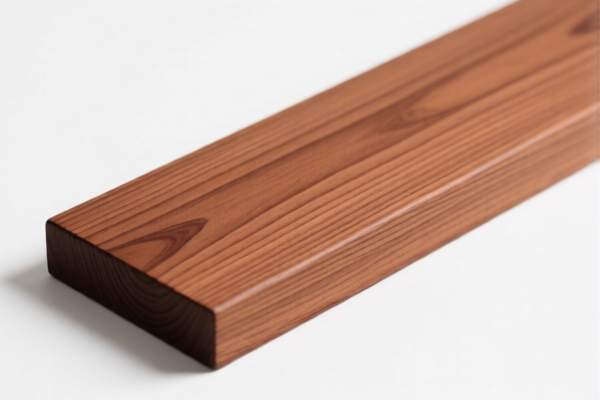
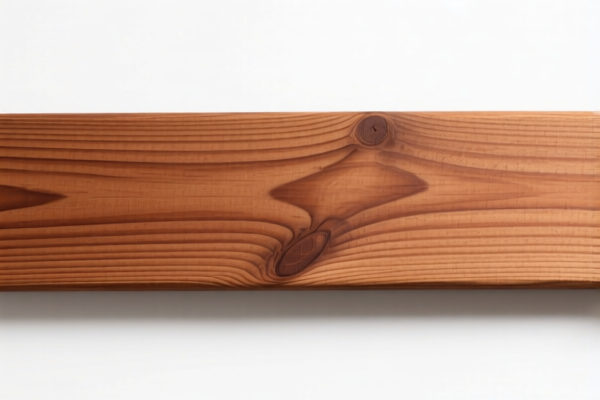
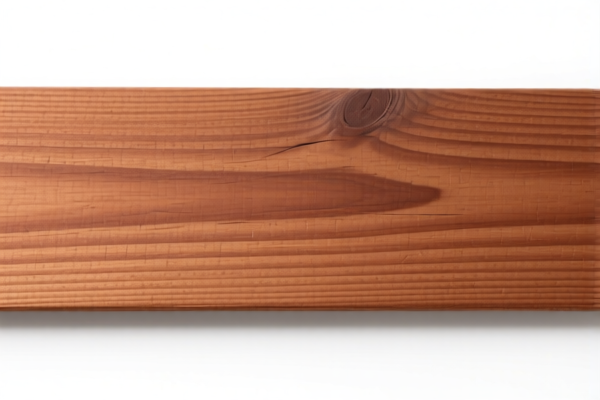
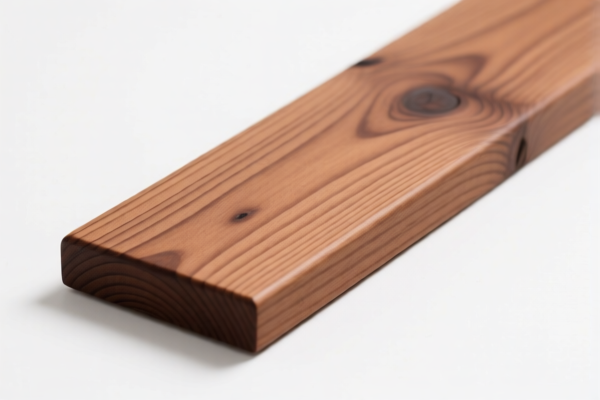
AI Analysis
🌲 Pine Wood with Anti-Corrosion Treatment (防腐处理松木)
🌐 HS Code Classification & Customs Clearance Guide | 2026 Tax Analysis & Strategy for US Imports
📌 I. Product Definition & Classification: Decoding "Anti-Corrosion Treated Pine"
Pine wood with anti-corrosion treatment is a semi-finished wood product heavily used in outdoor construction, landscaping, and structural applications. In international trade, the classification depends strictly on the state of processing (raw log vs. shaped lumber) and the chemical treatment.
The key to accurate classification lies in distinguishing between: * Raw Logs/Sawn Wood (Ch. 4403/4404): Wood that has been preserved/treated but not yet shaped into final architectural components. * Shaped/Profiled Wood (Ch. 4409): Wood that has been planed, tongued, grooved, or finger-jointed (finger-jointed wood is often considered "shaped" in specific customs interpretations if it meets certain criteria, but often falls under specific subheadings for "jointed" wood). * Wood Waste/Chips (Ch 4401/4706): If the product is processed into sawdust or wood chips for further chemical extraction.
⚠️ Critical Distinction:
- If the wood is sawn longitudinally but not profiled (planks, beams, logs) → Chapter 4403.
- If the wood is profiled (tongue-and-groove, finger-jointed, sanded finished) → Chapter 4409.
- If the wood is waste/chips → Chapter 4401 or 3824 (depending on chemical residue).
📦 II. HS Code Classification Details (2026 Latest Tariff Schedule)
Based on the provided data, here are the specific HS Codes for Anti-Corrosion Treated Pine:
| HS Code | Product Description | Application Scenario | Processing State |
|---|---|---|---|
4403.11.00.60 |
Preserved Pine Wood, Coniferous, Roughly Sawn | Outdoor decking, structural beams, fences, landscaping timbers. | ✅ Roughly sawn (not planed/profied). |
4403.21.01.65 |
Preserved Pine Wood (Pinus spp.), Other Coniferous Logs | Raw logs or timber for industrial processing, specifically Pinus species. | ✅ Raw/Log form. "Catch-all" for untreated/coniferous logs not elsewhere specified. |
4409.10.40.90 |
Shaped Pine Wood (Pinus spp.), Other Profiled Lumber | Finished flooring, wall paneling, finger-jointed studs, tongue-and-groove boards. | ✅ Shaped/Profiled (Planed, Tongued, Grooved, etc.). |
4409.10.40.10 |
Shaped Pine Wood (Pinus spp.), Finger-Jointed/End-Jointed | Structural lumber with end-jointing technology, specific material characteristics. | ✅ Finger-Jointed/End-Jointed. |
3824.99.49.00 |
Pine Sawdust/Chips (Preserved), Wood Fiber Primary Form | Wood waste, sawdust from cutting treated pine, for particle board or paper. | ✅ Waste/Chips/Primary Fiber. |
🔍 Key Clarification:
-4403Series: Covers "Timber, roughly squared or merely sawn." If your pine is just cut to length but not smoothed or profiled, it belongs here. -4409Series: Covers "Wood continuously shaped along its length." This includes finger-jointed (end-jointed) wood if it is considered "shaped" for structural integrity. Note: Customs may scrutinize whether "end-jointing" constitutes "shaping." -3824Series: Applies if the product is not usable wood but rather waste/residue (sawdust) with chemical residue.
💰 III. 2026 Tariff Rate Breakdown (Detailed Tax Analysis)
✅ Applicable Country: United States (US)
✅ Origin: China (CN)
✅ Effective Date: 2025/2026 (Current Trade War Status)
🎯 1. 4403.11.00.60 & 4403.21.01.65 – Preserved Pine (Logs/Sawn)
| Item | Details |
|---|---|
| Base Tariff (MFN) | 0.0% (ad valorem) |
| Section 301 Tariff (USITC) | +25.0% (Specific to Chinese wood products) |
| Section 122 Tariff (IEEPA) | +10.0% (Additional levy on Chinese goods) |
| Total Tariff Rate | 35.0% |
| De Minimis Exemption | ❌ NOT ELIGIBLE (Deny de minimis for wood products from China due to high risk of circumvention and tariff rate). |
| Legal Basis Path | USITC:4403.11.00.60 → FOOTNOTE:9903.88.01 (+25%) → IEEPA:9903.01.25 (+10%) |
📌 Explanation:
- 0% Base: Wood products often have low MFN rates.
- 25% Section 301: Standard tariff on many Chinese goods, including wood.
- 10% Section 122: A specific additional tariff layer applied to Chinese imports.
- Total 35%: This is a high-cost category. Importers must budget for nearly one-third of the CIF value in duties alone.
🎯 2. 4409.10.40.90 & 4409.10.40.10 – Shaped/Profiled Pine
| Item | Details |
|---|---|
| Base Tariff (MFN) | 0.0% (ad valorem) |
| Section 301 Tariff (USITC) | +25.0% |
| Section 122 Tariff (IEEPA) | +10.0% |
| Total Tariff Rate | 35.0% |
| De Minimis Exemption | ❌ NOT ELIGIBLE |
| Legal Basis Path | USITC:4409.10.40.90 → FOOTNOTE:9903.88.01 (+25%) → IEEPA:9903.01.25 (+10%) |
📌 Note:
- Despite being "processed" (profiled/jointed), the tariff rate remains 35%.
- Do not assume higher processing reduces tariff. In this case, the base is 0%, and the add-ons are fixed percentages.
🎯 3. 3824.99.49.00 – Pine Sawdust/Chips (Waste)
| Item | Details |
|---|---|
| Base Tariff (MFN) | 6.5% (ad valorem) |
| Section 301 Tariff (USITC) | +25.0% |
| Section 122 Tariff (IEEPA) | +10.0% |
| Total Tariff Rate | 41.5% |
| De Minimis Exemption | ❌ NOT ELIGIBLE |
| Legal Basis Path | USITC:3824.99.49.00 → FOOTNOTE:9903.88.01 (+25%) → IEEPA:9903.01.25 (+10%) |
📌 Warning:
- If you misclassify sawdust as "wood products" (4403/4409), you might face penalties for incorrect declaration.
- The base rate is higher (6.5%), leading to a 41.5% total. This is the highest tax bracket in the dataset.
🛠️ IV. Customs Clearance Practical Advice (Risk Mitigation)
✅ 1. Documentation Checklist (Mandatory)
| Document | Required? | Purpose |
|---|---|---|
| ✅ Commercial Invoice | ✔️ | Must state "Anti-Corrosion Treated Pine Wood" and HS Code. |
| ✅ Packing List | ✔️ | Weight, volume, number of bundles. |
| ✅ Treaty/Preservation Certificate | ✔️ | Proof of chemical treatment (e.g., ACQ, CCA, Copper Azole) to verify it is "preserved" (Ch 4403/4409) and not raw wood. |
| ✅ Wood Treatment Declaration | ✔️ | Confirm no prohibited pests (ISPM 15 compliance if raw, but treated wood usually exempt from fumigation if processed). |
| ✅ Product Photos | ✔️ | Show labels, treatment stamps, and wood grain. |
| ✅ Material Safety Data Sheet (MSDS) | ✔️ | Required if importing sawdust (3824) due to chemical residue hazards. |
✅ 2. Classification Strategy (Key Decision Tree)
| Scenario | Correct HS Code | Risk Level |
|---|---|---|
| Raw Logs (Unshaped) | 4403.21.01.65 |
🟡 Medium (Ensure it’s not misclassified as 4407 if planed) |
| Rough Sawn Lumber (Beams, Decking boards) | 4403.11.00.60 |
🟢 Low (Standard for outdoor wood) |
| Profiled/Finger-Jointed (Flooring, Studs) | 4409.10.40.90 or 4409.10.40.10 |
🟠 High (Customs may debate "shaping"; ensure technical specs match) |
| Sawdust/Waste | 3824.99.49.00 |
🔴 High (High tariff; must prove it’s waste, not usable wood) |
🔥 Pro Tip:
- "Finger-Jointed" Wood: If the wood is end-jointed but not planed on all four sides, it may still fall under4403. However, if it is fully profiled, it goes to4409. Clarify with your broker to avoid reclassification. - "Preserved" Label: Always include "Preserved" or "Treated" in the description. Raw wood and treated wood have different phytosanitary requirements.
✅ 3. Special Considerations
| Issue | Solution |
|---|---|
| Phytosanitary Certification | Even if treated, some US ports require proof of treatment to prevent pest entry. |
| Chemical Compliance | Ensure preservatives comply with US EPA standards (e.g., no CCA in residential use). |
| Tariff Engineering | Can you avoid "treated" status? No, if sold as treated, you must declare it. Attempting to misdeclare as "raw" will lead to seizures. |
| De Minimis (Section 321) | ❌ No. Wood products from China are generally excluded from $800 de minimis relief due to Section 301 and 122 tariffs. |
🌍 V. Global Market Comparison (2026)
| Region | HS Code | Base Rate | Add-ons | Total Est. | Notes |
|---|---|---|---|---|---|
| 🇺🇸 USA | 4403.11.00.60 |
0% | +35% (301+122) | 35% | High barrier. |
| 🇺🇸 USA | 3824.99.49.00 |
6.5% | +35% (301+122) | 41.5% | Highest tax. |
| 🇪🇺 EU | 4403.11 |
0-5% | None | 0-5% | Favorable. |
| 🇨🇳 China | 4403.11 |
0-5% | None | 0-5% | Export duty may apply. |
| 🇬🇧 UK | 4403.11 |
0-5% | None | 0-5% | Post-Brexit alignment. |
📌 Conclusion:
- The US is the most expensive market for treated pine wood from China due to the 35% cumulative tariff.
- EU/UK/Asia are significantly more competitive.
- Consider supply chain diversification (e.g., sourcing from Canada, Russia, or Southeast Asia) if targeting the US market.
📌 VI. Common Mistakes & Pitfalls (Lessons Learned)
❌ Mistake 1: Classifying Finger-Jointed Lumber as 4403 (Rough Sawn)
👉 Consequence: If it’s profiled, it should be 4409. Incorrect classification can lead to penalties and delayed clearance.
✅ Fix: Verify if the wood is "continuously shaped" along its length.
❌ Mistake 2: Under-declaring Chemical Treatment
👉 Consequence: If not declared as "preserved," it may be flagged for phytosanitary inspection. If declared as "raw" but is treated, it violates EPA/USDA rules.
✅ Fix: Always include "Treated with [Chemical Name]" in the description.
❌ Mistake 3: Misclassifying Sawdust as Lumber
👉 Consequence: You pay 35% instead of 41.5%? No, the risk is misdeclaration of waste vs. product. Sawdust may require hazardous waste handling.
✅ Fix: Use 3824.99.49.00 for waste, with proper MSDS.
❌ Mistake 4: Assuming De Minimis applies
👉 Consequence: Packages under $800 are not exempt from 35% tariff for Chinese wood.
✅ Fix: Prepare for full duty payment regardless of value.
🎯 VII. Conclusion: Strategic Import Advice
🎯 Key Takeaway:
"Treated Pine Wood from China = 35% Duty. Plan accordingly."
- For Importers: Factor in 35% additional cost on top of product and shipping.
- For Exporters: Highlight quality of treatment and certifications to justify value.
- For Logistics: Ensure stacking and ventilation during transit to prevent mold (since wood is treated but still organic).
📣 Immediate Action Items:
1. Confirm HS Code with your customs broker based on physical sample (Rough vs. Profiled).
2. Calculate Landed Cost: CIF Value × 1.35.
3. Verify Treatment Certificates: Ensure they meet US EPA/USDA standards.
4. Avoid Misclassification: Do not attempt to bypass tariffs by misdeclaring shape or status.
✨ Professional Customs Clearance Starts with Accurate Classification!
💼 Your Supply Chain, Optimized for 2026 Tariffs!
Customer Reviews
About HS Code Classification
The Harmonized System (HS) is an internationally standardized nomenclature developed by the World Customs Organization (WCO) to classify traded products. Over 200 countries use the HS system as the basis for customs tariffs, trade statistics, and import/export regulations.
Each HS code follows a hierarchical structure:
- Chapter (2 digits) — Broad category of goods (e.g., Chapter 84: Machinery and Mechanical Appliances)
- Heading (4 digits) — More specific grouping within the chapter
- Subheading (6 digits) — Internationally standardized breakdown, used by all WCO member countries
- National subdivisions (8-10 digits) — Country-specific extensions for further classification, such as US HTSUS 10-digit codes
Correct HS code classification is essential for smooth customs clearance, accurate duty payment, and compliance with trade regulations. Misclassification can lead to customs delays, overpayment of duties, or penalties.
When importing from CN to US, the applicable tariff rates may include:
- Most-Favored-Nation (MFN) rate — The standard duty rate applied to WTO members
- General rate — Applied to countries without trade agreements
- Trade remedy duties — Additional tariffs such as Section 301 (anti-dumping), Section 232 (national security), or countervailing duties
The information provided on this page is for reference purposes only. For official classification, please consult with your local customs authority or a licensed customs broker.