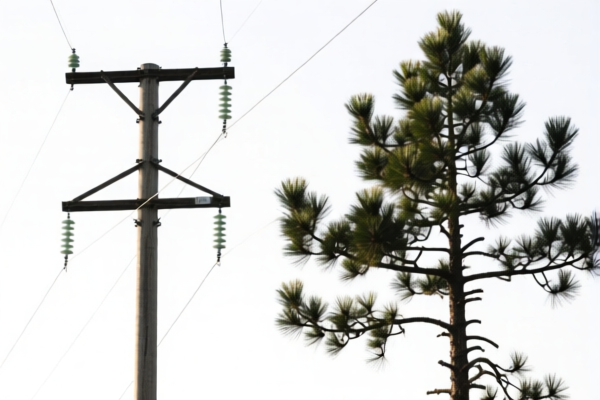
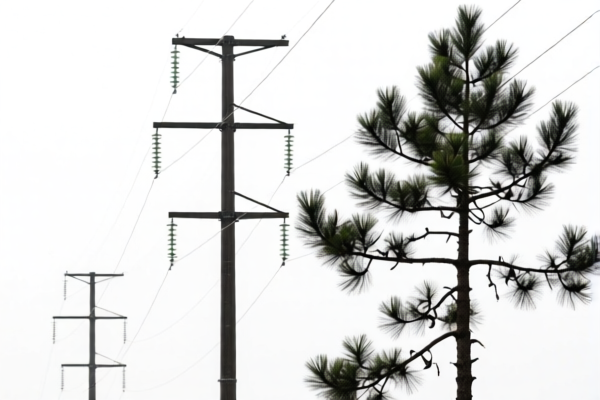
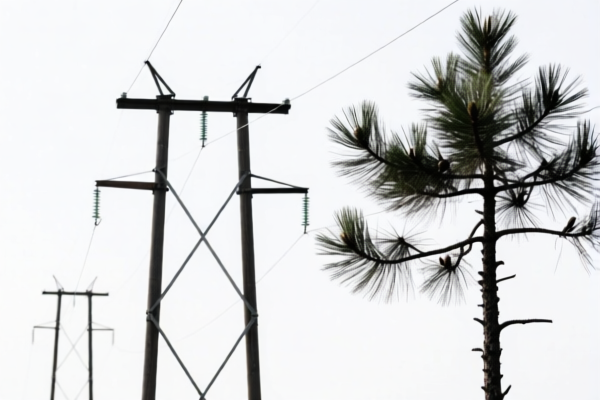
pine wood pole for power transmission
CN → US| HS Code | Tariff Rate | Origin | Destination | Doc |
|---|---|---|---|---|
| 4418300100 | 38.2% | CN | US | Official Doc |
| 4418999140 | 38.2% | CN | US | Official Doc |
| 4421997020 | 35.0% | CN | US | Official Doc |
| 4403220112 | 35.0% | CN | US | Official Doc |
| 4403210112 | 35.0% | CN | US | Official Doc |
Product Images
AI Analysis
🌲 Pine Wood Pole for Power Transmission (Communications/Utility)
🌐 HS Code Reference & Customs Clearance Guide | 2026 Latest Tariff Analysis | Professional Level Strategy for US Imports
📌 I. Product Definition and Classification: Do You Really Understand "Pine Wood Poles"?
Pine wood poles are critical infrastructure components used in telecommunications and power transmission networks. They are typically made from treated pine wood, shaped into cylindrical pillars. In international trade, these products are classified based on their physical form (cylinder vs. pre-assembled structure), material processing (sawed vs. simple shaping), and specific end-use.
Key Distinction Points:
- Pre-fabricated Structural Components: If the pole is part of a larger pre-cut assembly for buildings/infrastructure joints → 4418.30.01.00 / 4418.99.91.40
- Simple Wood Posts/Poles: If the pole is essentially a sawn or shaped cylinder (even if tapered) intended for use as a post → 4421.99.70.20 / 4403.22.01.12 / 4403.21.01.12
⚠️ Critical Note:
- The term "Pine Wood Pole for Power Transmission" is ambiguous in HS classification. It falls under Chapter 44 (Wood and Articles of Wood).
- Treated Wood: If the wood is chemically treated (creosote, copper, etc.), it generally remains in Chapter 44 unless the treatment fundamentally changes its character to a chemical product (rare for poles).
- Origin Risk: Most pine poles imported into the US likely originate from China or other targeted countries, triggering Section 301 and Section 122 tariffs.
📦 II. HS Code Classification Details (2026 Latest Tariff Authority Comparison)
| HS Code | Product Description | Applicable Scenario | Key Classification Criteria |
|---|---|---|---|
4418.30.01.00 |
Wooden Building or Infrastructure Joint Pieces (Pine Wood Pole) | Pre-fabricated wooden structures, utility poles considered part of infrastructure joints | Form: Pillar/Post; Use: Communication/Infrastructure; Material: Pine Wood |
4418.99.91.40 |
Other Prefabricated Wooden Components (Pine Wood Pole) | Generic prefabricated wooden structural components not specified elsewhere | Form: Utility Pole; Use: Communication; Category: Other Prefabricated |
4421.99.70.20 |
Sawn Fence Posts, Railings, Columns, and Bars (Pine Wood Pole) | Simple sawn cylinders, utility poles treated as "posts/columns" | Form: Column/Pole; Use: Communication; Category: Other wooden articles |
4403.22.01.12 |
Wood Continuously Shaped along Its Length (Coniferous, Pine) (Pine Wood Pole) | Poles that are shaped (tapered) along their length, specifically for telephone/telegraph/power | Form: Pole; Use: Telephone/Telegraph/Power; Material: Coniferous (Pine) |
4403.21.01.12 |
Wood Continuously Shaped along Its Length (Coniferous, Pine) (Pine Wood Pole) | Similar to above, specifically categorized under pine conifers for telegraph/telephone use | Form: Pole; Use: Communication; Material: Pine (Coniferous) |
🔍 Important Reminder:
- HS Codes4403.21/22are often preferred for simple, shaped wooden poles because they fall under "Wood Continuously Shaped."
- HS Codes4418are used if the poles are considered part of "prefabricated buildings" or infrastructure joints, which might apply if sold as part of a larger structural kit.
- HS Code4421is a catch-all for "other wood articles" but can apply to simple posts if not deemed "continuously shaped" in a specific way.
- All listed HS Codes attract significant additional tariffs for US imports from China.
💰 III. 2026 Latest Tariff Rate Breakdown (Including Surcharges and Policy Add-ons)
✅ Applicable Country: United States (US)
✅ Origin: China (CN) (Assumed based on tariff structure in DATA)
✅ Effective Date: Current rates as per Section 301 and Section 122 provisions
🎯 1. 4418.30.01.00 & 4418.99.91.40 —— Prefabricated Wooden Structural Components
| Item | Content |
|---|---|
| Base Duty Rate | 3.2% (Ad Valorem) |
| Section 301 Surcharge | +25.0% (USITC Footnote) |
| Section 122 Surcharge | +10.0% (Specific provisions) |
| Total Effective Rate | 38.2% |
| Tax Calculation | CIF Value × 38.2% |
| De Minimis Eligibility | ❌ No (Deny de minimis for Section 301 goods) |
| Legal Basis Path | USITC:4418.30.01.00 / USITC:4418.99.91.40 → Section 301: 25% → Section 122: 10% |
📌 Explanation:
- The 3.2% base duty applies to wooden prefabricated structures.
- 25% Section 301 tariff is levied on Chinese-made wooden products classified under Chapter 44.
- 10% Section 122 tariff may apply depending on specific enforcement guidelines for infrastructure materials.
- Total 38.2% is very high. Cost planning must include this.
🎯 2. 4421.99.70.20 —— Other Wood Articles (Sawn Posts/Poles)
| Item | Content |
|---|---|
| Base Duty Rate | 0.0% (Ad Valorem) |
| Section 301 Surcharge | +25.0% |
| Section 122 Surcharge | +10.0% |
| Total Effective Rate | 35.0% |
| Tax Calculation | CIF Value × 35.0% |
| De Minimis Eligibility | ❌ No |
| Legal Basis Path | USITC:4421.99.70.20 → Section 301: 25% → Section 122: 10% |
📌 Note:
- Although the base duty is 0%, the 25% + 10% surcharges make it 35%.
- This is slightly cheaper than the 38.2% rate for prefabricated structures.
- Applies to simple sawn or shaped pine poles classified as "posts" or "columns."
🎯 3. 4403.22.01.12 & 4403.21.01.12 —— Wood Continuously Shaped (Coniferous/Pine)
| Item | Content |
|---|---|
| Base Duty Rate | 0.0% (Ad Valorem) |
| Section 301 Surcharge | +25.0% |
| Section 122 Surcharge | +10.0% |
| Total Effective Rate | 35.0% |
| Tax Calculation | CIF Value × 35.0% |
| De Minimis Eligibility | ❌ No |
| Legal Basis Path | USITC:4403.22.01.12 / USITC:4403.21.01.12 → Section 301: 25% → Section 122: 10% |
📌 Note:
- These codes classify pine wood that is "continuously shaped along its length" (e.g., tapered poles).
- Base duty is 0%, but total tariff is 35% due to surcharges.
- This is the most common classification for standard utility poles.
- Ensure the product description clearly states "Continuously Shaped" to justify this HS code.
🛠️ IV. Customs Clearance Practical Advice (Avoid Pitfalls)
✅ 1. Required Documentation Checklist (Mandatory)
| Document | Must Provide | Description |
|---|---|---|
| ✅ Product Specification Sheet | ✔️ | Dimensions, length, diameter, taper, treatment type (e.g., creosote, copper azole) |
| ✅ Material Certificate | ✔️ | Proof of wood species (Pine/Coniferous), treatment process |
| ✅ Commercial Invoice | ✔️ | Must clearly state: "Pine Wood Utility Pole," HS Code, Country of Origin |
| ✅ Packing List | ✔️ | Weight, volume, number of poles per bundle |
| ✅ Treatment Certification | ✔️ | EPA or local authority certificate for chemical treatment (if applicable) |
| ✅ Bill of Lading | ✔️ | Clear description of goods |
✅ 2. Declaration Tips (Key Mantra)
🔥 "Shape Matters, Treatment Counts, HS Code Determines Tariff!"
| Scenario | Correct Declaration | Wrong Practice |
|---|---|---|
| Standard tapered pole | 4403.22.01.12 or 4403.21.01.12 (35%) |
Misclassified as 4418 → 38.2% |
| Pre-assembled pole kit | 4418.30.01.00 (38.2%) |
Misclassified as simple wood → Risk of penalty |
| Untreated rough log | Not a pole (different HS) | Claiming as "pole" → Customs rejection |
| Treated wood | Must disclose treatment | Hiding treatment → Seizure/Fine |
✅ 3. Special Cases
| Scenario | Handling Advice |
|---|---|
| Chemically Treated Poles | Provide treatment certificate. Ensure compliance with EPA regulations. |
| OEM Custom Sizes | Provide engineering drawings. Justify HS code with "shape" description. |
| Mixed Loads | Do not mix with non-targeted goods if claiming de minimis (not applicable here). |
| Origin Labeling | Clearly mark "Made in China" on each pole or bundle. |
🌍 V. Global Market Customs Comparison (2026 Latest)
| Country/Region | Recommended HS Code | Tariff Rate (China Origin) | Certification Requirements | Notes |
|---|---|---|---|---|
| 🇺🇸 USA | 4403.22.01.12 / 4403.21.01.12 |
35.0% (incl. 25% + 10%) | EPA Treatment Cert | High tariff burden. |
| 🇺🇸 USA | 4418.30.01.00 |
38.2% (incl. 25% + 10%) | EPA Treatment Cert | For prefabricated structures. |
| 🇨🇳 China | 4403.22 |
0-5% | None | Low export duty. |
| 🇪🇺 EU | 4403.22 |
0% (if untreated) / 3.2% (if treated) | REACH | No Section 301 equivalent. |
| 🇨🇦 Canada | 4403.22 |
0% (under CUSMA) | CFIA | Check for invasive species rules. |
📌 Conclusion:
- US is the most expensive market for Chinese pine wood poles due to 35-38.2% total tariffs.
- EU and Canada are more favorable, but require strict environmental/phytosanitary compliance.
- Consider supply chain diversification (e.g., Canada, Chile) if targeting the US market.
📌 VI. Common Mistakes & Pitfalls (Lessons Learned)
❌ Mistake 1: Using "Wood Pole" without specifying "Continuously Shaped"
👉 Consequence: Customs may assign a higher general rate or require additional documentation.
❌ Mistake 2: Ignoring the Section 122 tariff
👉 Consequence: Underpayment of 10% → Penalties and interest.
❌ Mistake 3: Misclassifying treated wood as "raw wood"
👉 Consequence: Violation of EPA regulations → Seizure.
❌ Mistake 4: Not disclosing the exact wood species (Pine vs. Spruce)
👉 Consequence: HS code error (e.g., 4403.21 vs 4403.29) → Delays.
✅ Correct Approach:
"Pine Wood Utility Pole, Tapered, 40ft Length, Creosote Treated, HS Code 4403.22.01.12, Country of Origin: China"
🎯 VII. Conclusion: Professional Declaration, Save Time and Cost
🎯 Remember the Mantra:
🔹 "Shape defines HS Code, Treatment defines Compliance, Surcharges Define Cost!"
🔹 "35% vs 38.2%: A small classification change saves 3.2%!"
📌 Tips:
- If your poles are originating from Canada, Chile, or New Zealand, you may qualify for zero or low tariffs under various free trade agreements.
- Apply for a Binding Tariff Ruling (BTR) from US Customs and Border Protection (CBP) before shipping to avoid classification disputes.
📣 Action Required:
📞 Contact a professional customs broker + Provide Product Specs + Apply for BTR
🚀 Let your pine wood poles clear customs smoothly, minimize costs, and maximize profit!
✨ Professional Customs Clearance Starts with Precise Classification!
💼 Every percent of tariff matters!
Customer Reviews
About HS Code Classification
The Harmonized System (HS) is an internationally standardized nomenclature developed by the World Customs Organization (WCO) to classify traded products. Over 200 countries use the HS system as the basis for customs tariffs, trade statistics, and import/export regulations.
Each HS code follows a hierarchical structure:
- Chapter (2 digits) — Broad category of goods (e.g., Chapter 84: Machinery and Mechanical Appliances)
- Heading (4 digits) — More specific grouping within the chapter
- Subheading (6 digits) — Internationally standardized breakdown, used by all WCO member countries
- National subdivisions (8-10 digits) — Country-specific extensions for further classification, such as US HTSUS 10-digit codes
Correct HS code classification is essential for smooth customs clearance, accurate duty payment, and compliance with trade regulations. Misclassification can lead to customs delays, overpayment of duties, or penalties.
When importing from CN to US, the applicable tariff rates may include:
- Most-Favored-Nation (MFN) rate — The standard duty rate applied to WTO members
- General rate — Applied to countries without trade agreements
- Trade remedy duties — Additional tariffs such as Section 301 (anti-dumping), Section 232 (national security), or countervailing duties
The information provided on this page is for reference purposes only. For official classification, please consult with your local customs authority or a licensed customs broker.