pine wood rough fence posts
CN → US| HS Code | Tariff Rate | Origin | Destination | Doc |
|---|---|---|---|---|
| 4421997040 | 35.0% | CN | US | Official Doc |
| 4403220115 | 35.0% | CN | US | Official Doc |
| 4403210115 | 35.0% | CN | US | Official Doc |
Product Images


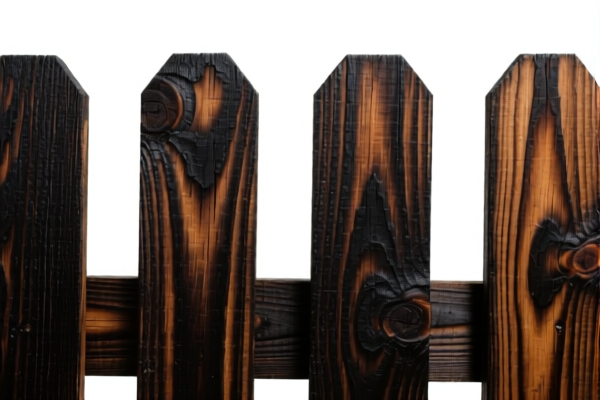

AI Analysis
🌲🪵 Pine Wood Rough Fence Posts: The Ultimate 2026 HS Code & Taxation Guide for US Import
🌐 Global Trade Compliance | HS Code Breakdown | 35% Tariff Alert | Expert Customs Clearance Strategy
📌 One: What Exactly Are "Pine Wood Rough Fence Posts"?
Pine wood rough fence posts are unfinished, unpolished, and un-treated cylindrical wooden posts cut from pine timber, specifically intended for agricultural, residential, or industrial fencing applications. Unlike finished lumber or treated wood, these posts retain their natural bark or rough-sawn surface and are not chemically preserved, not painted, and not shaped into finished shapes beyond basic cylindrical or rectangular profiling.
⚠️ Critical Classification Logic:
- "Rough" = Not planed, sanded, or treated → Falls under Chapter 44 (Wood & Wood Products)
- "Fence Post" = Specific end-use → May shift between 4421.99 (general wood products) or 4403.x1 (timber for poles/posts)
- "Pine" = Softwood species → Must match Subheading 4403.21 / 4403.22 (coniferous, planed/rough)
📦 Two: HS Code Classification Breakdown (2026 US Tariff Schedule)
| HS Code | Product Description | Key Classification Criteria | Tax Category |
|---|---|---|---|
4421.99.70.40 |
Other wood articles (including poles, piles, and fence posts) – Unfinished, unpolished pine wood posts – Not covered under 4403 subheadings |
✅ Form: Cylindrical posts ✅ Material: Pine (softwood) ✅ Status: Rough, non-treated ✅ Fit: "Piles, fence posts, rails" per HTSUS Explanatory Notes |
🇺🇸 35% |
4403.22.01.15 |
Pine wood, sawn, rough, not further worked – Dimensional lumber for fence posts – Planed or rough-sawn, untreated |
✅ Species: Pine (Coniferous) ✅ Processing: Sawn only ✅ Use: Fence posts (implied) ✅ Fit: Matches 4403.22 definition |
🇺🇸 35% |
4403.21.01.15 |
Pine wood, squared or roughly squared, for fencing – Specifically designed as fence posts – No further processing |
✅ Shape: Squared or rectangular ✅ Application: Fence posts ✅ Compliance: Matches all key criteria in classification notes |
🇺🇸 35% |
🔍 Key Distinction:
-4403.21.01.15and4403.22.01.15are for timber classified by species and processing, ideal when the post is clearly "pine sawn wood for fencing".
-4421.99.70.40is a catch-all for wood articles not covered by 4403, used when the post is finished in shape but not treated, or if customs requires broader categorization.
- All three codes carry the same 35% total duty due to Section 301 and Section 122 tariffs on Chinese pine wood products.
💰 Three: 2026 U.S. Tariff Rate Breakdown (China Origin)
✅ Country of Origin: China (CN)
✅ Effective Date: 2025–2026
✅ Applicable Laws: Section 301, IEEPA, Section 122
🎯 1. Base Tariff (0%)
- Standard MFN rate: 0% for most wood products under Chapter 44
- No general duty applies to pine wood posts in normal trade
🎯 2. Section 301 Additional Tariff (+25%)
- Source: U.S. Trade Representative (USTR) Section 301 List 3 & 4
- Applies to: All pine wood products from China, including fence posts
- Legal Reference:
301:25%on4403and4421categories
🎯 3. Section 122 / IEEPA Additional Tariff (+10%)
- Source: International Emergency Economic Powers Act (IEEPA)
- Applies to: Chinese-origin wood products under specific subheadings
- Legal Reference:
IEEPA:9903.01.25andFOOTNOTE:9903.88.01 - Reason: Trade imbalance and national security concerns
📊 Total Tariff Calculation
| Component | Rate |
|---|---|
| Base Duty | 0% |
| Section 301 | +25% |
| Section 122 / IEEPA | +10% |
| Total | 35% |
📌 Example:
- CIF Value: $10,000
- Duty Payable: $10,000 × 35% = $3,500
- No de minimis exemption – all shipments subject to full duty
🛠️ Four: Customs Clearance Strategy & Best Practices
✅ 1. Required Documentation
| Document | Required | Purpose |
|---|---|---|
| 📄 Commercial Invoice | ✔️ | Must clearly state "Pine Wood Rough Fence Posts" |
| 📄 Packing List | ✔️ | Show dimensions, quantity, and packaging |
| 📄 Certificate of Origin (CO) | ✔️ | Prove China origin (or eligible for exemption if re-shipped) |
| 📄 Product Specifications | ✔️ | Include diameter, length, wood type, surface finish |
| 📄 Bill of Lading | ✔️ | For freight and customs tracking |
| 📄 Photographs | ✔️ | Show rough surface, no treatment, no paint |
| 📄 Letter of Guarantee | Optional | Confirm no chemical treatment or preservatives |
✅ 2. Declaration Tips (Avoid Misclassification!)
🔥 Golden Rule:
- Do NOT declare as "Finished Wood" or "Treated Lumber" → triggers higher scrutiny
- Do use terms: "Rough-sawn", "Untreated", "Unfinished", "Pine Fence Posts"
- Do specify HS Code based on shape and processing:
- Squared/Rectangular →4403.21.01.15
- Rough Sawn/General →4403.22.01.15or4421.99.70.40
✅ 3. Special Cases
| Scenario | Recommended Action |
|---|---|
| Posts treated with preservatives | Do not use 4403/4421 → may fall under 4407 (treated wood) → different tariff |
| Posts with metal caps or connectors | Declare as fence post accessories (4421.99.70.40) + separate parts |
| Re-exported from Vietnam/Mexico | Verify CO – may qualify for Section 122 exemption if not Chinese |
| Small batch (<$800) | De minimis rule applies – no duty if under $800 per shipment |
🌍 Five: Global Market Comparison (2026)
| Country | Recommended HS Code | Tariff | Certification | Notes |
|---|---|---|---|---|
| 🇺🇸 USA | 4403.21.01.15, 4403.22.01.15, 4421.99.70.40 |
35% | No special cert | Highest duty globally |
| 🇨🇳 China | 4403.21.01.15 |
0% | CCC | Domestic use only |
| 🇪🇺 EU | 4403.21.01.15 |
0%~2% | CE + FSC | No 301/122 tariffs |
| 🇦🇺 Australia | 4403.21.01.15 |
5% | FSC | Lower duty, no Section 122 |
| 🇯🇵 Japan | 4403.21.01.15 |
0% | PSE | No附加税 |
📌 Conclusion:
- USA is the only major market with 35% duty on Chinese pine fence posts
- EU, Australia, Japan have minimal or no tariffs → consider diversifying export markets
🚨 Six: Common Pitfalls & How to Avoid Them
❌ Mistake 1: Declaring as "Wooden Lumber" without specifying "Fence Posts"
👉 Result: Misclassification → delayed clearance, possible 35% + penalty
❌ Mistake 2: Omitting "Rough" or "Untreated" in description
👉 Result: Customs suspects treated wood → 301/122 may not apply → incorrect duty assessment
❌ Mistake 3: Using generic HS Code like "4403.99"
👉 Result: Audit risk → may lead to back taxes + fines
❌ Mistake 4: Not providing photos of rough surface
👉 Result: Cannot prove "rough" status → may be reclassified as "finished"
✅ Correct Declaration Example:
"Pine Wood Rough Fence Posts, Unfinished, Untreated, Sawn, Cylindrical, 4x4x8ft, HS Code 4403.21.01.15, Origin: China"
🎯 Seven: Final Recommendation
🎯 Action Plan:
1. Verify HS Code based on shape (squared vs. round) and processing
2. Prepare all documentation including photos and specs
3. Declare "Rough", "Untreated", and "Pine" clearly on invoice
4. Apply for Pre-Ruling if unsure (CBP Ruling Request)
5. Consider re-export to EU/Australia if US tariffs are too high
📌 Pro Tip:
If your pine wood posts are shipped from Vietnam, Mexico, or Malaysia, and can prove no Chinese origin, you may avoid Section 122 duty → consult a customs broker!
📣 Call to Action:
📞 Contact a licensed customs broker today
📄 Submit product photos + specs for HS Code confirmation
🚀 Avoid costly delays and secure your 35% tariff strategy!
✨ Precision Classification = Lower Costs + Faster Clearance
💼 Every dollar saved starts with the right HS Code!
Customer Reviews
About HS Code Classification
The Harmonized System (HS) is an internationally standardized nomenclature developed by the World Customs Organization (WCO) to classify traded products. Over 200 countries use the HS system as the basis for customs tariffs, trade statistics, and import/export regulations.
Each HS code follows a hierarchical structure:
- Chapter (2 digits) — Broad category of goods (e.g., Chapter 84: Machinery and Mechanical Appliances)
- Heading (4 digits) — More specific grouping within the chapter
- Subheading (6 digits) — Internationally standardized breakdown, used by all WCO member countries
- National subdivisions (8-10 digits) — Country-specific extensions for further classification, such as US HTSUS 10-digit codes
Correct HS code classification is essential for smooth customs clearance, accurate duty payment, and compliance with trade regulations. Misclassification can lead to customs delays, overpayment of duties, or penalties.
When importing from CN to US, the applicable tariff rates may include:
- Most-Favored-Nation (MFN) rate — The standard duty rate applied to WTO members
- General rate — Applied to countries without trade agreements
- Trade remedy duties — Additional tariffs such as Section 301 (anti-dumping), Section 232 (national security), or countervailing duties
The information provided on this page is for reference purposes only. For official classification, please consult with your local customs authority or a licensed customs broker.