piping bag
CN → US| HS Code | Tariff Rate | Origin | Destination | Doc |
|---|---|---|---|---|
| 3923210095 | 38.0% | CN | US | Official Doc |
| 3923290000 | 38.0% | CN | US | Official Doc |
| 4823908680 | 35.0% | CN | US | Official Doc |
| 3920992000 | 39.2% | CN | US | Official Doc |
| 3923290000 | 38.0% | CN | US | Official Doc |
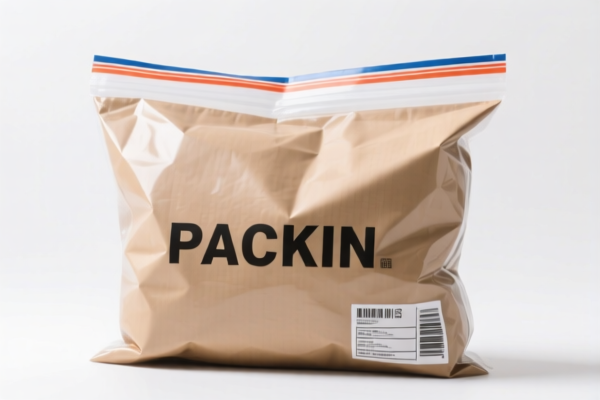
Product Images



AI Analysis
🧁 Piping Bags (裱花袋)
🌐 HS Code Reference & Customs Clearance Guide | 2026 Latest Tariff Analysis | Professional Level Clearance Strategy
📌 Part I: Product Definition & Classification: Do You Really Understand "Piping Bags"?
Piping bags are essential tools in culinary arts, baking, and industrial decoration. In international trade, they are primarily classified based on material and form. The core distinction lies in whether the bag is made of plastic (most common for food-grade disposable bags) or paper, and whether it is a sealed "pouch/sachet" or a simple "sheet/film."
⚠️ Key Distinction Point:
- If the material is Plastic and shaped as a pouch/sachet → Classified under 3923 (Articles for the conveyance or packaging of goods).
- If the material is Paper → Classified under 4823 (Other articles of paper pulp, paper, cellulose wadding and papers).
- If the material is Plastic Film (not shaped as a bag) → Classified under 3920 (Other plates, sheets, film, foil and strip).
📦 Part II: HS Code Classification Details (2026 Latest Tariff Authority Comparison)
| HS Code | Product Description | Applicable Scenario | Material/Form Logic |
|---|---|---|---|
3923.21.00.95 |
Pouches and bags, of plastics | Disposable plastic piping bags, shaped like bags | ✅ Plastic, Bag Form |
3923.29.00.00 |
Other sacks and bags | Generic plastic packaging bags, other plastic pouches | ✅ Plastic, Pouch Form |
4823.90.86.80 |
Other articles of paper pulp/paper | Paper piping bags, non-excluded paper items | ✅ Paper |
3920.99.20.00 |
Other plates, sheets, film | Food-grade plastic film, sheets not yet shaped into bags | ✅ Plastic, Film/Sheet Form |
3923.29.00.00 |
Other sacks and bags | Re-classification logic for food-grade plastic piping bags | ✅ Plastic, Pouch Form |
🔍 Key Reminder:
- Plastic Piping Bags: Most commercial food-grade piping bags are made of PE/PP plastic. If they are pre-formed into a bag shape, they belong to 3923. If they are just rolls of film intended to be folded, they might fall under 3920. - Paper Piping Bags: Less common for heavy icing but used for light dusting; classified under 4823.
💰 Part III: 2026 Latest Tariff Rate Details (Including Additional Taxes, Policy Add-ons)
✅ Applicable Country: United States (US)
✅ Origin: China (CN)
✅ Effective Date: From November 10, 2025 (Including subsequent imports)
🎯 1. 3923.21.00.95 —— Pouches and Bags, of Plastics (Piping Bag Form)
| Item | Content |
|---|---|
| Basic Tariff | 3.0% (ad valorem) |
| Section 301 Additional Tariff | +25% (Based on USITC Footnote) |
| Section 122 Tariff | +10% (Specific policy add-on) |
| Total Tariff Rate | 38.0% |
| Tax Calculation | CIF Value × 38.0% |
| De Minimis Exemption Available? | ❌ No (deny_de_minimis) |
| Legal Basis Path | Base Tariff → Section 301 → Section 122 |
📌 Explanation:
- Base Tariff 3.0%: Standard duty for plastic packaging articles. - Section 301 Additional Tariff 25%: Major US trade remedy tariff on Chinese goods. - Section 122 Tariff 10%: Specific additional tax layer. - Total 38.0%: High cost for plastic packaging imports from China.
🎯 2. 3923.29.00.00 —— Other Sacks and Bags (Plastic Piping Bag)
| Item | Content |
|---|---|
| Basic Tariff | 3.0% |
| Section 301 Additional Tariff | +25% |
| Section 122 Tariff | +10% |
| Total Tariff Rate | 38.0% |
| Tax Calculation | CIF Value × 38.0% |
| De Minimis Exemption Available? | ❌ No |
| Legal Basis Path | Base Tariff → Section 301 → Section 122 |
📌 Note:
- This code is often used for generic plastic bags or when specific sub-heading 3923.21 doesn't perfectly fit the specific plastic type. - Tax rate is identical to3923.21.00.95at 38.0%. - Food-grade plastic piping bags generally fall under "plastic packaging articles."
🎯 3. 4823.90.86.80 —— Other Articles of Paper (Paper Piping Bag)
| Item | Content |
|---|---|
| Basic Tariff | 0.0% |
| Section 301 Additional Tariff | +25% |
| Section 122 Tariff | +10% |
| Total Tariff Rate | 35.0% |
| Tax Calculation | CIF Value × 35.0% |
| De Minimis Exemption Available? | ❌ No |
| Legal Basis Path | Base Tariff (0%) → Section 301 → Section 122 |
📌 Explanation:
- Base Tariff 0.0%: Paper articles often have lower base duties. - Total 35.0%: Slightly cheaper than plastic bags (38.0%) due to the 0% base rate, but still subject to significant US additional tariffs.
🎯 4. 3920.99.20.00 —— Other Plates, Sheets, Film (Food-Grade Plastic Film)
| Item | Content |
|---|---|
| Basic Tariff | 4.2% |
| Section 301 Additional Tariff | +25% |
| Section 122 Tariff | +10% |
| Total Tariff Rate | 39.2% |
| Tax Calculation | CIF Value × 39.2% |
| De Minimis Exemption Available? | ❌ No |
| Legal Basis Path | Base Tariff → Section 301 → Section 122 |
📌 Note:
- This code applies if the product is imported as rolls of film rather than pre-formed bags. - Highest Rate (39.2%): Due to the higher base tariff (4.2%) for certain plastic films. - Strategy: Ensure the product is described and shipped as "Bags" (3923) rather than "Film" (3920) if possible, to save 1.2% in duties.
🛠️ Part IV: Customs Clearance Practical Advice (Pitfall Avoidance Guide)
✅ 1. Preparation Checklist (All or Nothing)
| Document | Must Provide | Description |
|---|---|---|
| ✅ Product Specifications | ✔️ | Material (PE/PP/Paper), Thickness, Food-Grade Certification (FDA/LFGB) |
| ✅ Product Photos | ✔️ | Clear images showing the bag shape, sealing, and any printing |
| ✅ Commercial Invoice | ✔️ | Clearly state "Plastic Piping Bags" or "Paper Piping Bags," NOT "Generic Plastic Sheets" |
| ✅ Packing List | ✔️ | Detail net/gross weight, quantity per carton |
| ✅ Food Safety Certificate | ✔️ | Critical for food-contact items (FDA compliance for US market) |
| ✅ Country of Origin | ✔️ | Must be marked "Made in China" |
✅ 2. Declaration Skills (Key Mantra)
🔥 "Material Determines Code, Form Determines Heading, Name Must Be Precise!"
| Scenario | Correct Declaration | Wrong Approach |
|---|---|---|
| Pre-formed Plastic Bag | 3923.21.00.95 or 3923.29.00.00 |
Declare as "Plastic Film" → 39.2% |
| Roll of Plastic Film | 3920.99.20.00 |
Declare as "Bag" → Misclassification penalty |
| Paper Bag | 4823.90.86.80 |
Declare as "Plastic" → Audit risk |
| Food-Grade Item | Highlight FDA Compliance | Ignore food safety certs → Clearance delay |
✅ 3. Special Case Handling
| Situation | Handling Advice |
|---|---|
| OEM Custom Printing | Provide design approval documents; ensure ink is non-toxic (food-grade) |
| Mixed Packaging (Bag + Tip) | If sold as a set, declare the main character (the bag). The tip (plastic/metal) may need separate line items or be included if minor |
| Raw Material vs. Finished Good | Do not mix "plastic rolls" and "pre-made bags" in one HS code. Separation is key for accurate tax calculation |
🌍 Part V: Global Market Clearance Comparison (2026 Latest)
| Country/Region | Recommended HS Code | Tariff Rate (China Origin) | Certification Requirements | Notes |
|---|---|---|---|---|
| 🇺🇸 USA | 3923.21.00.95 / 3923.29.00.00 |
38.0% (Plastic) 35.0% (Paper) |
FDA + RoHS (if applicable) | High Tariff Environment. Section 301 & 122 apply. |
| 🇨🇳 China | 3923.21.00.95 |
~3-5% | CCC (if applicable) | Low base tariff, no Section 301 |
| 🇪🇺 EU | 3923.21.00.00 |
~6.5% | LFGB + REACH | No US-style additional tariffs |
| 🇦🇺 Australia | 3923.21.00.00 |
~5% | SAA | Standard GATT rates |
📌 Conclusion:
- USA is the most expensive market for plastic piping bags due to the 38% total tariff. - Paper bags offer a slight advantage (35% total). - Strategy: For US exports, consider sourcing raw materials from non-China origins or leveraging free trade agreements if applicable (though rare for China origin).
📌 Part VI: Common Errors & Pitfall Guide (Lessons Learned)
❌ Error 1: Declaring "Plastic Piping Bags" as "Plastic Film" (3920)
👉 Consequence: Higher base tariff (4.2% vs 3.0%) → Total 39.2% instead of 38.0%.
❌ Error 2: Ignoring Food-Grade Certification
👉 Consequence: US CBP may detain shipment for FDA violations → Deportation or Destruction.
❌ Error 3: Mixed Bag Types in One HS Code
👉 Consequence: If paper and plastic bags are mixed, customs may audit the whole shipment → Delays and fines.
❌ Error 4: Incorrect Description "Baking Supplies"
👉 Consequence: Too vague. Must specify Material (Plastic/Paper) and Form (Bag/Film).
✅ Correct Declaration Example:
"Disposable Food-Grade Plastic Piping Bags, PE Material, Clear, 12-inch, FDA Compliant, Model: PB-12, Made in China"
🎯 Part VII: Conclusion: Precision in Classification Saves Money!
🎯 Remember the Mantra:
🔹 "Plastic Bag = 3923, Paper Bag = 4823, Film = 3920."
🔹 "US Tariff is 38% for Plastic, 35% for Paper. Don't let 'Film' trap you at 39.2%."
🔹 "FDA Compliance is Key for Food Contact Items."
📌 Tips:
- If your piping bags are not made in China (e.g., Vietnam, Thailand), check for preferential tariffs.
- For US imports, pre-clearance communication with your customs broker is vital to confirm the latest Section 122 application.
📣 Immediate Action:
📞 Contact your customs broker with product photos and material specs.
🚀 Ensure FDA compliance documentation is ready.
💼 Optimize your HS Code to avoid the highest possible tariff!
✨ Professional Clearance, Starting with Accurate Classification!
💼 Every Percent of Tax Saved is Pure Profit!
Customer Reviews
About HS Code Classification
The Harmonized System (HS) is an internationally standardized nomenclature developed by the World Customs Organization (WCO) to classify traded products. Over 200 countries use the HS system as the basis for customs tariffs, trade statistics, and import/export regulations.
Each HS code follows a hierarchical structure:
- Chapter (2 digits) — Broad category of goods (e.g., Chapter 84: Machinery and Mechanical Appliances)
- Heading (4 digits) — More specific grouping within the chapter
- Subheading (6 digits) — Internationally standardized breakdown, used by all WCO member countries
- National subdivisions (8-10 digits) — Country-specific extensions for further classification, such as US HTSUS 10-digit codes
Correct HS code classification is essential for smooth customs clearance, accurate duty payment, and compliance with trade regulations. Misclassification can lead to customs delays, overpayment of duties, or penalties.
When importing from CN to US, the applicable tariff rates may include:
- Most-Favored-Nation (MFN) rate — The standard duty rate applied to WTO members
- General rate — Applied to countries without trade agreements
- Trade remedy duties — Additional tariffs such as Section 301 (anti-dumping), Section 232 (national security), or countervailing duties
The information provided on this page is for reference purposes only. For official classification, please consult with your local customs authority or a licensed customs broker.