pir motion sensor switch
CN → US| HS Code | Tariff Rate | Origin | Destination | Doc |
|---|---|---|---|---|
| 8536509031 | 35.0% | CN | US | Official Doc |
| 8536509032 | 35.0% | CN | US | Official Doc |
| 8537109170 | 37.7% | CN | US | Official Doc |
| 8537109160 | 37.7% | CN | US | Official Doc |
Product Images
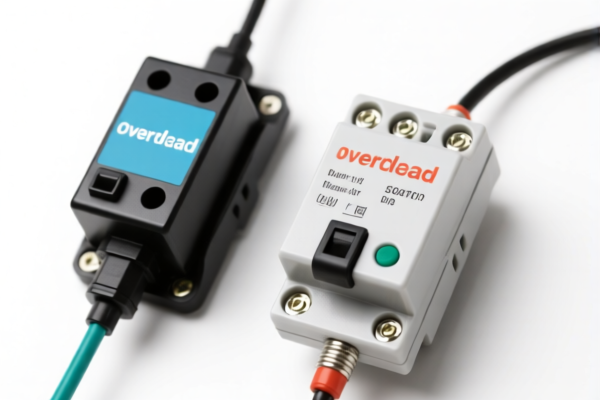
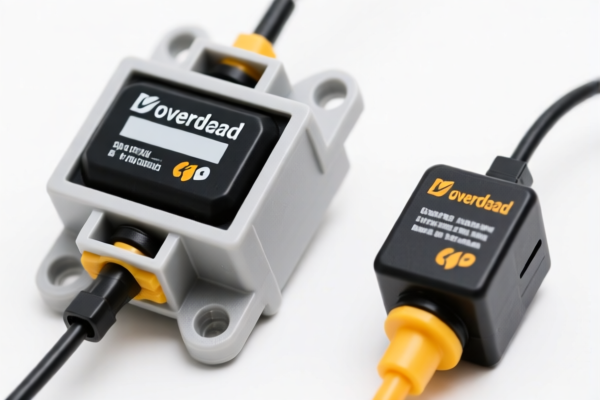
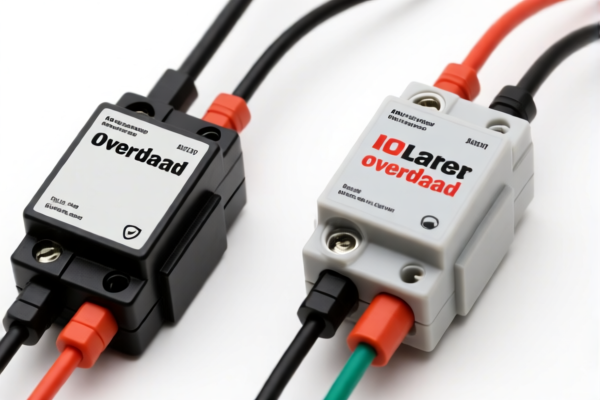
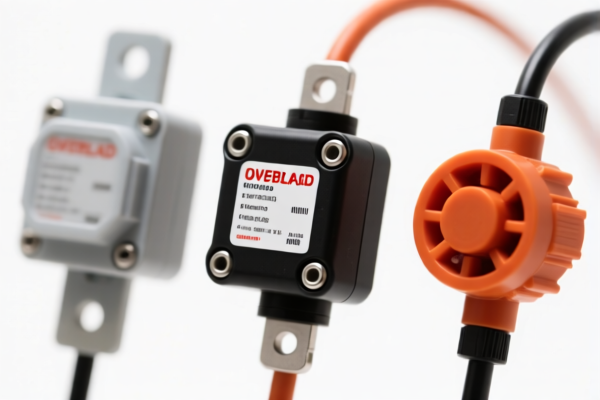
AI Analysis
🕵️♂️ PIR Motion Sensor Switch (Electrical Control Apparatus)
🌐 HS Code Reference & Customs Clearance Guide | 2026 Latest Tariff Analysis | Professional Level Strategy
📌 I. Product Definition: What Exactly is a "PIR Motion Sensor Switch"?
A PIR (Passive Infrared) Motion Sensor Switch is an electrical device used to automatically control lighting or other electrical loads based on human presence. In international trade classification, it is crucial to distinguish between the sensor unit itself (the detection component) and the control board/console (the central hub managing multiple circuits).
Two Main Classification Paths:
-
Switching Apparatus (Heading 8536):
- If the product is a standalone push-button or gang switch that includes a PIR sensor module, or is marketed specifically as a "sensor switch" functioning as a switch.
- Key Feature: Rated ≤ 1,000V, acts as a connector/disconnector for the circuit.
-
Control/Distribution Boards (Heading 8537):
- If the product is a panel, console, or desk equipped with two or more apparatus of heading 8535 or 8536 (e.g., relays, contactors) for electric control or distribution, including numerical control apparatus.
- Key Feature: It’s a "base" or "console" that manages complex circuits, often incorporating programmable logic or multiple switching devices.
⚠️ Critical Distinction:
- If it’s a single unit replacing a standard wall switch with a sensor → Likely 8536 (Switching).
- If it’s a complex control panel with multiple outputs, relays, and programming capabilities → Likely 8537 (Control Boards).
- Note on Programmable Controllers: If it’s a dedicated PLC-based system, it falls under 8537. If it’s a simple mechanical/electromechanical switch with a sensor, it leans toward 8536.
📦 II. HS Code Classification Details (Based on Provided Data)
| HS Code | Product Description | Key Characteristics | Voltage Rating |
|---|---|---|---|
8537.10.91.70 |
Boards, panels, consoles, desks, cabinets... equipped with two or more apparatus of heading 8535/8536 for electric control... Other | Generic control panel without specific programmable or numeric features. Must have ≥2 switching devices. | ≤ 1,000 V |
8537.10.91.60 |
Boards, panels, consoles... Programmable controllers | Central processing units, PLCs, or smart home hubs that can be programmed to control multiple loads. | ≤ 1,000 V |
8536.50.90.31 |
Electrical apparatus for switching... Push-button: Rated at not over 5 A, Momentary contact | Simple push-button switches with sensor integration, low current, momentary action. | ≤ 1,000 V |
8536.50.90.32 |
Electrical apparatus for switching... Push-button: Rated at not over 5 A, Other, gang switches | Multi-gang switches or non-momentary push-button switches with sensor functionality, low current. | ≤ 1,000 V |
🔍 Focus Note:
- Most simple "PIR Light Switches" found in retail (replacing a light switch) are classified under 8536.50.90.31/32 if they are momentary push-button types or standard gang switches.
- Complex commercial control panels with multiple relays and programming are classified under 8537.10.91.60 (if programmable) or 8537.10.91.70 (if not).
💰 III. 2026 Latest Tariff Rate Breakdown (Detailed Tax Clause Analysis)
✅ Applicable Countries: United States (US)
✅ Origin: China (CN)
✅ Effective Time: Current rates apply (2025-2026)
🎯 1. 8537.10.91.70 – Other Control Boards/Panels (Non-Programmable)
| Item | Detail |
|---|---|
| Basic Tariff | 2.7% (Ad Valorem) |
| Section 301 / Additional Tariff | 25.0% |
| Total Tariff Rate | 27.7% |
| Tax Calculation | CIF Value × 27.7% |
| De Minimis Exemption | ❌ Not Eligible (De Minimis threshold does not apply to Section 301 goods) |
| Legal Basis | HTSUS 8537.10.91.70 + Section 301 Footnote |
📌 Explanation:
- The 2.7% is the standard Most Favored Nation (MFN) duty.
- The 25.0% is the punitive tariff imposed under Section 301 of the Trade Act of 1974 on Chinese-origin goods.
- Total: 27.7%. This is a significant cost burden for importers.
🎯 2. 8537.10.91.60 – Programmable Controllers
| Item | Detail |
|---|---|
| Basic Tariff | 2.7% (Ad Valorem) |
| Section 301 / Additional Tariff | 25.0% |
| Total Tariff Rate | 27.7% |
| Tax Calculation | CIF Value × 27.7% |
| De Minimis Exemption | ❌ Not Eligible |
| Legal Basis | HTSUS 8537.10.91.60 + Section 301 Footnote |
📌 Explanation:
- Same tariff structure as above. Even if the device is "smart" or programmable, it does not escape the 25% additional tariff.
🎯 3. 8536.50.90.31 – Push-Button Switch (Momentary, ≤5A)
| Item | Detail |
|---|---|
| Basic Tariff | 0.0% (Ad Valorem) |
| Section 301 / Additional Tariff | 25.0% |
| Total Tariff Rate | 25.0% |
| Tax Calculation | CIF Value × 25.0% |
| De Minimis Exemption | ❌ Not Eligible |
| Legal Basis | HTSUS 8536.50.90.31 + Section 301 Footnote |
📌 Explanation:
- Basic duty is 0%, which is favorable. However, the 25% additional tariff still applies.
- This is cheaper than the 8537 categories (27.7%), but only by 2.7 percentage points.
🎯 4. 8536.50.90.32 – Push-Button Switch (Other, Gang Switch, ≤5A)
| Item | Detail |
|---|---|
| Basic Tariff | 0.0% (Ad Valorem) |
| Section 301 / Additional Tariff | 25.0% |
| Total Tariff Rate | 25.0% |
| Tax Calculation | CIF Value × 25.0% |
| De Minimis Exemption | ❌ Not Eligible |
| Legal Basis | HTSUS 8536.50.90.32 + Section 301 Footnote |
📌 Explanation:
- Identical to 8536.50.90.31.
- Savings Tip: If your product can be technically justified as a simple switch (8536) rather than a control board (8537), you save 2.7% on the base duty.
🛠️ IV. Customs Clearance Practical Advice (Avoid Pitfalls)
✅ 1. Required Documentation Checklist
| Document | Must Provide | Notes |
|---|---|---|
| ✅ Product Specification Sheet | ✔️ | Must clearly state: Voltage, Current Rating, Type (Switch vs. Panel), Programmability. |
| ✅ Circuit Diagram/Schematic | ✔️ | Critical. Proves whether the device is a simple switch (8536) or a complex control board with ≥2 apparatus (8537). |
| ✅ Product Photos (Label & Internal) | ✔️ | Show model number, input/output ratings. Internal shots help prove "programmable" vs. "non-programmable". |
| ✅ Commercial Invoice | ✔️ | Must not use vague terms like "Light Sensor". Use precise HTS description: "PIR Motion Sensor Switch, Electrical, ≤1000V" or "Control Panel, Programmable". |
| ✅ Origin Certificate | ✔️ | Confirm Chinese origin to assess 301 tariffs. |
| ✅ Declaration of Compliance | ✔️ | FCC/CE certification if applicable (safety standards). |
✅ 2. Declaration Strategy (Key Mnemonics)
🔥 "Panel with Multiple, Go to 8537; Simple Switch, 8536; Check Voltage, Always ≤1000V!"
| Scenario | Recommended HS Code | Reason |
|---|---|---|
| Single PIR switch replacing a wall switch | 8536.50.90.31 or .32 |
It’s a switch apparatus, not a control panel. |
| Central Smart Home Hub controlling multiple lights | 8537.10.91.60 |
It’s a programmable controller with multiple switching apparatus. |
| Industrial Control Panel with relays & PIR inputs | 8537.10.91.70 |
It’s a base with ≥2 apparatus for distribution/control. |
| Ambiguous "Sensor Module" sold separately | Consult Customs | May be classified as a part (8536/8537) or accessory. |
⚠️ Warning:
- Do not label a complex control panel as a "simple switch" to avoid 27.7% tariff. This is misclassification and can lead to seizures and fines.
- Do not split shipments to avoid de minimis. Section 301 goods are not eligible for de minimis exemption (currently $800).
✅ 3. Special Considerations
| Situation | Advice |
|---|---|
| OEM/ODM Products | Ensure the contract specifies the exact technical function. If it’s a "switch," provide switch specs. If it’s a "controller," provide PLC specs. |
| High Voltage (>1000V) | NOT COVERED IN DATA. These HS codes are strictly for ≤1000V. Higher voltage falls under different headings (e.g., 8535 for higher voltage switches). Check carefully! |
| Non-Chinese Origin | If manufactured in Vietnam/Malaysia, Section 301 tariffs may not apply. Check country of origin rules. |
🌍 V. Global Market Comparison (2026)
| Market | Recommended HS Code | Base Tariff | Additional Tariff (China) | Total (China) |
|---|---|---|---|---|
| 🇺🇸 USA | 8536.50.90.31 |
0% | 25% | 25.0% |
| 🇺🇸 USA | 8537.10.91.60 |
2.7% | 25% | 27.7% |
| 🇨🇳 China | 8536.50.90.31 |
0% | 0% | 0% (Import) |
| 🇪🇺 EU | 8536.50.90 |
0-1.7% | 0% | ~1.7% |
| 🇬🇧 UK | 8536.50.90 |
0-2.5% | 0% | ~2.5% |
📌 Conclusion:
- USA imposes heavy tariffs on Chinese electrical controls.
- Duty Savings: Classifying as a simple switch (8536) saves 2.7% compared to control panels (8537).
- Non-Chinese Origin: If possible, source from non-301 countries to avoid the 25% surcharge entirely.
📌 VI. Common Errors & Pitfalls (Lessons Learned)
❌ Error 1: Misclassifying a "Programmable Controller" as a "Switch"
👉 Consequence: If caught, customs may reclassify to 8537 and assess the correct 27.7% vs. 25%, plus penalties.
👉 Fix: Provide proof of programmability (e.g., software interface, PLC specs).
❌ Error 2: Ignoring the "≥2 Apparatus" Rule for 8537
👉 Consequence: Declaring a single-switch unit as 8537 leads to overpayment of 2.7%.
👉 Fix: If it’s a single switch, use 8536.
❌ Error 3: Assuming De Minimis Applies
👉 Consequence: Shipments under $800 from China will still be taxed 25-27.7%.
👉 Fix: Budget for tariffs even for small shipments.
❌ Error 4: Vague Product Descriptions
👉 Consequence: Customs holds the shipment for inspection.
👉 Fix: Use precise descriptions: "PIR Motion Sensor Switch, Push-Button, 5A, 120V, Model XYZ."
✅ Correct Approach:
"Electrical Switch, PIR Motion Sensor, Momentary Contact, 5A Max, 120VAC, FCC Certified, Model PIR-500"
🎯 VII. Conclusion: Precise Classification Saves Money!
🎯 Remember the Key Takeaways:
🔹 "Switch ≤1000V? Try 8536 (25% Total)."
🔹 "Complex Panel or PLC? It’s 8537 (27.7% Total)."
🔹 "De Minimis Does Not Apply to China!"
🔹 "Voltage Matters: Ensure ≤1000V for these codes."
📌 Pro Tip:
If your product is borderline between 8536 and 8537, consider applying for a Customs Ruling (Advance Ruling) from CBP. This provides legal certainty and prevents future disputes.
📣 Immediate Action Steps:
📞 Contact a Licensed Customs Broker
📄 Provide Circuit Diagrams & Specs
📉 Evaluate Total Landed Cost (CIF + 25-27.7% Tariff)
🚀 Optimize Supply Chain to Minimize Tax Exposure
✨ Professional Clearance Starts with Accurate Classification!
💼 Every Percentage Point Counts in Global Trade!
Customer Reviews
About HS Code Classification
The Harmonized System (HS) is an internationally standardized nomenclature developed by the World Customs Organization (WCO) to classify traded products. Over 200 countries use the HS system as the basis for customs tariffs, trade statistics, and import/export regulations.
Each HS code follows a hierarchical structure:
- Chapter (2 digits) — Broad category of goods (e.g., Chapter 84: Machinery and Mechanical Appliances)
- Heading (4 digits) — More specific grouping within the chapter
- Subheading (6 digits) — Internationally standardized breakdown, used by all WCO member countries
- National subdivisions (8-10 digits) — Country-specific extensions for further classification, such as US HTSUS 10-digit codes
Correct HS code classification is essential for smooth customs clearance, accurate duty payment, and compliance with trade regulations. Misclassification can lead to customs delays, overpayment of duties, or penalties.
When importing from CN to US, the applicable tariff rates may include:
- Most-Favored-Nation (MFN) rate — The standard duty rate applied to WTO members
- General rate — Applied to countries without trade agreements
- Trade remedy duties — Additional tariffs such as Section 301 (anti-dumping), Section 232 (national security), or countervailing duties
The information provided on this page is for reference purposes only. For official classification, please consult with your local customs authority or a licensed customs broker.