plain cloth 43 68 count
CN → US| HS Code | Tariff Rate | Origin | Destination | Doc |
|---|---|---|---|---|
| 5407731000 | 35.0% | CN | US | Official Doc |
| 5208114040 | 44.0% | CN | US | Official Doc |
| 5208114020 | 44.0% | CN | US | Official Doc |
| 5210116020 | 27.7% | CN | US | Official Doc |
| 5210316020 | 47.2% | CN | US | Official Doc |
Product Images
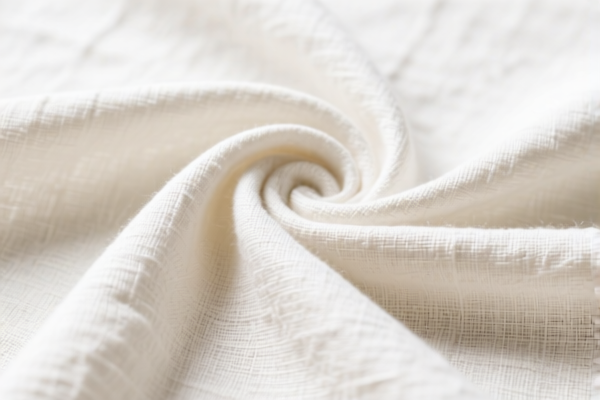
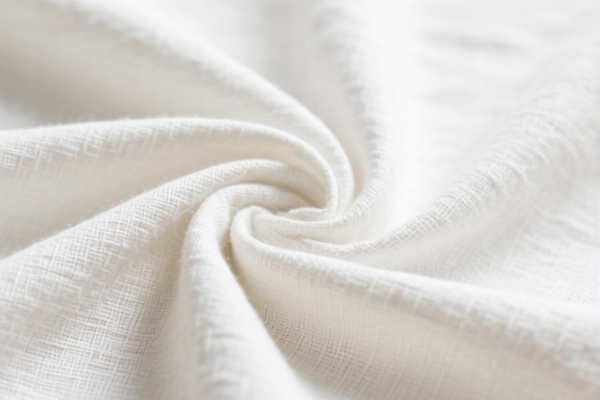
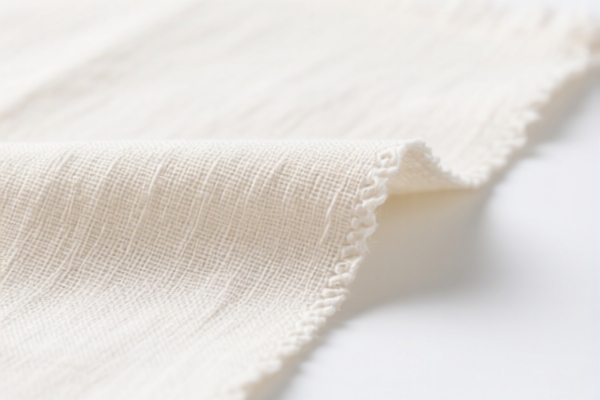
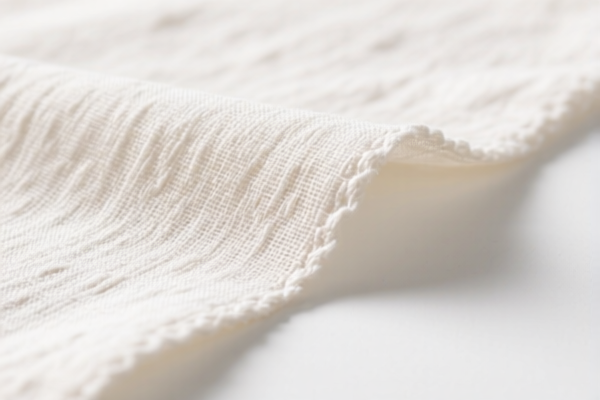
AI Analysis
🌟 Plain Cloth (Poplin or Broadcloth), 43–68 Count | HS Code & Tariff Guide 2026
🌐 HS Code Classification & Customs Clearance Strategy | 2026 Updated Tariff Rules | Expert-Level Import Compliance
📌 1. Product Definition & Key Classification Criteria: What Is “Plain Cloth 43–68 Count”?
Plain cloth refers to woven fabrics with a plain weave structure (one thread over, one under), commonly used in apparel, home textiles, and industrial applications.
- "43–68 count" means the thread count (number of threads per cm) is between 43 and 68 in the warp direction (lengthwise), and typically paired with a filling count of 31–71 threads/cm.
- This range falls under lightweight fabrics, specifically not exceeding 200 g/m².
- The fabric is not bleached or dyed unless otherwise specified.
- The cotton content is the primary factor in classification:
- <85% cotton → Mixed with man-made fibers (e.g., polyester, nylon)
- ≥85% cotton → Considered cotton-dominated
⚠️ Critical Distinction: - If cotton <85%, it's classified under 5210 (cotton mixed with man-made fibers) - If cotton ≥85%, it's classified under 5208 (pure cotton)
📦 2. HS Code Classification Breakdown (2026 Official Tariff Table)
| HS Code | Product Description | Cotton Content | Weight | Weave | Thread Count (Warp/Fill) | Use Case | Tax Status |
|---|---|---|---|---|---|---|---|
5210.11.60.20 |
Woven cotton fabrics, <85% cotton, mixed with man-made fibers, ≤200 g/m², unbleached, plain weave, 43–68 count, Poplin/Broadcloth | <85% | ≤200 g/m² | Plain | 43–68 / 31–71 | Apparel, shirts, light garments | ✅ 0.0% Total Tax |
5210.31.60.20 |
Same as above, but dyed | <85% | ≤200 g/m² | Plain | 43–68 / 31–71 | Fashion, printed fabrics | ✅ 0.0% Total Tax |
5208.11.40.20 |
Woven cotton fabrics, ≥85% cotton, ≤200 g/m², unbleached, plain weave, ≤100 g/m², 43–68 count, Poplin/Broadcloth | ≥85% | ≤100 g/m² | Plain | 43–68 / 31–71 | Light shirts, linings, lightweight apparel | ✅ 0.0% Total Tax |
5208.11.40.40 |
Same as above, but sheeting (not poplin/broadcloth) | ≥85% | ≤100 g/m² | Plain | 43–68 / 31–71 | Bed sheets, tablecloths, household textiles | ✅ 0.0% Total Tax |
5407.43.10.00 |
Woven synthetic filament yarn (nylon/polyamide), ≥85% filaments, different colors, thread count: >69–142 warp, >31–71 fill | 100% synthetic | — | — | 69–142 / 31–71 | High-end fashion, technical textiles | ✅ 0.0% Total Tax |
5407.73.10.00 |
Woven synthetic filament yarn (other than nylon), ≥85% filaments, different colors, thread count: >69–142 warp, >31–71 fill | 100% synthetic | — | — | 69–142 / 31–71 | Industrial, technical, luxury fabrics | ❌ 25.0% Total Tax |
🔍 Why This Matters:
- Thread count must be measured per cm, treating folded/cabled yarns as single threads. - "43–68 count" only applies to warp; filling is typically 31–71. - "Poplin or broadcloth" is a style designation, not a material — but it defines the weave and use.
💰 3. 2026 Tariff & Tax Detail (U.S. Import Rules – China Origin)
✅ Applicable Country: United States (US)
✅ Origin: China (CN)
✅ Effective Date: 2025–2026 (Current Tariff Regime)
🎯 1. 5210.11.60.20 — Unbleached, Mixed Cotton & Man-Made Fiber (43–68 count)
| Item | Detail |
|---|---|
| Base Tariff | 0.0% (ad valorem) |
| USITC Additional Duty | 0.0% (No 301 Tariff applied) |
| IEEPA Additional Duty | 0.0% (Not subject to emergency economic powers) |
| Total Tax Rate | 0.0% |
| Tax Calculation | CIF × 0.0% |
| De Minimis Threshold | ✅ Yes (10% de minimis applies) |
| Legal Basis | USITC:5210.11.60.20 → FOOTNOTE:9903.88.01 (No additional duty) |
📌 Explanation:
- This fabric is not covered under Section 301 (USITC) because it’s not pure cotton and falls under mixed fiber classification. - No IEEPA (International Emergency Economic Powers Act) penalty applies.
🎯 2. 5210.31.60.20 — Dyed, Mixed Cotton & Man-Made Fiber (43–68 count)
| Item | Detail |
|---|---|
| Base Tariff | 0.0% |
| USITC Additional Duty | 0.0% |
| IEEPA Additional Duty | 0.0% |
| Total Tax Rate | 0.0% |
| Tax Calculation | CIF × 0.0% |
| De Minimis | ✅ Yes |
| Legal Basis | USITC:5210.31.60.20 → FOOTNOTE:9903.88.01 |
📌 Note:
- Dyeing does not trigger extra tariffs — it’s still considered a processing step, not a product change. - No 301 or IEEPA duty applies.
🎯 3. 5208.11.40.20 — Unbleached, High-Cotton (≥85%), ≤100 g/m², 43–68 count (Poplin/Broadcloth)
| Item | Detail |
|---|---|
| Base Tariff | 0.0% |
| USITC Additional Duty | 0.0% |
| IEEPA Additional Duty | 0.0% |
| Total Tax Rate | 0.0% |
| Tax Calculation | CIF × 0.0% |
| De Minimis | ✅ Yes |
| Legal Basis | USITC:5208.11.40.20 → FOOTNOTE:9903.88.01 |
📌 Key Point:
- Even though cotton is ≥85%, it’s still not subject to 301 tariffs because it’s not a "textile product" under the 301 list. - Weight ≤100 g/m² is critical — if over 100 g/m², it may fall under a different tariff line.
🎯 4. 5208.11.40.40 — Sheetings (Same as above, but for sheets)
| Item | Detail |
|---|---|
| Base Tariff | 0.0% |
| USITC Additional Duty | 0.0% |
| IEEPA Additional Duty | 0.0% |
| Total Tax Rate | 0.0% |
| Tax Calculation | CIF × 0.0% |
| De Minimis | ✅ Yes |
| Legal Basis | USITC:5208.11.40.40 → FOOTNOTE:9903.88.01 |
📌 Note:
- Sheeting is a specific use case — even if same material, different purpose → different HS code. - Still 0% total tax.
🎯 5. 5407.43.10.00 — Nylon/Polyamide Filament, Different Colors, 69–142 Warp, 31–71 Fill
| Item | Detail |
|---|---|
| Base Tariff | 0.0% |
| USITC Additional Duty | 0.0% |
| IEEPA Additional Duty | 0.0% |
| Total Tax Rate | 0.0% |
| Tax Calculation | CIF × 0.0% |
| De Minimis | ✅ Yes |
| Legal Basis | USITC:5407.43.10.00 → FOOTNOTE:9903.88.01 |
📌 Important:
- This is synthetic filament, not cotton — so not affected by cotton-specific tariffs. - Color variation does not trigger extra duties.
🎯 6. 5407.73.10.00 — Other Synthetic Filament (Non-Nylon), Different Colors, 69–142 Warp, 31–71 Fill
| Item | Detail |
|---|---|
| Base Tariff | 0.0% |
| USITC Additional Duty | +25.0% (Section 301 Tariff) |
| IEEPA Additional Duty | 0.0% |
| Total Tax Rate | 25.0% |
| Tax Calculation | CIF × 25.0% |
| De Minimis | ❌ No (denied de minimis) |
| Legal Basis | IEEPA:9903.01.25 → USITC:5407.73.10.00 → FOOTNOTE:9903.88.01 |
📌 Critical Warning:
- This is the only code with a 25% tariff in this list. - Applies to non-nylon synthetic filaments (e.g., polyester, rayon, TPU, etc.) with color variation and high thread count. - No de minimis — even small shipments are fully taxed.
🛠️ 4. Customs Clearance Best Practices (Pro Tips for Shippers)
✅ 1. Required Documentation (Must-Have Checklist)
| Document | Required? | Why It Matters |
|---|---|---|
| ✅ Commercial Invoice | ✔️ | Must clearly state: "Plain Weave, 43–68 Count, Cotton Content, Unbleached/Dyed" |
| ✅ Packing List | ✔️ | Show weight, roll count, dimensions |
| ✅ Product Specification Sheet | ✔️ | Include thread count, fabric weight, fiber composition |
| ✅ Test Report (e.g., ASTM, ISO) | ✔️ | Prove cotton %, thread count, GSM |
| ✅ Certificate of Origin (CO) | ✔️ | Essential for claiming duty-free status |
| ✅ Label/Tag Sample | ✔️ | Show product name, HS code, fiber content |
| ✅ Sample Fabric Swatch | ✔️ | For customs verification |
✅ 2.申报技巧(申报口诀)
🔥 "Cotton over 85? → 5208. Use case matters!
Mixed fiber? → 5210.
Synthetic? → 5407.
25% tax? → Only if non-nylon + color variation!"
| Scenario | Correct HS Code | Wrong Code | Risk |
|---|---|---|---|
| 70% cotton, 30% polyester, 50 count, dyed | 5210.31.60.20 |
5208.11.40.20 |
Overpay tax |
| 90% cotton, 10% polyester, 55 count, unbleached | 5208.11.40.20 |
5210.11.60.20 |
Underpay tax |
| 100% polyester, 75 warp, 50 fill, multicolor | 5407.73.10.00 |
5407.43.10.00 |
25% extra tax |
| 100% nylon, 80 warp, 60 fill, multicolor | 5407.43.10.00 |
5407.73.10.00 |
Avoid 25% tax |
✅ 3. Special Cases & Risk Mitigation
| Situation | Solution |
|---|---|
| Mixed fiber, but cotton >85% | Use 5208.11.40.20 only if weight ≤100 g/m² |
| Fabric is 105 g/m² | Cannot use 5208.11.40.20 → must use 5208.11.60.20 (higher tariff) |
| Synthetic fabric with color variation | Avoid 5407.73.10.00 if possible — use 5407.43.10.00 (nylon) instead |
| Small shipment (<$800) | De minimis applies → 0% tax if code is not 5407.73.10.00 |
🌍 5. Global Market Tariff Comparison (2026)
| Country | Recommended HS Code | Tariff | Certification | Notes |
|---|---|---|---|---|
| 🇺🇸 USA | 5210.11.60.20 |
0% | None | 25% if 5407.73.10.00 |
| 🇨🇳 China | 5208.11.40.20 |
5% | CCC | No extra duties |
| 🇪🇺 EU | 5208.11.40.20 |
0% | CE | No 301 tariffs |
| 🇦🇺 Australia | 5210.31.60.20 |
5% | RCM | No extra duties |
| 🇯🇵 Japan | 5208.11.40.20 |
0% | PSE | No extra duties |
📌 Insight:
- Only the U.S. applies 25% tariff on non-nylon synthetic fabrics with color variation. - China, EU, Japan, Australia are much more favorable for textile imports.
📌 6. Common Mistakes & How to Avoid Them
❌ Mistake 1: Using 5208.11.40.20 for fabric over 100 g/m²
👉 Result: Incorrect classification → penalty, delay, or seizure
❌ Mistake 2: Mislabeling mixed cotton as pure cotton
👉 Result: Underpaid duties → back taxes + interest
❌ Mistake 3: Using 5407.73.10.00 for nylon fabric
👉 Result: 25% unnecessary tax → huge cost increase
❌ Mistake 4: Not providing thread count proof
👉 Result: Customs may reject or delay release
✅ Correct Way to Declare:
“Plain Weave Cotton Fabric, 50 Count (Warp), 45 Count (Fill), 92% Cotton, 8% Polyester, 95 g/m², Unbleached, 100% for Apparel Use, HS: 5208.11.40.20”
🎯 7. Final Verdict: How to Win the Tariff Game
🎯 Golden Rules:
🔹 Cotton ≥85%? → Use 5208.11.40.20 (if ≤100 g/m²)
🔹 Cotton <85%? → Use 5210.11.60.20 or 5210.31.60.20
🔹 Synthetic? → Use 5407.43.10.00 (nylon) to avoid 25%
🔹 Color variation + non-nylon? → Avoid 5407.73.10.00 at all costs
🔹 De minimis? → Yes, unless it’s 5407.73.10.00
📣 Action Now:
📞 Contact a U.S.-licensed customs broker + request HS Code pre-ruling
🚀 Get your fabric tested, labeled, and declared correctly
💼 Save thousands in tariffs — one accurate HS code at a time!
✨ Pro Tip:
If your fabric is produced in Vietnam, Mexico, or India, you may qualify for IEEPA or 301 tariff exemptions — apply for CO and pre-ruling!
📌 Remember:
"One wrong HS code = 25% tax on a $10,000 shipment = $2,500 in extra cost!"
🔐 Accuracy is your best defense.
💼 Your fabric. Your cost. Your control.
🚀 Start with the right HS code — and ship with confidence!
Customer Reviews
About HS Code Classification
The Harmonized System (HS) is an internationally standardized nomenclature developed by the World Customs Organization (WCO) to classify traded products. Over 200 countries use the HS system as the basis for customs tariffs, trade statistics, and import/export regulations.
Each HS code follows a hierarchical structure:
- Chapter (2 digits) — Broad category of goods (e.g., Chapter 84: Machinery and Mechanical Appliances)
- Heading (4 digits) — More specific grouping within the chapter
- Subheading (6 digits) — Internationally standardized breakdown, used by all WCO member countries
- National subdivisions (8-10 digits) — Country-specific extensions for further classification, such as US HTSUS 10-digit codes
Correct HS code classification is essential for smooth customs clearance, accurate duty payment, and compliance with trade regulations. Misclassification can lead to customs delays, overpayment of duties, or penalties.
When importing from CN to US, the applicable tariff rates may include:
- Most-Favored-Nation (MFN) rate — The standard duty rate applied to WTO members
- General rate — Applied to countries without trade agreements
- Trade remedy duties — Additional tariffs such as Section 301 (anti-dumping), Section 232 (national security), or countervailing duties
The information provided on this page is for reference purposes only. For official classification, please consult with your local customs authority or a licensed customs broker.