plain woven fabric
CN → US| HS Code | Tariff Rate | Origin | Destination | Doc |
|---|---|---|---|---|
| 5309213055 | 41.9% | CN | US | Official Doc |
| 5309293055 | 35.0% | CN | US | Official Doc |
| 5210316020 | 47.2% | CN | US | Official Doc |
| 5208114020 | 44.0% | CN | US | Official Doc |
| 5208112020 | 42.0% | CN | US | Official Doc |
| 5407619965 | 49.9% | CN | US | Official Doc |
Product Images
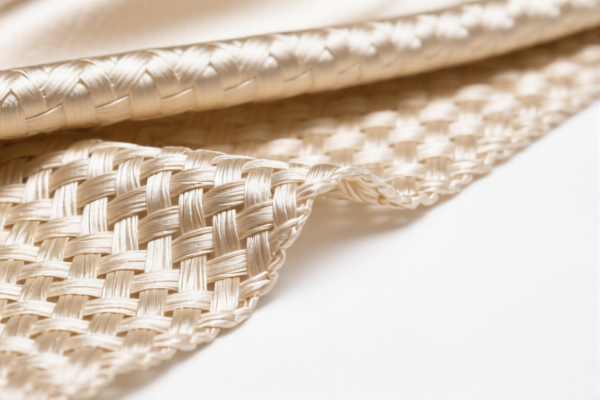
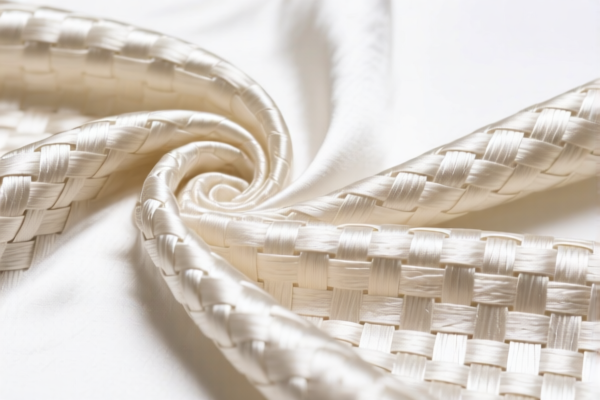
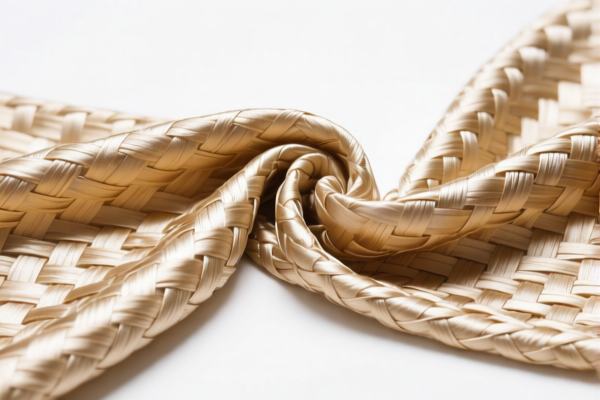
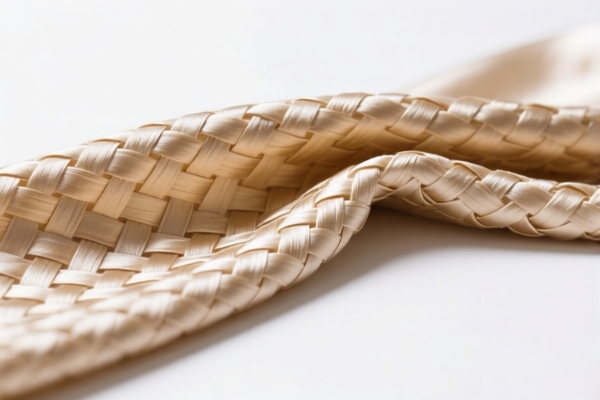
AI Analysis
🧵 Plain Woven Fabric (Plain Weave Textile Goods)
🌐 HS Code Reference & Customs Clearance Guide | 2026 Latest Tariff Analysis | Professional-Level Entry Strategy
📌 1. Product Definition & Classification: Do You Truly Understand "Plain Woven Fabric"?
"Plain Woven Fabric" is the most fundamental structure in the textile industry, characterized by the simplest interlacing pattern (over one, under one). In international trade, it is not a single HS code but a category heavily dependent on material composition (Cotton, Linen, Man-made Fibers) and weight/construction.
Misclassification is the #1 cause of customs delays and excessive duties. The critical distinction lies in the base material: * Cotton-based: Generally falls under Chapter 52. * Linen/Flax-based: Generally falls under Chapter 53. * Man-made Fiber (Synthetic/Artificial): Generally falls under Chapter 54.
⚠️ Key Distinction Point:
- If the fabric is Cotton → Look to 5208 or 5210 subheadings.
- If the fabric is Linen → Look to 5309 subheadings.
- If the fabric is Synthetic/Artificial Fiber → Look to 5407 subheadings.
- Failure to specify material often leads to customs downgrading the classification to the highest duty bracket or "Residual" categories.
📦 2. HS Code Classification Details (2026 Latest Tariff Authority Comparison)
Based on the provided data for "Plain Woven Fabric", here is the breakdown of potential HS Codes, summaries, and total tax rates.
| HS Code | Summary / Classification Logic | Total Tax Rate | Tax Detail Breakdown |
|---|---|---|---|
5309.21.30.55 |
Linen-based Plain Weave: Matches "Broadcloth" morphological characteristics; specifically Linen/Flax. | 41.9% | Base: 6.9% + Section 301: 25.0% + Section 122: 10.0% |
5309.29.30.55 |
Linen Blend: Contains Cotton & Man-made Fibers; fits Linen fabric category rules. | 35.0% | Base: 0.0% + Section 301: 25.0% + Section 122: 10.0% |
5210.31.60.20 |
Cotton Woven, Plain Weave: Direct match for "Plain" (Weave) and "Fabric" (Weight < 200g/m² usually implied in sub-chapter). | 47.2% | Base: 12.2% + Section 301: 25.0% + Section 122: 10.0% |
5208.11.40.20 |
Cotton Woven: Plain woven fabric with no material conflict (Typically Cotton < 85%, mixed with others or specific weaves). | 44.0% | Base: 9.0% + Section 301: 25.0% + Section 122: 10.0% |
5208.11.20.20 |
Cotton Woven: Fits "Plain" weave and "Fabric" features (Often heavier cotton plain weaves). | 42.0% | Base: 7.0% + Section 301: 25.0% + Section 122: 10.0% |
5407.61.99.65 |
Man-made Fiber Woven: Other uses for plain woven fabrics; fits the "Residual/Catch-all" rule for synthetics. | 49.9% | Base: 14.9% + Section 301: 25.0% + Section 122: 10.0% |
🔍 Key Insight:
- Section 301 Tariff (25%) and Section 122 Tariff (10%) are mandatory additions for Chinese-origin goods in all these categories.
- The Base Tariff varies significantly (0% to 14.9%), meaning material selection directly impacts cost before trade wars are even applied.
- 5309.29.30.55 offers the lowest total tax (35%) because its base rate is 0%, despite having the same附加税 (add-ons).
💰 3. 2026 Latest Tariff Rate Detailed Explanation (Including Additional Taxes)
✅ Applicable Country: USA (US)
✅ Country of Origin: China (CN)
✅ Effective Time: Current rates apply (Section 301 & 122 are active)
🎯 1. 5309.21.30.55 — Linen Broadcloth (Plain Weave)
| Item | Content |
|---|---|
| Base Rate | 6.9% |
| Section 301 Surcharge | +25.0% (USITC Footnote 9903.88.01) |
| Section 122 Surcharge | +10.0% (针对中国/香港产品) |
| Total Rate | 41.9% |
| Calculation | CIF Value × 41.9% |
| De Minimis Exemption | ❌ Not Eligible |
| Legal Basis Path | IEEPA:9903.01.25 → USITC:5309.21.30.55 → FOOTNOTE:9903.88.01 |
📌 Explanation:
- "Linen" goods often have moderate base duties, but the 25% + 10% surcharges make the total significant.
- Ensure the product is genuinely Flax/Linen. Misdeclaring synthetic as linen to avoid base duties is a major compliance risk.
🎯 2. 5309.29.30.55 — Linen Blend (Lowest Base Duty)
| Item | Content |
|---|---|
| Base Rate | 0.0% |
| Section 301 Surcharge | +25.0% |
| Section 122 Surcharge | +10.0% |
| Total Rate | 35.0% |
| Calculation | CIF Value × 35.0% |
| De Minimis Exemption | ❌ Not Eligible |
| Legal Basis Path | IEEPA:9903.01.24 → USITC:5309.29.30.55 |
📌 Note:
- This is the most cost-effective option in the list because the Base Rate is 0%.
- Applicable if the fabric contains Linen but is blended with other fibers (e.g., Cotton/Polyester) such that it doesn't fall under the specific "Broadcloth" definition of 5309.21.
- Strategic Tip: If your fabric can be formulated or declared as this blend, it saves 6.9% in base duty compared to pure linen broadcloth.
🎯 3. 5210.31.60.20 — Cotton Woven (Highest Base Duty in Cotton Group)
| Item | Content |
|---|---|
| Base Rate | 12.2% |
| Section 301 Surcharge | +25.0% |
| Section 122 Surcharge | +10.0% |
| Total Rate | 47.2% |
| Calculation | CIF Value × 47.2% |
| De Minimis Exemption | ❌ Not Eligible |
| Legal Basis Path | IEEPA:9903.01.25 → USITC:5210.31.60.20 |
📌 Warning:
- Cotton fabrics often face higher base duties.
- This code represents a specific weight/thickness classification for cotton plain weave.
- High Cost Alert: At 47.2%, this is one of the more expensive classifications. Verify if a lighter or heavier cotton variant falls under a different base duty (e.g., 5208 series).
🎯 4. 5407.61.99.65 — Man-Made Fiber (Highest Total Tax)
| Item | Content |
|---|---|
| Base Rate | 14.9% |
| Section 301 Surcharge | +25.0% |
| Section 122 Surcharge | +10.0% |
| Total Rate | 49.9% |
| Calculation | CIF Value × 49.9% |
| De Minimis Exemption | ❌ Not Eligible |
| Legal Basis Path | IEEPA:9903.01.25 → USITC:5407.61.99.65 |
📌 Critical:
- This is a "Residual" category for synthetic/plain weave fabrics.
- Base duty is the highest (14.9%).
- Only use this if the fabric is definitively Man-Made Fiber (Polyester, Nylon, etc.) and does not fit more specific subheadings.
🛠️ 4. Customs Clearance Practical Advice (Battle-Tested Pitfall Guide)
✅ 1. Documentation Checklist (Non-Negotiable)
| Document | Must Provide | Purpose |
|---|---|---|
| ✅ Product Specification Sheet | ✔️ | Must state: Material Composition (e.g., 100% Linen, 65% Poly/35% Cotton), Weight (GSM), Width, Weave Count. |
| ✅ Fabric Swatch / Photo | ✔️ | Visual proof of "Plain Weave" structure. |
| ✅ Third-Party Test Report | ✔️ | Fiber content analysis is critical to justify HS Code. |
| ✅ Commercial Invoice | ✔️ | Must clearly state "Plain Woven Fabric" and material. |
| ✅ Packing List | ✔️ | Details rolls, bundles, and weights. |
✅ 2. Declaration Skills (Key Mantra)
🔥 "Material First, Weave Second, Weight Third!"
| Scenario | Correct Declaration | Wrong Practice |
|---|---|---|
| 100% Cotton, Plain Weave | 5208.11.xxxx or 5210.31.xxxx (depending on weight) |
Calling it "Textile" → Vague, high audit risk |
| 100% Linen, Plain Weave | 5309.21.xxxx or 5309.29.xxxx |
Mixing up with Cotton → 52xx codes |
| Polyester, Plain Weave | 5407.61.99.65 (if residual) |
Declaring as Cotton → Fraud/Penalty |
| Linen Blend | 5309.29.30.55 |
Declaring as pure Linen 5309.21 → Higher Base Duty (6.9% vs 0%) |
✅ 3. Special Circumstances Handling
| Situation | Handling Advice |
|---|---|
| Blended Fabrics | Verify the primary material. If Linen > Cotton, Chapter 53 applies. If Cotton > Linen, Chapter 52 applies. |
| OEM Custom Fabric | Provide supplier contracts showing material specs. Avoid generic "Plain Cloth" descriptions. |
| Sample vs. Bulk | Samples often face the same tariffs. Don’t declare as "Gift" or "Sample" to avoid 0% duty; it’s still subject to Section 301/122 if from China. |
| Weight Variations | Cotton fabrics are heavily split by weight (e.g., < 200g/m² vs > 200g/m²). Ensure your GSM matches the HS code definition. |
🌍 5. Global Market Clearance Comparison (2026 Latest)
| Country/Region | Recommended HS Code (Example) | Tariff (China Origin) | Certification | Notes |
|---|---|---|---|---|
| 🇺🇸 USA | Varies by Material (see above) | 35% - 49.9% | None (but FTWUS possible if Vietnam/Mexico) | High Tariffs due to Sec 301/122. |
| 🇨🇳 China | Same HS Codes | 5% - 12% | N/A | Import into China is cheaper; export to US is expensive. |
| 🇪🇺 EU | Varies (e.g., 5208, 5309) | 0% - 12% | REACH (Chemical Compliance) | No Section 301/122. Lower base duties for some textiles. |
| 🇬🇧 UK | Varies | 0% - 12% | UKCA | Post-Brexit rules apply, but generally no China-specific war tariffs. |
| 🇦🇺 Australia | Varies | 5% | N/A | No major additional surcharges for China. |
📌 Conclusion:
- USA is the most hostile market for Chinese textiles due to the 25% + 10% layered tariffs.
- EU/UK/Australia are significantly cheaper for clearance, but require strict chemical compliance (REACH).
- If exporting to the US, consider supply chain diversification (e.g., sourcing from Vietnam or Turkey) to avoid US-specific surcharges.
📌 6. Common Errors & Pitfall Guide (Lessons from Blood & Tears)
❌ Error 1: Declaring "Cotton" when it is "Poly-Cotton Blend"
👉 Consequence: Misclassification → Penalty + Back Duties (Base rate difference + Surcharge disputes).
❌ Error 2: Ignoring Section 122 Tariff (10%) in cost calculation
👉 Consequence: Profit margin erosion. Many suppliers only factor in Base + Sec 301. Total is always Base + 25% + 10%.
❌ Error 3: Using "Fabric" as the only product name
👉 Consequence: Customs may assign the highest residual code (5407.61.99.65 at 49.9%) if material is unclear.
❌ Error 4: Misidentifying Linen vs. Ramie or Flax
👉 Consequence: Chapter 53 applies to Flax/Linen. Ramie is also 5309 but might have different nuances. Linen is strictly Flax.
✅ Correct Practice:
"Plain Woven Fabric, 100% Linen, 120 GSM, 150cm Width, No Dyeing"
HS: 5309.21.30.55 | Rate: 41.9%
🎯 7. Conclusion: Professional Declaration, Cost Optimization!
🎯 Remember the Mantra:
🔹 "Material Dictates Chapter, Weave Dictates Heading, Weight Dictates Subheading."
🔹 "USA Tariff = Base + 25% + 10%. Do not forget the 10% Sec 122!"
🔹 "Linen Blends (5309.29) can be cheaper than Pure Linen (5309.21) due to 0% Base Duty."
📌 Pro Tip:
If your fabric is Cotton-based, compare 5208.11.20.20 (42.0%) vs 5210.31.60.20 (47.2%). A slight change in weight or thread count might shift you to the lower bracket.
For Linen, 5309.29.30.55 (35.0%) is the sweet spot if composition allows.
📣 Immediate Action:
📞 Contact a licensed Customs Broker + Provide Fiber Content Report + Apply for HTS Code Ruling if volume is high.
🚀 Optimize your fabric composition and declaration to minimize Base Duty within legal limits.
✨ Professional Clearance Starts with Precise Classification!
💼 Every Percentage Point Saved is Pure Profit!
Customer Reviews
About HS Code Classification
The Harmonized System (HS) is an internationally standardized nomenclature developed by the World Customs Organization (WCO) to classify traded products. Over 200 countries use the HS system as the basis for customs tariffs, trade statistics, and import/export regulations.
Each HS code follows a hierarchical structure:
- Chapter (2 digits) — Broad category of goods (e.g., Chapter 84: Machinery and Mechanical Appliances)
- Heading (4 digits) — More specific grouping within the chapter
- Subheading (6 digits) — Internationally standardized breakdown, used by all WCO member countries
- National subdivisions (8-10 digits) — Country-specific extensions for further classification, such as US HTSUS 10-digit codes
Correct HS code classification is essential for smooth customs clearance, accurate duty payment, and compliance with trade regulations. Misclassification can lead to customs delays, overpayment of duties, or penalties.
When importing from CN to US, the applicable tariff rates may include:
- Most-Favored-Nation (MFN) rate — The standard duty rate applied to WTO members
- General rate — Applied to countries without trade agreements
- Trade remedy duties — Additional tariffs such as Section 301 (anti-dumping), Section 232 (national security), or countervailing duties
The information provided on this page is for reference purposes only. For official classification, please consult with your local customs authority or a licensed customs broker.