plant fiber woven carpet kitchen
CN → US| HS Code | Tariff Rate | Origin | Destination | Doc |
|---|---|---|---|---|
| 4602198000 | 37.3% | CN | US | Official Doc |
| 5705002090 | 38.3% | CN | US | Official Doc |
| 5705001000 | 35.0% | CN | US | Official Doc |
| 4602191800 | 39.5% | CN | US | Official Doc |
| 4601298000 | 35.0% | CN | US | Official Doc |
Product Images
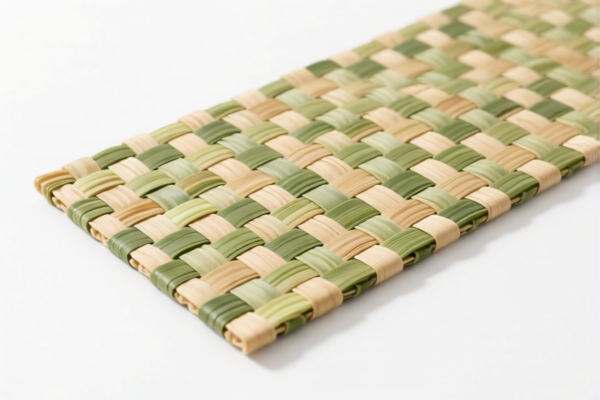
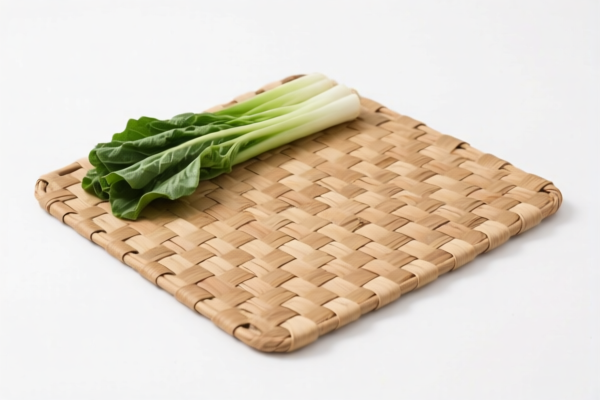
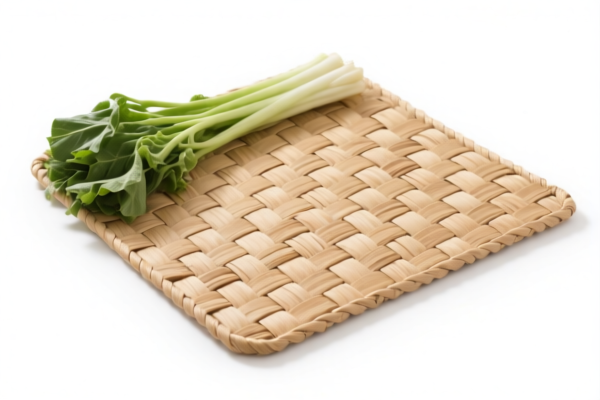
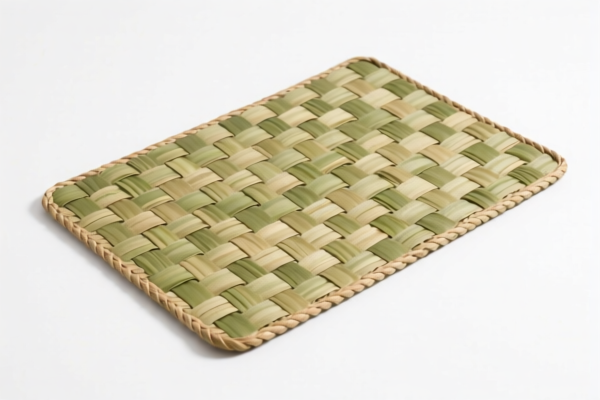
AI Analysis
🧺 Plant Fiber Woven Carpet / Kitchen Mat (Natural Fiber Floor Coverings)
🌐 HS Code Reference & Customs Clearance Guide | 2026 Latest Tariff Analysis | Professional Entry Strategies
📌 I. Product Definition & Classification: Do You Really Understand "Plant Fiber Carpets"?
A plant fiber woven carpet (often used as a kitchen mat, doormat, or general floor covering) is defined by its material composition (natural vegetable fibers like sisal, jute, coir, seagrass) and its manufacturing process (woven). In international trade, classification hinges on whether it is categorized as a "Woven Fabric/Textile Art" (Chapter 46) or a "Carpets & Floor Coverings" (Chapter 57).
Key Distinction Points: * Chapter 46 (Weaving of Materials): Applied if the item is viewed primarily as a craft/woven article from plant materials, often used for mats, rugs, or decorative floor coverings that don't strictly meet the "carpet" definition of tufted/knotted pile. * Chapter 57 (Carpets & Textile Floor Coverings): Applied if the item is classified strictly as a "carpet" or "textile floor covering" intended for heavy foot traffic (like a kitchen runner), regardless of whether it is woven or knotted.
⚠️ Critical Classification Trap:
- If it is a woven mat made of vegetable plaiting/materials → Likely Chapter 46 (e.g., 4602.19, 4601.29).
- If it is a woven carpet intended as a standard floor covering → Likely Chapter 57 (e.g., 5705.00).
- Note: Even if woven, customs often push woven natural fiber rugs into 5705.00 ("Other Carpets and Other Textile Floor Coverings") because they function as floor coverings, not just woven articles.
📦 II. HS Code Classification Details (2026 Latest Tariff Data)
Based on the provided data, here are the five specific HS Codes applicable to plant fiber woven carpets/mats, along with their tax implications.
| HS Code | Product Description | Applicable Scenario | Total Tax Rate (US/China Origin) |
|---|---|---|---|
4602.19.80.00 |
Woven articles of vegetable plaiting materials; other | Woven plant fiber carpet viewed as a generic "woven article" (fallback category) | 39.5% |
4602.19.18.00 |
Woven articles of vegetable plaiting materials; other | Woven plant fiber carpet as a generic woven product (兜底 classification) | 39.5% |
5705.00.20.90 |
Other carpets and other textile floor coverings | Woven plant fiber carpet classified as a general "other carpet/floor covering" | 38.3% |
4601.29.80.00 |
Woven floor coverings of vegetable materials; other | Woven plant fiber mat (floor cover) classified under woven mats | 35.0% |
5705.00.10.00 |
Other carpets and other textile floor coverings | Woven plant fiber carpet classified as a standard "carpet" (lowest base duty) | 35.0% |
🔍 Key Insight:
- The lowest total tax rate is 35.0%. This is achieved under either4601.29.80.00(Woven Floor Coverings/Mats) or5705.00.10.00(Other Carpets).
- The highest total tax rate is 39.5%. This occurs when classified as a general woven article under4602.19.80.00or4602.19.18.00.
- Why the difference? Base tariffs vary (0% vs 4.5%). All items face 25% Section 301 Tariff + 10% Section 122 Tariff (or similar IEEPA surcharge).
- Base Tariffs:
-5705.00.10.00: Base 0.0% → Total 35.0%
-4601.29.80.00: Base 0.0% → Total 35.0%
-5705.00.20.90: Base 3.3% → Total 38.3%
-4602.19.80.00: Base 2.3% → Total 39.5%
-4602.19.18.00: Base 4.5% → Total 39.5%
💰 III. 2026 Latest Tariff Rate Breakdown (Including Additional Taxes)
✅ Applicable Country: United States (US)
✅ Origin: China (CN)
✅ Effective Date: From November 10, 2025 onwards (including subsequent imports)
🎯 1. 5705.00.10.00 & 4601.29.80.00 —— Lowest Tax Tier (35.0%)
| Item | Content |
|---|---|
| Base Duty | 0.0% (ad valorem) |
| Section 301 Tariff | +25.0% (USITC Footnote 9903.88.01) |
| Section 122/IEEPA Tariff | +10.0% (Against Chinese/HK products) |
| Total Tax Rate | 35.0% |
| Tax Calculation | CIF Value × 35% |
| De Minimis Exemption? | ❌ No (denied_de_minimis) |
| Legal Path | Section 301: 9903.88.01 → Section 122/IEEPA: 9903.01.25 → HS Code |
📌 Explanation:
- These two HS codes offer the most favorable tax burden.
-5705.00.10.00classifies it as a generic "carpet/floor covering" with zero base duty.
-4601.29.80.00classifies it as a "woven floor covering/mat" with zero base duty.
- Recommendation: Aim for one of these two codes if the product can be reasonably described as a "floor mat" or "carpet."
🎯 2. 5705.00.20.90 —— Medium Tax Tier (38.3%)
| Item | Content |
|---|---|
| Base Duty | 3.3% (ad valorem) |
| Section 301 Tariff | +25.0% |
| Section 122/IEEPA Tariff | +10.0% |
| Total Tax Rate | 38.3% |
| Tax Calculation | CIF Value × 38.3% |
| De Minimis Exemption? | ❌ No |
| Legal Path | Section 301 + Section 122 + HS 5705.00.20.90 |
📌 Note:
- This code is used when the product is classified as "Other Carpets" but doesn't fit the specific "0% base" subheading5705.00.10.00.
- The 3.3% base duty adds significantly to the final cost.
🎯 3. 4602.19.80.00 & 4602.19.18.00 —— Highest Tax Tier (39.5%)
| Item | Content |
|---|---|
| Base Duty | 2.3% (for .80) / 4.5% (for .18) |
| Section 301 Tariff | +25.0% |
| Section 122/IEEPA Tariff | +10.0% |
| Total Tax Rate | 39.5% |
| Tax Calculation | CIF Value × 39.5% |
| De Minimis Exemption? | ❌ No |
| Legal Path | Section 301 + Section 122 + HS 4602.19 |
📌 Note:
- These codes classify the item as a "Woven Article of Vegetable Materials" rather than a "Carpet."
- Customs may apply these if the product is more like a decorative woven piece than a functional floor covering.
- Avoid if possible, as the base duty is higher, leading to the maximum tax burden.
🛠️ IV. Customs Clearance Practical Advice (Battle-Tested Pitfall Guide)
✅ 1. Required Documentation Checklist (Must-Haves)
| Document | Mandatory? | Description |
|---|---|---|
| ✅ Product Specification Sheet | ✔️ | Include material (e.g., "100% Sisal"), weave type, dimensions, weight. |
| ✅ Product Photos | ✔️ | Clear images of the top, bottom, and edges. Show it's a floor covering/mat. |
| ✅ Commercial Invoice | ✔️ | Clearly state "Plant Fiber Woven Carpet" or "Woven Floor Mat." |
| ✅ Packing List | ✔️ | Detail quantity, gross weight, net weight. |
| ✅ Certificate of Origin | ✔️ | Required for determining country of origin (China = high tariff). |
| ✅ Material Declaration | ✔️ | Confirm it contains no synthetic fibers (like polypropylene) which might change the HS code. |
✅ 2. Declaration Strategy (Key Mantras)
🔥 "Describe as Floor Covering, Not Woven Craft; Aim for 0% Base Duty!"
| Scenario | Correct Declaration | Incorrect Declaration |
|---|---|---|
| Kitchen Mat (Woven) | 4601.29.80.00 or 5705.00.10.00 ("Woven Floor Mat" / "Carpet") |
"Woven Decorative Basket" → 4602.19 → 39.5% |
| Sisal Rug | 5705.00.10.00 ("Other Carpet") |
"Rope Mat" → 4602.19 → 39.5% |
| Jute Runner | 4601.29.80.00 ("Woven Floor Covering") |
"Textile Article" → 4602.19 → 39.5% |
📌 Crucial Tip:
- Use terms like "Floor Mat," "Floor Covering," or "Carpet" in your invoice description.
- Avoid terms like "Woven Basket," "Decorative Weave," or "Craft Item" unless it truly is one, as these trigger the higher-duty4602.19codes.
- If the product is primarily for kitchen use, emphasizing "Floor Mat" (4601.29) is a strong strategy to hit the 0% base duty.
✅ 3. Special Cases Handling
| Scenario | Handling Advice |
|---|---|
| Mixed Materials (e.g., Cotton Border) | If <50% plant fiber, it may not qualify for Chapter 46. Check if it falls under textile carpets (Chapter 57). |
| Backed with Rubber | If it has a non-textile backing (e.g., rubber) to prevent slipping, it is still classified as a floor covering. Ensure the description highlights "Woven Floor Mat." |
| Customs Scrutiny | Provide a clear photo showing the woven texture and flat structure (no pile/tufts) to distinguish from traditional tufted carpets. |
🌍 V. Global Market Comparison (2026 Latest)
| Country/Region | Recommended HS Code | Tariff Rate (China Origin) | Certification | Notes |
|---|---|---|---|---|
| 🇺🇸 USA | 5705.00.10.00 / 4601.29.80.00 |
35.0% | No special certs | High tariffs apply (301 + 122). Avoid 4602.19 (39.5%). |
| 🇨🇳 China | 5705.00.10.00 |
5% - 10% | N/A | Domestic trade low tariff. |
| 🇪🇺 EU | 5703.10 / 4601.21 |
0% - 2.5% | CE (if applicable) | No Section 301 tariffs. |
| 🇬🇧 UK | 5705.00 |
0% - 5% | UKCA | Post-Brexit rules apply. |
📌 Conclusion:
- USA is the only major market with punitive additional tariffs (35% total).
- Strategy for US Market: Always aim for5705.00.10.00or4601.29.80.00to minimize the 0% base duty.
- Avoid4602.19codes unless necessary, as they add 2-4.5% more to the total cost.
📌 VI. Common Mistakes & Pitfalls (Lessons Learned)
❌ Mistake 1: Declaring as "Woven Basket" or "Decorative Weave"
👉 Consequence: HS Code 4602.19 → 39.5% Tax instead of 35%.
👉 Result: Unnecessary cost increase of 4.5%.
❌ Mistake 2: Using "Rug" or "Carpet" without specifying "Woven"
👉 Consequence: Customs may misclassify as tufted carpet (higher base duty).
👉 Result: Delays for classification review.
❌ Mistake 3: Not disclosing Material Composition
👉 Consequence: If synthetic fibers are found, the HS code changes completely (e.g., to 5703/5704), leading to misdeclaration penalties.
👉 Result: Fines + Back Taxes.
✅ Correct Approach:
"Plant Fiber Woven Kitchen Mat, Sisal, 24x36 inch, No Pile, Non-Slip Backing Optional"
🎯 VII. Conclusion: Professional Declaration, Cost Optimization!
🎯 Remember the Mantra:
🔹 "Floor Mat or Carpet, Aim for 0% Base; Avoid Woven Craft Codes, Save 4.5%!"
🔹 "301 + 122 = 35% Total; Base Duty Makes the Difference!"
📌 Tip:
If your product is exclusively woven vegetable fiber and used as a floor mat, strongly consider declaring under 4601.29.80.00 or 5705.00.10.00 to achieve the 35.0% total rate.
Always include high-resolution photos showing the woven texture to support your declaration.
📣 Immediate Action:
📞 Consult a licensed customs broker for Pre-Ruling if you are unsure.
🚀 Optimize your supply chain by declaring correctly from the start.
✨ Professional Clearance, Starting with Accurate Classification!
💼 Every Percent Counts in Your Profit Margin!
Customer Reviews
About HS Code Classification
The Harmonized System (HS) is an internationally standardized nomenclature developed by the World Customs Organization (WCO) to classify traded products. Over 200 countries use the HS system as the basis for customs tariffs, trade statistics, and import/export regulations.
Each HS code follows a hierarchical structure:
- Chapter (2 digits) — Broad category of goods (e.g., Chapter 84: Machinery and Mechanical Appliances)
- Heading (4 digits) — More specific grouping within the chapter
- Subheading (6 digits) — Internationally standardized breakdown, used by all WCO member countries
- National subdivisions (8-10 digits) — Country-specific extensions for further classification, such as US HTSUS 10-digit codes
Correct HS code classification is essential for smooth customs clearance, accurate duty payment, and compliance with trade regulations. Misclassification can lead to customs delays, overpayment of duties, or penalties.
When importing from CN to US, the applicable tariff rates may include:
- Most-Favored-Nation (MFN) rate — The standard duty rate applied to WTO members
- General rate — Applied to countries without trade agreements
- Trade remedy duties — Additional tariffs such as Section 301 (anti-dumping), Section 232 (national security), or countervailing duties
The information provided on this page is for reference purposes only. For official classification, please consult with your local customs authority or a licensed customs broker.