plant pot
CN → US| HS Code | Tariff Rate | Origin | Destination | Doc |
|---|---|---|---|---|
| 6912004810 | 19.8% | CN | US | Official Doc |
| 6912005000 | 16.0% | CN | US | Official Doc |
| 3924104000 | 13.4% | CN | US | Official Doc |
| 3924905650 | 20.9% | CN | US | Official Doc |
| 6914108000 | 44.0% | CN | US | Official Doc |
Product Images
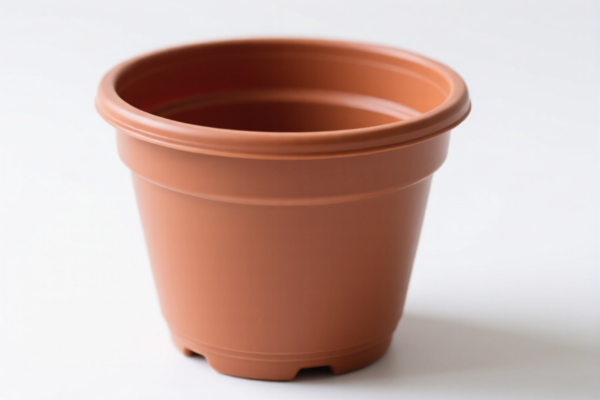
AI Analysis
🌱 Plant Pot (Flower Pots, Hanging Baskets, & Ceramic/Plastic Planters)
🌐 HS Code Classification & US Import Strategy | 2026 Tax Guide | Avoid 44% Pitfalls!
📌 一、Product Definition: Are You Sure What You're Shipping?
Plant pots are categorized globally, but in the US market, the distinction between Ceramic, Non-Porcelain Ceramic, and Plastic drastically changes your tax burden (from 13.4% to 44%!).
1. Ceramic Pots (True Pottery): Fired clay, often glazed.
2. Non-Porcelain Ceramic (Stone/Glass/Other Minerals): Not true "china" or "pottery" in the strict sense.
3. Plastic/Resin Pots: Polyethylene, polypropylene, or composite materials.
⚠️ Critical Classification Pitfall:
- Ceramic vs. Non-Ceramic: If your pot looks like ceramic but is made of stone or glass, it falls under a different, often higher tax bracket.
- Material Matters: Plastic pots have a "catch-all" category that can trigger 25% anti-dumping duties if misclassified.
📦 二、HS Code Classification Matrix (US Customs & Border Protection)
| HS Code | Product Description | Material | Total Tax Rate | Key Components |
|---|---|---|---|---|
| 6912.00.48.10 | Ceramic Flower Pot (True Ceramic) | Ceramic | 19.8% | Base (9.8%) + 122 Sec (10%) |
| 6912.00.50.00 | Non-Porcelain Ceramic Pot | Stone/Glass/Other | 16.0% | Base (6.0%) + 122 Sec (10%) |
| 3924.10.40.00 | Plastic Household Items (General/Unspecified) | Plastic/Resin | 13.4% | Base (3.4%) + 122 Sec (10%) |
| 3924.90.56.50 | Plastic Flower Pot (Specific "Other") | Plastic/Resin | 20.9% | Base (3.4%) + Anti-Dump (7.5%) + 122 Sec (10%) |
| 6914.10.80.00 | Explicitly Ceramic Pots (Special Category) | Ceramic | 44.0% | Base (9.0%) + Anti-Dump (25.0%) + 122 Sec (10%) |
🔍 Key Insight:
- HS Code6914.10.80.00is a Trap! Despite being "Ceramic," it carries a massive 25% anti-dumping duty (Section 301/122 context), bringing the total to 44%.
- Plastic Pits: Most plastic pots fall under 3924.10.40.00 (13.4%), BUT if classified as "Other Plastic Household Items" (3924.90.56.50), you face an extra 7.5% surcharge.
💰 三、2026 US Tax Rate Breakdown & Policy Details
✅ Applicable Market: USA (US)
✅ Origin: China (CN)
✅ Effective Date: 2025/2026 Import Regulations
🎯 1. 6912.00.48.10 – The "Safe" Ceramic Option (19.8%)
| Item | Detail |
|---|---|
| Base Duty | 9.8% (Standard MFN) |
| Section 122 Duty | 10% (Additional tariff on specific goods) |
| Additional Tariff | 0.0% |
| Total Rate | 19.8% |
| Tax Calculation | CIF Value × 19.8% |
| De Minimis? | ❌ No (Commercial shipment) |
📌 Explanation:
This is the standard classification for genuine ceramic flower pots. It includes the standard "Base Tariff" and the "122 Section Tariff" (10%), but avoids the punitive 25% anti-dumping surcharge.
🎯 2. 6912.00.50.00 – Non-Porcelain Ceramic (16.0%)
| Item | Detail |
|---|---|
| Base Duty | 6.0% |
| Section 122 Duty | 10% |
| Additional Tariff | 0.0% |
| Total Rate | 16.0% |
| Tax Calculation | CIF Value × 16.0% |
📌 Explanation:
For pots made of materials like stone, glass, or mixed minerals that are not "true" ceramic. Lower base rate, but still subject to the 10% 122 Section tariff.
🎯 3. 3924.10.40.00 – General Plastic Household Items (13.4%)
| Item | Detail |
|---|---|
| Base Duty | 3.4% |
| Section 122 Duty | 10% |
| Additional Tariff | 0.0% |
| Total Rate | 13.4% |
| Tax Calculation | CIF Value × 13.4% |
📌 Explanation:
This is the lowest tax bracket for plastic pots. Applies to general plastic household items where the specific type is not listed elsewhere.
🎯 4. 3924.90.56.50 – The "Trap" Plastic Pot (20.9%)
| Item | Detail |
|---|---|
| Base Duty | 3.4% |
| Section 122 Duty | 10% |
| Additional Tariff | 7.5% (Anti-Dumping/Countervailing) |
| Total Rate | 20.9% |
| Tax Calculation | CIF Value × 20.9% |
📌 Explanation:
⚠️ WARNING: If your plastic pot is specifically identified as "Other Plastic Household Items" in this subheading, an extra 7.5% penalty is added. This is often triggered by specific product descriptions or lack of generic classification.
🎯 5. 6914.10.80.00 – The "High Risk" Ceramic Category (44.0%)
| Item | Detail |
|---|---|
| Base Duty | 9.0% |
| Section 122 Duty | 10% |
| Additional Tariff | 25.0% (Severe Anti-Dumping) |
| Total Rate | 44.0% |
| Tax Calculation | CIF Value × 44.0% |
📌 Explanation:
🚨 DANGER ZONE: This code applies to specific "Explicitly Ceramic Pots" listed under a restrictive clause. The 25% surcharge makes this the most expensive category. Avoid this classification unless legally required.
🛠️ 四、Customs Clearance Strategy & Practical Advice
✅ 1. Pre-Shipment Material Verification
Before shipping, you must know the exact material composition.
| Material | Recommended HS Code | Tax Risk | Action |
|:---|:---|:---|:---|
| True Ceramic | 6912.00.48.10 | Medium | ✅ Preferred |
| Non-Ceramic (Stone/Glass) | 6912.00.50.00 | Low | ✅ Safe |
| General Plastic | 3924.10.40.00 | Lowest | ✅ Best |
| Specific Plastic Pot | 3924.90.56.50 | High | ⚠️ Avoid |
| Special Ceramic | 6914.10.80.00 | Extremely High | ❌ AVOID |
✅ 2. Declaring Strategy (The "Golden Rules")
| Situation | Correct Declaration | Wrong Declaration | Consequence |
|---|---|---|---|
| Ceramic Pots | "Ceramic Flower Pot" → 6912.00.48.10 |
"Pottery" → 6914.10.80.00 |
Tax jumps to 44% |
| Plastic Pots | "Plastic Plant Pot" → 3924.10.40.00 |
"Other Plastic Items" → 3924.90.56.50 |
Tax jumps to 20.9% |
| Mixed Materials | Specify "Resin/Ceramic Hybrid" | Vague "Garden Item" | Customs Seizure |
🔥 Mnemonic:
"Ceramic 48 is King, 14 is the King of Pain!"
"Plastic 10 is Gold, 90 is the Cost!"
✅ 3. Documentation Checklist
| Document | Requirement | Why? |
|---|---|---|
| Material Spec Sheet | ✔️ Must state "Ceramic," "Plastic," or "Resin" | To avoid 6914 trap |
| Product Photos | ✔️ Show glaze, texture, and material | To prove "True Ceramic" vs "Stone" |
| Composition Report | ✔️ Lab test for clay vs. resin content | Critical for 6912 vs 3924 |
| Commercial Invoice | ✔️ Use exact HS Code in description | Prevents "Misdeclaration" penalties |
✅ 4. Special Scenarios
| Scenario | Recommendation |
|---|---|
| OEM Pots (Custom Mold) | Ensure mold is not classified under "Special Ceramic" (6914). |
| Decorative Pots (No Drain Hole) | Still 6912 if ceramic; verify plastic type to avoid 3924.90. |
| Set with Stand + Pot | Declare separately: Pot (6912/3924) + Stand (if different material). |
| Gift Sets (Pot + Soil) | Soil often triggers separate classification; keep values separate. |
🌍 五、Global Market Comparison (2026)
| Market | Recommended HS Code | Est. Tax (China Origin) | Notes |
|---|---|---|---|
| 🇺🇸 USA | 6912.00.48.10 / 3924.10.40.00 |
13.4% – 19.8% | Avoid 6914.10.80.00 (44%) |
| 🇪🇺 EU | 6913.90.00 / 3924.10.00 |
0% – 6% | Lower tariffs, but strict CE/RoHS |
| 🇨🇦 Canada | 6912.00.40 / 3924.10.40 |
5% – 10% | Generally safer than US |
| 🇦🇺 Australia | 6912.00 / 3924.10 |
5% – 8% | Low risk, but check anti-dumping |
📌 Conclusion:
The US is the only market with a 44% tariff trap for certain ceramic pots.
Strategy: Always aim for6912.00.48.10(Ceramic) or3924.10.40.00(Plastic) to stay safe.
📌 六、Common Mistakes & Avoidance (Lessons Learned)
❌ Mistake 1: Labeling "Ceramic" but using 6914.10.80.00.
👉 Result: Paying 44% instead of 19.8%.
👉 Fix: Verify "True Ceramic" definition in Chapter 69 Note 1.
❌ Mistake 2: Calling a plastic pot "Ceramic" to save tax.
👉 Result: Customs inspection reveals plastic → Fraud Penalty + 25% surcharge.
👉 Fix: Be honest; use 3924.10.40.00.
❌ Mistake 3: Using "Flower Pot" without specifying material.
👉 Result: Customs classifies to 6914 by default (highest risk).
👉 Fix: Explicitly state "Ceramic" or "Plastic" in the Invoice.
🎯 七、Final Verdict: Smart Shipping, Lower Tax!
🎯 Key Takeaway:
🌱 Ceramic Pots: Target
6912.00.48.10(19.8%). Avoid6914(44%)!
🌱 Plastic Pots: Target3924.10.40.00(13.4%). Avoid3924.90.56.50(20.9%)!💡 Pro Tip:
If your product is resin but looks like ceramic, declare as3924.10.40.00to save 25% tax.
Do not let "looks like ceramic" fool you into the 44% bracket!
📣 Action Plan:
📞 Contact your Customs Broker with a material breakdown.
📄 Update your Invoice to include the specific HS Code and material description.
🚀 Verify the Bill of Lading before loading to prevent re-classification penalties.
✨ Precision in Classification = Profit in Your Pocket!
💼 Don't let a wrong HS Code cost you 44% of your value!
Customer Reviews
About HS Code Classification
The Harmonized System (HS) is an internationally standardized nomenclature developed by the World Customs Organization (WCO) to classify traded products. Over 200 countries use the HS system as the basis for customs tariffs, trade statistics, and import/export regulations.
Each HS code follows a hierarchical structure:
- Chapter (2 digits) — Broad category of goods (e.g., Chapter 84: Machinery and Mechanical Appliances)
- Heading (4 digits) — More specific grouping within the chapter
- Subheading (6 digits) — Internationally standardized breakdown, used by all WCO member countries
- National subdivisions (8-10 digits) — Country-specific extensions for further classification, such as US HTSUS 10-digit codes
Correct HS code classification is essential for smooth customs clearance, accurate duty payment, and compliance with trade regulations. Misclassification can lead to customs delays, overpayment of duties, or penalties.
When importing from CN to US, the applicable tariff rates may include:
- Most-Favored-Nation (MFN) rate — The standard duty rate applied to WTO members
- General rate — Applied to countries without trade agreements
- Trade remedy duties — Additional tariffs such as Section 301 (anti-dumping), Section 232 (national security), or countervailing duties
The information provided on this page is for reference purposes only. For official classification, please consult with your local customs authority or a licensed customs broker.