plant watering balls
CN → US| HS Code | Tariff Rate | Origin | Destination | Doc |
|---|---|---|---|---|
| 6913905000 | 23.5% | CN | US | Official Doc |
| 6911900050 | 22.9% | CN | US | Official Doc |
| 6914108000 | 44.0% | CN | US | Official Doc |
| 6914908000 | 40.6% | CN | US | Official Doc |
| 6913105000 | 17.5% | CN | US | Official Doc |
| 6911108090 | 38.3% | CN | US | Official Doc |
Product Images
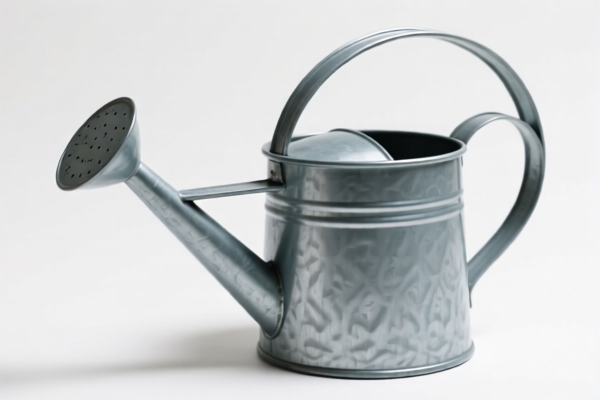
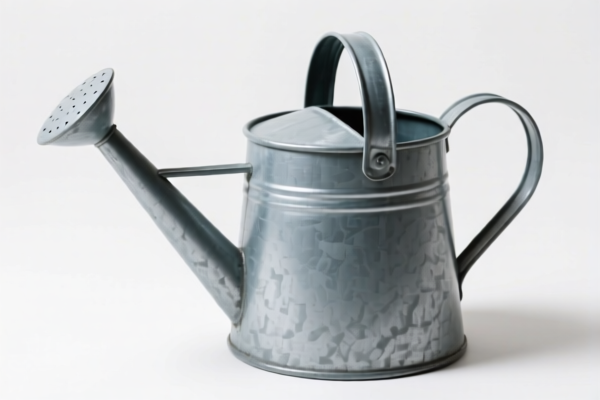
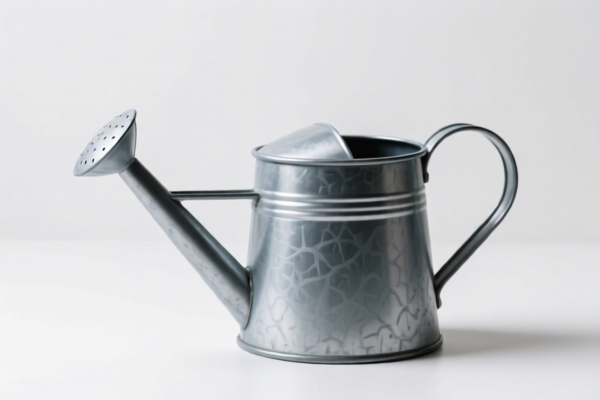
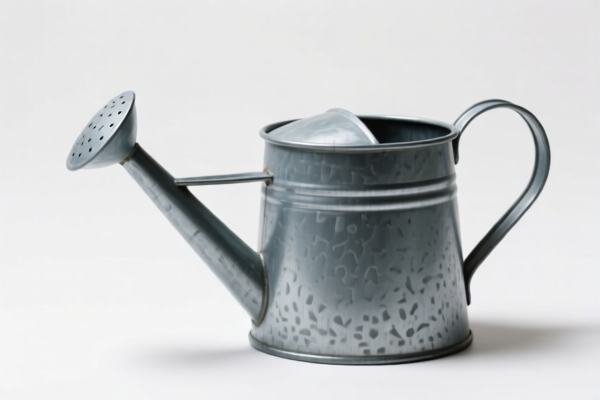
AI Analysis
🌱 Plant Watering Balls (Automatic Drip Irrigation Spikes)
🌐 HS Code Reference & Customs Clearance Guide | 2026 Latest Tariff Analysis | Professional Import Strategy 📌 1. Product Definition & Classification: Do You Really Know What "Plant Watering Balls" Are?
Plant watering balls (also known as drip irrigation spikes, aqua globes, or porous clay irrigation devices) are passive irrigation tools used to maintain soil moisture for houseplants, gardens, and outdoor landscapes. They function by allowing water to seep through porous ceramic or plastic materials into the surrounding soil at a controlled rate.
In international trade, they are broadly categorized based on material and intended use: * Ceramic/Porcelain Types: Often used as decorative home accents or high-end gardening tools. * Plastic/Polymer Types: Used for bulk agricultural or general household gardening.
⚠️ Key Classification Point: * If made of ceramic and intended for decoration or general household use → Classified under Chapter 69 (Ceramic Products). * If made of ceramic but strictly for agricultural purposes (e.g., large-scale drip irrigation systems) → May fall under Chapter 84 (Machinery for Agriculture), but most small-scale "balls" remain in Chapter 69 due to their simple, non-mechanical nature. * Crucial Distinction: The specific HS code depends heavily on whether the item is classified as "ornamental," "household," or "general ceramic article."
📦 2. HS Code Classification Details (Based on Provided Data)
The following HS codes are derived from the provided dataset, specifically for Ceramic Material plant watering balls. The classification varies by the specific description and tariff treatment.
| HS Code | Summary / Description | Total Tax Rate | Tax Detail Breakdown |
|---|---|---|---|
| 6913.90.50.00 | Ceramic material, classified as ornamental ceramic articles | 23.5% | Base: 6.0% + Add'l: 7.5% + Sec 301: 10% + 122-Section: 10% |
| 6911.90.00.50 | Ceramic material, classified as other ceramic tableware/household articles | 22.9% | Base: 5.4% + Add'l: 7.5% + Sec 301: 10% + 122-Section: 10% |
| 6914.10.80.00 | Ceramic material, classified as other ceramic articles | 44.0% | Base: 9.0% + Add'l: 25.0% + Sec 301: 10% + 122-Section: 10% |
| 6914.90.80.00 | Ceramic material, classified as other ceramic articles not specified elsewhere | 40.6% | Base: 5.6% + Add'l: 25.0% + Sec 301: 10% + 122-Section: 10% |
| 6913.10.50.00 | Ceramic material, classified as ornamental ceramic articles | 17.5% | Base: 0.0% + Add'l: 7.5% + Sec 301: 10% + 122-Section: 10% |
| 6911.10.80.90 | Ceramic material, classified as other household articles | 38.3% | Base: 20.8% + Add'l: 7.5% + Sec 301: 10% + 122-Section: 10% |
🔍 Note on Tax Structure: All rates include: 1. Base Duty: Varies by specific subheading (0%–20.8%). 2. Additional Duty: Likely related to Section 301 or retaliatory tariffs (7.5% or 25.0%). 3. Section 301 Tariff: Consistently 10% (unless specified otherwise in specific trade agreements, but data shows 10% for all). 4. 122-Section Tariff: Consistently 10% (likely referencing specific US trade action or retaliatory measure).
💰 3. Tariff Rate Detailed Explanation (2026 Latest)
✅ Applicable Country: United States (US)
✅ Origin: China (CN) (Implied by "Section 301" and "122-Section" structure)
✅ Material: Ceramic
🎯 1. 6913.90.50.00 – Ornamental Ceramic Articles (Mid-Range Tariff)
- Total Rate: 23.5%
- Breakdown:
- Base: 6.0%
- Additional: 7.5%
- Sec 301: 10%
- 122-Section: 10%
- Analysis: This is a moderate-cost classification. It applies if the watering ball is marketed primarily as a decorative item (e.g., glazed, colorful, garden ornament style).
🎯 2. 6911.90.00.50 – Other Ceramic Household Articles (Lowest Base)
- Total Rate: 22.9%
- Breakdown:
- Base: 5.4%
- Additional: 7.5%
- Sec 301: 10%
- 122-Section: 10%
- Analysis: This is the lowest total tax rate in the dataset. It applies if the product is classified as a household ceramic item (e.g., similar to vases, planters, or kitchen-related ceramics). Recommendation: If the product can be described as "household ceramic," this is the most cost-effective code.
🎯 3. 6914.10.80.00 – Other Ceramic Articles (Highest Tariff)
- Total Rate: 44.0%
- Breakdown:
- Base: 9.0%
- Additional: 25.0%
- Sec 301: 10%
- 122-Section: 10%
- Analysis: This is the highest tax bracket. The "Additional 25%" suggests a more punitive tariff category, possibly for "other ceramic articles" not specifically classified as ornamental or household. Avoid this code if possible.
🎯 4. 6914.90.80.00 – Other Ceramic Articles, Not Elsewhere Specified
- Total Rate: 40.6%
- Breakdown:
- Base: 5.6%
- Additional: 25.0%
- Sec 301: 10%
- 122-Section: 10%
- Analysis: Similar to above, the 25% Additional Duty drives the cost up. Use only if the product doesn't fit ornamental or household categories.
🎯 5. 6913.10.50.00 – Ornamental Ceramic Articles (Zero Base)
- Total Rate: 17.5%
- Breakdown:
- Base: 0.0%
- Additional: 7.5%
- Sec 301: 10%
- 122-Section: 10%
- Analysis: This is the MOST COST-EFFECTIVE classification. With a 0% base duty, the total tax is only 17.5%. This applies if the item is strictly classified as "ornamental" and qualifies for the 0% base rate. Strong Recommendation: Argue for this classification if the product is decorative.
🎯 6. 6911.10.80.90 – Other Household Ceramic Articles (High Base)
- Total Rate: 38.3%
- Breakdown:
- Base: 20.8%
- Additional: 7.5%
- Sec 301: 10%
- 122-Section: 10%
- Analysis: Despite being a "household" code, the 20.8% Base Duty makes it expensive. Avoid unless no other option is available.
🛠️ 4. Customs Clearance Practical Advice (Battle-Tested Guide)
✅ 1. Preparation Checklist (Non-Negotiable)
| Document | Required | Notes |
|---|---|---|
| Product Photos | ✔️ | Clear images showing the porous nature, shape, and any glaze/decorations. |
| Material Composition | ✔️ | Must confirm 100% Ceramic or Porcelain. If plastic parts exist, classification changes. |
| Function Description | ✔️ | Describe as "porous ceramic spike for passive irrigation." Avoid words like "machine" or "pump." |
| Intended Use | ✔️ | Specify if for ornamental (garden decoration) or household (indoor plant care). |
| Commercial Invoice | ✔️ | Accurately describe item as "Ceramic Plant Watering Globe" or "Ornamental Ceramic Drip Spike." |
| Packing List | ✔️ | Show unit weight and dimensions for accurate duty calculation. |
✅ 2. Classification Strategy (Key to Saving Money)
🔥 "Decorative is Cheap, Household is Mixed, General is Expensive!"
| Scenario | Recommended HS Code | Why? |
|---|---|---|
| Product is Glazed/Colorful/Artistic | 6913.10.50.00 |
Lowest Tax (17.5%). Fits "Ornamental" with 0% base. |
| Product is Plain/Functional/Indoor | 6911.90.00.50 |
Low Tax (22.9%). Fits "Household Ceramic" with low base. |
| Product is Unspecified/Industrial | 6914.90.80.00 |
High Tax (40.6%). Avoid unless necessary. |
| Product is Large/Outdoor/Decorative | 6913.90.50.00 |
Mid Tax (23.5%). Safe middle ground. |
📌 Critical Tip: * If you market the watering balls as "Garden Decor" or "Home Decor," you can often justify Chapter 6913 (Ornamental Ceramics), which has lower base duties. * If marketed as "Gardening Tool" without decorative features, customs may lean toward Chapter 6914 (Other Ceramics), which has higher additional duties (25%).
✅ 3. Special Considerations
| Situation | Advice |
|---|---|
| Plastic Components | If the ball has a plastic cap or non-ceramic parts, it may be classified under Chapter 39 (Plastics) or Chapter 84 (Machinery) instead. This changes the entire tax structure. Ensure 100% ceramic for Chapter 69. |
| Set Packaging | If sold as a set (e.g., 5 balls + stand), declare the principal component (the ceramic balls) as the primary article. |
| Origin Labeling | Clearly mark "Made in China" on packaging. This triggers the Section 301 and 122-Section tariffs. |
| Pre-Ruling | For large volumes, apply for an Advance Ruling from US Customs (CBP) to lock in the HS code (preferably 6913.10.50.00 or 6911.90.00.50). |
🌍 5. Market Comparison & Tariff Impact
| Market | HS Code (Ceramic Watering Balls) | Estimated Total Duty | Notes |
|---|---|---|---|
| 🇺🇸 USA | 6913.10.50.00 |
17.5% | Best option if classified as ornamental. |
| 🇺🇸 USA | 6911.90.00.50 |
22.9% | Second best if classified as household. |
| 🇺🇸 USA | 6914.10.80.00 |
44.0% | Avoid. High additional duty. |
| 🇨🇳 China | Varies | Low (~5-10%) | Export from China has no duty. |
| 🇪🇺 EU | 6913.90 |
~6% + VAT | No Section 301/122 tariffs. Much cheaper. |
📌 Conclusion: * The US market is the most expensive due to multiple layers of tariffs (Base + Additional + 301 + 122). * Classification is everything. A difference between
6913.10.50.00(17.5%) and6914.10.80.00(44.0%) is 26.5% on the CIF value. * Strategy: Market your plant watering balls as ornamental home decor to qualify for6913.10.50.00(17.5%) or6911.90.00.50(22.9%).
📌 6. Common Mistakes & Pitfalls (Lessons Learned)
❌ Mistake 1: Classifying as "Gardening Tool" under Chapter 84. 👉 Result: If not mechanical, it may be rejected. If accepted, it might attract different duties. Stick to Chapter 69 for ceramic.
❌ Mistake 2: Misdeclaring as "Plastic" when it is Ceramic. 👉 Result: Customs inspection reveals ceramic → Penalty + Retroactive Duty + Possible Seizure.
❌ Mistake 3: Ignoring the "122-Section" Tariff. 👉 Result: Underestimating total landed cost. The 10% 122-Section tariff is often overlooked in basic duty calculators. Always add 10% for this.
❌ Mistake 4: Using 6914.90.80.00 without justification.
👉 Result: 40.6% tax. You could have paid 17.5% by better describing the item as "ornamental."
✅ Correct Declaration Example:
"Ceramic Plant Watering Balls, Ornamental Design, Porous Clay, for Passive Garden Irrigation, Model XYZ, Made in China" HS Code:
6913.10.50.00
🎯 7. Conclusion: Optimize Classification, Maximize Profit
🎯 Key Takeaway:
🔹 "Ornamental is 17.5%, Household is 22.9%, General is 40%+." 🔹 "Market as Decor, Classify as Ornamental, Save 23% in Duties." 🔹 "Always Add 10% for 122-Section Tariff."
📌 Pro Tip: If your plant watering balls are plastic, the entire tax structure changes. Plastic gardening tools often fall under Chapter 39 or Chapter 84, with potentially lower or no Section 301 tariffs. Consider material switching if ceramic tariffs remain prohibitive.
📣 Immediate Action:
📞 Consult a Customs Broker to verify if your specific product design qualifies for 6913.10.50.00. 🚀 Label your products as "Ornamental Ceramic Garden Decor" in marketing materials to support this classification. 💡 Your duty savings are worth the marketing shift!
✨ Precise Classification Saves Thousands! 💼 Don't let tariffs water down your profits!
Customer Reviews
About HS Code Classification
The Harmonized System (HS) is an internationally standardized nomenclature developed by the World Customs Organization (WCO) to classify traded products. Over 200 countries use the HS system as the basis for customs tariffs, trade statistics, and import/export regulations.
Each HS code follows a hierarchical structure:
- Chapter (2 digits) — Broad category of goods (e.g., Chapter 84: Machinery and Mechanical Appliances)
- Heading (4 digits) — More specific grouping within the chapter
- Subheading (6 digits) — Internationally standardized breakdown, used by all WCO member countries
- National subdivisions (8-10 digits) — Country-specific extensions for further classification, such as US HTSUS 10-digit codes
Correct HS code classification is essential for smooth customs clearance, accurate duty payment, and compliance with trade regulations. Misclassification can lead to customs delays, overpayment of duties, or penalties.
When importing from CN to US, the applicable tariff rates may include:
- Most-Favored-Nation (MFN) rate — The standard duty rate applied to WTO members
- General rate — Applied to countries without trade agreements
- Trade remedy duties — Additional tariffs such as Section 301 (anti-dumping), Section 232 (national security), or countervailing duties
The information provided on this page is for reference purposes only. For official classification, please consult with your local customs authority or a licensed customs broker.