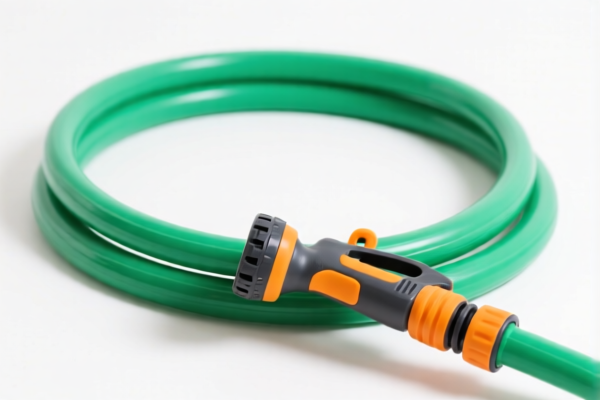
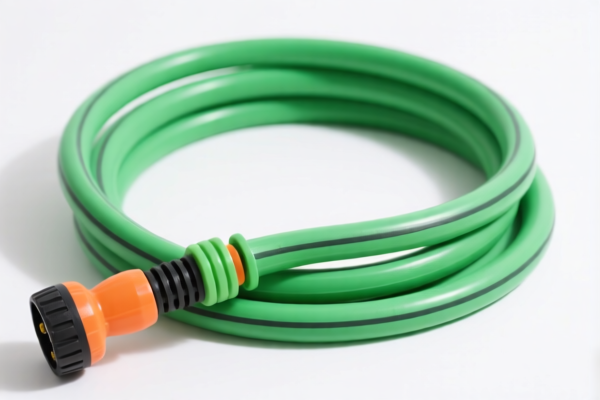
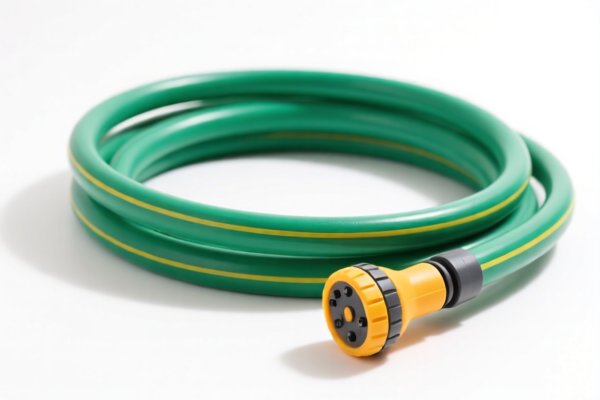
plastic agricultural hose
CN → USProduct Images

AI Analysis
💦 Plastic Agricultural Hose (Irrigation & Farming Hoses)
🌐 HS Code Reference & Customs Clearance Guide | 2026 Latest Tariff Analysis | Professional Logistics Strategy
📌 Part 1: Product Definition & Classification: What Exactly is "Plastic Agricultural Hose"?
Plastic agricultural hoses are flexible tubing used primarily for irrigation, drainage, and fluid transport in farming environments. In international trade, they are broadly categorized based on their material composition, structure (reinforced vs. non-reinforced), and intended use.
Common Types: 1. PVC Irrigation Hoses: Soft, flexible, often unreinforced or lightly reinforced. Used for low-pressure irrigation. 2. Reinforced Garden/Farm Hoses: Multilayer hoses with internal mesh or wire reinforcement to withstand higher pressure. 3. Drainage/Sewer Hoses: Corrugated, large-diameter hoses for water removal. 4. Micro-irrigation Tubing: Small-diameter tubes for drip irrigation systems.
⚠️ Critical Distinction Point:
- If the hose is plain plastic (PVC, PE, PP) without reinforcement, it is generally classified under Chapter 39 (Plastics and Articles Thereof).
- If the hose contains metal reinforcement (wire/mesh) that provides structural integrity, it may fall under Chapter 72 (Iron/Steel) or Chapter 73 (Articles of Iron/Steel), depending on the dominant characteristic.
- Most agricultural plastic hoses (PVC/PE) without significant metal content are classified under 3917.
📦 Part 2: HS Code Classification Details (2026 Latest Tariff Concordance)
| HS Code | Product Description | Applicable Scenario | Reinforcement Status |
|---|---|---|---|
3917.21.00.00 |
Hoses and tubing of polymers of ethylene (PE), flexible, with a diameter ≤ 6mm | Micro-irrigation, drip lines, low-pressure PE hoses | ❌ Non-reinforced |
3917.22.00.00 |
Hoses of polymers of vinyl chloride (PVC), flexible, with a diameter ≤ 6mm | Small-diameter PVC garden hoses, spray lines | ❌ Non-reinforced |
3917.23.00.00 |
Hoses of polymers of propylene (PP), flexible, with a diameter ≤ 6mm | Agricultural drainage, chemical transport | ❌ Non-reinforced |
3917.32.00.00 |
Hoses and tubes, fitted with fittings or otherwise combined with other materials, of plastics | Hoses with pre-attached connectors, couplings, or valves | ✅ With Fittings |
3917.33.00.00 |
Tubes and pipes, rigid, of plastics | Rigid PVC pipes for main water lines (NOT flexible hoses) | ❌ Rigid |
3917.40.00.00 |
Other plates, sheets, films, foil and strip, of plastics | Not hoses; if misclassified, results in high penalty | ❌ N/A |
3917.90.00.00 |
Other tubes, pipes and hoses, of plastics | Other plastic hoses not elsewhere specified | ❌ Non-reinforced |
🔍 Key Reminder:
- Flexible hoses made of polyethylene (PE), PVC, or PP are typically classified under 3917.21, 3917.22, or 3917.23.
- If the hose has fittings (connectors, nozzles) permanently attached or packaged together as a set, it may fall under 3917.32 or 3917.33.
- Reinforced hoses with significant metal content (e.g., steel wire braid) may be classified under Chapter 73 (e.g.,7307.99or7308.90), but most modern agricultural hoses are plastic-dominated and remain in Chapter 39.
💰 Part 3: 2026 Latest Tariff Rates Explained (Including Surcharges & Policy Add-ons)
✅ Applicable Country: United States (US)
✅ Country of Origin: China (CN)
✅ Effective Date: From November 10, 2025 (and subsequent imports)
🎯 1. 3917.21.00.00 / 3917.22.00.00 / 3917.23.00.00 — Plastic Hoses (Flexible, ≤6mm Diameter)
| Item | Content |
|---|---|
| Base Tariff Rate | 3.4% (ad valorem) |
| USITC Additional Duty (Section 301) | +7.5% (from USITC Footnote 9903.01.24) |
| IEEPA Additional Duty | +10% (for China/Hong Kong origin, effective Nov 10, 2025) |
| Total Effective Rate | 20.9% |
| Tax Calculation | CIF Value × 20.9% |
| De Minimis Eligibility | ❌ Not Eligible (deny_de_minimis applies due to IEEPA/301 duties) |
| Legal Pathway | IEEPA:9901.25 → IEEPA:9903.01.24 → USITC:3917.21/22/23.00.00 → FOOTNOTE:9903.88.01 |
📌 Explanation:
- The 3.4% base rate is the MFN (Most Favored Nation) rate for plastic hoses.
- The 7.5% Section 301 duty applies to most plastic articles from China.
- The 10% IEEPA duty is a new surcharge for Chinese goods under the International Emergency Economic Powers Act.
- Total 20.9% is a significant cost factor. Must be factored into pricing strategies.
🎯 2. 3917.32.00.00 — Hoses with Fittings (Plastic)
| Item | Content |
|---|---|
| Base Tariff Rate | 3.4% |
| USITC Additional Duty (Section 301) | +7.5% |
| IEEPA Additional Duty | +10% |
| Total Effective Rate | 20.9% |
| Tax Calculation | CIF Value × 20.9% |
| De Minimis Eligibility | ❌ Not Eligible |
| Legal Pathway | IEEPA:9901.25 → IEEPA:9903.01.24 → USITC:3917.32.00.00 → FOOTNOTE:9903.88.01 |
📌 Note:
- Same as above. Even if the hose has fittings, the primary material (plastic) dictates the chapter, and the duties remain identical.
🎯 3. 3917.90.00.00 — Other Plastic Hoses (e.g., >6mm diameter, non-PE/PVC/PP)
| Item | Content |
|---|---|
| Base Tariff Rate | 3.4% |
| USITC Additional Duty (Section 301) | +7.5% |
| IEEPA Additional Duty | +10% |
| Total Effective Rate | 20.9% |
| Tax Calculation | CIF Value × 20.9% |
| De Minimis Eligibility | ❌ Not Eligible |
📌 Note:
- Hoses made of other plastics (e.g., polyurethane, rubber-plastic blends) also face the same 20.9% total duty if from China.
🛠️ Part 4: Customs Clearance Practical Advice (Avoid Pitfalls)
✅ 1. Required Documentation Checklist
| Document | Required? | Notes |
|---|---|---|
| ✅ Product Specification Sheet | ✔️ | Include material (PVC/PE/PP), diameter, wall thickness, pressure rating |
| ✅ Material Safety Data Sheet (MSDS) | ✔️ | If used for chemical irrigation |
| ✅ Commercial Invoice | ✔️ | Clearly state "Plastic Agricultural Hose" and HS Code |
| ✅ Packing List | ✔️ | Include net/gross weight, dimensions, and quantity |
| ✅ Certificate of Origin (CO) | ✔️ | If applicable for non-China origin to avoid surcharges |
| ✅ Test Reports | ✔️ | FDA (if for drinking water), NSF/ANSI 61, or agricultural standards |
| ✅ Photographs | ✔️ | Show cross-section, fittings, and labeling |
✅ 2. Declaration Tips (Key Mantra)
🔥 "Flexible Plastic, Chapter 39, Diameter Matters, Reinforcement Checks!"
| Scenario | Correct Declaration | Wrong Practice |
|---|---|---|
| Small-diameter PE hose (≤6mm) | 3917.21.00.00 |
Misclassified as 3917.39 → Higher scrutiny |
| Hose with pre-attached nozzle | 3917.32.00.00 |
Declared as separate items → Complicated clearance |
| Reinforced hose with steel wire | Check Chapter 73 | Declared as 3917 → Risk of reclassification penalty |
| Large-diameter corrugated drain hose | 3917.24.00.00 (if >6mm PE) |
Declared as "Pipe" (3917.40) → Wrong classification |
✅ 3. Special Cases
| Scenario | Handling Advice |
|---|---|
| Hoses for Drinking Water | Must comply with FDA 21 CFR 177.1520 or NSF/ANSI 61. Provide test reports. |
| Chemical Transport Hoses | May require Hazmat Declaration if carrying hazardous substances. |
| Reinforced Hoses (Metal Content >10%) | May be classified under Chapter 73 (e.g., 7307.99). Seek pre-ruling. |
| OEM Custom Hoses | Provide customer design specs to avoid "generic" classification issues. |
🌍 Part 5: Global Market Clearance Comparison (2026 Latest)
| Country/Region | Recommended HS Code | Tariff Rate (China Origin) | Certification Requirements | Notes |
|---|---|---|---|---|
| 🇺🇸 USA | 3917.21.00.00 |
20.9% | FDA, NSF/ANSI 61 (if potable) | High duties due to 301/IEEPA |
| 🇨🇳 China | 3917.21.00.00 |
7.5% | CCC (if applicable) | No additional surcharges |
| 🇪🇺 EU | 3917.21.00.00 |
4.7% | CE, REACH, RoHS | No major surcharges |
| 🇦🇺 Australia | 3917.21.00.00 |
5.0% | RCM, WELS (water efficiency) | No surcharges |
| 🇯🇵 Japan | 3917.21.00.00 |
5.5% | PSE, JIS | No surcharges |
📌 Conclusion:
- USA has the highest duty burden due to Section 301 + IEEPA.
- EU, Australia, Japan are more favorable with standard MFN rates.
- Consider supply chain diversification (e.g., Vietnam, Thailand) to mitigate US duties.
📌 Part 6: Common Mistakes & Pitfalls (Lessons Learned)
❌ Mistake 1: Declaring reinforced hoses as pure plastic hoses
👉 Consequence: Misclassification under Chapter 39 → Penalties + Back Duties
❌ Mistake 2: Ignoring de minimis restrictions
👉 Consequence: Small shipments still subject to 20.9% duties in the US → Unexpected Costs
❌ Mistake 3: Omitting material composition on invoice
👉 Consequence: Customs cannot verify HS Code → Delays + Inspections
❌ Mistake 4: Using "Garden Hose" as a generic description
👉 Consequence: Lack of specificity → Customs may assign higher tariff
✅ Correct Approach:
"Flexible Polyethylene Irrigation Hose, 12mm Diameter, ASTM D2304 Compliant, Model XYZ, NSF/ANSI 61 Certified"
🎯 Part 7: Conclusion: Precise Classification Saves Money!
🎯 Remember the Mantra:
🔹 "Flexible Plastic, Chapter 39, Diameter Matters, Reinforcement Checks!"
🔹 "HS Code Defines Duty, 20.9% in USA, 4.7% in EU, Choose Origin Wisely!"
📌 Pro Tip:
If your hoses are originated from Vietnam, Thailand, or Malaysia, you may avoid US IEEPA/301 surcharges, reducing duties to ~3.4%.
Consider applying for an Advance Ruling from U.S. Customs for complex reinforced hoses.
📣 Immediate Action:
📞 Contact a Professional Customs Broker + Provide Product Specs + Apply for HS Code Advance Ruling
🚀 Ensure Smooth Clearance, Cost Efficiency, and Profit Maximization for Your Agricultural Hoses!
✨ Professional Clearance Starts with Accurate Classification!
💼 Every Percent of Duty Saved is Pure Profit!
Customer Reviews
About HS Code Classification
The Harmonized System (HS) is an internationally standardized nomenclature developed by the World Customs Organization (WCO) to classify traded products. Over 200 countries use the HS system as the basis for customs tariffs, trade statistics, and import/export regulations.
Each HS code follows a hierarchical structure:
- Chapter (2 digits) — Broad category of goods (e.g., Chapter 84: Machinery and Mechanical Appliances)
- Heading (4 digits) — More specific grouping within the chapter
- Subheading (6 digits) — Internationally standardized breakdown, used by all WCO member countries
- National subdivisions (8-10 digits) — Country-specific extensions for further classification, such as US HTSUS 10-digit codes
Correct HS code classification is essential for smooth customs clearance, accurate duty payment, and compliance with trade regulations. Misclassification can lead to customs delays, overpayment of duties, or penalties.
When importing from CN to US, the applicable tariff rates may include:
- Most-Favored-Nation (MFN) rate — The standard duty rate applied to WTO members
- General rate — Applied to countries without trade agreements
- Trade remedy duties — Additional tariffs such as Section 301 (anti-dumping), Section 232 (national security), or countervailing duties
The information provided on this page is for reference purposes only. For official classification, please consult with your local customs authority or a licensed customs broker.