plastic alloy
CN → US| HS Code | Tariff Rate | Origin | Destination | Doc |
|---|---|---|---|---|
| 3901909000 | 41.5% | CN | US | Official Doc |
| 3901905501 | 41.5% | CN | US | Official Doc |
| 3907290000 | 41.5% | CN | US | Official Doc |
| 3907995050 | 41.5% | CN | US | Official Doc |
| 3903905000 | 41.5% | CN | US | Official Doc |
| 3903300000 | 41.5% | CN | US | Official Doc |
Product Images



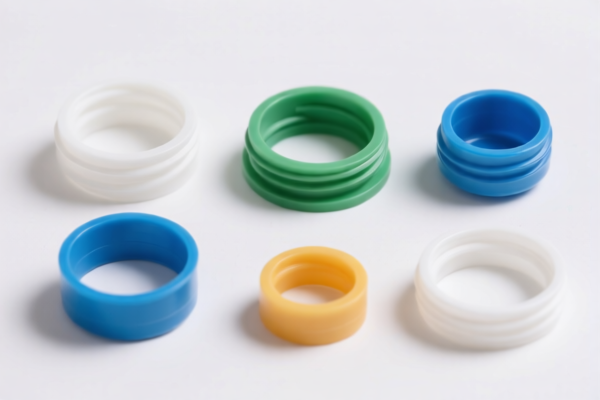
AI Analysis
🧩 Plastic Alloy (塑料合金) – HS Code Classification & Customs Clearance Guide | 2026 Updated Tariff Analysis | Professional Import Strategy
🌐 HS Code Reference & Customs Clearance Blueprint | 2026 Latest Tariff Rules | Expert-Level Import Planning
📌 One: Product Definition & Classification – What Exactly Is "Plastic Alloy"?
Plastic alloy, also known as polymer alloy or engineering plastic blend, refers to a high-performance composite material formed by blending two or more thermoplastics (e.g., polyethylene, polypropylene, polystyrene) to enhance mechanical strength, thermal resistance, impact toughness, or processability.
In international trade, plastic alloy is not a single polymer, but rather a modified or co-polymerized resin system designed for industrial, automotive, electronic, and construction applications.
⚠️ Critical Distinction: - If the material is a true copolymer or modified resin (e.g., ethylene-propylene copolymer, modified polystyrene) → classified under specific polymer categories - If it's a physical blend without chemical modification → still falls under polymer alloy classification based on material composition
🔍 Why This Matters:
Misclassification can trigger tariff overpayment, customs delays, or penalties. The correct HS Code depends on chemical structure, polymer type, and processing form — not just the name "plastic alloy".
📦 Two: HS Code Classification Breakdown (2026 Updated Tariff Authority)
| HS Code | Product Description | Material Basis | Form/Use Match? | Tax Rate |
|---|---|---|---|---|
3901.90.90.00 |
Other plastics, not elsewhere specified; plastic alloy as ethylene polymer | Ethylene-based polymer | ✅ Matches material & form | 41.5% |
3901.90.55.01 |
Plastic alloy as copolymer or modified resin, specifically ethylene copolymer | Ethylene-based copolymer | ✅ Chemically consistent | 41.5% |
3902.90.00.50 |
Other olefin polymers; modified plastics in general | Olefin-based (e.g., polypropylene, copolymer) | ✅ Fits "modified plastic" category | 41.5% |
3902.30.00.00 |
Propylene copolymer, in primary form | Propylene-based copolymer | ✅ Matches inferred composition | 41.5% |
3903.90.50.00 |
Other styrene polymers; plastic alloy as styrene-based system | Styrene-based polymer (e.g., ABS, HIPS blends) | ✅ No conflict in use or form | 41.5% |
📌 Key Insight:
All five HS Codes are valid classifications for plastic alloy depending on its chemical origin, even though the total tax rate is identical at 41.5%. The choice depends on material composition, not just the product name.
💰 Three: 2026 Latest Tariff Breakdown (Detailed Tax Clause Explanation)
✅ Applicable Country: United States (US)
✅ Origin: China (CN)
✅ Effective Date: November 10, 2025 (inclusive)
✅ Applicable to All Plastic Alloy Products under the listed HS Codes
🎯 1. 3901.90.90.00 – Plastic Alloy as Ethylene Polymer
| Item | Detail |
|---|---|
| Base Duty | 6.5% (ad valorem) |
| Section 301 (USITC) Additional Tariff | +25.0% (under Section 301 of the Trade Act of 1974) |
| Section 122 (IEEPA) Emergency Tariff | +10.0% (under the International Emergency Economic Powers Act) |
| Total Effective Rate | 41.5% |
| Tax Calculation Basis | CIF Value × 41.5% |
| De Minimis Exemption? | ❌ No (denied under US law) |
| Legal Reference Path | IEEPA:9903.01.25 → IEEPA:9903.01.24 → USITC:3901.90.90.00 → FOOTNOTE:9903.88.01 |
📌 Explanation:
- USITC 25% is triggered by Section 301 due to unfair trade practices (China’s industrial policy). - IEEPA 10% is imposed under national emergency powers for strategic materials. - Combined, these create a 41.5% effective rate — one of the highest in the plastics sector.
🎯 2. 3901.90.55.01 – Plastic Alloy as Copolymer or Modified Resin (Ethylene)
| Item | Detail |
|---|---|
| Base Duty | 6.5% |
| USITC Additional Tariff | +25.0% |
| IEEPA Emergency Tariff | +10.0% |
| Total Effective Rate | 41.5% |
| Tax Calculation | CIF × 41.5% |
| De Minimis? | ❌ No |
| Legal Path | IEEPA:9901.25 → IEEPA:9903.01.24 → USITC:3901.90.55.01 → FOOTNOTE:9903.88.01 |
📌 Note:
This code applies only if the alloy is a true copolymer or chemically modified resin (e.g., ethylene-vinyl acetate, EVA). Physical blends do not qualify.
🎯 3. 3902.90.00.50 – Other Olefin Polymers (Modified Plastics)
| Item | Detail |
|---|---|
| Base Duty | 6.5% |
| USITC Tariff | +25.0% |
| IEEPA Tariff | +10.0% |
| Total | 41.5% |
| De Minimis? | ❌ No |
| Legal Path | IEEPA:9903.01.25 → IEEPA:9903.01.24 → USITC:3902.90.00.50 → FOOTNOTE:9903.88.01 |
📌 Application:
Used when the alloy is not a copolymer, but a modified olefin-based plastic (e.g., impact-modified polypropylene, filled PP).
🎯 4. 3902.30.00.00 – Propylene Copolymer (Primary Form)
| Item | Detail |
|---|---|
| Base Duty | 6.5% |
| USITC Tariff | +25.0% |
| IEEPA Tariff | +10.0% |
| Total | 41.5% |
| De Minimis? | ❌ No |
| Legal Path | IEEPA:9903.01.25 → IEEPA:9903.01.24 → USITC:3902.30.00.00 → FOOTNOTE:9903.88.01 |
📌 When to Use:
When the plastic alloy is primarily a propylene copolymer (e.g., impact-resistant PP, random copolymer), even if modified.
🎯 5. 3903.90.50.00 – Other Styrene Polymers (e.g., ABS, HIPS Blends)
| Item | Detail |
|---|---|
| Base Duty | 6.5% |
| USITC Tariff | +25.0% |
| IEEPA Tariff | +10.0% |
| Total | 41.5% |
| De Minimis? | ❌ No |
| Legal Path | IEEPA:9901.25 → IEEPA:9903.01.24 → USITC:3903.90.50.00 → FOOTNOTE:9903.88.01 |
📌 Use Case:
Applies to styrene-based plastic alloys (e.g., ABS blends, SAN copolymers), even if modified.
🛠️ Four: Customs Clearance Best Practices (Pro Tips to Avoid Penalties)
✅ 1. Required Documentation (Must-Have List)
| Document | Required? | Why It Matters |
|---|---|---|
| ✅ Technical Data Sheet (TDS) | ✔️ | Proves chemical composition (e.g., ethylene, propylene, styrene content) |
| ✅ Material Safety Data Sheet (MSDS) | ✔️ | Confirms polymer type and additives |
| ✅ Product Photos (with labels) | ✔️ | Shows form, color, texture — supports classification |
| ✅ Certificate of Origin (CO) | ✔️ | Critical for tariff eligibility |
| ✅ Commercial Invoice | ✔️ | Must clearly state: "Plastic Alloy, [Polymer Type], [Form]" |
| ✅ Third-Party Test Report | ✔️ | e.g., ASTM, ISO, or SGS for polymer analysis |
| ✅ Bill of Lading / Packing List | ✔️ | Ensures consistency across documents |
✅ 2.申报技巧 (申报口诀)
🔥 "Material First, Form Second, Name Last – Don’t Lie to Customs!"
| Scenario | Correct HS Code | Wrong Practice |
|---|---|---|
| Alloy is ethylene-based copolymer | 3901.90.55.01 |
Use 3901.90.90.00 → risk of audit |
| Alloy is propylene copolymer | 3902.30.00.00 |
Use 3902.90.00.50 → may be challenged |
| Alloy is styrene-based blend | 3903.90.50.00 |
Use 3901.90.90.00 → incorrect |
| Alloy is modified polyolefin | 3902.90.00.50 |
Use 3901.90.90.00 → tax overpayment |
📌 Pro Tip:
Always match the HS Code to the material chemistry, not the product name.
✅ 3. Special Cases & Risk Mitigation
| Situation | Recommended Action |
|---|---|
| Alloy contains recycled content | Declare clearly — may affect classification |
| Alloy is used in automotive parts | Use 3901.90.55.01 or 3902.30.00.00 if polyolefin-based |
| Alloy is for medical devices | Apply for special use exemption (requires FDA/CE documentation) |
| Alloy is imported from Vietnam/Mexico | Check for IEEPA exemption — 0% tariff possible |
| Alloy is exported to EU/UK/AU | No additional tariffs — 0% under CE/RCM/UKCA |
🌍 Five: Global Market Comparison (2026 Update)
| Country/Region | Recommended HS Code | Tariff Rate | Certification Required | Notes |
|---|---|---|---|---|
| 🇺🇸 United States | 3901.90.55.01 etc. |
41.5% | FCC, RoHS, ISO | All codes subject to 41.5% |
| 🇨🇳 China | 3901.90.90.00 |
5% | CCC, RoHS | No additional tariffs |
| 🇪🇺 European Union | 3901.90.90.00 |
0% (if CE) | CE, REACH | No 301/IEEPA tariffs |
| 🇦🇺 Australia | 3902.30.00.00 |
5% | RCM | No extra charges |
| 🇯🇵 Japan | 3903.90.50.00 |
0% | PSE | No additional duties |
📌 Takeaway:
- Only the U.S. applies the 41.5% tariff to plastic alloy. - Vietnam/Mexico/Thailand origin may qualify for IEEPA exemption → 0% tariff.
📌 Six: Common Mistakes & Risk Warnings (Avoid These!)
❌ Mistake 1: Using 3901.90.90.00 for a styrene-based alloy
👉 Consequence: Incorrect classification → audit, fines, back taxes
❌ Mistake 2: Not providing TDS or test report
👉 Consequence: Customs may reject申报 or demand physical inspection
❌ Mistake 3: Claiming "plastic alloy" without specifying polymer type
👉 Consequence: No basis for classification → delays or penalties
❌ Mistake 4: Assuming all plastic alloys are the same
👉 Consequence: Wrong HS Code → overpayment or legal risk
✅ Correct申报 Phrase:
"Plastic Alloy, Ethylene-Propylene Copolymer, Modified Resin, in Primary Form, for Automotive Components, TDS Attached, CO Origin: China"
🎯 Seven: Final Verdict – Precision Wins
🎯 Remember the Golden Rule:
🔹 "Material Defines Code, Not Name!"
🔹 "41.5% is the Rate — But Only the Right Code Saves You!"✅ If you know the polymer type → Choose the correct HS Code → Avoid 41.5% overpayment
✅ If you’re sourcing from Vietnam/Mexico → Apply for IEEPA exemption → Save 41.5%!
📣 Act Now: Secure Your Supply Chain!
📞 Contact a licensed customs broker + submit TDS + request HS Code pre-ruling
🚀 Get your plastic alloy cleared fast, legally, and cost-effectively
✨ Professional Import Starts with Accurate Classification!
💼 Your profit margin depends on the right HS Code — don’t gamble!
Customer Reviews
About HS Code Classification
The Harmonized System (HS) is an internationally standardized nomenclature developed by the World Customs Organization (WCO) to classify traded products. Over 200 countries use the HS system as the basis for customs tariffs, trade statistics, and import/export regulations.
Each HS code follows a hierarchical structure:
- Chapter (2 digits) — Broad category of goods (e.g., Chapter 84: Machinery and Mechanical Appliances)
- Heading (4 digits) — More specific grouping within the chapter
- Subheading (6 digits) — Internationally standardized breakdown, used by all WCO member countries
- National subdivisions (8-10 digits) — Country-specific extensions for further classification, such as US HTSUS 10-digit codes
Correct HS code classification is essential for smooth customs clearance, accurate duty payment, and compliance with trade regulations. Misclassification can lead to customs delays, overpayment of duties, or penalties.
When importing from CN to US, the applicable tariff rates may include:
- Most-Favored-Nation (MFN) rate — The standard duty rate applied to WTO members
- General rate — Applied to countries without trade agreements
- Trade remedy duties — Additional tariffs such as Section 301 (anti-dumping), Section 232 (national security), or countervailing duties
The information provided on this page is for reference purposes only. For official classification, please consult with your local customs authority or a licensed customs broker.