plastic anti fog agent
CN → US| HS Code | Tariff Rate | Origin | Destination | Doc |
|---|---|---|---|---|
| 3907995010 | 41.5% | CN | US | Official Doc |
| 3907290000 | 41.5% | CN | US | Official Doc |
| 3824994900 | 41.5% | CN | US | Official Doc |
| 3403112000 | 35.2% | CN | US | Official Doc |
Product Images

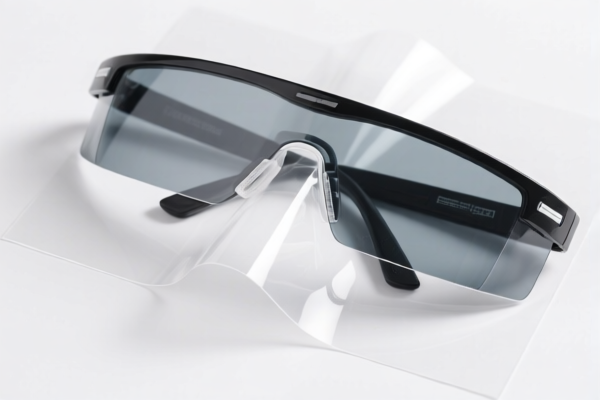

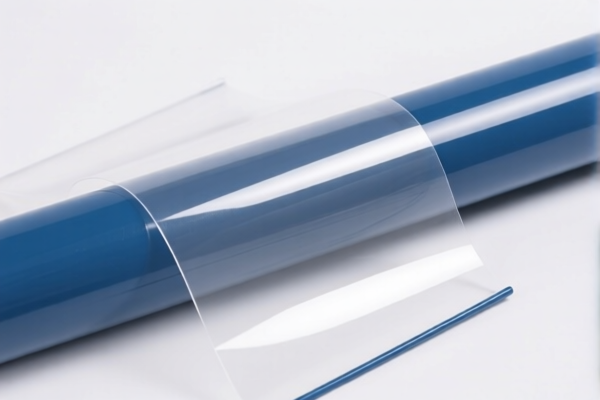
AI Analysis
🧪 Plastic Anti-Fog Agent (Polybutene Resin Based)
🌐 HS Code Reference & Customs Clearance Guide | 2026 Latest Tariff Analysis | Professional Compliance Strategy
📌 I. Product Definition & Classification: What Exactly Is "Polybutene Resin Anti-Fog Agent"?
The Plastic Anti-Fog Agent described in the data is a specialized chemical additive primarily composed of Polybutene Resin. Its core function is to prevent condensation (fogging) on plastic surfaces, commonly used in packaging films, greenhouse covers, and transparent plastic products.
In international trade, classification depends on whether the product is viewed as a resin/plastic raw material, a prepared chemical mixture, or a surface treatment agent. The data provides four distinct HS Code possibilities, reflecting different regulatory interpretations of its chemical nature and primary function.
⚠️ Key Classification Distinction:
- If viewed strictly as a Polyether/Polyester Resin in primary form → 3907.99.50.10
- If viewed as a Polyether Polymer → 3907.29.00.00
- If viewed as a Prepared Chemical Preparation (mixture/compound) → 3824.99.49.00
- If viewed specifically as a Surface Treatment Agent for Materials → 3403.11.20.00
📦 II. HS Code Classification Details (2026 Latest Tariff Authority Reference)
| HS Code | Product Description | Basis for Classification | Key Characteristic |
|---|---|---|---|
3907.99.50.10 |
Polybutene Resin Anti-Fog Agent, material is polybutene resin, falls under polyether/polyester resin category, form is resin (primary form). | Classified as Resin (Primary Form) under Chapter 39. | Emphasizes the material composition (Polybutene Resin). |
3907.29.00.00 |
Polybutene Resin Anti-Fog Agent, conforms to characteristics of polyether/polyester resins, belongs to polyether or related polymer category. | Classified as Polyether Polymer under Chapter 39. | Emphasizes the polymer type (Polyether-related). |
3824.99.49.00 |
Polybutene Resin Anti-Fog Agent, belongs to chemical preparations, core material is polybutene resin, conforms to hydrocarbon derivatives & chemical products. | Classified as Prepared Chemical under Chapter 38. | Emphasizes the preparation/mixture nature (Chemical Agent). |
3403.11.20.00 |
Polybutene Resin Anti-Fog Agent, in chemical preparation form, used as an anti-fog agent for material surface treatment, core material is polybutene resin. | Classified as Surface Treatment Agent under Chapter 34. | Emphasizes the function (Anti-fog/Surface Treatment). |
🔍 Critical Note:
- All four codes share the same Total Tax Rate (except for slight variations in base duty, see below).
- The choice of HS Code depends on how customs interprets the primary character of the product: Is it a resin (39), a chemical mix (38), or a surface treatment (34)?
- Chapter 39 (Resins) is often preferred if the product is sold as a bulk resin additive.
- Chapter 34 (Oils & Surface Agents) is preferred if it’s marketed specifically as a "treatment agent" or "coating."
- Chapter 38 (Miscellaneous Chemical Products) is a fallback for "prepared chemicals" not elsewhere specified.
💰 III. 2026 Latest Tariff Rate Breakdown (Including Surtaxes & Policy Surcharges)
✅ Applicable Country: United States (US)
✅ Country of Origin: China (CN)
✅ Effective Date: November 10, 2025 (and subsequent imports)
🎯 1. Codes 3907.99.50.10 & 3907.29.00.00 & 3824.99.49.00
Base Duty: 6.5%
| Item | Detail |
|---|---|
| Base Tariff | 6.5% (Ad Valorem) |
| Section 301 Surtax | +25.0% (USITC Footnote 9903.88.01 / Trade Act) |
| Section 122 Tariff | +10.0% (Specific policy surcharge for certain chemical/resin imports from China) |
| Total Effective Rate | 41.5% |
| Tax Calculation | CIF Value × 41.5% |
| De Minimis Exemption | ❌ Not Available (deny_de_minimis) |
| Legal Basis Path | USITC:3907.99.50.10 → SURTAX:301 → POLICY:122 |
📌 Explanation:
- These three codes are grouped together because they share the same tax structure in the provided data.
- The 6.5% base is the standard MFN rate for resins/chemicals.
- The +25% is the standard Section 301 tariff on Chinese goods.
- The +10% is an additional "Section 122" tariff, likely targeting specific chemical/resin categories to protect domestic industry.
- Total: 41.5% is a very high tariff, significantly impacting cost competitiveness.
🎯 2. Code 3403.11.20.00
Base Duty: 0.2%
| Item | Detail |
|---|---|
| Base Tariff | 0.2% (Ad Valorem) |
| Section 301 Surtax | +25.0% (USITC Footnote 9903.88.01 / Trade Act) |
| Section 122 Tariff | +10.0% (Specific policy surcharge) |
| Total Effective Rate | 35.2% |
| Tax Calculation | CIF Value × 35.2% |
| De Minimis Exemption | ❌ Not Available (deny_de_minimis) |
| Legal Basis Path | USITC:3403.11.20.00 → SURTAX:301 → POLICY:122 |
📌 Explanation:
- This code has a much lower base rate (0.2%) compared to the resin codes (6.5%).
- However, the Section 301 (25%) and Section 122 (10%) surcharges still apply.
- Total: 35.2% is 6.3 percentage points lower than the resin classifications.
- Strategic Implication: If the product can be legitimately classified under 3403.11.20.00 (as a surface treatment agent rather than a raw resin), it offers a significant cost advantage.
🛠️ IV. Customs Clearance Practical Advice (Battle-Tested Pitfall Guide)
✅ 1. Documentation Checklist (Mandatory)
| Document | Required | Purpose |
|---|---|---|
| ✅ Product Specification Sheet | ✔️ | Must detail: Polybutene Resin content, anti-fog efficacy, physical state (liquid/resin/powder), intended use. |
| ✅ Formula/Composition List | ✔️ | Critical for determining if it’s a "pure resin" (Ch 39) or "prepared chemical" (Ch 38/34). |
| ✅ Product Photos (Label & Bulk) | ✔️ | Show packaging, hazard symbols (if any), and product form. |
| ✅ Safety Data Sheet (SDS) | ✔️ | Confirm chemical composition and handling requirements. |
| ✅ Commercial Invoice | ✔️ | Must clearly state: "Polybutene Resin Anti-Fog Agent," HS Code, and Country of Origin (China). |
| ✅ Proof of Use/Function | ✔️ | If claiming 3403 (Surface Treatment), provide proof it’s applied to surfaces, not just a raw material. |
✅ 2. Classification Strategy (Key Mantra)
🔥 "Function Dictates Chapter: Treatment = 34, Resin = 39, Mix = 38!"
| Scenario | Recommended HS Code | Why? |
|---|---|---|
| Sold as Raw Material for manufacturers to mix into plastics | 3907.99.50.10 or 3907.29.00.00 |
Treated as a Resin/Polymer. Higher base duty (6.5%). |
| Sold as a Chemical Mixture not elsewhere specified | 3824.99.49.00 |
Treated as a Prepared Chemical. Same tax as resin codes (41.5%). |
| Sold as a Surface Coating/Anti-Fog Spray for direct use | 3403.11.20.00 |
Treated as a Surface Treatment Agent. Lower base duty (0.2%), total 35.2%. |
⚠️ Warning:
- Do not arbitrarily choose the lower-tariff code (3403) unless the product’s primary use and marketing support it as a "surface treatment agent."
- Customs may challenge a 3403 classification if the product is sold as a bulk resin additive. Misclassification can lead to back taxes, penalties, and shipment delays.
✅ 3. Special Situations
| Situation | Advice |
|---|---|
| OEM/Private Label | Ensure the invoice clearly identifies the supplier and product type. Avoid generic names like "Plastic Additive" without further detail. |
| Mixed Shipment (Resin + Other Chemicals) | Declare each component separately if possible. If mixed, the principal use determines the code. |
| Pre-Clearance Ruling | Highly Recommended. Apply for an Advance Ruling from CBP to confirm if your specific product qualifies for 3403.11.20.00 to save 6.3% in duty. |
🌍 V. Global Market Comparison (2026 Latest)
| Country/Region | Recommended HS Code | Tariff (China Origin) | Certification | Notes |
|---|---|---|---|---|
| 🇺🇸 USA | 3403.11.20.00 (Preferred) |
35.2% | SDS, TSCA Compliance | 3907 codes attract 41.5%. Savings = 6.3%. |
| 🇨🇳 China | 3907.29.00.00 |
~5-7% (Est.) | None | Lower import duties, no 301/122 surcharges. |
| 🇪🇺 EU | 3907.99 |
6.5% (DAP) | REACH Registration | No US-style 301/122 surcharges. |
| 🇦🇺 Australia | 3824.99 |
5% | AICIS Registration | Standard GST + low duty. |
| 🇯🇵 Japan | 3907.29 |
5.2% | JIS Standards | Stable tariff environment. |
📌 Conclusion:
- The US market is the most challenging due to Section 301 and Section 122 tariffs.
- Strategic Focus: For US exports, classify as3403.11.20.00if legally permissible to reduce duty from 41.5% to 35.2%.
- For other markets, focus on REACH (EU), AICIS (Australia), and TSCA (US) compliance for chemical safety.
📌 VI. Common Errors & Pitfalls (Lessons Learned)
❌ Error 1: Using generic name "Plastic Additive" on Invoice
👉 Consequence: Customs may assign a default higher tariff or request additional review → Delay.
✅ Fix: Use precise description: "Polybutene Resin Anti-Fog Agent, for Surface Treatment, HS 3403.11.20.00."
❌ Error 2: Misclassifying as 3907 when it’s a ready-to-use spray
👉 Consequence: Overpaying 6.3% in duty + potential audit for misclassification.
✅ Fix: If it’s a spray/coating, use 3403. If it’s bulk resin, use 3907.
❌ Error 3: Ignoring Section 122 Tariff
👉 Consequence: Unexpected bill for 10% surcharge.
✅ Fix: Always include Section 122 in cost calculations for US imports from China for resins/chemicals.
❌ Error 4: No SDS or Formula Disclosure
👉 Consequence: Rejected entry at port due to lack of chemical safety data.
✅ Fix: Submit SDS and detailed formula with the initial entry summary.
🎯 VII. Conclusion: Precision Classification = Profit Protection
🎯 Key Takeaways:
🔹 "Resin = 41.5%, Treatment = 35.2%" – The 6.3% difference is pure profit if classified correctly.
🔹 "Function Over Material" – If it functions as a surface treatment, push for 3403.
🔹 "Section 122 is Real" – Don’t forget the 10% surcharge in your cost model.
🔹 "Pre-Ruling is Worth It" – Save thousands by getting a CBP Advance Ruling on your specific product form.
📌 Pro Tip:
If you are exporting Polybutene Resin Anti-Fog Agent to the US, consult a customs broker to evaluate if your product’s formulation and marketing materials support a 3403.11.20.00 classification. This small shift can save you 6.3% on every shipment.
📣 Action Item:
📞 Contact your customs broker today with your product SDS and marketing brochure.
📝 Request an Advance Ruling for HS Code3403.11.20.00if applicable.
🚀 Optimize your cost structure and ensure smooth customs clearance.
✨ Smart Classification, Smarter Profits!
💼 Every percentage point of duty matters in global trade!
Customer Reviews
About HS Code Classification
The Harmonized System (HS) is an internationally standardized nomenclature developed by the World Customs Organization (WCO) to classify traded products. Over 200 countries use the HS system as the basis for customs tariffs, trade statistics, and import/export regulations.
Each HS code follows a hierarchical structure:
- Chapter (2 digits) — Broad category of goods (e.g., Chapter 84: Machinery and Mechanical Appliances)
- Heading (4 digits) — More specific grouping within the chapter
- Subheading (6 digits) — Internationally standardized breakdown, used by all WCO member countries
- National subdivisions (8-10 digits) — Country-specific extensions for further classification, such as US HTSUS 10-digit codes
Correct HS code classification is essential for smooth customs clearance, accurate duty payment, and compliance with trade regulations. Misclassification can lead to customs delays, overpayment of duties, or penalties.
When importing from CN to US, the applicable tariff rates may include:
- Most-Favored-Nation (MFN) rate — The standard duty rate applied to WTO members
- General rate — Applied to countries without trade agreements
- Trade remedy duties — Additional tariffs such as Section 301 (anti-dumping), Section 232 (national security), or countervailing duties
The information provided on this page is for reference purposes only. For official classification, please consult with your local customs authority or a licensed customs broker.