plastic apron oil proof
CN → US| HS Code | Tariff Rate | Origin | Destination | Doc |
|---|---|---|---|---|
| 6210203000 | 13.8% | CN | US | Official Doc |
| 6210207000 | 13.3% | CN | US | Official Doc |
| 3926209010 | 40.0% | CN | US | Official Doc |
Product Images
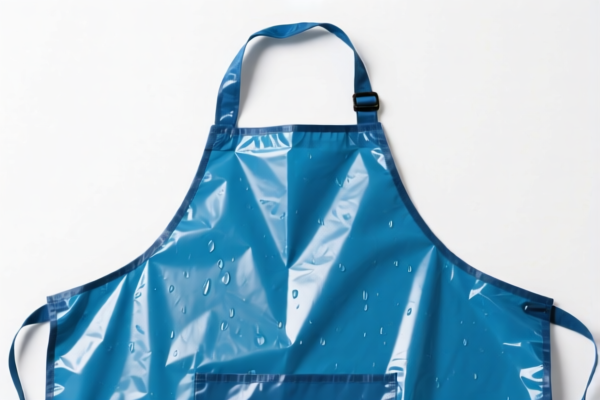
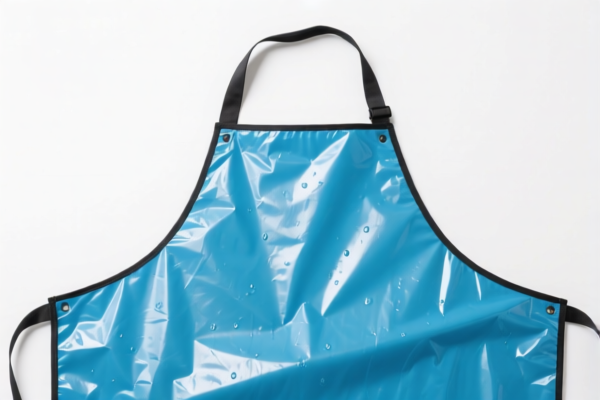
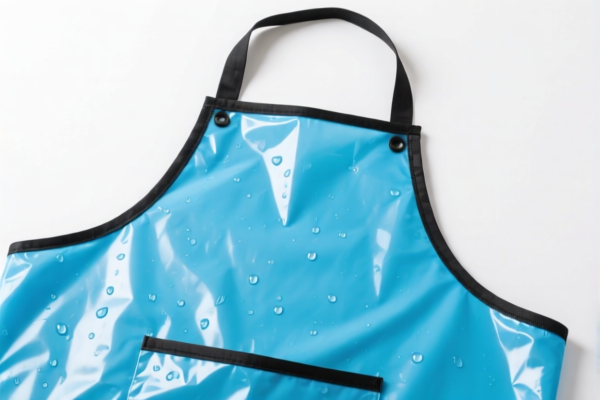

AI Analysis
🛡️ Plastic Oil-Proof Aprons: The Ultimate Tariff & Classification Guide
🌐 HS Code Reference & Customs Clearance Guide | 2024/2025 Latest Tariff Analysis | Strategic Entry Strategy
📌 I. Product Definition & Classification: What Exactly Is an "Oil-Proof Plastic Apron"?
A plastic oil-proof apron is a protective garment used in kitchens, laboratories, and industrial settings to prevent oil, grease, and liquids from soiling clothing. In international trade, these items are classified based on their material composition and manufacturing process (e.g., whether they are simple garments or coated/plastic-based articles).
There are three main classification paths for this product:
- Textile/Garment Path: If considered a "garment of textile materials" that is merely coated/covered.
- Plastic Article Path: If considered a "plastic article" because the plastic layer is the defining characteristic.
⚠️ Critical Distinction:
- Misclassification Risk: Declaring a heavily coated plastic apron as a simple textile item can lead to severe penalties. - Key Factor: Does the plastic coating/impregnation define the item's essential character? If yes, it falls under plastic articles (3926), which carries significantly higher tariffs.
📦 II. HS Code Classification Details (Based on Provided Data)
The following HS Codes are derived directly from the provided dataset. Note the drastic difference in tariff rates between "garment-like" classifications and "plastic article" classifications.
| HS Code | Product Description (Summary) | Essential Characteristic | Total Tax Rate |
|---|---|---|---|
| 6210.20.30.00 | Plastic Apron (Oil-proof), belongs to clothing class, made of plastic, used for oil proofing. | Classified as Clothing/Garment | 13.8% |
| 6210.20.70.00 | Plastic Apron (Oil-proof), material is rubber or plastic impregnated/coated/covered/laminated, form is apron. | Classified as Coated Textile/Garment | 13.3% |
| 3926.20.90.10 | Plastic Apron (Oil-proof), explicitly includes material "plastic" and use "apron," classified as plastic products. | Classified as Plastic Product | 40.0% |
🔍 Analysis of the Data:
- Codes 6210.20.30.00 and 6210.20.70.00 treat the apron as a garment (Chapter 62). These are preferred if the item retains the shape and function of clothing. - Code 3926.20.90.10 treats the apron as a plastic article (Chapter 39). This classification attracts the highest tariffs due to anti-dumping duties (Section 301) and IEEPA tariffs.
💰 III. Tariff Rate Breakdown (Detailed Tax Clauses)
✅ Applicable Jurisdiction: United States (US)
✅ Origin: China (CN)
✅ Status: Subject to 122-Clause and Section 301 tariffs.
🎯 1. 6210.20.30.00 – Plastic Apron (Clothing Classification)
| Item | Detail |
|---|---|
| Base Tariff | 3.8% |
| Additional Tariff (Section 301) | 0.0% |
| Clause 122 Tariff | 10% |
| Total Tax Rate | 13.8% |
| Legal Basis | Base rate + 122-Clause surcharge |
📌 Explanation:
- This is the standard garment classification. - The 122-Clause Tariff (likely referring to specific administrative notes or recent policy adjustments) adds 10%. - No Section 301 (25%) or IEEPA (10-25%) surcharges are applied in this specific data entry, making this the most cost-effective option if the customs officer agrees with the "garment" classification.
🎯 2. 6210.20.70.00 – Coated/Laminated Plastic Apron
| Item | Detail |
|---|---|
| Base Tariff | 3.3% |
| Additional Tariff (Section 301) | 0.0% |
| Clause 122 Tariff | 10% |
| Total Tax Rate | 13.3% |
| Legal Basis | Base rate + 122-Clause surcharge |
📌 Explanation:
- This code specifically mentions "impregnated, coated, covered or laminated" materials. - This is often the most accurate description for plastic aprons, as they are typically fabric with a plastic coating. - Savings: It is 0.5% cheaper than code 6210.20.30.00.
🎯 3. 3926.20.90.10 – Plastic Product (Plastic Article Classification)
| Item | Detail |
|---|---|
| Base Tariff | 5.0% |
| Additional Tariff (Section 301) | 25.0% |
| Clause 122 Tariff | 10% |
| Total Tax Rate | 40.0% |
| Legal Basis | Base + Section 301 (25%) + 122-Clause (10%) |
📌 Warning:
- This classification triggers the 25% Section 301 Tariff. - Total tax jumps to 40%. - Recommendation: Avoid this classification unless the apron is solid plastic (e.g., a rigid sheet cut into shape) with no textile base, and even then, argue for garment classification.
🛠️ IV. Customs Clearance Practical Advice (Pitfall Avoidance Guide)
✅ 1. Documentation Checklist (Must-Have)
| Document | Requirement | Purpose |
|---|---|---|
| Product Specification Sheet | ✔️ Required | Must specify material composition (e.g., "Polyethylene coated fabric") to justify HS Code 6210. |
| Commercial Invoice | ✔️ Required | Description must match the HS Code summary (e.g., "Coated Apron"). Avoid vague terms like "Plastic Sheet." |
| Material Breakdown | ✔️ Recommended | Show % of fabric vs. plastic to prove it's a "garment of impregnated textile." |
| Photos | ✔️ Required | Show flexibility, stitching, and neck/arm holes to prove it is a wearable garment, not a rigid plastic item. |
✅ 2. Classification Strategy (Key Mnemonic)
🔥 "Coat the Textile, Not the Plastic"
| Scenario | Recommended HS Code | Tax Rate | Reason |
|---|---|---|---|
| Fabric + Plastic Coating (Standard Apron) | 6210.20.70.00 | 13.3% | Best fit for "coated/laminated" garments. Lowest cost. |
| Plastic Garment (General) | 6210.20.30.00 | 13.8% | Acceptable if "coated" terminology is avoided, but slightly higher tax. |
| Solid Plastic / Non-Wearable | 3926.20.90.10 | 40.0% | ❌ High Risk. Avoid unless the item is clearly not a garment. |
💡 Pro Tip:
Use the term "Coated Fabric Apron" or "Impregnated Plastic Apron" in your invoice. This supports the argument for 6210.20.70.00 (13.3%) rather than 3926.20.90.10 (40%).
✅ 3. Special Cases & Handling
| Situation | Handling Advice |
|---|---|
| Mixed Material (e.g., Rubber + Plastic) | If rubber content > plastic, it may fall under different rubber codes. However, data suggests 6210 covers "rubber or plastic." Stick to 6210 for coated items. |
| Clearance Delay | If Customs questions the classification, provide a detailed material sample showing the textile base with plastic coating. |
| Section 301 Exclusion | Check if your specific product is excluded from Section 301. If it falls under 3926, you might qualify for exclusion if listed. If under 6210, Section 301 is 0% in the provided data. |
🌍 V. Global Market Comparison (Quick Reference)
| Market | Recommended HS Code | Est. Tax Rate | Notes |
|---|---|---|---|
| USA | 6210.20.70.00 | 13.3% | Best option. Avoid 3926 (40%). |
| China (Import) | 6210.20.70.00 | ~13-15% | Generally lower tariffs for coated textiles. |
| EU | 6210.20.00 | ~12% | Similar classification logic. |
📌 Conclusion:
For US imports, HS Code 6210.20.70.00 is the optimal choice for plastic oil-proof aprons, offering the lowest total tax rate of 13.3%. Classification under 3926.20.90.10 results in a 3x higher tax burden (40%).
📌 VI. Common Errors & Pitfalls (Lessons Learned)
❌ Error 1: Declaring as "Plastic Sheet" or "Plastic Product"
👉 Consequence: Attributed to 3926.20.90.10 → 40% Tax.
👉 Fix: Emphasize "Wearable," "Garment," "Coated Fabric."
❌ Error 2: Using generic term "Apron" without material detail
👉 Consequence: Customs may default to the highest applicable rate or request samples.
👉 Fix: Specify "Polyethylene-coated polyester apron."
❌ Error 3: Ignoring the "122-Clause"
👉 Consequence: Unexpected 10% surcharge on top of base rate.
👉 Fix: Include this in your landed cost calculation.
✅ Correct Declaration Example:
"Women's Coated Fabric Apron, Oil-Proof, Polyethylene Coated on Polyester Base, Unlined, with Neck Strap and Waist Ties. HS: 6210.20.70.00"
🎯 VII. Conclusion: Professional Declaration, Cost Saving!
🎯 Remember the Golden Rule:
🔹 "Coated Textile = 13.3% | Solid Plastic = 40%"
🔹 "Describe the Garment, Not the Material Alone"
🔹 "Avoid 3926, Embrace 6210"
📌 Actionable Next Steps:
📞 Contact Freight Forwarder: Confirm HS Code 6210.20.70.00 with your customs broker.
📝 Update Invoice: Ensure "Coated Fabric" and "Garment" keywords are present.
📊 Calculate Costs: Use 13.3% for budgeting, not 40%.
✨ Precise Classification is the Key to Profitability!
💼 Save 26.7% on tariffs by choosing the right HS Code!
Customer Reviews
About HS Code Classification
The Harmonized System (HS) is an internationally standardized nomenclature developed by the World Customs Organization (WCO) to classify traded products. Over 200 countries use the HS system as the basis for customs tariffs, trade statistics, and import/export regulations.
Each HS code follows a hierarchical structure:
- Chapter (2 digits) — Broad category of goods (e.g., Chapter 84: Machinery and Mechanical Appliances)
- Heading (4 digits) — More specific grouping within the chapter
- Subheading (6 digits) — Internationally standardized breakdown, used by all WCO member countries
- National subdivisions (8-10 digits) — Country-specific extensions for further classification, such as US HTSUS 10-digit codes
Correct HS code classification is essential for smooth customs clearance, accurate duty payment, and compliance with trade regulations. Misclassification can lead to customs delays, overpayment of duties, or penalties.
When importing from CN to US, the applicable tariff rates may include:
- Most-Favored-Nation (MFN) rate — The standard duty rate applied to WTO members
- General rate — Applied to countries without trade agreements
- Trade remedy duties — Additional tariffs such as Section 301 (anti-dumping), Section 232 (national security), or countervailing duties
The information provided on this page is for reference purposes only. For official classification, please consult with your local customs authority or a licensed customs broker.