plastic articles hs 3926905600
CN → US| HS Code | Tariff Rate | Origin | Destination | Doc |
|---|---|---|---|---|
| 3923900012 | 38.0% | CN | US | Official Doc |
| 3923900080 | 38.0% | CN | US | Official Doc |
| 3924905610 | 20.9% | CN | US | Official Doc |
| 3924905650 | 20.9% | CN | US | Official Doc |
| 3926908500 | 24.0% | CN | US | Official Doc |
Product Images
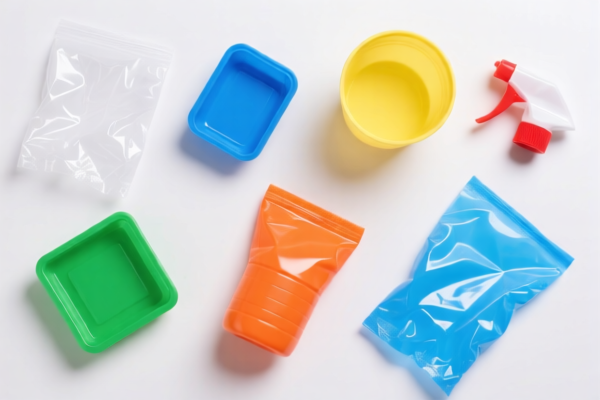
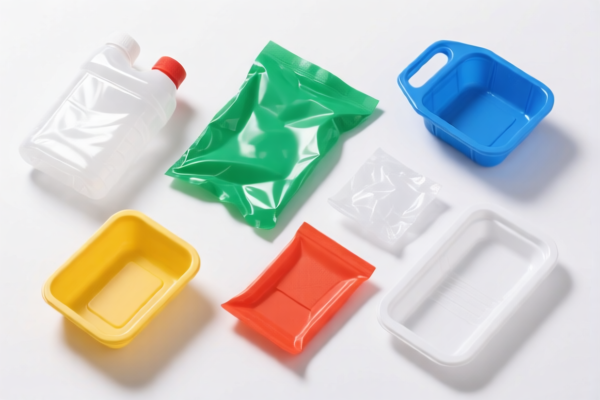
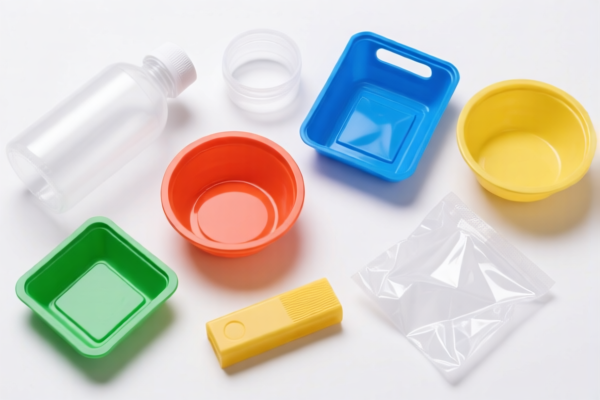

AI Analysis
🏭 Plastic Articles (Plastic Products / Other Plastic Goods)
🌐 HS Code Reference & Customs Clearance Guide | 2026 Latest Tariff Analysis | Professional Clearance Strategy
📌 I. Product Definition & Classification: Do You Really Understand "Plastic Articles"?
"Plastic Articles" (HS Chapter 39, Heading 3926) is a broad catch-all category for finished plastic products that are not specifically listed elsewhere in Chapters 39 and 40. This includes household items, industrial components, packaging, office supplies, and decorative goods made entirely of plastic.
In international trade, the classification depends heavily on the specific use, material composition, and level of processing. The key distinction lies in whether the item falls under: 1. Packaging/Transport containers (Heading 3923 or 3924 in some contexts, but often 3926 for general goods). 2. Household/Kitchenware (Heading 3924). 3. General/Other Plastic Articles (Heading 3926).
⚠️ Key Distinction:
- If the item is a box, sack, or bag for transport → Usually HS 3923.
- If the item is tableware or kitchenware → Usually HS 3924.
- If the item is miscellaneous (toys, parts, furniture, general utility) → Usually HS 3926.
📦 II. HS Code Classification Details (2026 Latest Tariff Authority Comparison)
Based on the provided data, the following HS codes are relevant for various plastic articles. Note that while the user asked for 3926.90.56.00, the data provides specific 10-digit codes with varying tax rates due to trade policies (e.g., Section 301, Section 122).
| HS Code | Product Description | Application Scenario | Total Tax Rate (China Origin) |
|---|---|---|---|
3923.90.00.12 |
Other plastic articles (Packaging/General) | General plastic packaging, non-specific plastic goods | 38.0% |
3923.90.00.80 |
Other plastic articles (Plastic Category) | Miscellaneous plastic items not elsewhere specified | 38.0% |
3924.90.56.10 |
Plastic tableware/kitchenware (Other) | Household plastic plates, bowls, cutlery, containers | 20.9% |
3924.90.56.50 |
Plastic tableware/kitchenware (Other) | Same as above, specific sub-category | 20.9% |
3926.90.85.00 |
Other plastic articles (Miscellaneous) | Plastic furniture, toys, industrial parts, general utility items | 24.0% |
🔍 Important Note:
- HS 3926.90.85.00 is the most common "catch-all" for general plastic goods (toys, decor, industrial parts).
- HS 3924 items (household) have a lower base duty but are still subject to additional tariffs.
- HS 3923 items (packaging) have the highest additional tariffs in this dataset.
- There is no3926.90.56.00in the provided data. The user’s query3926905600likely refers to a generic 8-digit code. In the US 10-digit system, plastic articles under 3926 typically fall under3926.90.85or similar. The data provided maps Household Plastic (3924) to.56.xcodes, not General Plastic (3926).
- Correction: The data shows3924.90.56.10/50(Household) at 20.9%.
- Correction: The data shows3926.90.85.00(General) at 24.0%.
- Conclusion: If your item is household (plates, cups), use 3924. If it’s general (toys, parts), use 3926.90.85.
💰 III. 2026 Latest Tariff Rate Breakdown (Including Surcharges, Policy Add-ons)
✅ Applicable Country: United States (US)
✅ Country of Origin: China (CN)
✅ Effective Date: As of current trade policy (Section 301 & Section 122)
🎯 1. 3924.90.56.10 & 3924.90.56.50 —— Plastic Tableware & Kitchenware (Household)
| Item | Content |
|---|---|
| Base Tariff | 3.4% (Ad Valorem) |
| Section 301 Surcharge | +7.5% |
| Section 122 Tariff | +10% |
| Total Tax Rate | 20.9% |
| Tax Calculation | CIF Value × 20.9% |
| De Minimis Eligibility | ❌ No (Deny De Minimis for Section 301/122 goods) |
| Legal Basis Path | Section 301: Footnote 9903.88.01 → Section 122: IEEPA → USITC:3924.90.56.10 |
📌 Explanation:
- "Section 301 Surcharge 7.5%" is part of the US-China trade war tariffs.
- "Section 122 Tariff 10%" applies to steel, aluminum, and certain plastic articles under specific executive orders.
- Total 20.9% is moderate compared to packaging plastics.
🎯 2. 3926.90.85.00 —— Other Plastic Articles (General/Miscellaneous)
| Item | Content |
|---|---|
| Base Tariff | 6.5% (Ad Valorem) |
| Section 301 Surcharge | +7.5% |
| Section 122 Tariff | +10% |
| Total Tax Rate | 24.0% |
| Tax Calculation | CIF Value × 24.0% |
| De Minimis Eligibility | ❌ No |
| Legal Basis Path | Section 301: Footnote 9903.88.01 → Section 122: IEEPA → USITC:3926.90.85.00 |
📌 Explanation:
- Higher base duty (6.5%) than household plastics.
- Same surcharges apply.
- This is the standard code for plastic toys, furniture, industrial parts, and general utility items.
🎯 3. 3923.90.00.12 & 3923.90.00.80 —— Packaging & Transport Plastic Articles
| Item | Content |
|---|---|
| Base Tariff | 3.0% (Ad Valorem) |
| Section 301 Surcharge | +25.0% |
| Section 122 Tariff | +10% |
| Total Tax Rate | 38.0% |
| Tax Calculation | CIF Value × 38.0% |
| De Minimis Eligibility | ❌ No |
| Legal Basis Path | Section 301: Footnote 9903.88.01 → Section 122: IEEPA → USITC:3923.90.00.12 |
📌 Explanation:
- Highest total tax rate (38%) in this dataset.
- Section 301 surcharge is significantly higher (25%) for packaging materials.
- Common for plastic bags, boxes, pallets, and shipping containers.
🛠️ IV. Customs Clearance Practical Advice (Real-World Pitfall Avoidance)
✅ 1. Required Documentation Checklist (All Must Be Provided)
| Document | Mandatory | Description |
|---|---|---|
| ✅ Product Specifications | ✔️ | Material type (PP, PE, ABS, etc.), dimensions, weight. |
| ✅ Product Photos | ✔️ | Clear images showing the item, packaging, and any labels. |
| ✅ Commercial Invoice | ✔️ | Must accurately describe the item (e.g., "Plastic Storage Bin" not just "Plastic"). |
| ✅ Packing List | ✔️ | Details of quantity, gross weight, net weight. |
| ✅ Origin Certificate | ✔️ | If applicable for non-China origin (though most tariffs apply to CN). |
| ✅ Material Declaration | ✔️ | Confirm no restricted substances (e.g., certain phthalates in toys). |
✅ 2. Declaration Tips (Key Mantras)
🔥 "Accurate Description, Correct Heading, Avoid Package Confusion!"
| Scenario | Correct Declaration | Wrong Practice |
|---|---|---|
| Plastic Storage Boxes | 3923.90.00.12 (Packaging) or 3926.90.85.00 (Furniture) |
Misdeclaring as "Household" to save tax |
| Plastic Plates/Bowls | 3924.90.56.10 (Household) |
Misdeclaring as "General Plastic" → Higher base duty |
| Plastic Toys | 3926.90.85.00 (Other) |
Misdeclaring as "Household" → Inaccurate |
| Plastic Bags/Boxes | 3923.90.00.80 (Packaging) |
Misdeclaring as "General" → Potential audit |
⚠️ Critical:
- Do not use generic terms like "Plastic Parts" without specifying function.
- Do not confuse 3923 (Packaging) with 3926 (General). The tax difference is significant (38% vs 24%).
- Do not confuse 3924 (Household) with 3926 (General). Household has a lower base duty (3.4% vs 6.5%).
✅ 3. Special Handling Cases
| Scenario | Handling Advice |
|---|---|
| Mixed Shipment | If shipment contains both household (3924) and general (3926) items, declare separately. Do not lump into one HS code. |
| Plastic + Non-Plastic | If the item is 95% plastic with metal hinges, it may still be classified as plastic. Provide detailed BOM. |
| Customs Valuation | Ensure CIF value is accurate. High tariffs mean even small valuation errors lead to large tax discrepancies. |
| Section 122 Exemptions | Check if any specific plastic articles are exempt from Section 122. (Generally, most are included). |
🌍 V. Global Market Customs Comparison (2026 Latest)
| Country/Region | Recommended HS Code | Tariff (China Origin) | Certification Required | Notes |
|---|---|---|---|---|
| 🇺🇸 USA | 3926.90.85.00 |
24.0% | FCC (if electronic), CPSIA (if toys) | High tariffs due to Section 301/122 |
| 🇨🇳 China | 3926.90.85.00 |
~6.5% | CCC (if applicable) | Base duty only, no Section 301 |
| 🇪🇺 EU | 3926.90.85.00 |
~5-6% | CE, REACH | No Section 301/122 |
| 🇬🇧 UK | 3926.90.85.00 |
~5-6% | UKCA | Post-Brexit rules apply |
| 🇯🇵 Japan | 3926.90.85.00 |
~5% | PSE (if electrical) | No major anti-dumping |
📌 Conclusion:
- USA is the most costly market for Chinese plastic articles due to additional tariffs.
- EU and UK have lower tariffs but stricter environmental regulations (REACH).
- China has moderate base duties but no trade war surcharges.
📌 VI. Common Mistakes & Pitfall Guide (Lessons Learned)
❌ Mistake 1: Misclassifying Plastic Packaging as General Plastic
👉 Result: Under-declared tax. Customs will audit and charge 38% instead of 24% + penalties.
❌ Mistake 2: Misclassifying Plastic Household Items as General Plastic
👉 Result: Over-declared tax. You pay 24% instead of 20.9%. Small savings, but inefficient.
❌ Mistake 3: Using Generic Descriptions ("Plastic Item")
👉 Result: Customs may classify as the highest duty category (3923 at 38%) due to uncertainty.
❌ Mistake 4: Ignoring Section 122
👉 Result: Missing the 10% surcharge on all three categories. Total tax will be underestimated by 10%.
✅ Correct Approach:
"Plastic Storage Bin, Polypropylene, Blue, Model XYZ, For Household Use" → 3924.90.56.10
"Plastic Toy Car, ABS, Red, Model ABC" → 3926.90.85.00
"Plastic Shipping Box, Corrugated Plastic, Green" → 3923.90.00.12
🎯 VII. Conclusion: Professional Declaration Saves Money!
🎯 Remember the Mantras:
🔹 "Household = 20.9%, General = 24.0%, Packaging = 38.0%!"
🔹 "Section 301 + Section 122 = Higher Tax, Be Precise!"
🔹 "Don't Guess HS Code, Or You Pay 38%!"
📌 Pro Tip:
If your plastic articles are originating from Vietnam, Mexico, Thailand, or Malaysia, you may qualify for IEEPA exemptions or lower Section 301 rates.
Recommend pre-classification rulings or consult a customs broker to verify if your specific product qualifies for lower duty rates under FTAs.
📣 Immediate Action:
📞 Contact a licensed customs broker + Provide product photos + Verify HS Code pre-shipment
🚀 Ensure smooth customs clearance, avoid delays, and optimize your cost structure!
✨ Professional Customs Clearance Starts with Accurate Classification!
💼 Every percentage point of tax matters to your bottom line!
Customer Reviews
About HS Code Classification
The Harmonized System (HS) is an internationally standardized nomenclature developed by the World Customs Organization (WCO) to classify traded products. Over 200 countries use the HS system as the basis for customs tariffs, trade statistics, and import/export regulations.
Each HS code follows a hierarchical structure:
- Chapter (2 digits) — Broad category of goods (e.g., Chapter 84: Machinery and Mechanical Appliances)
- Heading (4 digits) — More specific grouping within the chapter
- Subheading (6 digits) — Internationally standardized breakdown, used by all WCO member countries
- National subdivisions (8-10 digits) — Country-specific extensions for further classification, such as US HTSUS 10-digit codes
Correct HS code classification is essential for smooth customs clearance, accurate duty payment, and compliance with trade regulations. Misclassification can lead to customs delays, overpayment of duties, or penalties.
When importing from CN to US, the applicable tariff rates may include:
- Most-Favored-Nation (MFN) rate — The standard duty rate applied to WTO members
- General rate — Applied to countries without trade agreements
- Trade remedy duties — Additional tariffs such as Section 301 (anti-dumping), Section 232 (national security), or countervailing duties
The information provided on this page is for reference purposes only. For official classification, please consult with your local customs authority or a licensed customs broker.