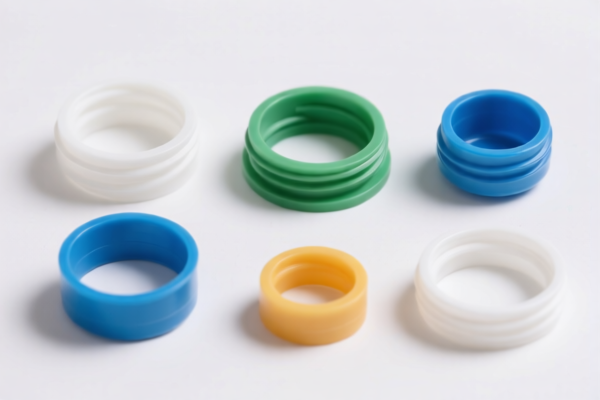
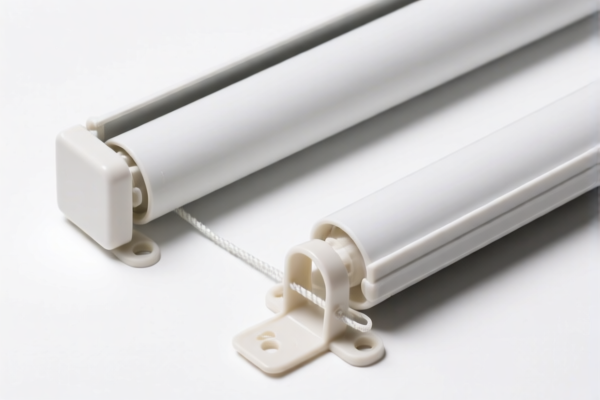
plastic blind components
CN → US| HS Code | Tariff Rate | Origin | Destination | Doc |
|---|---|---|---|---|
| 3920995000 | 40.8% | CN | US | Official Doc |
| 5903102090 | 35.0% | CN | US | Official Doc |
| 3926909989 | 22.8% | CN | US | Official Doc |
| 3926909987 | 22.8% | CN | US | Official Doc |
| 3920991000 | 41.0% | CN | US | Official Doc |
Product Images


AI Analysis
🌞 Plastic Blind Components (Window Blinds & Shutters)
🌐 HS Code Reference & Customs Clearance Guide | 2026 Latest Tariff Analysis | Strategic Clearance Strategy
📌 I. Product Definition: What Exactly Are "Plastic Blind Components"?
"Plastic Blind Components" generally refer to Venetian blinds made of plastic slats, louvers, cords, and headrails. In international trade, the classification is highly sensitive because the same physical object can fall under different HS Codes depending on its material structure and application form.
Key Distinction in Classification: * Sheet/Film/Form: If the slats are treated as a sheet, plate, film, or strip (often continuous or rolled before cutting) → 3920.99... * Finished Article/Application: If the item is a specific finished part (e.g., a slat specifically shaped for a blind, or a curtain assembly) → 3926.90... or 5903.10... * Coated Fabric: If the material is plastic-coated fabric used as a curtain → 5903.10...
⚠️ Critical Warning:
- Misclassification Risk: Declaring a finished blind as a "plastic sheet" (3920) vs. a "finished plastic article" (3926) changes the Base Tariff from 5.3% to 6.0% and the Section 301 Tariff from 7.5% to 25.0%.
- Total Tax Impact: The total tax rate ranges from 22.8% to 41.0%. An error of one code can mean 18.2% more cost per unit.
📦 II. HS Code Classification Details (2026 Official Tariff Reference)
| HS Code | Product Description | Material & Form Analysis | Total Tax (China to US) |
|---|---|---|---|
3920.99.50.00 |
Plastic Venetian Blinds, Plastic Sheets/Plates/Films | Classified as "Plastic Sheet, Plate, Film, Foil & Strip." The slats are treated as continuous plastic profiles or sheet material. | 40.8% |
3920.99.10.00 |
Plastic Venetian Blinds, Extended Sheet/Film Forms | Similar to above, but specifically for extended forms of plastic sheets/films used as blinds. | 41.0% |
5903.10.20.90 |
Plastic Venetian Blinds, Plastic-Coated/Covered Fabric | The slats or the entire curtain assembly is made of textile fabric coated/impregnated with plastic (not solid plastic). | 35.0% |
3926.90.99.89 |
Plastic Venetian Blinds, Other Plastic Articles | Classified as a finished application part of plastic (specific slat, specific component, not a sheet). | 22.8% |
3926.90.99.87 |
Plastic Venetian Blinds, Specific Plastic Application | Another sub-category for specific plastic components (finished articles) not covered by sheet forms. | 22.8% |
🔍 Key Insight:
- Lowest Tax (22.8%) applies if you can prove the item is a finished article (3926).
- Highest Tax (41.0%) applies if the item is treated as plastic sheet material (3920).
- Intermediate Tax (35.0%) applies if the material is plastic-coated fabric (5903).
💰 III. 2026 Tariff Rate Deep Dive (Base + Section 301 + 122)
✅ Applicable Country: United States (US)
✅ Country of Origin: China (CN)
✅ Effective Time: 2025-2026 (Current Active Regime)
🎯 1. 3920.99.50.00 & 3920.99.10.00 — Plastic Sheet/Film Category
High Risk / High Tax Tier
| Component | Rate | Legal Basis |
|---|---|---|
| Base Tariff | 5.8% / 6.0% | Harmonized Tariff Schedule (HTSUS) General |
| Section 301 (Section 122) | +25.0% | "China Specific Tariff" on plastic products (Footnote) |
| Additional 122 Clause | +10.0% | Specific Section 122 Tariff on Plastics |
| Total Effective Rate | 40.8% / 41.0% | Sum of all above |
| De Minimis Exemption | ❌ No | Not eligible for $800 exemption |
📌 Explanation:
- This category assumes the product is raw material or semi-finished sheet/plastic.
- 25% Section 301 is the standard "China Tariff" for plastics.
- +10% is the additional penalty under the specific Section 122 clause.
- Result: If your product is declared here, you pay ~41 cents per dollar of value.
🎯 2. 5903.10.20.90 — Plastic-Coated Fabric
Medium Risk Tier
| Component | Rate | Legal Basis |
|---|---|---|
| Base Tariff | 0.0% | Textile category often has 0% base |
| Section 301 | +25.0% | "China Specific Tariff" on coated fabrics |
| Additional 122 Clause | +10.0% | Specific Section 122 Tariff on Coated Textiles |
| Total Effective Rate | 35.0% | Sum of all above |
| De Minimis Exemption | ❌ No | Not eligible |
📌 Explanation:
- Base tariff is 0% because it's a textile product.
- However, the 301 tariff (25%) and 122 tariff (10%) still apply due to the plastic coating.
- Result: 35% total tax. Lower than pure plastic sheets, but still high.
🎯 3. 3926.90.99.89 & 3926.90.99.87 — Finished Plastic Articles
Lowest Risk / Lowest Tax Tier
| Component | Rate | Legal Basis |
|---|---|---|
| Base Tariff | 5.3% | General "Other Plastic Articles" |
| Section 301 | +7.5% | Reduced Section 301 for specific finished goods (Note: Some sub-codes have reduced rates) |
| Additional 122 Clause | +10.0% | Still applies to the plastic content |
| Total Effective Rate | 22.8% | Sum of all above |
| De Minimis Exemption | ❌ No | Not eligible |
📌 Explanation:
- Crucial Strategy: If the product is declared as a finished article (not a sheet), the Section 301 tariff drops from 25% to 7.5%.
- Savings: This results in a 17.2% reduction in total tax compared to the sheet category.
- Condition: The product must be clearly defined as a specific component or finished blind slat, not a raw sheet.
🛠️ IV. Customs Clearance Strategy & Practical Advice
✅ 1. Documentation Checklist (Must-Have)
| Document | Requirement | Purpose |
|---|---|---|
| Product Technical Spec Sheet | ✔️ | Must detail: Material (Solid Plastic vs. Coated Fabric), Shape (Slat, Cord, Rail), Dimensions. |
| Photographs (High Res) | ✔️ | Clear images of the finished blind, slats, and how they are assembled. |
| Bill of Materials (BOM) | ✔️ | List all components (Plastic slats, cords, headrail) to prove "Finished Article" status. |
| Factory Certificate | ✔️ | Proof of manufacturing process (e.g., "Injection Molded Slats" vs. "Cut from Sheet"). |
| Commercial Invoice | ✔️ | Critical: Must state "Finished Plastic Venetian Blinds" (NOT "Plastic Sheets"). |
📌 Pro Tip:
- If you import solid plastic slats, do NOT call them "Plastic Sheets." Call them "Venetian Blind Slat Components".
- If you import fabric-covered blinds, call them "Plastic Coated Window Curtains".
✅ 2. Classification Strategy (The "22.8%" Hack)
| Scenario | Recommended HS Code | Tax Rate | Reasoning |
|---|---|---|---|
| Solid Plastic Slats (Injection Molded) | 3926.90.99.89 |
22.8% | They are finished articles (specific shape), not raw sheets. |
| Solid Plastic Slats (Cut from Sheet) | 3920.99.50.00 |
40.8% | If they are sold as sheets and you cut them later, they are "Sheet" goods. |
| Plastic-Coated Fabric Blinds | 5903.10.20.90 |
35.0% | Material is textile + plastic coating. |
| Mixed Components (Slats + Cords) | 3926.90.99.89 |
22.8% | If the whole assembly is a finished kit, classify as finished article. |
🔥 Golden Rule:
"Finished Product = Lower Tax."
If you import finished slats, declare under 3926 (22.8%).
If you import plastic rolls/sheets to make slats later, declare under 3920 (40.8%).
✅ 3. Common Pitfalls to Avoid
❌ Pitfall 1: Declaring as "Plastic Sheets" (3920)
- Result: You pay 40.8% tax.
- Fix: Re-classify as "Finished Plastic Articles" (3926) if the slats are already cut and shaped.
- Savings: 18% tax reduction.
❌ Pitfall 2: Mixing "Fabric" and "Plastic" without clarity
- Result: Customs may classify as the higher rate or demand re-inspection.
- Fix: Clearly state "Plastic-Coated Fabric" or "Solid Plastic" in the invoice description.
❌ Pitfall 3: Missing Section 122 Clause
- Result: Underpayment of 10% tax → Penalty + Back Taxes.
- Fix: Always check if the Section 122 (10%) applies to your specific HS sub-code.
🌍 V. Global Market Comparison (2026)
| Destination | Best HS Code | Total Tax | Notes |
|---|---|---|---|
| 🇺🇸 USA | 3926.90.99.89 |
22.8% | Critical: Avoid 3920 (41%) by claiming "Finished Article". |
| 🇪🇺 EU | 3926.90 |
~4-6% | Lower base tariff, but CE/FSC certification required. |
| 🇨🇦 Canada | 3926.90 |
~5-8% | No Section 301 tariff, but strict plastic labeling rules. |
| 🇦🇺 Australia | 3926.90 |
~5% | No major Section 301 impact. |
📌 Conclusion:
- USA is the only market with the Section 301 + 122 double penalty.
- Strategy: Aggressive classification as "Finished Article" (3926) is the only way to reduce costs in the US market.
📌 VI. Summary & Action Plan
🎯 Final Checklist for Shippers:
- Check Material: Is it Solid Plastic or Coated Fabric?
- Check State: Is it Raw Sheet or Finished Slat?
- Select Code:
- Solid Plastic + Finished Slat → 3926.90.99.89 (22.8%) ✅
- Solid Plastic + Sheet → 3920.99.50.00 (40.8%) ❌ (Avoid if possible)
- Coated Fabric → 5903.10.20.90 (35.0%)
- Document: Ensure Invoice says "Finished Venetian Blind Components", not "Plastic Sheets".
🚀 Pro Tip:
If you are unsure, contact a customs broker to request a Pre-Ruling (HTS Classification Ruling) from US Customs. It costs ~$500 but saves you thousands in potential penalties and 18% in taxes per shipment.
✨ "Correct HS Code = Lower Tax = Higher Profit!"
💼 Don't let a wrong declaration cost you 18% of your margin!
Customer Reviews
About HS Code Classification
The Harmonized System (HS) is an internationally standardized nomenclature developed by the World Customs Organization (WCO) to classify traded products. Over 200 countries use the HS system as the basis for customs tariffs, trade statistics, and import/export regulations.
Each HS code follows a hierarchical structure:
- Chapter (2 digits) — Broad category of goods (e.g., Chapter 84: Machinery and Mechanical Appliances)
- Heading (4 digits) — More specific grouping within the chapter
- Subheading (6 digits) — Internationally standardized breakdown, used by all WCO member countries
- National subdivisions (8-10 digits) — Country-specific extensions for further classification, such as US HTSUS 10-digit codes
Correct HS code classification is essential for smooth customs clearance, accurate duty payment, and compliance with trade regulations. Misclassification can lead to customs delays, overpayment of duties, or penalties.
When importing from CN to US, the applicable tariff rates may include:
- Most-Favored-Nation (MFN) rate — The standard duty rate applied to WTO members
- General rate — Applied to countries without trade agreements
- Trade remedy duties — Additional tariffs such as Section 301 (anti-dumping), Section 232 (national security), or countervailing duties
The information provided on this page is for reference purposes only. For official classification, please consult with your local customs authority or a licensed customs broker.