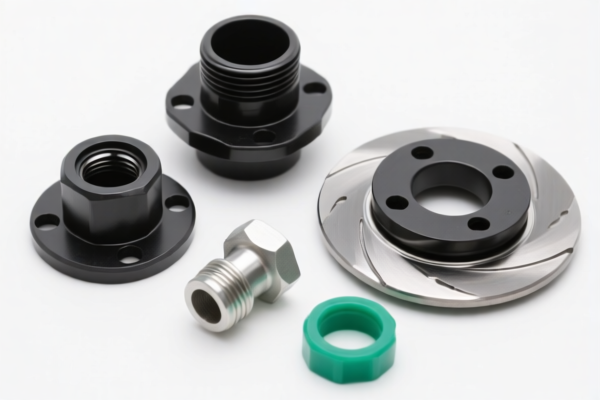
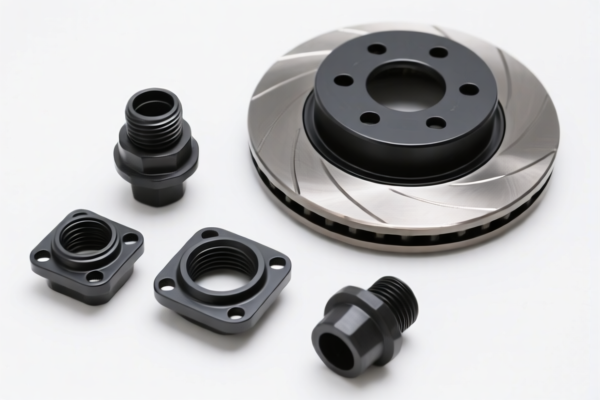
plastic brake system components
CN → US| HS Code | Tariff Rate | Origin | Destination | Doc |
|---|---|---|---|---|
| 8708305090 | 0.0% | CN | US | Official Doc |
| 3926909600 | 35.0% | CN | US | Official Doc |
| 3926909987 | 22.8% | CN | US | Official Doc |
| 8708998105 | 37.5% | CN | US | Official Doc |
Product Images
AI Analysis
🛑 Plastic Brake System Components
🌐 HS Code Reference & Customs Clearance Guide | 2026 Latest Tariff Analysis | Professional Clearance Strategy
📌 1. Product Definition and Classification: Do You Really Know “Plastic Brake Components”?
Plastic brake system components are critical parts used in automotive braking systems, typically made from engineering plastics (such as polyamide, PTFE, or reinforced polymers) for their lightweight, corrosion-resistant, and high-strength properties. These components may include: * Brake pedal assemblies * Brake fluid reservoirs * Vacuum booster housings * Brake line connectors/clips * Master cylinder parts
⚠️ Key Classification Point:
- If the component is specifically designed for motor vehicles (automotive application) and meets the definition of “parts of vehicles,” it generally falls under Chapter 87 (8708).
- If it is a general-purpose plastic part without specific automotive designation or used in other machinery, it may fall under Chapter 39 (3926) as other plastic articles.
- Critical Distinction: Automotive-specific parts →8708| General plastic parts →3926
📦 2. HS Code Classification Details (2026 Latest Tariff Authority Comparison)
| HS Code | Product Description | Applicable Scenario | Contains Automotive Specificity? |
|--------|--------------------------|-----------------------------|
| 3926.90.96.00 | Other plastic articles and components, not specified elsewhere | General plastic brake parts (e.g., non-automotive applications or generic components) | ❌ No |
| 3926.90.99.87 | Other plastic articles, parts, or assemblies, default match logic | Plastic brake components classified as general parts/components | ❌ No |
| 8708.99.81.05 | Plastic components for brake systems, intended for motor vehicles | Automotive-specific plastic brake parts (e.g., brake pedal housings, master cylinder parts) | ✅ Yes |
| 8708.30.50.90 | Other brake systems and parts thereof (including plastic) | Plastic brake components falling under “other brake system parts” | ✅ Yes |
🔍 Important Reminder:
- Automotive-specific components should be classified under 8708, not 3926, to avoid misdeclaration.
- If the component is not explicitly for automotive use (e.g., industrial machinery brake parts), it may fall under 3926.
- Do not split the declaration if the plastic component is part of an integrated brake assembly; declare as a single unit.
💰 3. Detailed Breakdown of Tariff Rates (Including Additional Duties & Policy Add-ons)
✅ Applicable Country: United States (US)
✅ Country of Origin: China (CN)
✅ Effective Date: November 10, 2025 (including subsequent imports)
🎯 1. 3926.90.96.00 —— Plastic Articles and Components
| Item | Content |
|---|---|
| Base Duty Rate | 0% (ad valorem) |
| USITC Additional Duty | +25% (under USITC Footnote 9903.88.01) |
| IEEPA Additional Duty | +10% (for China/HK origin, effective Nov 10, 2025) |
| Total Duty Rate | 35.0% |
| Duty Calculation | CIF Value × 35% |
| De Minimis Eligible? | ❌ No (deny_de_minimis) |
| Legal Basis Path | IEEPA:9903.01.25 → IEEPA:9903.01.24 → USITC:3926.90.96.00 → FOOTNOTE:9903.88.01 |
📌 Explanation:
- The 25% USITC duty is imposed under Section 301 of the US Trade Act.
- The 10% IEEPA duty is an additional penalty for Chinese-origin goods.
- Total 35%, which is a high tariff, requiring careful cost assessment.
🎯 2. 3926.90.99.87 —— Other Plastic Articles, Parts, or Assemblies
| Item | Content |
|---|---|
| Base Duty Rate | 5.3% |
| USITC Additional Duty | +7.5% |
| IEEPA Additional Duty | +10% |
| Total Duty Rate | 22.8% |
| Duty Calculation | CIF Value × 22.8% |
| De Minimis Eligible? | ❌ No |
| Legal Basis Path | IEEPA:9901.25 → IEEPA:9903.01.24 → USITC:3926.90.99.87 → FOOTNOTE:9903.88.01 |
📌 Note:
- This classification applies to general plastic parts not specifically for automotive use.
- Lower total rate (22.8%) compared to3926.90.96.00(35%), but still subject to no de minimis exemption.
🎯 3. 8708.99.81.05 —— Plastic Components for Brake Systems (Automotive)
| Item | Content |
|---|---|
| Base Duty Rate | 2.5% |
| USITC Additional Duty | +25% |
| IEEPA Additional Duty | +10% |
| Total Duty Rate | 37.5% |
| Duty Calculation | CIF Value × 37.5% |
| De Minimis Eligible? | ❌ No |
| Legal Basis Path | IEEPA:9903.01.25 → IEEPA:9903.01.24 → USITC:8708.99.81.05 → FOOTNOTE:9903.88.01 |
📌 Explanation:
- Although this is an automotive-specific part (8708), it still faces high additional duties.
- Total 37.5%, the highest among all options, due to the combination of base duty and additional tariffs.
🎯 4. 8708.30.50.90 —— Other Brake Systems and Parts
| Item | Content |
|---|---|
| Base Duty Rate | 2.5% |
| USITC Additional Duty | +25% |
| IEEPA Additional Duty | +10% |
| Total Duty Rate | 2.5% + 35.0% = 37.5% |
| Duty Calculation | CIF Value × 37.5% |
| De Minimis Eligible? | ❌ No |
| Legal Basis Path | IEEPA:9903.01.25 → IEEPA:9903.01.24 → USITC:8708.30.50.90 → FOOTNOTE:9903.88.01 |
📌 Note:
- Similar to8708.99.81.05, this is an automotive brake part classification.
- Total 37.5%, same as above, due to identical additional duty structure.
🛠️ 4. Practical Customs Clearance Advice (Battle-Tested Pitfall Avoidance Guide)
✅ 1. Required Documentation Checklist (All Mandatory)
| Document | Required | Notes |
|---|---|---|
| ✅ Product Specification Sheet | ✔️ | Must include material type (e.g., PA66, PTFE), dimensions, application (automotive/general) |
| ✅ Engineering Drawing/3D Model | ✔️ | To prove automotive specificity or general use |
| ✅ Product Photos (with Label) | ✔️ | Clear view of model number, brand, input/output specs |
| ✅ Third-Party Certification | ✔️ | ISO/TS 16949, IATF 16949, RoHS, REACH (if applicable) |
| ✅ Commercial Invoice | ✔️ | Must clearly state “Plastic Brake System Component for Automotive/Industrial Use” |
| ✅ Certificate of Origin (CO) | ✔️ | If not Chinese origin, may qualify for reduced rates |
| ✅ Packing List | ✔️ | Show integration of components to avoid split declaration |
✅ 2. Declaration Tips (Key Mnemonics)
🔥 “Auto Parts Go to 8708, General Parts to 3926, Name Precisely, Tariff Saves Big!”
| Scenario | Correct Declaration | Wrong Practice |
|---|---|---|
| Automotive-specific plastic brake part | 8708.99.81.05 or 8708.30.50.90 |
Misdeclare as 3926 → 35% vs 37.5% (minor difference but wrong logic) |
| General plastic brake part (non-auto) | 3926.90.96.00 or 3926.90.99.87 |
Misdeclare as 8708 → 37.5% |
| Integrated brake assembly (with metal parts) | Declare as single unit under 8708 |
Split declaration → Each item taxed separately, higher total |
✅ 3. Special Case Handling
| Scenario | Handling Advice |
|---|---|
| OEM Custom Parts | Provide customer PO + design drawings to prove automotive specificity |
| Parts Used in Both Automotive & Industrial | Declare under automotive 8708 if primarily for auto; provide justification |
| Mixed Shipment (Auto + General Parts) | Separate declarations; do not mix under one HS code |
| Parts with Metal Inserts | If predominantly plastic, still classify under 3926 or 8708 based on primary function |
🌍 5. Global Market Clearance Comparison (2026 Latest)
| Country/Region | Recommended HS Code | Duty Rate | Certification Required | Notes |
|---|---|---|---|---|
| 🇺🇸 USA | 8708.99.81.05 / 3926.90.96.00 |
35%–37.5% (China origin) | IATF 16949, RoHS, REACH | High additional tariffs |
| 🇨🇳 China | 8708.99.81.05 / 3926.90.96.00 |
0%–2.5% | CCC (if applicable) | No additional duties |
| 🇪🇺 EU | 8708.99.81.05 / 3926.90.96.00 |
0% (if ECE certified) | ECE R13, REACH | No additional duties |
| 🇦🇺 Australia | 8708.99.81.05 / 3926.90.96.00 |
5% | SAA | No additional duties |
| 🇯🇵 Japan | 8708.99.81.05 / 3926.90.96.00 |
0% | JIS, JIS Q 16949 | No additional duties |
📌 Conclusion:
- USA imposes the highest tariffs on Chinese-origin plastic brake components.
- EU, Japan, Australia, and China have lower or zero duties, making them more attractive markets.
- Consider supply chain relocation to Vietnam, Mexico, or Thailand to avoid IEEPA 10% and USITC 25% duties.
📌 6. Common Errors & Pitfall Guide (Lessons from Blood and Tears)
❌ Error 1: Declaring automotive brake parts as “general plastic parts” (3926)
👉 Consequence: Wrong legal basis, potential audit, back taxes + penalties.
❌ Error 2: Splitting an integrated brake assembly into individual components
👉 Consequence: Each component taxed separately → Total duty exceeds 50%!
❌ Error 3: Failing to provide automotive certification (IATF 16949)
👉 Consequence: Customs cannot verify automotive specificity → Delay or rejection.
❌ Error 4: Using vague descriptions like “Plastic Part”
👉 Consequence: Ambiguity → Customs discretion applies, possibly higher rate.
✅ Correct Practice:
“Plastic Brake Pedal Housing, IATF 16949 Certified, For Automotive Use, Model XYZ, RoHS & REACH Compliant”
🎯 7. Conclusion: Precision Classification Saves Money and Time!
🎯 Key Takeaways:
🔹 “Auto Parts → 8708, General Parts → 3926, Name Precisely, Tariff Saves Big!”
🔹 “US Tariffs Hit Hard: 35%–37.5% for China Origin, Consider Offshoring!”
🔹 “Documentation is Key: IATF 16949, RoHS, REACH, and Design Drawings Are Mandatory!”
📌 Pro Tip:
If your parts are sourced from Vietnam, Mexico, Thailand, or Malaysia, you may qualify for IEEPA exemption, reducing duty to 0%–5%.
Recommendation: Apply for Advance Ruling before shipment to avoid clearance risks.
📣 Call to Action:
📞 Consult a Licensed Customs Broker + Provide Product Photos + Apply for HS Code Advance Ruling
🚀 Clear Your Shipment Smoothly, Expand Global Markets, Maximize Profits!
✨ Professional Clearance Starts with Accurate Classification!
💼 Every Cent of Cost Deserves Precise Calculation!
Customer Reviews
About HS Code Classification
The Harmonized System (HS) is an internationally standardized nomenclature developed by the World Customs Organization (WCO) to classify traded products. Over 200 countries use the HS system as the basis for customs tariffs, trade statistics, and import/export regulations.
Each HS code follows a hierarchical structure:
- Chapter (2 digits) — Broad category of goods (e.g., Chapter 84: Machinery and Mechanical Appliances)
- Heading (4 digits) — More specific grouping within the chapter
- Subheading (6 digits) — Internationally standardized breakdown, used by all WCO member countries
- National subdivisions (8-10 digits) — Country-specific extensions for further classification, such as US HTSUS 10-digit codes
Correct HS code classification is essential for smooth customs clearance, accurate duty payment, and compliance with trade regulations. Misclassification can lead to customs delays, overpayment of duties, or penalties.
When importing from CN to US, the applicable tariff rates may include:
- Most-Favored-Nation (MFN) rate — The standard duty rate applied to WTO members
- General rate — Applied to countries without trade agreements
- Trade remedy duties — Additional tariffs such as Section 301 (anti-dumping), Section 232 (national security), or countervailing duties
The information provided on this page is for reference purposes only. For official classification, please consult with your local customs authority or a licensed customs broker.