plastic building window
CN → US| HS Code | Tariff Rate | Origin | Destination | Doc |
|---|---|---|---|---|
| 3925200020 | 22.8% | CN | US | Official Doc |
| 3925200091 | 22.8% | CN | US | Official Doc |
| 3925200010 | 22.8% | CN | US | Official Doc |
| 3916200091 | 40.8% | CN | US | Official Doc |
| 3926305000 | 22.8% | CN | US | Official Doc |
Product Images
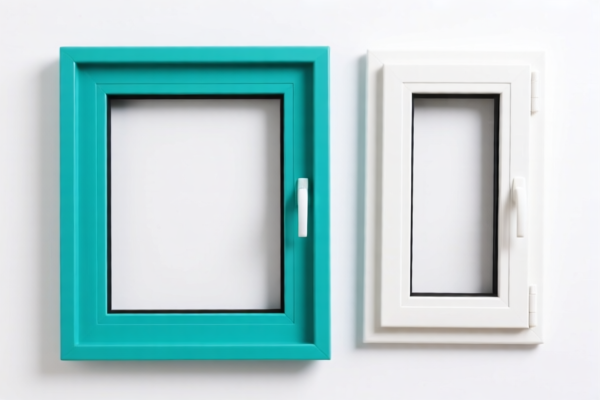
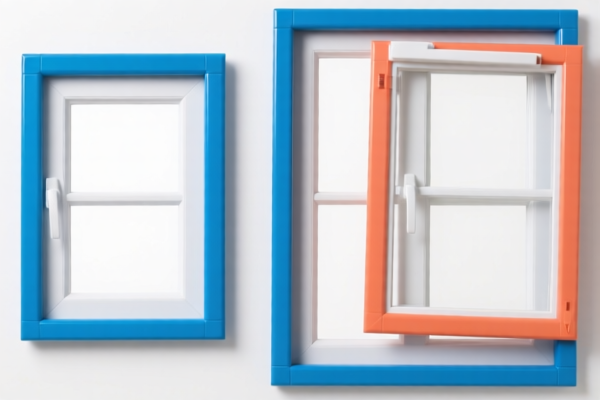
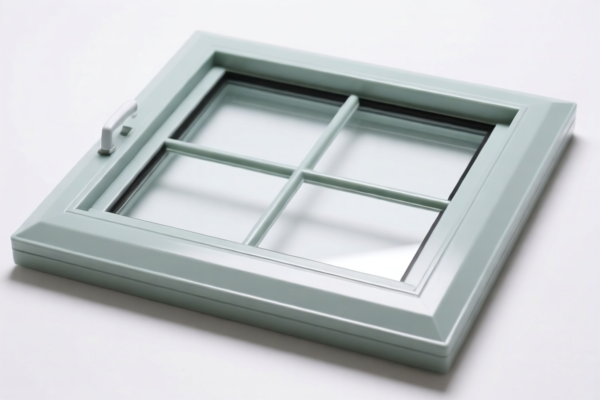
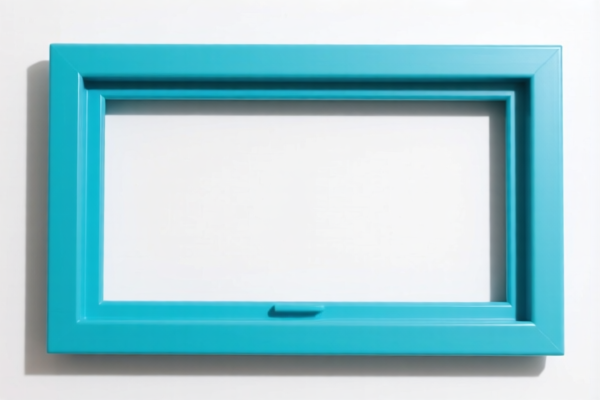
AI Analysis
🪟 Plastic Building Windows (Plastic Architectural Glazing & Frames)
🌐 HS Code Reference & Customs Clearance Guide | 2026 Latest Tariff Analysis | Professional Entry Strategy
📌 I. Product Definition & Classification: Do You Really Understand "Plastic Windows"?
Plastic building windows are critical components in modern construction, valued for thermal insulation, durability, and cost-efficiency. In international trade, they are primarily composed of Plastic (e.g., PVC, uPVC, Polycarbonate) and fall under Chapter 39 (Plastics and Articles Thereof).
The classification depends heavily on the specific form (finished window unit vs. profile/frame) and structural role (opening sash vs. structural frame).
⚠️ Key Distinction Point:
- If it is a complete window assembly (glass + frame + hardware) → 3925.20.00
- If it is a structural frame/projection (profile type) → 3916.20.00 or 3926.30.50.00
- Crucial Note: All HS Codes listed below are subject to significant Additional Tariffs due to Section 301 and Section 232/IEEPA implications for Chinese-origin goods.
📦 II. HS Code Classification Details (2026 Latest Tariff Authority Comparison)
| HS Code | Product Description | Application Scenario | Key Classification Feature |
|---|---|---|---|
3925.20.00.20 |
Plastic Windows for Buildings | Complete window units, uPVC casement/slider windows | Fits "Windows for buildings" specifically |
3925.20.00.91 |
Plastic Windows for Buildings (General) | General plastic windows, frames & casings for doors/windows | Fits "Doors, windows and their frames" broadly |
3925.20.00.10 |
Plastic Door Frames | Structural plastic frames for doors | Fits "Plastic building components" |
3916.20.00.91 |
Plastic Window/Door Frames (Profiles) | Extruded plastic profiles, rods, bars for frames | Fits "Profiles, rods, bars" of vinyl polymers |
3926.30.50.00 |
Other Plastic Articles (Frames/Connectors) | Plastic connectors, structural fittings for doors/windows | Fits "Other articles of plastics" |
🔍 Priority Reminder:
- For finished window units,3925.20.00is the primary chapter.
- For raw extruded profiles used to make frames,3916.20.00may apply, but higher tariffs often apply due to specific trade restrictions.
- Do not split a complete window unit into "frame + glass + handle" for lower tariffs; Customs typically requires assembly classification.
💰 III. 2026 Latest Tariff Rate Breakdown (Including Additional Taxes & Policy Add-ons)
✅ Applicable Country: United States (US)
✅ Origin: China (CN)
✅ Effective Date: 2025-2026 (Current enforcement period)
🎯 1. 3925.20.00.20, 3925.20.00.91, 3925.20.00.10, 3926.30.50.00
(Standard Plastic Building Components & Windows)
| Item | Content |
|---|---|
| Base Duty Rate | 5.3% (Ad Valorem) |
| Section 301 Additional Tariff | +7.5% (China-origin specific) |
| Section 232 / IEEPA Add-on | +10% (Targeted trade remedy) |
| Total Effective Rate | 22.8% |
| Tax Calculation | CIF Value × 22.8% |
| De Minimis Eligibility | ❌ No (Deny de minimis for Section 301 goods) |
| Legal Basis Path | USITC:3925.20.00 → Section 301: Footnote 9903.88.01 → IEEPA:9903.01.24 |
📌 Explanation:
- The 5.3% is the standard Most-Favored-Nation (MFN) rate for plastic building articles.
- The 7.5% is part of the revised Section 301 list affecting construction materials.
- The 10% is an additional layer applied to specific plastic structural goods under trade enforcement.
- Total 22.8% is high but lower than the alternative profile classification.
🎯 2. 3916.20.00.91
(Plastic Profiles / Rods / Bars for Frames)
| Item | Content |
|---|---|
| Base Duty Rate | 5.8% (Ad Valorem) |
| Section 301 Additional Tariff | +25.0% (Heavier penalty for polymers/profiles) |
| Section 232 / IEEPA Add-on | +10% |
| Total Effective Rate | 40.8% |
| Tax Calculation | CIF Value × 40.8% |
| De Minimis Eligibility | ❌ No |
| Legal Basis Path | USITC:3916.20.00 → Section 301: High-Tariff Footnote → IEEPA:9903.01.25 |
📌 Critical Warning:
- DO NOT classify a finished window frame as a "plastic profile" (3916) to save money. The tariff jumps from 22.8% to 40.8%.
- This HS Code applies to extruded shapes (like raw PVC tubes) intended for further manufacturing, not finished building components.
🛠️ IV. Customs Clearance Practical Advice (Avoid Pitfalls Guide)
✅ 1. Required Documentation Checklist
| Document | Mandatory? | Notes |
|---|---|---|
| ✅ Product Specification Sheet | ✔️ | Must specify material (e.g., uPVC, PVC), dimensions, and assembly status. |
| ✅ Product Photos | ✔️ | Clear images of the window/frame, showing labels, hardware, and finish. |
| ✅ Commercial Invoice | ✔️ | Description must match HS Code exactly (e.g., "Plastic Window Unit" vs. "Plastic Profile"). |
| ✅ Packing List | ✔️ | Detail parts if shipped disassembled (e.g., Frame + Sash + Glass). |
| ✅ Origin Certificate (CO) | ✔️ | Critical for proving Chinese origin to apply correct Section 301 rates. |
| ✅ Bill of Lading / Air Waybill | ✔️ | Standard shipping document. |
✅ 2. Declaration Tips (Key Mnemonic)
🔥 "Finished Window is 22.8%, Raw Profile is 40.8% – Don't Mix Them Up!"
| Scenario | Correct HS Code | Incorrect HS Code | Risk |
|---|---|---|---|
| Complete Plastic Window (Frame + Glass + Hardware) | 3925.20.00.20 or .91 |
3916.20.00.91 (Profile) |
Overpayment: Paying 40.8% instead of 22.8%. |
| Raw Plastic Extrusion (To be cut into frames) | 3916.20.00.91 |
3925.20.00.20 (Window) |
Underpayment Risk: Customs may reclassify as window, add penalties. |
| Plastic Door Frame | 3925.20.00.10 |
3926.30.50.00 (Other) |
Minor rate difference, but consistency is key. |
| Plastic Connector/Bracket | 3926.30.50.00 |
3925.20.00.91 (Window) |
Misclassification may lead to audit. |
✅ 3. Special Situation Handling
| Situation | Handling Advice |
|---|---|
| Shipped Disassembled | Declare as "Parts of Plastic Windows" if the main function is lost. However, if the frame is already cut/formed, declare as 3925.20.00.91. |
| uPVC vs. PVC | Both generally fall under 3925 if finished as windows. Specify material in specs. |
| Import from Vietnam/Malaysia | Opportunity: If goods are substantially transformed in these countries, they may avoid China-specific Section 301 tariffs (7.5% + 10%). Get a valid Certificate of Origin. |
| Mixed Container | Clearly separate "Plastic Windows" from "Glass Panes" (which have different HS codes) to avoid valuation issues. |
🌍 V. Global Market Comparison (2026 Update)
| Region | Recommended HS Code | Base Rate | Additional Tariff (China) | Total Estimate | Notes |
|---|---|---|---|---|---|
| 🇺🇸 USA | 3925.20.00.20/.91 |
5.3% | +17.5% (301+IEEPA) | 22.8% | High barrier; ensure accurate description. |
| 🇺🇸 USA (Profile) | 3916.20.00.91 |
5.8% | +35.0% (301+IEEPA) | 40.8% | Avoid unless truly raw profiles. |
| 🇪🇺 EU | 3925.20.00.00 |
~5% | None | ~5% | No Section 301. CE Certification required. |
| 🇨🇳 China (Export) | 3925.20.00.00 |
0% | None | 0% | Standard export rate. |
| 🇨🇦 Canada | 3925.20.00.00 |
~5% | None | ~5% | CUSMA eligible if Canadian origin. |
📌 Conclusion:
- USA Market: High tariffs make cost control vital. Accurate classification is the #1 way to save costs (avoiding the 40.8% profile rate).
- EU/Asia Markets: Lower barriers; focus on CE/RoHS compliance rather than tariff avoidance.
📌 VI. Common Errors & Pitfalls (Lessons Learned)
❌ Error 1: Classifying finished windows as plastic profiles (3916).
👉 Result: You pay 40.8% instead of 22.8%. Loss of profit!
❌ Error 2: Declaring "Plastic Parts" vaguely on the invoice.
👉 Result: Customs delays for additional information, leading to demurrage charges at the port.
❌ Error 3: Ignoring Section 301 updates.
👉 Result: Assuming a 0% or low rate based on old data, leading to underpayment penalties and seizures.
❌ Error 4: Splitting a single window unit into multiple line items (Frame, Sash, Glass) incorrectly.
👉 Result: Complex valuation disputes. Declare as a complete unit if assembled.
✅ Correct Approach:
"uPVC Casement Window, Assembled, 1200x1200mm, Clear Glass, Model XYZ, Origin: China"
HS Code:3925.20.00.20
Total Duty: 22.8%
🎯 VII. Conclusion: Precision Classification, Maximized Profit!
🎯 Remember This Mantra:
🔹 "Finished Window = 3925 (22.8%)"
🔹 "Raw Profile = 3916 (40.8%)"
🔹 "Don't Guess, Verify – Avoid the 40% Trap!"
📌 Pro Tip:
If you are importing large volumes to the USA, consider supply chain diversification. Sourcing plastic windows from Vietnam, Thailand, or Mexico can help bypass the 17.5% additional tariffs associated with Chinese origin. Always verify Substantial Transformation rules.
📣 Action Plan:
1. Confirm Product Form: Is it a finished window or raw profile?
2. Select HS Code: Use 3925.20.00.20 for finished windows.
3. Prepare Docs: Invoice, Packing List, Photos, CO.
4. Calculate Cost: Include 22.8% duty in your Landed Cost.
✨ Professional Customs Clearance Starts with Accurate Classification!
💼 Your Margin Depends on Your HS Code!
Customer Reviews
About HS Code Classification
The Harmonized System (HS) is an internationally standardized nomenclature developed by the World Customs Organization (WCO) to classify traded products. Over 200 countries use the HS system as the basis for customs tariffs, trade statistics, and import/export regulations.
Each HS code follows a hierarchical structure:
- Chapter (2 digits) — Broad category of goods (e.g., Chapter 84: Machinery and Mechanical Appliances)
- Heading (4 digits) — More specific grouping within the chapter
- Subheading (6 digits) — Internationally standardized breakdown, used by all WCO member countries
- National subdivisions (8-10 digits) — Country-specific extensions for further classification, such as US HTSUS 10-digit codes
Correct HS code classification is essential for smooth customs clearance, accurate duty payment, and compliance with trade regulations. Misclassification can lead to customs delays, overpayment of duties, or penalties.
When importing from CN to US, the applicable tariff rates may include:
- Most-Favored-Nation (MFN) rate — The standard duty rate applied to WTO members
- General rate — Applied to countries without trade agreements
- Trade remedy duties — Additional tariffs such as Section 301 (anti-dumping), Section 232 (national security), or countervailing duties
The information provided on this page is for reference purposes only. For official classification, please consult with your local customs authority or a licensed customs broker.