plastic cake horn
CN → US| HS Code | Tariff Rate | Origin | Destination | Doc |
|---|---|---|---|---|
| 3923109000 | 38.0% | CN | US | Official Doc |
| 3924104000 | 13.4% | CN | US | Official Doc |
| 3917400095 | 40.3% | CN | US | Official Doc |
| 3926909989 | 22.8% | CN | US | Official Doc |
| 3917290090 | 38.1% | CN | US | Official Doc |
Product Images

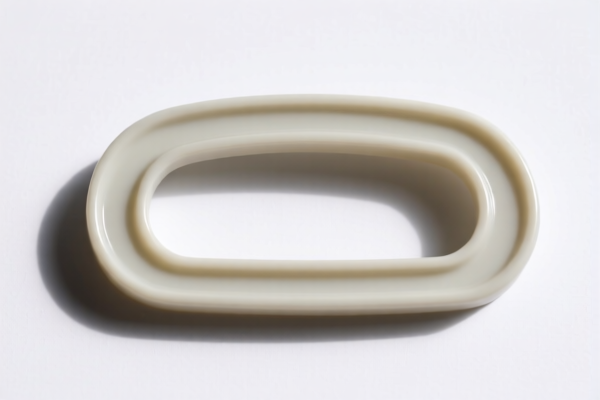
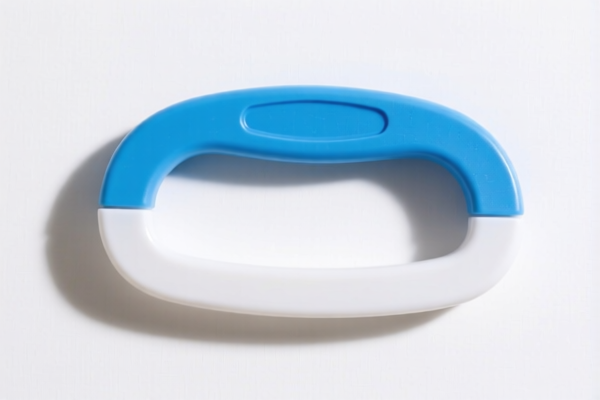
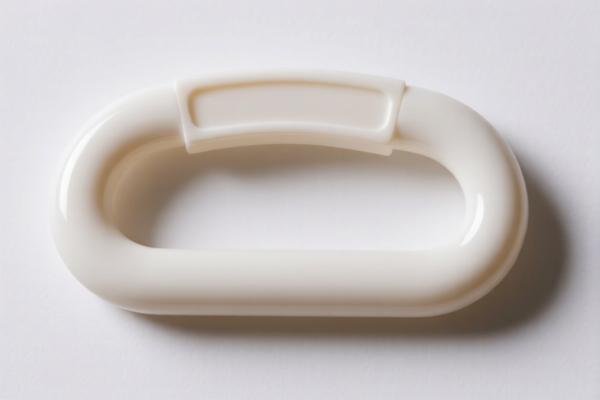
AI Analysis
🎂 Plastic Cake Horn (Decorating Tips)
🌐 HS Code Reference & Customs Clearance Guide | 2026 Latest Tariff Analysis | Professional Strategy for Plastic Bakery Accessories
📌 I. Product Definition & Classification: What Exactly is a "Plastic Cake Horn"?
A Plastic Cake Horn (also known as a piping tip, nozzle, or decorating horn) is a specialized accessory used in baking and pastry arts to extrude icing, cream, or dough into decorative shapes.
In international trade, while it serves a "kitchen" function, its material classification is strictly governed by its composition: Plastic. It does not fall under metal cutlery or ceramic ware. The key debate in customs classification lies between "Articles of Plastic" (Packaging/General Use) vs. "Plastic Tableware/Kitchenware" (Utensils).
⚠️ Key Distinction Point:
- If the item is a rigid container/box for holding the cake → Classified as Packaging (3923).
- If the item is a tool/horn for shaping/decorating → Classified as Tableware/Kitchen Utensils (3924) or Other Plastic Articles (3926/3917).
- Most "Cake Horns" are piping tools, often mistakenly grouped with packaging if not described precisely.
📦 II. HS Code Classification Details (2026 Latest Tariff Authority Comparison)
Based on the provided data, here are the five possible classifications with their corresponding tax implications. Note that 3924.10.40.00 is generally the most accurate for utensils, while others apply if the product is interpreted as packaging or generic parts.
| HS Code | Product Description | Application Scenario | Key Classification Logic |
|---|---|---|---|
3923.10.90.00 |
Plastic Articles for the Conveyance or Packing of Goods | Plastic boxes, containers, or bags for cakes | ✅ Packaging: If the "horn" is actually a rigid box/container holding the cake. |
3924.10.40.00 |
Plastic Tableware & Kitchenware (Other) | Piping tips, decorating horns, spatulas | ✅ Utensils: If it is a tool used on the food, not containing it. Most likely for tools. |
3917.40.00.95 |
Other Plastic Pipes, Hoses & Fittings | Plastic connectors/nozzles interpreted as industrial fittings | ⚠️ Fittings: If declared as a "plastic fitting" for a tube/hose system (less common for consumer cake tools). |
3926.90.99.89 |
Other Plastic Articles | Generic plastic accessories not specified elsewhere | ❓ Generic: Catch-all for plastic items that don't fit neatly into packaging or tableware. |
3917.29.00.90 |
Other Plastic Pipes, Hoses & Fittings | Plastic accessories for tubes/hoses | ⚠️ Fittings: Similar to 3917.40, implies a tubular component connection. |
🔍 Critical Reminder:
- Do NOT confuse "Cake Box" with "Cake Horn". If you are exporting the tool used to pipe frosting, 3924.10.40.00 is the strongest candidate.
- If you are exporting the plastic container that holds the cake, use 3923.10.90.00.
- Customs officers may challenge "Utensil" claims if the plastic is flimsy or clearly part of a packaging line.
💰 III. 2026 Latest Tariff Rate Breakdown (Detailed Tax Clauses)
✅ Applicable Country: United States (US)
✅ Origin: China (CN)
✅ Effective Date: Rates apply to imports from China under current Section 301 & IEEPA mandates.
🎯 1. 3923.10.90.00 – Plastic Packaging Articles (The "Box" Scenario)
| Item | Content |
|---|---|
| Base Tariff | 3.0% |
| Section 301 Surcharge | +25.0% |
| IEEPA Surcharge | +10.0% (122 Clause) |
| Total Tax Rate | 38.0% |
| Tax Calculation | CIF Value × 38.0% |
| De Minimis Eligibility | ❌ Not Eligible (High duty burden) |
| Legal Path | IEEPA:9903.01.25 → USITC:3923.10.90.00 |
📌 Explanation:
- This rate applies if the item is deemed a packaging container.
- The 25% Section 301 tariff is significant for plastic goods from China.
- Risk: If you ship piping tools but declare them as boxes, this leads to misclassification penalties.
🎯 2. 3924.10.40.00 – Plastic Tableware & Kitchen Utensils (The "Tool" Scenario)
| Item | Content |
|---|---|
| Base Tariff | 3.4% |
| Section 301 Surcharge | 0.0% |
| IEEPA Surcharge | +10.0% (122 Clause) |
| Total Tax Rate | 13.4% |
| Tax Calculation | CIF Value × 13.4% |
| De Minimis Eligibility | ❌ Not Eligible |
| Legal Path | IEEPA:9903.01.24 → USITC:3924.10.40.00 |
📌 Explanation:
- This is the MOST COST-EFFICIENT option if the product is truly a kitchen utensil (piping tip/horn).
- Why no 25% Section 301? Many plastic tableware items benefit from lower or exempt Section 301 rates compared to packaging or industrial parts, though you must ensure the description matches "Tableware/Kitchenware."
- Recommendation: Argue for this classification if the item is a decorating tool.
🎯 3. 3917.40.00.95 – Other Plastic Fittings (The "Industrial Part" Scenario)
| Item | Content |
|---|---|
| Base Tariff | 5.3% |
| Section 301 Surcharge | +25.0% |
| IEEPA Surcharge | +10.0% (122 Clause) |
| Total Tax Rate | 40.3% |
| Tax Calculation | CIF Value × 40.3% |
| De Minimis Eligibility | ❌ Not Eligible |
| Legal Path | IEEPA:9903.01.25 → USITC:3917.40.00.95 |
📌 Explanation:
- Highest Tax Rate (40.3%).
- Only use this if the product is explicitly a plastic fitting for a hose/tube system (e.g., industrial icing extruder parts), not a consumer bakery tool.
- Avoid this classification for standard cake decorating tips unless unavoidable.
🎯 4. 3926.90.99.89 – Other Plastic Articles (The "Generic" Scenario)
| Item | Content |
|---|---|
| Base Tariff | 5.3% |
| Section 301 Surcharge | +7.5% |
| IEEPA Surcharge | +10.0% (122 Clause) |
| Total Tax Rate | 22.8% |
| Tax Calculation | CIF Value × 22.8% |
| De Minimis Eligibility | ❌ Not Eligible |
| Legal Path | IEEPA:9903.01.24 → USITC:3926.90.99.89 |
📌 Explanation:
- A middle-ground rate.
- Used when the article is plastic but doesn't fit neatly into tableware or packaging.
- Lower than 3917 (40.3%) but higher than 3924 (13.4%).
- Use only if 3924 is rejected by customs due to ambiguity.
🎯 5. 3917.29.00.90 – Other Plastic Pipes/Hoses & Fittings
| Item | Content |
|---|---|
| Base Tariff | 3.1% |
| Section 301 Surcharge | +25.0% |
| IEEPA Surcharge | +10.0% (122 Clause) |
| Total Tax Rate | 38.1% |
| Tax Calculation | CIF Value × 38.1% |
| De Minimis Eligibility | ❌ Not Eligible |
| Legal Path | IEEPA:9903.01.25 → USITC:3917.29.00.90 |
📌 Explanation:
- Similar to 3917.40, this incurs the 25% Section 301 surcharge.
- Total 38.1%.
- Not recommended for consumer bakery goods unless specifically marketed as "industrial piping components."
🛠️ IV. Customs Clearance Practical Advice (Avoid Pitfalls)
✅ 1. Preparation Checklist (Must-Have Documents)
| Document | Mandatory? | Notes |
|---|---|---|
| ✅ Product Photos | ✔️ | Clear images of the "horn" showing it is a tip/nozzle, not a box. |
| ✅ Product Description | ✔️ | Use terms: "Plastic Decorating Tip," "Piping Nozzle," "Cake Decorator Accessory." Avoid "Container" or "Box." |
| ✅ Material Specification | ✔️ | State: "100% Food-Grade Plastic (PET/PP/etc.)." |
| ✅ Usage Statement | ✔️ | "Used for extruding frosting/cream onto baked goods." |
| ✅ Commercial Invoice | ✔️ | HS Code must match the declared function (3924 for tools, 3923 for boxes). |
✅ 2. Declaration Strategy (Key Mnemonic)
🔥 "Utensil is 13%, Box is 38%! Don't call a Tool a Box!"
| Scenario | Correct Declaration | Incorrect Declaration | Consequence of Error |
|---|---|---|---|
| Piping Tip/Horn | 3924.10.40.00 (Utensil) |
3923.10.90.00 (Packaging) |
Pay 24.6% more in duties (38% vs 13.4%). |
| Cake Container | 3923.10.90.00 (Packaging) |
3924.10.40.00 (Utensil) |
Misclassification Risk: Customs may penalize for "Utensil" duty evasion. |
| Industrial Fitting | 3917.40.00.95 (Fitting) |
3924.10.40.00 (Utensil) |
No Penalty if it's truly industrial, but 40.3% tax applies. |
📌 Pro Tip:
- If you are shipping both tips and boxes, declare them separately.
- Do not bundle a "Plastic Box" and a "Plastic Tip" under one HS Code unless they are a single set (e.g., a kit sold as one unit), which may still require primary use determination.
✅ 3. Special Cases & Workarounds
| Situation | Suggestion |
|---|---|
| Food-Grade Requirement | Ensure the plastic is stated as "Food-Grade" to avoid health regulation delays, though this doesn't change HS Code. |
| Mixed Packaging | If tips are inside a plastic box, the primary function determines the HS. If the box is just for shipping, declare the tip (3924) and note the packing material separately if needed. |
| Customs Audit | If audited, provide a diagram showing how the horn attaches to a piping bag. This proves it is a tool, not packaging. |
🌍 V. Global Market Comparison (2026 Outlook)
| Market | Recommended HS Code | Est. Duty Rate (China Origin) | Note |
|---|---|---|---|
| 🇺🇸 USA | 3924.10.40.00 |
13.4% (Best Case) | Avoid 3923 (38%) and 3917 (40.3%) |
| 🇨🇳 China | 3924.10.40.00 |
~5-9% | Standard import duty for plastic tableware |
| 🇪🇺 EU | 3924.10.00 |
0-4% | Generally lower tariffs; no Section 301/IEEPA |
| 🇬🇧 UK | 3924.10.00 |
4% | Post-Brexit tariff structure |
📌 Conclusion:
- The US market is the most expensive due to Section 301 and IEEPA tariffs.
- Classification is critical: Getting the HS Code from3924(13.4%) instead of3923(38%) saves 24.6% on every shipment.
📌 VI. Common Mistakes & Pitfalls (Blood & Tears Lessons)
❌ Mistake 1: Calling a piping tip a "Plastic Container"
👉 Result: Customs classifies it as 3923 → 38% Tax instead of 13.4%.
👉 Fix: Use keywords "Decorating Tip," "Nozzle," "Extruder Accessory."
❌ Mistake 2: Calling a cake box a "Utensil"
👉 Result: Customs may suspect duty evasion or request additional proof of "Utensil" status.
👉 Fix: If it holds the cake, call it "Packaging" (3923).
❌ Mistake 3: Ignoring Section 301 implications
👉 Result: Unexpected bills at customs if the 25% surcharge was assumed but not applied.
👉 Fix: Always check the Total Tax Rate (Base + 301 + IEEPA).
✅ Correct Declaration Example:
"Plastic Piping Tip for Cake Decorating, Food-Grade PP, Assorted Sizes, No Metal Parts, HS 3924.10.40.00"
🎯 VII. Conclusion: Precision Saves Money!
🎯 Remember the Golden Rule:
🔹 "Utensil is 13%, Box is 38%, Fitting is 40%! Classify by Function!"
🔹 "Don't let a 25% Surcharge eat your margin. Prove it's a Tool, not a Box!"
📌 Pro Tip:
If you are unsure, apply for an Advance Ruling from U.S. Customs and Border Protection (CBP) to confirm the HS Code before shipping large volumes.
📣 Immediate Action:
📞 Contact your freight forwarder with photos and usage descriptions.
🚀 Clarify: Is it a Box (3923) or a Tool (3924)?
💰 Save up to 24.6% in duties by choosing the right classification!
✨ Professional Clearance Starts with Accurate Classification!
💼 Every percentage point counts in international trade!
Customer Reviews
About HS Code Classification
The Harmonized System (HS) is an internationally standardized nomenclature developed by the World Customs Organization (WCO) to classify traded products. Over 200 countries use the HS system as the basis for customs tariffs, trade statistics, and import/export regulations.
Each HS code follows a hierarchical structure:
- Chapter (2 digits) — Broad category of goods (e.g., Chapter 84: Machinery and Mechanical Appliances)
- Heading (4 digits) — More specific grouping within the chapter
- Subheading (6 digits) — Internationally standardized breakdown, used by all WCO member countries
- National subdivisions (8-10 digits) — Country-specific extensions for further classification, such as US HTSUS 10-digit codes
Correct HS code classification is essential for smooth customs clearance, accurate duty payment, and compliance with trade regulations. Misclassification can lead to customs delays, overpayment of duties, or penalties.
When importing from CN to US, the applicable tariff rates may include:
- Most-Favored-Nation (MFN) rate — The standard duty rate applied to WTO members
- General rate — Applied to countries without trade agreements
- Trade remedy duties — Additional tariffs such as Section 301 (anti-dumping), Section 232 (national security), or countervailing duties
The information provided on this page is for reference purposes only. For official classification, please consult with your local customs authority or a licensed customs broker.