plastic christmas baubles
CN → US| HS Code | Tariff Rate | Origin | Destination | Doc |
|---|---|---|---|---|
| 9503000090 | 10.0% | CN | US | Official Doc |
| 3926400090 | 15.3% | CN | US | Official Doc |
| 7117907500 | 10.0% | CN | US | Official Doc |
| 7117909000 | 28.5% | CN | US | Official Doc |
| 3926400010 | 15.3% | CN | US | Official Doc |
Product Images
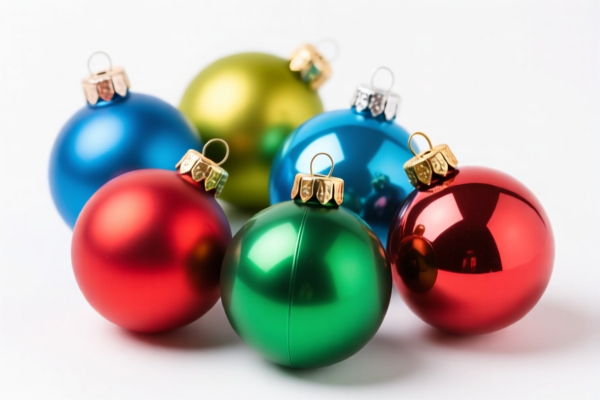
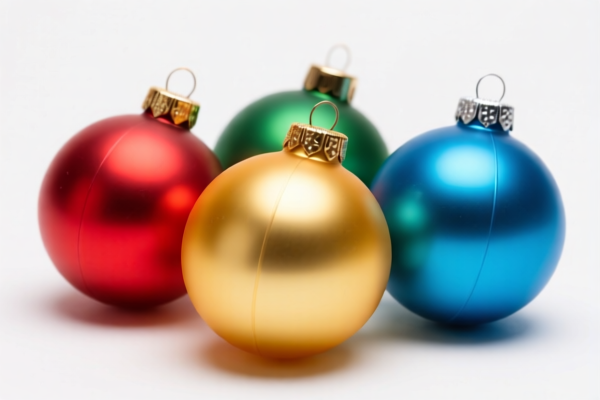
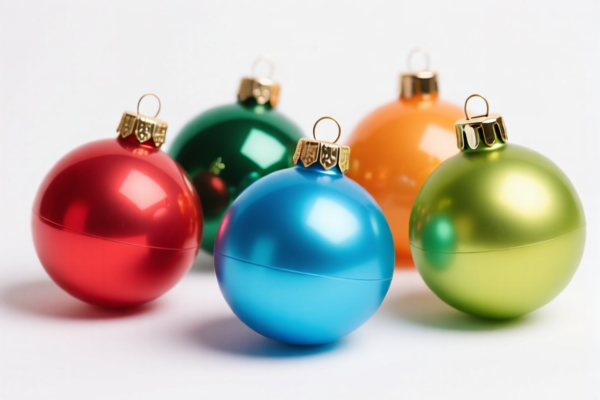
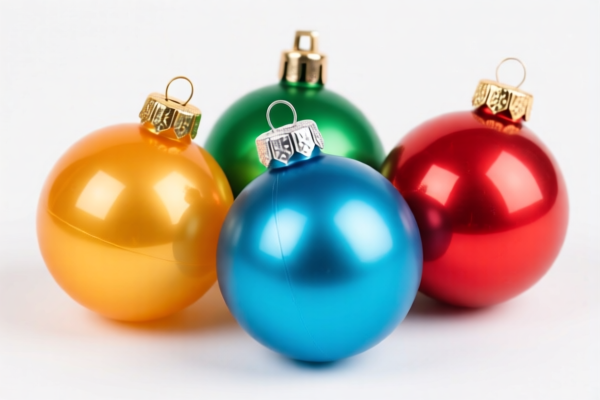
AI Analysis
🎄 Plastic Christmas Baubles (Decorative Ornaments)
🌐 HS Code Reference & Clearance Guide | 2026 Latest Tariff Analysis | Professional Customs Strategy
📌 I. Product Definition & Classification: Do You Really Understand "Plastic Baubles"?
Plastic Christmas baubles are essential decorative items for the holiday season. In international trade, their classification is not straightforward because they can be viewed through multiple lenses: as toys, as general plastic articles, or as imitation jewelry/decorations. The key to accurate classification lies in the primary function and physical characteristics of the item.
⚠️ Key Distinction Points:
- If the bauble is intended primarily for play (e.g., for children, with specific toy features) → Classified as Toys.
- If the bauble is intended primarily for decoration/display and made of plastic, without being jewelry → Classified as Plastic Ornamental Articles.
- If the bauble resembles jewelry (e.g., worn, small, intricate) → Classified as Imitation Jewelry.
📦 II. HS Code Classification Details (2026 Latest Tariff Authority Match)
Based on the provided data, here are the four possible HS Codes for "Plastic Christmas Baubles" and the rationale for each:
| HS Code | Product Description | Rationale for Classification | Total Tax Rate |
|---|---|---|---|
9503.00.00.90 |
Toys, models, or decorative small items made of plastic | Viewed as a toy or general decorative small item. Material is plastic. | 10.0% |
3926.40.00.90 |
Plastic ornaments/decorations (General) | Viewed as a decorative article made of plastic, fitting the category of ornamental articles. | 15.3% |
7117.90.75.00 |
Imitation jewelry (Plastic) | Viewed as imitation jewelry due to its decorative nature and plastic material. | 10.0% |
7117.90.90.00 |
Other imitation jewelry (Plastic) | Viewed as imitation jewelry falling under other categories of form/characteristics. | 28.5% |
🔍 Critical Analysis:
-9503.00.00.90and3926.40.00.10(see tax detail below) offer the most balanced views between "toy" and "plastic ornament."
-7117.90.75.00is a competitive option if the bauble is small and jewelry-like, offering a lower base tariff.
-7117.90.90.00carries the highest risk and cost (28.5%) and should be avoided unless the item strictly fits this narrow "other" jewelry category.
💰 III. 2026 Latest Tariff Rate Breakdown (Including Surcharges & Policy Add-ons)
✅ Applicable Country: United States (US)
✅ Origin: China (CN)
✅ Effective Date: From November 10, 2025 (including subsequent imports)
🎯 1. 9503.00.00.90 —— Toys, Models, or Decorative Small Items
| Item | Content |
|---|---|
| Base Tariff | 0% (ad valorem) |
| USITC Additional Tariff | 0% |
| Section 301 / IEEPA Tariff | +10% (Specific "122 Clause" tariff for China) |
| Total Tariff | 10.0% |
| Tax Calculation | CIF Value × 10% |
| De Minimis Eligibility | ❌ Not Eligible (Denied de_minimis for Section 301 items) |
| Legal Basis Path | HS:9503.00.00.90 → Section 301: 122 Clause |
📌 Explanation:
- This is the lowest cost option among the plausible classifications.
- The 10% tariff is a specific add-on (often referred to as the "122 Clause" in some trade databases), replacing or supplementing standard 301 rates for certain toy/decor categories.
- Strategy: If the product can be reasonably argued as a "decorative small item" or "toy," this is the preferred HS code.
🎯 2. 3926.40.00.90 —— Plastic Ornamental Articles (General)
| Item | Content |
|---|---|
| Base Tariff | 5.3% (ad valorem) |
| USITC Additional Tariff | 0% |
| Section 301 / IEEPA Tariff | +10% (Specific "122 Clause" tariff for China) |
| Total Tariff | 15.3% |
| Tax Calculation | CIF Value × 15.3% |
| De Minimis Eligibility | ❌ Not Eligible |
| Legal Basis Path | HS:3926.40.00.90 → Section 301: 122 Clause |
📌 Note:
- Also see3926.40.00.10(see below) which has the same tax structure.
- This classification is safer if the item is clearly a decoration and not a toy. However, the 5.3% base tariff makes it more expensive than the toy classification.
🎯 3. 7117.90.75.00 —— Imitation Jewelry (Plastic, Specific)
| Item | Content |
|---|---|
| Base Tariff | 0% (ad valorem) |
| USITC Additional Tariff | 0% |
| Section 301 / IEEPA Tariff | +10% (Specific "122 Clause" tariff for China) |
| Total Tariff | 10.0% |
| Tax Calculation | CIF Value × 10% |
| De Minimis Eligibility | ❌ Not Eligible |
| Legal Basis Path | HS:7117.90.75.00 → Section 301: 122 Clause |
📌 Explanation:
- This is a competitive option if the baubles are small, intricate, and resemble jewelry (e.g., pendants, bead-like ornaments).
- Like9503.00.00.90, it benefits from a 0% base tariff, resulting in only the 10% surcharge.
- Risk: Must ensure the product does not strictly fall under "jewelry" with higher duties (see7117.90.90.00).
🎯 4. 7117.90.90.00 —— Other Imitation Jewelry (Plastic)
| Item | Content |
|---|---|
| Base Tariff | 11.0% (ad valorem) |
| USITC Additional Tariff | 7.5% |
| Section 301 / IEEPA Tariff | +10% (Specific "122 Clause" tariff for China) |
| Total Tariff | 28.5% |
| Tax Calculation | CIF Value × 28.5% |
| De Minimis Eligibility | ❌ Not Eligible |
| Legal Basis Path | HS:7117.90.90.00 → Section 301: 122 Clause |
📌 Warning:
- This is the most expensive classification.
- It applies to imitation jewelry that does not fit specific sub-categories (like7117.90.75.00).
- Strategy: Avoid this classification unless absolutely necessary. It nearly triples the cost compared to9503or7117.90.75.
🛠️ IV. Customs Clearance Practical Advice (Real-World Pitfall Guide)
✅ 1. Recommended HS Code Strategy
| Priority | HS Code | Total Tax | Reason |
|---|---|---|---|
| 🥇 Best Option | 9503.00.00.90 |
10.0% | Low tax, broad "toy/decor" definition, safe for general baubles. |
| 🥈 Alternative | 7117.90.75.00 |
10.0% | Low tax, good for jewelry-like, small, intricate baubles. |
| 🥉 Safe Fallback | 3926.40.00.90 |
15.3% | Higher tax, but strictly accurate for "plastic ornaments" if not toys/jewelry. |
| ❌ Avoid | 7117.90.90.00 |
28.5% | Highest tax, narrow category, high compliance risk. |
✅ 2. Documentation & Declaration Tips
| Document | Requirement | Explanation |
|---|---|---|
| Product Description | Be Specific | Use terms like "Plastic Christmas Ornaments, Decorative, Not for Play" if using 3926, or "Plastic Toy Baubles" if using 9503. |
| Photos | Required | Provide clear photos showing the item's size, material, and packaging. |
| Usage Intention | Clarify | State if the product is intended for children (Toy) or adults (Decoration/Jewelry). |
| Composition | Disclose | Confirm 100% Plastic content to align with HS chapters 39 or 95. |
✅ 3. Special Considerations
| Scenario | Advice |
|---|---|
| Mixed Shipments | If you ship both toys and decorations, consider separating shipments or clearly labeling them to avoid misclassification penalties. |
| De Minimis (Section 321) | ❌ Not Eligible. Since these items are subject to the "122 Clause" (10% tariff), they cannot use the $800 de minimis exemption. Full formal entry is required. |
| Pre-Ruling | ✅ Strongly Recommended. Given the risk of falling into the 28.5% category, apply for an Advance Ruling from CBP to lock in the 10% or 15.3% rate. |
🌍 V. Global Market Comparison (2026 Latest)
| Country/Region | Recommended HS Code | Tariff Rate | Notes |
|---|---|---|---|
| 🇺🇸 USA | 9503.00.00.90 or 7117.90.75.00 |
10.0% | Avoid 7117.90.90.00 (28.5%). No de minimis. |
| 🇨🇳 China | 9503.00.00.90 |
~5-10% | Standard import duties apply. |
| 🇪🇺 EU | 9505.00 (Festive Articles) |
0-2.5% | Often duty-free under Chapter 95. Check specific member state rules. |
| 🇬🇧 UK | 9505.10 |
0% | Post-Brexit rules may vary; generally favorable for festive goods. |
📌 Conclusion:
- The USA is the most complex market for plastic Christmas baubles due to the 122 Clause and the risk of high "imitation jewelry" tariffs.
- Canada and EU generally offer more favorable or duty-free treatments for festive decorations.
📌 VI. Common Mistakes & Pitfalls (Blood & Tears Lessons)
❌ Mistake 1: Declaring all plastic baubles as "Plastic Articles" under 3926 without checking for toy features.
👉 Consequence: If deemed a toy, you might face higher scrutiny or if deemed jewelry, 28.5% tax.
❌ Mistake 2: Using the de minimis exemption ($800) for these items.
👉 Consequence: Severe penalties. These items are subject to the 122 Clause and cannot use Section 321.
❌ Mistake 3: Vague product descriptions like "Christmas Decorations."
👉 Consequence: CBP may classify as 7117.90.90.00 (28.5%) due to lack of clarity.
✅ Correct Action:
"Plastic Christmas Ornaments, Decorative, 5cm Diameter, Not for Play, 100% Plastic"
→ Declared as9503.00.00.90(10%) or3926.40.00.90(15.3%).
🎯 VII. Conclusion: Professional Classification Saves Money!
🎯 Key Takeaway:
🔹 "Toy or Decor? Aim for 10%!"
🔹 "Avoid Jewelry Traps: Stay at 10%, Don't jump to 28.5%!"
🔹 "No De Minimis: Plan for Formal Entry!"
📌 Pro Tip:
If your plastic baubles are small, intricate, and resemble jewelry, consider 7117.90.75.00 (10%).
If they are standard round baubles, 9503.00.00.90 (10%) is the safest and most common choice.
📣 Immediate Action:
📞 Apply for an Advance Ruling with CBP.
📄 Prepare Detailed Product Specs (Photos, Material, Use).
🚀 Optimize Your Supply Chain to ensure proper classification from the start!
✨ Professional Clearance Starts with Accurate Classification!
💼 Every Percentage Point Counts – Save Your Profit Margins!
Customer Reviews
About HS Code Classification
The Harmonized System (HS) is an internationally standardized nomenclature developed by the World Customs Organization (WCO) to classify traded products. Over 200 countries use the HS system as the basis for customs tariffs, trade statistics, and import/export regulations.
Each HS code follows a hierarchical structure:
- Chapter (2 digits) — Broad category of goods (e.g., Chapter 84: Machinery and Mechanical Appliances)
- Heading (4 digits) — More specific grouping within the chapter
- Subheading (6 digits) — Internationally standardized breakdown, used by all WCO member countries
- National subdivisions (8-10 digits) — Country-specific extensions for further classification, such as US HTSUS 10-digit codes
Correct HS code classification is essential for smooth customs clearance, accurate duty payment, and compliance with trade regulations. Misclassification can lead to customs delays, overpayment of duties, or penalties.
When importing from CN to US, the applicable tariff rates may include:
- Most-Favored-Nation (MFN) rate — The standard duty rate applied to WTO members
- General rate — Applied to countries without trade agreements
- Trade remedy duties — Additional tariffs such as Section 301 (anti-dumping), Section 232 (national security), or countervailing duties
The information provided on this page is for reference purposes only. For official classification, please consult with your local customs authority or a licensed customs broker.