plastic coated quick dry clothing
CN → US| HS Code | Tariff Rate | Origin | Destination | Doc |
|---|---|---|---|---|
| 6211339044 | 33.5% | CN | US | Official Doc |
| 6211335040 | 33.5% | CN | US | Official Doc |
| 6114301010 | 45.7% | CN | US | Official Doc |
| 6110303041 | 49.5% | CN | US | Official Doc |
Product Images
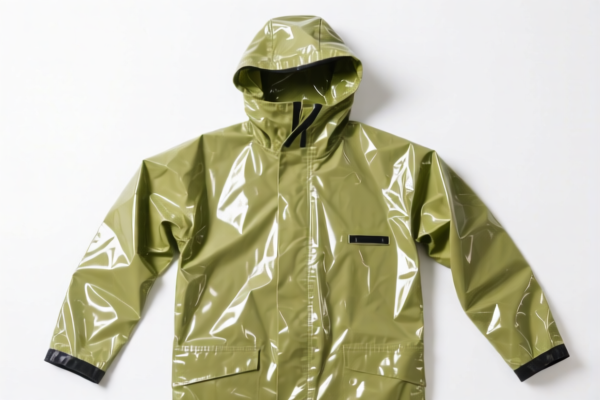
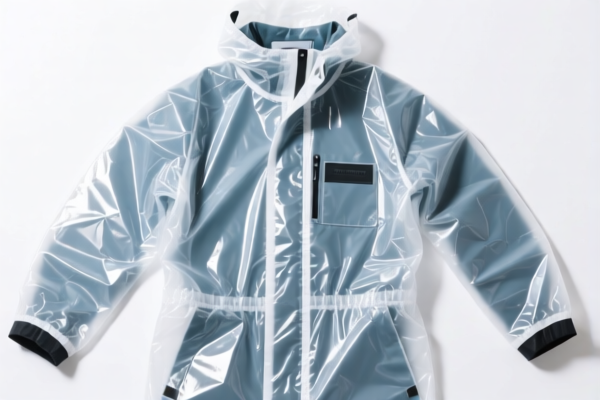
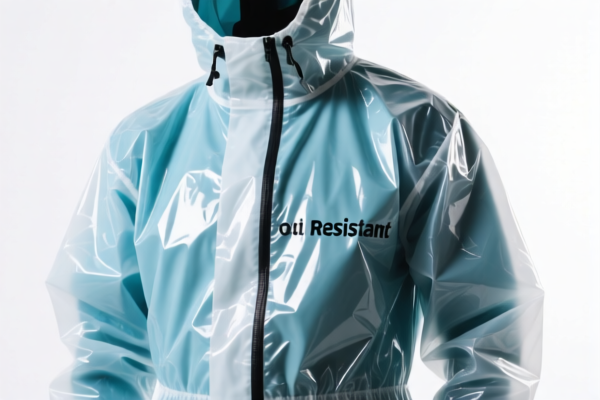
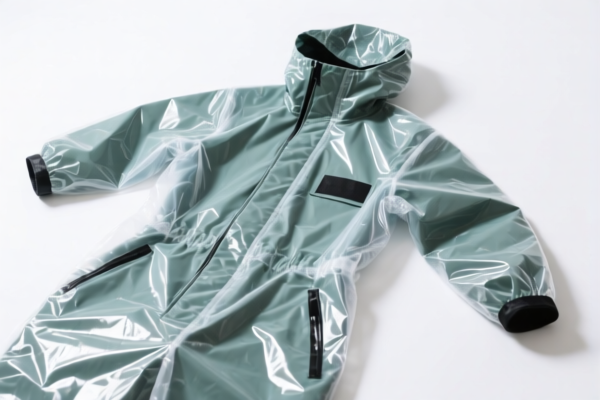
AI Analysis
👕 Plastic Coated Quick Dry Clothing
🌐 HS Code Classification & Customs Clearance Guide | 2026 Latest Tariff Analysis | Strategic US Entry Strategy 📌 I. Product Definition: What is "Plastic Coated Quick Dry Clothing"?
"Plastic Coated Quick Dry Clothing" typically refers to outerwear or sportswear made from synthetic or artificial fibers, often treated with coatings (like PVC or PU) for water resistance or specific functional properties (quick-drying). In international trade, the classification hinges on material composition (woven vs. knitted) and specific functional features (shirts vs. jackets/sweaters).
⚠️ Critical Distinction for US Customs: - Woven vs. Knitted: If the base fabric is woven, it likely falls under Chapter 62. If knitted, it falls under Chapter 61. - Specific Garment Type: Is it a "Shirt" (button-down/collar) or a "Jacket/Sweater"? This drastically changes the Base Duty Rate. - Coating Impact: "Plastic coated" often triggers specific subheadings or requires careful description to avoid being classified as general rubberized textiles if not properly defined as apparel.
📦 II. HS Code Classification Details (2026 Authoritative Mapping)
Based on the provided <DATA>, the product is categorized into four specific HS Codes depending on its exact structural and material characteristics.
| HS Code | Product Description | Key Characteristics | Material Basis |
|---|---|---|---|
| 6211.33.90.44 | Men’s/Boys’ Shirts | Woven shirt, synthetic/artificial fiber, non-medical/experimental | Woven |
| 6211.33.50.40 | Quick Dry Jacket/Outerwear | Woven jacket/outwear, synthetic/artificial fiber, sporty/leisure performance | Woven |
| 6114.30.10.10 | Boys’ Tops (Knitted) | Knitted or crocheted top, artificial fiber, meets material/form/age criteria | Knitted |
| 6110.30.30.41 | Men’s/Boys’ Sweaters | Knitted/crocheted sweater, artificial fiber, includes "Quick Dry" sports apparel | Knitted |
🔍 Key Interpretation: - 6211 Series: Applies to woven garments. The distinction between
90.44(Shirts) and50.40(Quick Dry/Outerwear) depends on whether the item is structured as a shirt or a performance jacket. - 6114 Series: Applies to knitted general articles. - 6110 Series: Applies to knitted sweaters or pullovers. The note explicitly states that "Quick Dry" sports items are often classified here if they meet the sweater definition.
💰 III. 2026 Latest Tariff Rate Breakdown (Including Surcharges)
✅ Target Market: United States (US) ✅ Origin: China (CN) ✅ Effective Date: Current rates applicable (Note: Rates reflect the specific tax structure provided in
<DATA>)
🎯 1. 6211.33.90.44 – Men’s/Boys’ Woven Shirts
For woven shirts made of synthetic/artificial fibers, not for medical/experimental use.
| Item | Detail |
|---|---|
| Base Duty Rate | 16.0% |
| Section 301 (Add-on) | 7.5% |
| Section 122 | 10.0% |
| Total Tax Rate | 33.5% |
| Calculation Basis | CIF Value × 33.5% |
| De Minimis Exemption? | ❌ NO (Not eligible for de minimis) |
📌 Explanation: - The 16.0% is the standard MFN (Most Favored Nation) duty for woven shirts. - The 7.5% is the standard Section 301 surcharge for Chinese goods. - The 10% is the specific "Section 122" tariff (often related to trade enforcement or specific bilateral agreements affecting textiles/apparel). - Total: 33.5% is a moderate-high tariff for apparel.
🎯 2. 6211.33.50.40 – Quick Dry Woven Outerwear
For woven jackets/outerwear with artificial fiber content, featuring quick-dry/sporting properties.
| Item | Detail |
|---|---|
| Base Duty Rate | 16.0% |
| Section 301 (Add-on) | 7.5% |
| Section 122 | 10.0% |
| Total Tax Rate | 33.5% |
| Calculation Basis | CIF Value × 33.5% |
| De Minimis Exemption? | ❌ NO |
📌 Explanation: - Interestingly, this HS code shares the same total tax rate (33.5%) as the shirt category. - Despite the "Quick Dry" designation, if it is a woven garment, it falls under the 16% base rate. - Strategy: If your product is a lightweight windbreaker or rain jacket (woven), this is the likely code. Ensure the "Quick Dry" feature is documented in the product spec to justify the subheading if challenged.
🎯 3. 6114.30.10.10 – Knitted Boys’ Tops (Artificial Fiber)
For knitted or crocheted tops for boys, made of artificial fibers, meeting specific material/form requirements.
| Item | Detail |
|---|---|
| Base Duty Rate | 28.2% |
| Section 301 (Add-on) | 7.5% |
| Section 122 | 10.0% |
| Total Tax Rate | 45.7% |
| Calculation Basis | CIF Value × 45.7% |
| De Minimis Exemption? | ❌ NO |
📌 Explanation: - The Base Duty (28.2%) is significantly higher than the woven counterpart (16.0%). This reflects the complex tariff structure for knitted textiles. - Total 45.7% is a heavy tariff. - Applicability: Use this only if the item is definitively knitted and fits the description of a general "top" for boys, not a sweater or jacket.
🎯 4. 6110.30.30.41 – Men’s/Boys’ Knitted Sweaters (Quick Dry)
Knitted/crocheted sweaters or pullovers, artificial fiber, including quick-dry sportswear.
| Item | Detail |
|---|---|
| Base Duty Rate | 32.0% |
| Section 301 (Add-on) | 7.5% |
| Section 122 | 10.0% |
| Total Tax Rate | 49.5% |
| Calculation Basis | CIF Value × 49.5% |
| De Minimis Exemption? | ❌ NO |
📌 Explanation: - This is the highest tariff category (49.5%). - Why so high? The base duty is 32.0%, which is the highest among the four. - Crucial Note: The data explicitly states "Quick dry clothing belongs to sports apparel" and maps it here. If your "Plastic Coated Quick Dry Clothing" is a knitted pullover, sweatshirt, or sweater-style jacket, it will be taxed at 49.5%. - Strategy: If the garment is technically a "shirt" (woven) or a "jacket" (woven), do NOT use this code, as it will cost you 16% more in base duty alone.
🛠️ IV. Customs Clearance Practical Advice (Risk Mitigation)
✅ 1. Documentation Checklist (Mandatory)
| Document | Required? | Notes |
|---|---|---|
| Product Specification Sheet | ✔️ | Must detail: Fiber content (e.g., 100% Polyester), Weave/Knit type, Coating material (PVC/PU), and "Quick Dry" technology description. |
| Composition Label | ✔️ | Clear photo of the care label inside the garment. |
| Commercial Invoice | ✔️ | Must match the HS Code description precisely. Do not just write "Clothing." Use "Men’s Synthetic Woven Quick-Dry Shirt" or "Knitted Synthetic Quick-Dry Sweater." |
| Origin Certificate | ✔️ | Proof of Chinese origin (even though tariffs apply, origin is required for Section 122/301 application). |
| Coating Material Safety Data | ✔️ | If "Plastic Coated," ensure compliance with CPSIA (for kids) or general toxicity standards. |
✅ 2. Classification Strategy & Tips
🔥 Golden Rule: "Woven vs. Knitted dictates the Base Rate!"
| Scenario | Correct HS Code | Total Tax | Why? |
|---|---|---|---|
| Woven Shirt (Collared, button-down) | 6211.33.90.44 |
33.5% | Woven shirts have lower base duty (16%). |
| Woven Jacket (Windbreaker, Raincoat) | 6211.33.50.40 |
33.5% | Woven outerwear also has 16% base duty. |
| Knitted Top (T-shirt, Polo, generic top) | 6114.30.10.10 |
45.7% | Knitted general articles have higher base duty (28.2%). |
| Knitted Sweater/Pullover (Sports hoodie, sweatshirt) | 6110.30.30.41 |
49.5% | Knitted sweaters have the highest base duty (32%). |
📌 Critical Warning: - If you import Knitted Quick-Dry Sportswear (e.g., a pullover) and incorrectly declare it as
6211...(Woven), you risk reclassification by CBP, resulting in back-duties, penalties, and shipment delays. - "Plastic Coated" does not automatically change the Chapter. It must still be apparel. If the coating is heavy rubberization, it might move to Chapter 39/40, but for light coatings (PU/PVC) on sportswear, it remains in Chapter 61/62.
✅ 3. Special Considerations for "Section 122"
- The 10% Section 122 tariff is applied alongside Section 301.
- This is a non-negotiable add-on for most Chinese textile/apparel imports under current trade policies.
- Do not expect exemptions unless the product qualifies for specific free trade agreements (FTAs), which generally do not apply to China.
🌍 V. Global Market Comparison (US vs. Others)
| Destination | Recommended HS Code | Approx. Total Duty | Key Certification |
|---|---|---|---|
| 🇺🇸 USA | See Table Above | 33.5% – 49.5% | FCC (not applicable), CPSIA (if kids), Care Labeling |
| 🇨🇳 China | Same HS Codes | 7% – 14% | CCC (if applicable), GB Standards |
| 🇪🇺 EU | Similar Codes | 12% – 17% | REACH (chemical compliance for plastic coating), CE (if medical) |
| 🇬🇧 UK | Similar Codes | 12% – 17% | UKCA, REACH |
📌 Conclusion: - The US market is the most expensive for Chinese apparel due to the combination of Base Duty + Section 301 + Section 122. - Cost Optimization: If possible, consider sourcing from Vietnam or Bangladesh to avoid Section 301/122 tariffs (though Base Duties may vary).
📌 VI. Common Errors & Pitfalls (Learn from Others’ Mistakes)
❌ Mistake 1: Classifying a Knitted Sweater as a Woven Shirt. 👉 Result: You pay 33.5% instead of 49.5%? NO! If caught, CBP will reassess at 49.5% + penalties. If you under-declare, you face fraud charges. If you over-declare, you lose profit. Accuracy is key.
❌ Mistake 2: Ignoring the "Plastic Coated" aspect. 👉 Result: If the coating is not declared, and the product is found to contain restricted chemicals (e.g., phthalates in PVC), the shipment will be detained for toxicology testing.
❌ Mistake 3: Using "Quick Dry" as the sole product name. 👉 Result: Customs may reject the description for being too vague. Always include Fiber Content and Garment Type (Shirt/Jacket/Sweater).
✅ Correct Declaration Example:
"Men’s Synthetic Woven Quick-Dry Outdoor Jacket, Plastic-Coated, 100% Polyester, Model XYZ, Made in China."
🎯 VII. Conclusion: Professional Classification Saves Money!
🎯 Key Takeaway:
🔹 Woven = 33.5% (Shirts & Jackets)
🔹 Knitted Top = 45.7%
🔹 Knitted Sweater = 49.5%
📌 Action Plan: 1. Confirm Fabric Structure: Is it Woven or Knitted? 2. Confirm Garment Type: Is it a Shirt, Jacket, or Sweater? 3. Select the Correct HS Code from the table above. 4. Prepare Detailed Specs including coating material and fiber content. 5. Budget for 33.5% – 49.5% in total duties.
📣 Final Advice:
⚠️ "Plastic Coated" items require strict chemical compliance (REACH/CPSIA). Ensure your coating is non-toxic and documented.
🚀 Hire a US Customs Broker to file a Binding Ruling if your product is on the borderline between "Shirt" and "Jacket" or "Top" and "Sweater." This protects you from future audits.
✨ Precise Classification, Predictable Costs, Smooth Customs!
💼 Every percentage point matters in apparel trade!
Customer Reviews
About HS Code Classification
The Harmonized System (HS) is an internationally standardized nomenclature developed by the World Customs Organization (WCO) to classify traded products. Over 200 countries use the HS system as the basis for customs tariffs, trade statistics, and import/export regulations.
Each HS code follows a hierarchical structure:
- Chapter (2 digits) — Broad category of goods (e.g., Chapter 84: Machinery and Mechanical Appliances)
- Heading (4 digits) — More specific grouping within the chapter
- Subheading (6 digits) — Internationally standardized breakdown, used by all WCO member countries
- National subdivisions (8-10 digits) — Country-specific extensions for further classification, such as US HTSUS 10-digit codes
Correct HS code classification is essential for smooth customs clearance, accurate duty payment, and compliance with trade regulations. Misclassification can lead to customs delays, overpayment of duties, or penalties.
When importing from CN to US, the applicable tariff rates may include:
- Most-Favored-Nation (MFN) rate — The standard duty rate applied to WTO members
- General rate — Applied to countries without trade agreements
- Trade remedy duties — Additional tariffs such as Section 301 (anti-dumping), Section 232 (national security), or countervailing duties
The information provided on this page is for reference purposes only. For official classification, please consult with your local customs authority or a licensed customs broker.